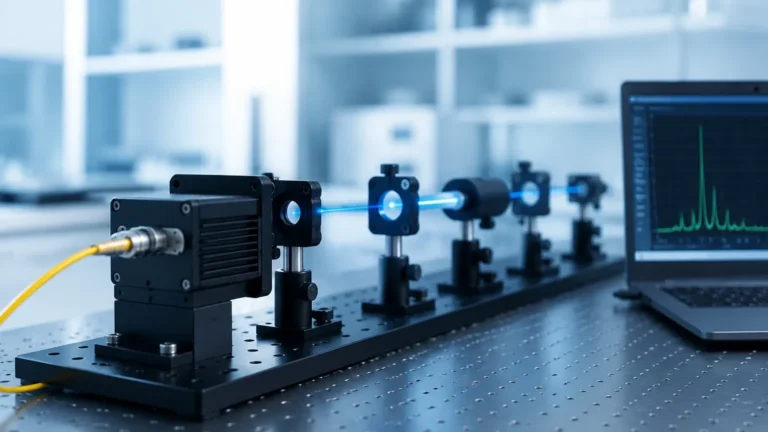
Quantometer
Quantometer
In the landscape of industrial process control and energy management, the quantometer serves as a fundamental instrument for measuring the volume of gas flowing through a pipeline. While often overshadowed by high-precision custody-transfer meters used in international trade, the quantometer is the workhorse of internal plant monitoring, secondary billing, and efficiency auditing. This guide provides a comprehensive technical overview of quantometer technology, its operational principles, and practical considerations for engineering selection and installation.
Understanding the Quantometer in Industrial Gas Measurement
A quantometer is essentially a turbine-type flow meter designed specifically for gas applications. Its primary function is to record the volume of gas passing through a cross-section of a pipe over a specific period. Unlike fiscal meters that must meet stringent legal metrology standards for buying and selling gas, quantometers are optimized for cost-effectiveness and reliability in non-custody transfer applications.
Industrial facilities utilize these instruments to monitor the consumption of natural gas in boilers, furnaces, and kilns. They are also widely deployed for measuring compressed air, nitrogen, and other technical gases. By providing accurate data on gas consumption, a quantometer enables plant managers to implement energy-saving measures, allocate costs to specific production lines, and detect leaks in the distribution network.
Measurement Principles: How a Quantometer Works
The operation of a quantometer is based on the principle of momentum exchange between a flowing gas stream and a mechanical rotor. The process can be broken down into several distinct stages:
1. Flow Conditioning
As gas enters the meter body, it first encounters a flow straightener or an integrated inlet piping section. This component is designed to eliminate swirls and turbulence, ensuring that the gas flow profile is as uniform as possible before it reaches the measurement element. This is critical because uneven flow can cause localized pressure drops and measurement errors.
2. Turbine Rotation
The conditioned gas stream flows through an annular chamber and strikes the blades of a turbine wheel (the rotor). The rotor is mounted on high-precision bearings and is designed to have very low inertia. The kinetic energy of the gas causes the turbine to rotate. Because the geometry of the meter is fixed, the angular velocity of the rotor is directly proportional to the actual volume flow rate of the gas.
3. Transmission and Counting
The rotation of the turbine wheel must be transmitted to a counting mechanism without introducing significant friction. This is typically achieved through one of two methods:
* Mechanical Coupling: A magnetic coupling transfers the rotation through the pressure-tight housing to a mechanical index (totalizer).
* Electronic Sensing: Proximity sensors or induction coils detect the passing of the turbine blades or a magnet attached to the rotor, converting the mechanical motion into electrical pulses.
4. Volume Calculation
The totalizer or an external flow computer accumulates the pulses or rotations to display the total volume in cubic meters (m³). It is important to note that a standard quantometer measures "actual" volume at operating pressure and temperature. To convert this to "standard" or "normal" volume, additional pressure and temperature compensation (PTZ correction) is required.
Key Evaluation Criteria for Selection
Selecting the right quantometer requires a thorough understanding of the process conditions. Engineers must evaluate the following parameters to ensure long-term accuracy and device longevity:
Gas Composition
While most quantometers are designed for natural gas and air, the presence of corrosive elements (like H2S in biogas) or high moisture levels can damage standard aluminum or steel components. For aggressive gases, stainless steel internals or specialized coatings are necessary.
Flow Range (Turndown Ratio)
Every quantometer has a minimum (Qmin) and maximum (Qmax) flow rate. The ratio between these two is the turndown ratio. If the flow falls below Qmin, the turbine may not rotate consistently due to bearing friction, leading to significant under-measurement. Conversely, exceeding Qmax can cause mechanical wear and potential rotor failure.
Operating Pressure and Temperature
The housing of the meter must be rated for the maximum possible system pressure. Common ratings include PN10, PN16, or ANSI 150. Temperature also affects the density of the gas and the expansion of the turbine blades, so the meter must be calibrated for the expected operating range.
Technical Selection Table
The following table provides a general reference for selecting a quantometer based on nominal pipe size and typical flow capacities. Note that these values are representative and may vary by manufacturer.
| Nominal Diameter (DN) | Qmin (m³/h) | Qmax (m³/h) | Typical Max Pressure (bar) | Connection Type |
| :— | :— | :— | :— | :— |
| DN25 (1") | 2.5 | 25 | 16 | Threaded / Flanged |
| DN50 (2") | 6 | 100 | 16/40 | Flanged |
| DN80 (3") | 13 | 400 | 16/40 | Flanged |
| DN100 (4") | 20 | 650 | 16/40 | Flanged |
| DN150 (6") | 40 | 1600 | 16/40 | Flanged |
| DN200 (8") | 80 | 2500 | 16 | Flanged |

Installation Guidelines and Best Practices
To achieve the specified accuracy (typically ±1.5% to ±2.0% for industrial quantometers), proper installation is paramount. Even the highest quality meter will fail to perform if subjected to poor piping geometry.
1. Inlet and Outlet Runs: A quantometer requires a stable flow profile. A general rule of thumb is to provide at least 5 times the nominal diameter (5D) of straight pipe upstream of the meter and 3 times the diameter (3D) downstream. If severe turbulence is expected (e.g., after a pressure regulator), longer inlet runs or flow conditioners are required.
2. Orientation: Most quantometers can be installed horizontally or vertically. However, if installed vertically, the flow direction (usually upward) must be specified at the time of order to ensure the bearings are correctly oriented for the load.
3. Filtration: Turbine meters are sensitive to debris. Dust, scale, or welding slag can chip the turbine blades or jam the bearings. A filter with a mesh size of at least 100 μm should be installed upstream of the meter.
4. Avoid Pulsation: Quantometers should not be installed immediately downstream of reciprocating compressors or fast-acting valves, as pulsating flow can lead to over-speeding and measurement errors.
5. Bypass Line: For critical processes where gas flow cannot be interrupted, a bypass manifold should be installed to allow for meter removal and maintenance without shutting down the system.
Limitations and Operational Risks
While highly effective, the quantometer is not a universal solution for all gas measurement needs. Engineers should be aware of the following limitations:
* Mechanical Wear: Because it contains moving parts, the bearings will eventually wear out. Regular lubrication (if the meter is equipped with an oil pump) and periodic recalibration are necessary.
* Pressure Drop: The turbine and flow straightener introduce a slight pressure drop into the system. This must be accounted for in low-pressure applications.
* Sensitivity to Overload: Sudden surges in flow, such as those caused by opening a valve too quickly, can cause the turbine to spin at speeds far exceeding its design limit, leading to catastrophic failure.
* Gas Density: Quantometers are calibrated for specific gas densities. If the gas composition changes significantly, the meter may require a correction factor.
Integrating Gas Flow and Liquid Level Monitoring
In many industrial environments, gas flow measurement is only one part of a larger automation strategy. For instance, in chemical processing or water treatment, monitoring the consumption of a gas (via a quantometer) often goes hand-in-hand with monitoring the level of liquid reagents or fuel in storage tanks.
Comprehensive industrial automation requires a holistic approach to instrumentation. While quantometers handle the gaseous phase, sophisticated level measurement technologies—such as radar level meters, ultrasonic sensors, and hydrostatic transmitters—ensure the liquid phase is managed with equal precision. For engineers looking to optimize their entire process loop, it is beneficial to Review product options and application support on the Welk Main Page to see how level measurement solutions complement gas flow data.
Frequently Asked Questions (FAQs)
Q: What is the difference between a quantometer and a turbine gas meter?
A: Technically, a quantometer *is* a turbine gas meter. However, in industry parlance, "turbine gas meter" often refers to high-accuracy meters used for custody transfer (fiscal billing), while "quantometer" refers to the more economical version used for internal plant measurement.
Q: Can a quantometer measure steam?
A: Generally, no. Standard quantometers are designed for dry gases. Steam requires specialized vortex flow meters or high-temperature turbine meters designed to handle the phase changes and high temperatures associated with steam.
Q: How often should a quantometer be calibrated?
A: For internal monitoring, a calibration interval of 2 to 5 years is common, depending on the cleanliness of the gas and the criticality of the data. If the meter is used for internal cost allocation, more frequent checks may be required.
Q: Does a quantometer require power?
A: Mechanical quantometers with a local totalizer do not require external power. However, if you need to transmit the data to a PLC or SCADA system via pulse output or Modbus, a power supply for the electronic head or pulse transmitter will be necessary.
Q: Can I use a quantometer for oxygen?
A: Only if the meter is specifically cleaned and certified for oxygen service. Standard lubricants and seals can ignite in the presence of high-pressure oxygen, posing a severe fire and explosion risk.
By following these technical guidelines and understanding the mechanical nature of the quantometer, process engineers can ensure reliable gas measurement that supports both operational efficiency and safety across the plant.