Laboratory Orp Sensor
Laboratory Orp Sensor
In the field of analytical chemistry and process engineering, the laboratory ORP sensor—short for Oxidation-Reduction Potential—serves as a critical instrument for quantifying the chemical activity of aqueous solutions. Often referred to as a Redox sensor, this device measures the tendency of a solution to either gain or lose electrons. In a laboratory setting, where precision and repeatability are paramount, understanding the electrochemical principles and mechanical nuances of these sensors is essential for accurate data collection.
While industrial applications often focus on ruggedized inline sensors for continuous monitoring, the laboratory ORP sensor is designed for high-resolution analysis, pilot-scale testing, and the validation of process parameters. This guide provides a technical overview of ORP measurement principles, sensor selection criteria, and maintenance protocols necessary for professional laboratory environments.
Measurement Principles of ORP
To effectively use a laboratory ORP sensor, one must first understand the underlying electrochemistry. ORP is a potentiometric measurement that reflects the ratio of oxidized to reduced species in a liquid. It does not measure the concentration of a specific chemical, but rather the total status of the solution's oxidative or reductive capacity.
The Electrochemical Cell
An ORP measurement system consists of two primary components: a sensing electrode and a reference electrode.
1. Sensing Electrode: This is typically an inert metal, most commonly platinum. Because platinum is chemically stable, it does not react with the solution but acts as a surface for electron transfer. If the solution contains oxidizing agents, they will strip electrons from the platinum surface, creating a positive potential. Conversely, reducing agents will donate electrons to the surface, creating a negative potential.
2. Reference Electrode: To measure the potential at the sensing electrode, a stable reference point is required. Most laboratory sensors use a Silver/Silver Chloride (Ag/AgCl) reference system immersed in a concentrated potassium chloride (KCl) electrolyte. This provides a constant voltage against which the sensing electrode's potential is compared.
The Nernst Equation
The relationship between the measured potential and the chemical activity is governed by the Nernst Equation. In simplified terms, the measured voltage (millivolts, mV) is proportional to the logarithm of the ratio of the activity of the oxidized form to the reduced form. Unlike pH measurement, which is temperature-compensated to account for changes in hydrogen ion activity, ORP readings are generally reported as "raw" millivolts at a specific temperature, as the complex interactions of various redox couples do not follow a universal temperature coefficient.
Laboratory vs. Industrial ORP Sensors
While the fundamental science remains the same, the design of a laboratory ORP sensor differs significantly from its industrial counterparts. Industrial sensors are built for durability, often featuring heavy-duty housings and specialized junctions to withstand high pressures and abrasive flows. In contrast, laboratory sensors prioritize:
* Response Speed: Laboratory electrodes often have thinner glass or specialized junctions to allow for rapid stabilization during titrations.
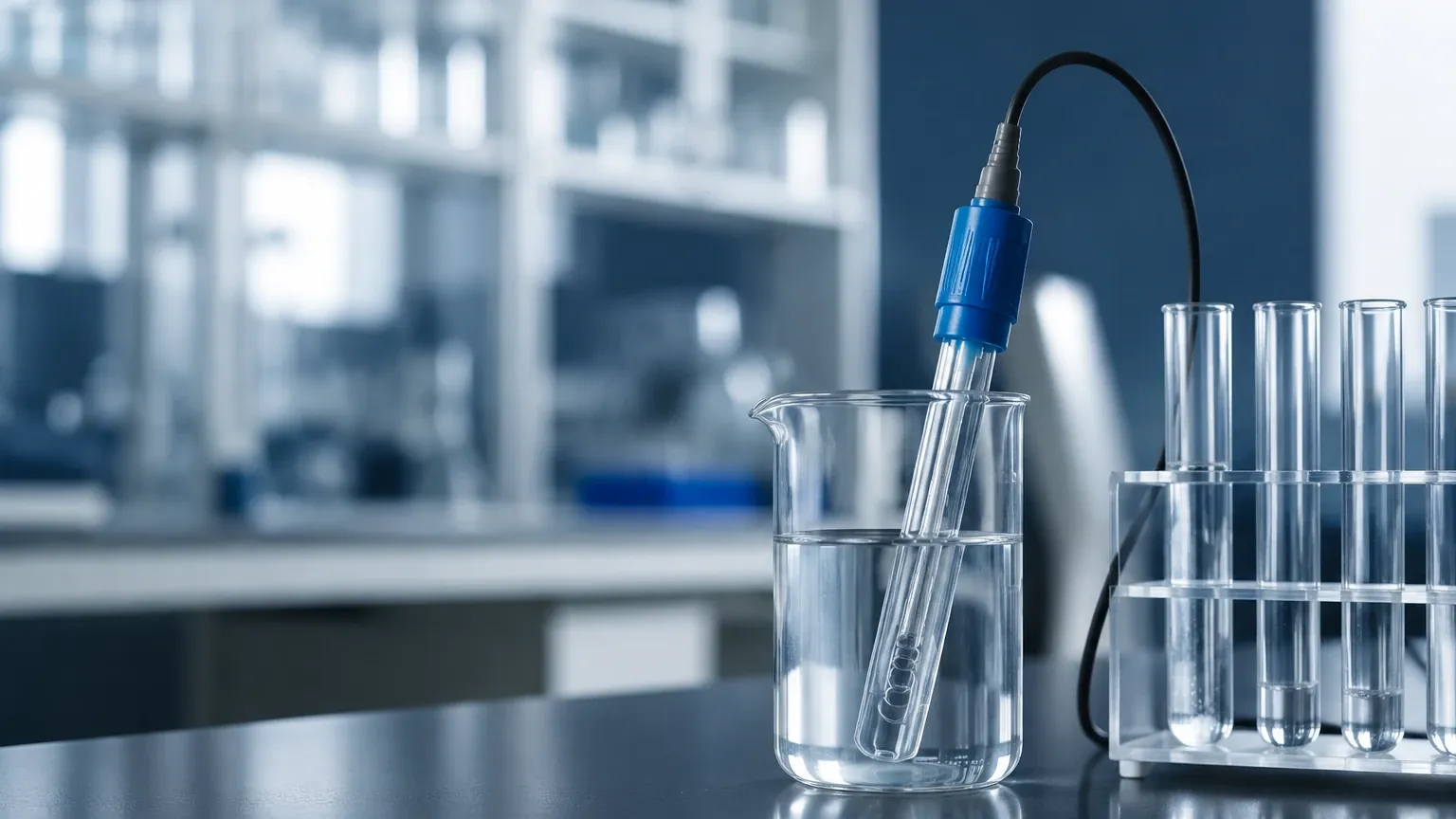
* Form Factor: Sensors are typically 12 mm in diameter and 120 mm to 160 mm in length, designed to fit into standard laboratory beakers, flasks, and test tube racks.
* Refillable Electrolyte: Many high-end laboratory sensors allow the user to refill the reference electrolyte. This ensures a fresh junction and extends the lifespan of the electrode compared to sealed, gel-filled industrial models.
For engineers transitioning from lab-scale testing to full-scale industrial implementation, it is vital to consult a comprehensive Main Page for instrumentation that bridges the gap between manual laboratory analysis and automated process control.
Key Components and Design Variations
When selecting a laboratory ORP sensor, the materials of construction and the junction type are the most critical factors influencing performance.
Sensing Metal: Platinum vs. Gold
* Platinum: The industry standard for most applications. It is highly resistant to corrosion and provides excellent electron transfer for common redox reactions like chlorine monitoring or water treatment analysis.
* Gold: Preferred in specific chemical environments, such as the oxidation of cyanide in alkaline solutions. In these conditions, platinum can catalyze unwanted side reactions or become "poisoned" more easily than gold.
Junction Types
The junction is the point where the internal reference electrolyte meets the sample.
* Ceramic Pin Junctions: Common in general-purpose sensors; they provide a steady, slow leak rate of electrolyte.
* Porous PTFE/Teflon Junctions: Highly resistant to clogging, making them suitable for samples containing suspended solids or organic oils.
* Open Junctions: Used with solid polymer electrolytes, these eliminate the risk of junction clogging entirely, though they are less common in high-precision laboratory work.
Selection Criteria for Laboratory Environments
Choosing the right sensor requires an evaluation of the sample's chemical properties and the required precision. The following table outlines selection parameters based on common laboratory scenarios:
| Application | Recommended Sensing Metal | Junction Type | Electrolyte Type |
| :— | :— | :— | :— |
| General Aqueous Research | Platinum | Ceramic | Refillable 3M KCl |
| Environmental Water Testing | Platinum | Porous PTFE | Gel-filled (Low maintenance) |
| Chemical Titrations | Platinum | Ground Glass Sleeve | Refillable (High flow rate) |
| Cyanide/Heavy Metal Processing| Gold | Ceramic | Refillable 3M KCl |
| Oily or Protein-rich Samples | Platinum | Open Junction | Solid Polymer |
Installation and Operational Considerations
In a laboratory setting, the "installation" of an ORP sensor usually involves mounting it on an electrode stand. However, the physical handling of the sensor significantly impacts the accuracy of the results.
1. Hydration: A laboratory ORP sensor must never be stored dry. The reference junction and the sensing bulb require constant hydration to maintain a conductive path. Storage should always be in a specialized storage solution (typically 3M or 4M KCl).
2. Air Bubbles: Ensure there are no air bubbles trapped near the sensing tip or inside the reference chamber. A gentle shake (similar to a clinical thermometer) can usually displace these bubbles.
3. Stirring: ORP measurements are sensitive to the flow of the sample across the electrode. For consistent results, use a magnetic stirrer at a constant, moderate speed. Avoid creating a vortex that introduces air, as dissolved oxygen can alter the redox potential.
Calibration and Verification
Technically, ORP sensors cannot be "calibrated" in the same way pH sensors are, because the mV output is an absolute physical property. Instead, we perform verification.
Verification involves measuring a standard solution with a known ORP value. Common standards include:
* Quinhydrone Solutions: Prepared by adding quinhydrone to pH 4.0 or pH 7.0 buffers. These provide a very specific mV reading at a given temperature.
* Zobell’s Solution: A more stable, pre-mixed solution used for quick verification in the field or lab.
If the sensor reading deviates by more than ±20 mV from the theoretical value of the standard, the electrode likely requires cleaning or the electrolyte needs replacement.
Limitations and Common Risks
Understanding the limitations of ORP technology prevents the misinterpretation of data:
* Non-Specificity: An ORP sensor cannot tell you *which* chemical is causing the potential. It only tells you the *net* effect of all oxidants and reductants.
* Surface Coating: In laboratory samples containing fats, oils, or proteins, the platinum surface can become coated. This insulates the electrode, leading to sluggish response times and "drifting" measurements.
* Poisoning: Certain chemicals, such as hydrogen sulfide or cyanide (when using platinum), can chemically alter the surface of the sensing metal, requiring aggressive chemical cleaning or replacement.
* Reference Contamination: If the sample pressure is higher than the internal electrolyte pressure (rare in labs but common in pressurized vessels), the sample may ingress into the reference chamber, poisoning the Ag/AgCl element.
Integrating Laboratory Data with Industrial Processes
For many B2B organizations, laboratory ORP analysis is the first step in designing a large-scale treatment or production plant. The data gathered using a laboratory ORP sensor informs the setpoints for industrial-grade controllers.
In industrial environments, ORP is frequently used alongside level measurement to ensure that tanks are not only filled to the correct volume but also contain the correct chemical concentration. For instance, in wastewater neutralization, a radar level meter might monitor the tank volume while an ORP sensor controls the dosing of sodium bisulfite. For those seeking integrated solutions for such applications, reviewing the various technologies available on the Main Page can provide a broader perspective on how chemical sensing and level monitoring work in tandem.
Maintenance and Cleaning Protocols
To maintain the integrity of a laboratory ORP sensor, a strict cleaning regimen is required:
* General Cleaning: Soak in a mild detergent and warm water solution for 15 minutes to remove dust and light oils.
* Inorganic Scale: Soak in 0.1M Hydrochloric Acid (HCl) for 10 minutes to dissolve calcium or magnesium deposits.
* Protein Contamination: Use a specialized pepsin/HCl cleaning solution to break down organic matter.
* Platinum Reconditioning: If the platinum surface appears dull or the response is slow, it can be gently polished with a very fine alumina slurry or a specialized polishing strip. This should be done sparingly to avoid wearing down the metal.
Frequently Asked Questions (FAQ)
Q: Why does my ORP reading keep changing even when the sample is stable?
A: This is often due to a clogged junction or a contaminated reference electrolyte. It can also occur if the solution is poorly buffered or if it is reacting with dissolved oxygen from the air. Ensure the junction is clean and the electrolyte is fresh.
Q: Can I use a pH meter to read an ORP sensor?
A: Yes, most modern pH meters have a "mV mode" that allows them to function as an ORP meter. However, the meter must have a high input impedance (typically >10^12 ohms) to avoid loading the circuit.
Q: How long does a laboratory ORP sensor last?
A: With proper care and regular electrolyte replacement, a high-quality refillable laboratory ORP sensor can last 1 to 3 years. Sealed gel-filled sensors typically have a shorter lifespan of 6 to 12 months depending on the samples being tested.
Q: Does temperature affect ORP?
A: Yes, but not in a linear, predictable way like pH. While the Nernstian slope changes with temperature, the chemical equilibrium of the redox couples in the solution also changes. It is best practice to record the temperature alongside every ORP reading for comparison purposes.
By adhering to these technical guidelines and understanding the electrochemical foundations of the laboratory ORP sensor, researchers and engineers can ensure the highest level of data integrity in their analytical workflows.