Gmp-compliant Automation Systems
Gmp-compliant Automation Systems
In the pharmaceutical, biotechnology, and food and beverage industries, the transition from manual processing to automated control is governed by stringent regulatory frameworks. Good Manufacturing Practice (GMP) ensures that products are consistently produced and controlled according to quality standards. When implementing gmp-compliant automation systems, the integration of precise field instrumentation—specifically level measurement sensors—is critical to maintaining batch consistency, safety, and data integrity.
For engineers and project managers, a GMP-compliant system is not merely about the software or the Programmable Logic Controller (PLC); it encompasses the entire ecosystem of hardware, data transmission, and cleaning protocols. This article explores the technical requirements for integrating level measurement technologies within these regulated environments.
Understanding GMP in Industrial Automation
GMP compliance in automation focuses on the prevention of contamination and the assurance of traceability. Automation systems must be designed to minimize human error while providing a robust "audit trail" for every action taken during the production cycle. In the context of level measurement, this means the sensors must not only provide accurate data but also withstand harsh cleaning cycles and provide verifiable output that aligns with ALCOA+ principles (Attributable, Legible, Contemporaneous, Original, Accurate, and more).
Key components of these systems include:
- Hygienic Hardware: Sensors and fittings that prevent bacterial growth.
- Validated Software: Control logic that has undergone rigorous Installation Qualification (IQ) and Operational Qualification (OQ).
- Data Integrity: Electronic records that comply with standards such as FDA 21 CFR Part 11.
Core Measurement Principles for Regulated Environments
Before selecting hardware for gmp-compliant automation systems, it is essential to understand the physical principles of level measurement and how they interact with sanitary requirements.
1. Radar Level Measurement (Non-Contact)
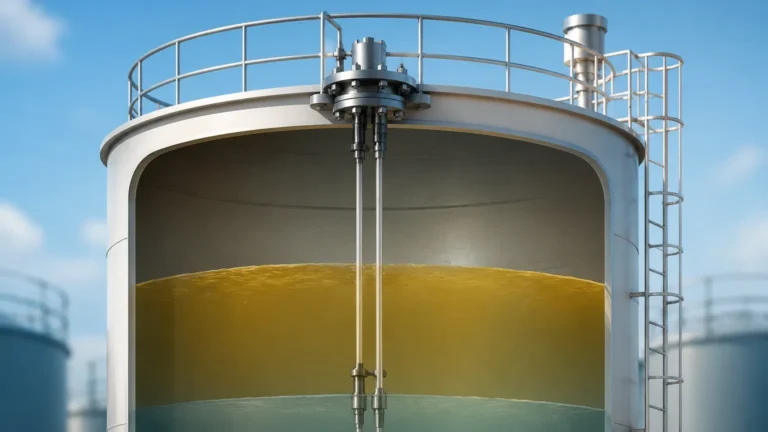
Radar level meters, particularly those operating at high frequencies like 80GHz, are often the preferred choice for GMP applications. They emit electromagnetic pulses that reflect off the surface of the medium. Because the sensor does not touch the liquid, the risk of cross-contamination is virtually eliminated. High-frequency radar allows for a narrow beam angle, which is crucial when measuring in small, agitated stainless steel vessels common in pharmaceutical suites.
2. Ultrasonic Level Sensors
Ultrasonic sensors use sound waves to determine the distance to the liquid surface. While cost-effective and non-contact, they are sensitive to changes in vapor pressure, temperature, and heavy foam. In GMP environments, they are typically relegated to water treatment or buffer tank applications where the atmosphere is stable and non-volatile.
3. Hydrostatic Level Transmitters
These sensors measure the pressure exerted by a liquid column at the bottom of a tank. To remain GMP-compliant, these transmitters must use a flush-mounted diaphragm. This design ensures there are no cavities or "dead legs" where product can accumulate and rot, supporting effective Clean-in-Place (CIP) processes.
4. Magnetic Level Gauges and Switches
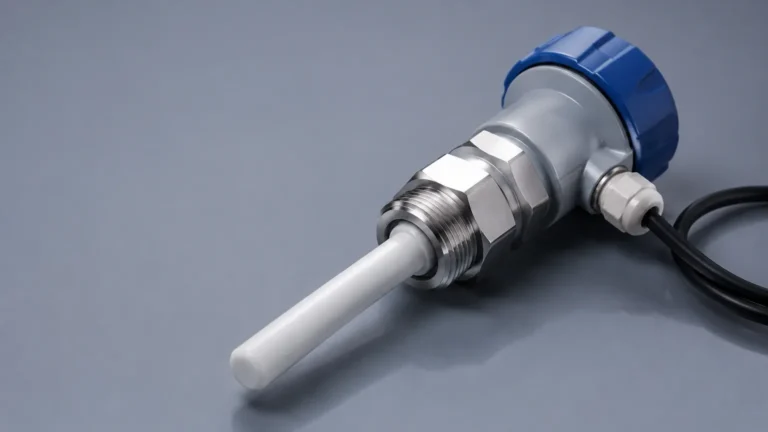
Magnetic gauges provide a visual indication and can be equipped with reed switches or transmitters for automation. In a GMP context, the internal float must be made of high-grade stainless steel or specialized fluoropolymers to ensure chemical compatibility and cleanability.
Integrating Level Sensors into GMP-compliant Automation Systems
Integration into a broader automation architecture requires more than just a 4-20mA signal. Modern systems demand digital communication protocols like HART, Profibus, or Foundation Fieldbus to facilitate remote diagnostics and calibration verification.
When connecting a sensor to a Main Page for monitoring or a central DCS (Distributed Control System), the following must be documented:
- Signal Mapping: Ensuring the digital value in the PLC accurately represents the physical level in the tank.
- Error Handling: Defining how the system reacts if a sensor fails or detects an out-of-range value.
- Calibration Logs: Maintaining a digital history of sensor performance to meet regulatory audit requirements.
Critical Selection Criteria for Sanitary Level Measurement
To ensure that instrumentation is suitable for gmp-compliant automation systems, engineers must evaluate several technical factors beyond basic accuracy.
Material Traceability
All wetted parts (parts that come into contact with the product) must have 3.1 material certificates. This proves that the stainless steel (typically 316L) or plastics (like PTFE) are of the grade specified and do not contain harmful impurities.
Surface Finish
Microscopic pits in metal can harbor bacteria. GMP standards usually require a surface roughness (Ra) of less than 0.8 µm (32 micro-inches), often achieved through electropolishing. This ensures that during a CIP cycle, the cleaning agents can effectively reach and sterilize every square millimeter of the sensor surface.
Process Connections
Standard threaded connections are generally forbidden in the core of a GMP process because the threads create areas that cannot be cleaned. Instead, hygienic connections such as Tri-Clamp, Varivent, or specialized aseptic flanges are used. These use food-grade gaskets (EPDM or Viton) that provide a flush seal.
Comparative Analysis: Technology Selection Table
| Technology | Contact Type | CIP/SIP Suitability | Primary Advantage | Limitation |
| :— | :— | :— | :— | :— |
| 80GHz Radar | Non-contact | Excellent | High precision; no contamination risk. | Higher initial capital cost. |
| Hydrostatic | Contact (Flush) | Good | Reliable for dense liquids/slurries. | Sensitive to density changes. |
| Ultrasonic | Non-contact | Moderate | Cost-effective for simple liquids. | Poor performance in steam/vacuum. |
| Capacitance | Contact | Moderate | Fast response time. | Requires frequent re-calibration if media changes. |
| Magnetic Gauge | Contact (Float) | Good | Redundant visual and electronic output. | Moving parts require maintenance. |

Installation and Validation Guidelines
Even the best sensor will fail a GMP audit if installed incorrectly. The following considerations are mandatory for maintaining system integrity:
1. Avoidance of Dead Legs: A "dead leg" is a section of piping or a nozzle that is too long for the cleaning fluid to penetrate effectively. Usually, the length-to-diameter ratio (L/D) should be less than 2:1.
2. Self-Draining Orientation: Sensors must be mounted at an angle or in a position that allows all liquid to drain away naturally after a batch is finished. Standing liquid is a primary source of bioburden.
3. Calibration in Situ: Whenever possible, sensors should be calibrated while installed to account for the specific geometry of the vessel. This is often done using a secondary reference or by weighing the vessel contents.
4. Electromagnetic Compatibility (EMC): In a complex automation environment, electrical noise from VFDs (Variable Frequency Drives) can interfere with sensor signals. Proper shielding and grounding are essential to prevent data corruption.
Common Risks and Mitigation Strategies
Implementing gmp-compliant automation systems involves navigating several technical risks:
* Sensor Drift: Over time, electronic components can shift. Mitigation: Implement a scheduled calibration program with documented NIST-traceable standards.
* Gasket Failure: High-temperature Steam-in-Place (SIP) cycles can degrade seals. Mitigation: Use USP Class VI compliant elastomers and replace them during preventative maintenance intervals.
* Data Silos: If the level sensor data is not integrated into the batch record, traceability is lost. Mitigation: Use automated data logging that timestamps every level change and alarm event.
Frequently Asked Questions (FAQ)
Q: Can I use a standard industrial radar for a GMP application?
A: Only if it meets the material and surface finish requirements. Standard industrial sensors often have threaded connections or plastic housings that do not survive SIP (Steam-in-Place) temperatures of 121°C to 134°C.
Q: What is the significance of 3-A and EHEDG certifications?
A: These are third-party certifications that verify the hygienic design of a component. 3-A is primarily used in the US, while EHEDG is the European standard. Both ensure the equipment is cleanable at a microscopic level.
Q: How does 21 CFR Part 11 apply to a level sensor?
A: The sensor itself doesn't always need to be compliant, but the system that records its data does. The automation system must ensure that the level data cannot be tampered with and that any changes to sensor settings are logged with a username and timestamp.
Q: Is hydrostatic pressure better than radar for small vessels?
A: For very small vessels (less than 500 liters), radar can sometimes struggle with internal obstructions like agitators. A flush-mounted hydrostatic sensor is often a very reliable and space-saving alternative in these scenarios.
Conclusion
Building and maintaining gmp-compliant automation systems requires a holistic approach where the choice of level measurement technology is driven by cleanability, data integrity, and process stability. By selecting instruments that adhere to hygienic design principles and integrating them into a validated control architecture, manufacturers can ensure both regulatory compliance and operational efficiency. For those seeking specific hardware configurations or technical support for regulated environments, it is advisable to Review product options and application support to find the right balance between precision and compliance.