High Temperature Sensor
High Temperature Sensor
In industrial process control, monitoring liquid or solid levels in environments exceeding 100°C (212°F) requires specialized instrumentation. A high temperature sensor designed for level measurement must not only withstand extreme thermal energy but also maintain accuracy despite thermal expansion, vapor interference, and potential electronic degradation. From molten metals and pressurized steam boilers to chemical reactors, the selection of the correct measurement principle is the primary factor in ensuring long-term reliability and safety.
Industrial level measurement at elevated temperatures typically involves isolating sensitive electronic components from the heat source or utilizing materials with high thermal stability. For engineers and plant managers, understanding how different technologies—such as radar, magnetic gauges, and hydrostatic transmitters—behave under thermal stress is essential for optimizing process efficiency.
Measurement Principles in High-Temperature Environments
Before selecting a high temperature sensor, it is critical to understand the physics of how heat affects different measurement signals. High temperatures often coincide with high pressures and the presence of heavy vapors or dust, all of which can influence signal propagation.
Radar Level Measurement (Non-Contact)
Radar level meters, particularly those operating at 26GHz or 80GHz, are frequently the preferred choice for high-temperature applications. They emit electromagnetic pulses that reflect off the surface of the medium. Because electromagnetic waves do not require a physical medium to travel, they are largely unaffected by air temperature fluctuations or vacuum conditions.
To handle extreme heat, radar sensors utilize heat sinks, cooling fins, or extension tubes. These mechanical buffers allow the antenna to be exposed to the process heat while keeping the electronic housing within its rated operating temperature (typically below 80°C / 176°F).
Magnetic Level Gauges (Contact)
Magnetic level gauges operate on the principle of buoyancy and magnetic coupling. A float containing a permanent magnet moves with the liquid level inside a bypass chamber. This magnet flips external flags or interacts with a reed-chain transmitter. Since the measurement is mechanical and magnetic, these systems can operate at temperatures exceeding 400°C (752°F), provided the materials and magnets are rated for such conditions.
Hydrostatic Pressure Measurement
Hydrostatic sensors measure the weight of the liquid column above a diaphragm. In high-temperature scenarios, the sensor often employs a diaphragm seal connected to the transmitter via a capillary tube filled with a high-temperature-stable silicone oil. This physical separation prevents the process heat from reaching the sensitive pressure transducer.
Key Evaluation Criteria for High-Temperature Level Sensors
When evaluating a high temperature sensor for industrial level monitoring, several technical parameters must be cross-referenced against the specific process requirements. A failure to account for any of these can lead to premature sensor failure or dangerous inaccuracies.
1. Maximum Operating Temperature
Sensors are typically rated for two distinct temperatures: the process temperature (at the probe or antenna) and the ambient temperature (at the electronics). For applications like bitumen storage or chemical synthesis, process temperatures may reach 250°C to 315°C (482°F to 600°F). Ensure the sensor's wetted materials, such as PTFE, PEEK, or specialized ceramics, are compatible with these limits.
2. Material Compatibility and Thermal Expansion
At high temperatures, materials expand. A sensor made of 316L stainless steel will expand at a different rate than a ceramic insulator. If the sensor design does not account for these coefficients of expansion, seals may fail, leading to leaks. Furthermore, the chemical corrosivity of many fluids increases significantly as temperature rises, necessitating the use of exotic alloys like Hastelloy or Monel.
3. Vapor and Condensation Management
High-temperature liquids often produce heavy vapors or steam. In non-contact measurements like ultrasonic or radar, these vapors can attenuate the signal or cause false reflections if condensation forms on the sensor face. High-frequency radar (80GHz) is generally better at penetrating steam, while specialized purging systems can be used to keep the sensor face clear.
Practical Selection Table for High-Temperature Applications
The following table provides a general comparison of common level measurement technologies used in high-temperature settings.
| Technology | Typical Max Process Temp | Advantages | Limitations |
| :— | :— | :— | :— |
| Radar (80GHz) | Up to 450°C (with cooling) | Highly accurate, non-contact, unaffected by vapor. | Requires line-of-sight, higher initial cost. |
| Magnetic Gauge | Up to 400°C | Visual indication, no power required for basic level. | Mechanical parts can stick, limited to liquids. |
| Hydrostatic | Up to 300°C (with seals) | Robust, easy to install on tanks. | Density dependent, capillary tubes are sensitive. |
| Guided Wave Radar | Up to 400°C | Works well in low dielectric liquids. | Contact-based, probe can be damaged by turbulence. |
| Ultrasonic | Up to 80°C – 100°C | Low cost, simple setup. | Highly sensitive to air temperature and steam. |
For a comprehensive look at available hardware and technical specifications, you can Review product options and application support to find the specific configuration for your industrial environment.
Installation Considerations and Best Practices
The longevity of a high temperature sensor is often determined by how it is installed rather than the sensor itself. Proper thermal management is the most effective way to protect your investment.
Use of Standpipes and Nozzles
In many high-temperature vessels, the sensor is mounted on a nozzle. Increasing the height of the nozzle can act as a natural chimney, allowing heat to dissipate before it reaches the electronics. However, for radar sensors, the nozzle must be designed to avoid signal interference from the nozzle walls.
Insulation and Heat Shields
While it is common to insulate tanks to conserve energy, the sensor housing should generally *not* be insulated. In fact, removing insulation around the mounting point can help the electronics stay cool. In extreme cases, a reflective heat shield can be placed between the tank and the sensor head to block radiant heat.
Orientation and Mounting
For sensors that utilize cooling fins, the orientation should allow for natural convection. Vertical mounting is usually preferred to ensure that heat rises away from the most sensitive components. If using hydrostatic transmitters with capillaries, ensure the capillaries are protected from mechanical damage and are not routed near other hot pipes.
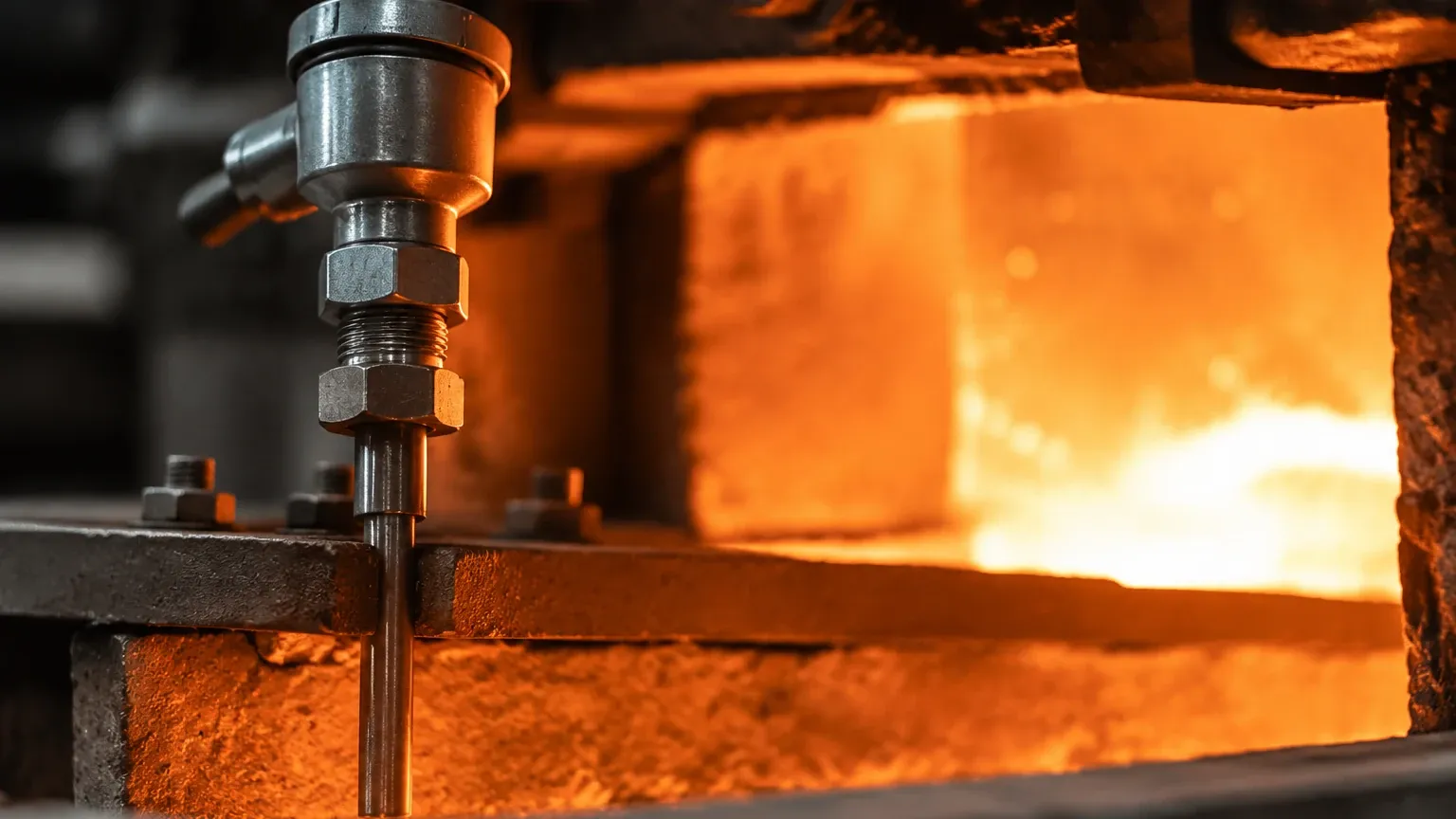
Limitations and Common Risks
Even the most advanced high temperature sensor has limitations. Understanding these risks allows for better system design and maintenance planning.
* Temperature Drift: Most electronic sensors experience a slight shift in accuracy as the temperature changes. High-quality transmitters include internal temperature compensation, but this must be calibrated for the specific range of the process.
* Signal Attenuation: In boiling liquids or high-pressure steam (such as in power plant boilers), the dielectric constant of the vapor space changes. This can slow down the speed of radar waves, leading to a "gas phase shift" error. Specialized radar algorithms are required to correct this.
* Seal Degradation: O-rings and gaskets are often the weakest link. Even if the metal body of the sensor can handle 300°C, a Viton seal might fail at 200°C. Always verify the seal material's thermal rating.
Frequently Asked Questions
Can I use an ultrasonic sensor for high-temperature steam applications?
Generally, no. Ultrasonic sensors rely on the speed of sound, which varies significantly with air temperature and gas composition. Furthermore, the transducer faces are typically made of materials that cannot withstand high heat or the corrosive nature of steam.
How do cooling fins work on a radar level meter?
Cooling fins increase the surface area of the sensor's mounting hardware. As heat conducts up from the process, the fins transfer that heat to the ambient air, creating a temperature gradient that ensures the electronics remain within their safe operating range (usually <80°C).
What is the best material for a high-temperature float?
For magnetic level gauges, titanium or high-grade stainless steel (316L) are common. The choice depends on the liquid's density and the required pressure rating. Titanium is often used for high-temperature, low-density fluids because of its high strength-to-weight ratio.
Does ambient temperature affect the high temperature sensor?
Yes. If the sensor is located outdoors in a hot climate or near other heat-generating machinery, the ambient temperature can combine with the process heat to overheat the electronics. In these cases, sunshades or active cooling (like compressed air purging) may be necessary.
Conclusion
Selecting a high temperature sensor for industrial level measurement requires a balance between material science and electronic engineering. By prioritizing technologies like high-frequency radar or robust magnetic gauges and implementing proper thermal isolation techniques, operators can achieve precise measurements even in the harshest thermal environments. For detailed engineering support and to explore a wide range of industrial level measurement solutions, visit the Main Page of Welk's technical resource center. Confirming the specific chemical properties and temperature peaks of your process before purchase is the final, most important step in ensuring a successful installation.