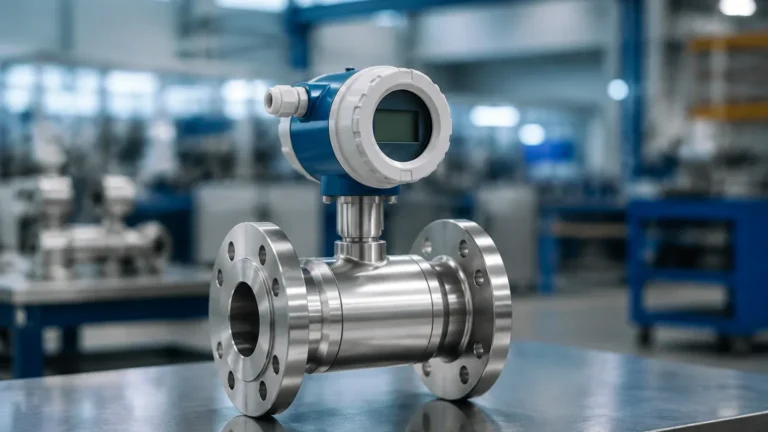
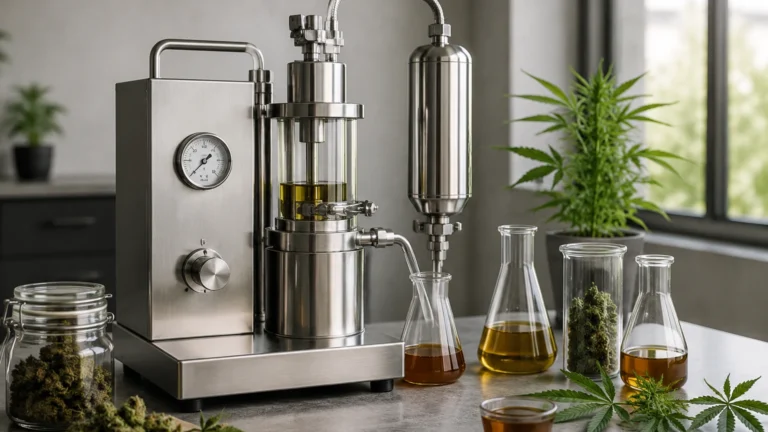
Life Sciences Tools and Services
Life Sciences Tools and Services
In the highly regulated environment of biotechnology, pharmaceuticals, and medical research, the accuracy of fluid management is a critical component of operational success. The sector of life sciences tools and services encompasses a wide range of technologies designed to support the development and production of therapeutic agents, vaccines, and diagnostic reagents. Among these tools, industrial level measurement instruments play a pivotal role in ensuring that processes remain within strict volumetric and safety parameters.
For engineers and facility managers, selecting the right instrumentation requires a deep understanding of measurement principles, material compatibility, and the specific demands of sterile environments. This guide examines the primary level measurement technologies used within life sciences applications, providing a framework for selection and installation.
Fundamental Measurement Principles
Before selecting a specific instrument, it is essential to understand the physics behind how different sensors detect fluid levels. In the life sciences sector, the most common technologies include radar, ultrasonic, hydrostatic, and magnetic measurement.
Radar Level Measurement
Radar level meters operate on the Time-of-Flight (ToF) principle. There are two primary types: non-contact (pulse or FMCW) and guided wave radar (GWR).
* Non-contact Radar: These devices emit high-frequency electromagnetic pulses (typically 26GHz or 80GHz) that reflect off the surface of the medium. The sensor calculates the distance based on the time it takes for the pulse to return. In life sciences, 80GHz radar is often preferred because its narrow beam angle avoids internal tank obstructions like agitators or spray balls.
* Guided Wave Radar (GWR): This technology utilizes a probe (waveguide) that extends into the medium. The radar pulse travels along the probe, reflects off the liquid surface, and returns. GWR is highly effective in applications with low dielectric constants or where heavy foam is present, though the contact nature of the probe requires careful cleaning protocols.
Ultrasonic Level Sensors
Ultrasonic sensors function by emitting high-frequency sound waves. These waves reflect off the liquid surface and return to the transducer. The distance is calculated using the speed of sound. Because this technology is non-contact, it is frequently used for high-purity water storage or chemical buffer tanks. However, ultrasonic waves are sensitive to air temperature, pressure fluctuations, and heavy vapor, which can alter the speed of sound and introduce measurement errors.
Hydrostatic Level Transmitters
Hydrostatic measurement is based on the principle that the pressure at the bottom of a vessel is directly proportional to the height of the liquid column above it. The formula used is $P = \rho \times g \times h$, where $P$ is pressure, $\rho$ is the density of the liquid, $g$ is gravity, and $h$ is the height. In life sciences, flush-diaphragm hydrostatic transmitters are common because they eliminate cavities where bacteria could grow, making them suitable for Clean-in-Place (CIP) processes.
Magnetic Level Gauges and Switches
Magnetic level gauges use a float containing a magnet that moves with the liquid level inside a bypass chamber. Outside the chamber, magnetic flags or a transmitter track the float's position. This provides a clear visual indication and can be paired with reed switches for high/low-level alarms. These are often used in utility applications, such as boiler feed water or large-scale waste neutralization tanks.
Selection Criteria for Life Science Environments
When evaluating life sciences tools and services for level measurement, several industry-specific factors must be prioritized to ensure both accuracy and regulatory compliance.
1. Hygienic Design and Material Compatibility
Instrumentation must withstand rigorous cleaning cycles. Surfaces in contact with the product are typically constructed from 316L stainless steel with a high degree of polishing (often measured in Ra, or roughness average). For corrosive chemicals used in buffer preparation, PTFE or PVDF coatings may be necessary. Seals and O-rings must be FDA-compliant and capable of withstanding Steam-in-Place (SIP) temperatures, which often exceed 121°C (250°F).
2. Accuracy and Repeatability
In bioreactors and chromatography skids, even a small error in level measurement can lead to significant yield loss or batch failure. Radar and hydrostatic transmitters typically offer the highest precision. Engineers should look for instruments with an accuracy of ±2mm (0.08 inches) or better for critical process vessels.
3. Media Characteristics
The dielectric constant ($ε_r$) of the fluid is a major factor for radar sensors. Water-based media have high dielectric constants and are easy to measure. However, certain oils or solvents used in pharmaceutical synthesis have low dielectric constants, which may require guided wave radar or high-sensitivity non-contact radar.
Technical Comparison Table
| Technology | Contact Type | Accuracy | Ideal Application | Limitations |
| :— | :— | :— | :— | :— |
| 80GHz Radar | Non-contact | ±1mm to ±2mm | Bioreactors, Small vessels | High cost compared to ultrasonic |
| Guided Wave Radar | Contact | ±2mm | Low dielectric fluids, Foam | Probe requires cleaning |
| Ultrasonic | Non-contact | ±0.25% of range | Water storage, Sumps | Sensitive to foam and vapor |
| Hydrostatic | Contact (Flush) | ±0.1% of span | Vented tanks, CIP systems | Requires constant density |
| Magnetic Gauge | Contact | ±5mm to ±10mm | Utility tanks, Visual monitoring | Not for high-viscosity fluids |
Installation Guidelines for Process Integrity
Proper installation is as important as technology selection. Incorrect mounting can lead to signal interference or mechanical failure.
1. Nozzle Height and Diameter: For radar and ultrasonic sensors, the nozzle should be as short as possible. If the nozzle is too long or narrow, it can cause "ringing" or false echoes. For 80GHz radar, a 50mm (2-inch) nozzle is usually sufficient.
2. Obstruction Avoidance: Sensors should be mounted away from the tank wall to avoid reflections. They must also be positioned to avoid agitator blades, heating coils, and inlet pipes. Most modern radar units allow for "false echo suppression," where the software ignores static internal structures.
3. Venting and Pressure: Hydrostatic sensors in sealed tanks require a differential pressure setup or a vented cable to compensate for changes in head pressure. Failure to account for tank pressure will result in significant level errors.
4. Mounting Orientation: Ultrasonic transducers must be mounted perfectly perpendicular to the liquid surface. Even a small tilt can cause the sound wave to bounce away from the receiver, resulting in a loss of signal.

Addressing Operational Limitations and Risks
In the context of life sciences tools and services, engineers must account for environmental variables that can disrupt measurement.
* Foam Management: Foam is a common byproduct of agitation in bioreactors. It can absorb ultrasonic waves and scatter radar signals. If heavy foam is expected, guided wave radar or hydrostatic transmitters are the most reliable options.
* Agitation and Turbulence: Rapid mixing can create a vortex or a turbulent surface. This makes non-contact measurement difficult. Using a stilling well or selecting a radar sensor with advanced signal processing algorithms can mitigate these effects.
* Condensation and Steam: During SIP cycles or high-temperature reactions, condensation can form on the sensor face. Some radar sensors feature a drip-off antenna design (typically a convex PTFE shield) that allows droplets to run off, preventing signal attenuation.
Maintenance and Calibration Protocols
To maintain the integrity of life sciences tools and services, a regular maintenance schedule is required.
* Verification vs. Calibration: Verification involves checking the instrument against a known reference point (like a sight glass or manual dip) to ensure it is functioning. Calibration involves adjusting the instrument's output to match a certified standard. For pharmaceutical applications, annual or bi-annual calibration is standard.
* CIP/SIP Inspection: After cleaning cycles, sensors should be inspected for any buildup of material or degradation of seals. Even a small amount of residue on an ultrasonic transducer can significantly degrade performance.
* Digital Diagnostics: Modern instruments, such as those provided by Welk, often include HART or Modbus communication. These protocols allow for remote diagnostics, enabling maintenance teams to monitor signal strength and electronics temperature without entering the sterile zone.
For more detailed technical specifications and to explore specific instrumentation for your facility, you can Review product options and application support on the Welk Main Page.
Frequently Asked Questions (FAQs)
Q: Can I use ultrasonic sensors in a vacuum?
No. Ultrasonic waves require a medium (air or gas) to travel. In a vacuum, there are no molecules to transmit the sound, making ultrasonic measurement impossible. Radar is the preferred choice for vacuum applications.
Q: How does liquid density affect hydrostatic level measurement?
Hydrostatic sensors measure pressure, not actual height. If the density of the liquid changes (due to temperature shifts or concentration changes), the pressure will change even if the level remains the same. If density is variable, a radar sensor is a better choice as it is independent of density.
Q: What is the "Dead Zone" in level measurement?
The dead zone (or blocking distance) is the area directly below the sensor where it cannot measure. For ultrasonic sensors, this is typically 100mm to 500mm (4 to 20 inches). For radar, the dead zone is much smaller, often less than 50mm (2 inches). This must be accounted for when determining the maximum fill height of a tank.
Q: Is 80GHz radar always better than 26GHz?
Not necessarily. While 80GHz offers a narrower beam and better resolution for small tanks, 26GHz radar can sometimes perform better in extremely dusty environments or where very heavy steam is present, as the longer wavelength is less affected by small particles.
By carefully considering these technical factors, professionals in the life sciences sector can ensure that their tools and services provide the reliability and precision required for modern process automation. For further engineering assistance and product selection, visit the Main Page to connect with technical specialists.