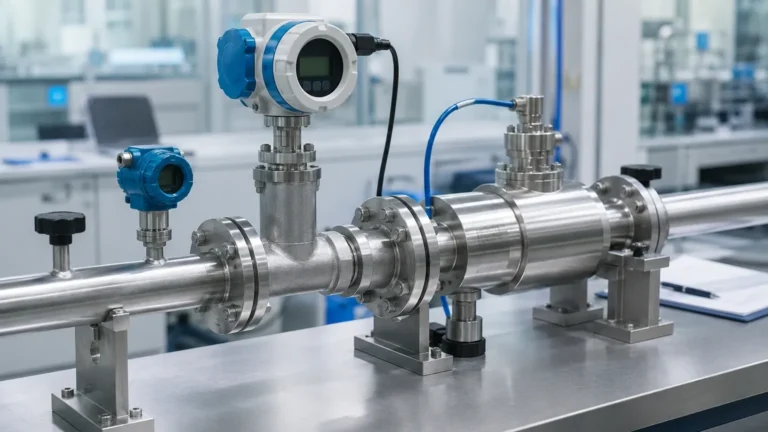
Instrumentation and Controls Training
Instrumentation and Controls Training
In the modern industrial landscape, the accuracy of process data is the foundation of operational safety, efficiency, and regulatory compliance. Instrumentation and controls training serves as the bridge between theoretical engineering and the practical realities of the plant floor. For professionals managing complex systems in water treatment, chemical processing, and oil and gas, understanding the nuances of level measurement and control loops is not merely an advantage—it is a necessity.
As industrial automation evolves, the integration of smart sensors and digital communication protocols requires a workforce that is proficient in both legacy mechanical systems and advanced electronic instrumentation. This guide explores the core principles of level measurement, the essential components of a robust training program, and the technical considerations required to maintain high-performance control systems.
Core Principles of Level Measurement Technologies
Before implementing a control strategy, engineers must understand the physics governing the sensors. Level measurement is generally categorized into point level detection (on/off) and continuous level measurement. Within these categories, several distinct physical principles are employed.
Radar Level Measurement
Radar level meters utilize electromagnetic waves to determine the distance to a product surface. There are two primary types: Pulse Radar and Frequency Modulated Continuous Wave (FMCW).
* Measurement Principle: The sensor emits a high-frequency signal (often 26 GHz or 80 GHz) that travels at the speed of light. The signal reflects off the material surface and returns to the receiver. The time elapsed—or the frequency shift in FMCW systems—is directly proportional to the distance.
* Advantages: Since electromagnetic waves do not require a medium, radar is unaffected by vacuum, high pressure, or temperature fluctuations in the vapor space.
Ultrasonic Level Sensors
Ultrasonic devices are non-contact sensors that use sound waves rather than electromagnetic energy.
* Measurement Principle: A piezoelectric crystal inside the transducer converts electrical energy into mechanical pulses. These sound waves travel to the surface and reflect back. The instrument calculates the level based on the time of flight and the speed of sound in air (approximately 343 m/s at 20°C).
* Considerations: Because sound speed varies with air density and temperature, integrated temperature compensation is critical for accuracy.
Hydrostatic Level Transmitters
Hydrostatic measurement is a contact-based method relying on the weight of the liquid column.
* Measurement Principle: The pressure at the bottom of a vessel is proportional to the height of the liquid multiplied by its specific gravity ($P = ρ × g × h$).
* Application: These are commonly used in vented tanks or deep wells (submersible versions). If the tank is pressurized, a differential pressure (DP) transmitter is required to subtract the top-side pressure from the total bottom pressure.
Magnetic Level Gauges
Magnetic gauges provide both visual indication and electronic feedback through buoyancy.
* Measurement Principle: A float containing a permanent magnet moves with the liquid level inside a bypass chamber. This magnet flips bi-color flags on an external scale and can actuate magnetic switches or a reed-chain transmitter for remote monitoring.
The Importance of Instrumentation and Controls Training
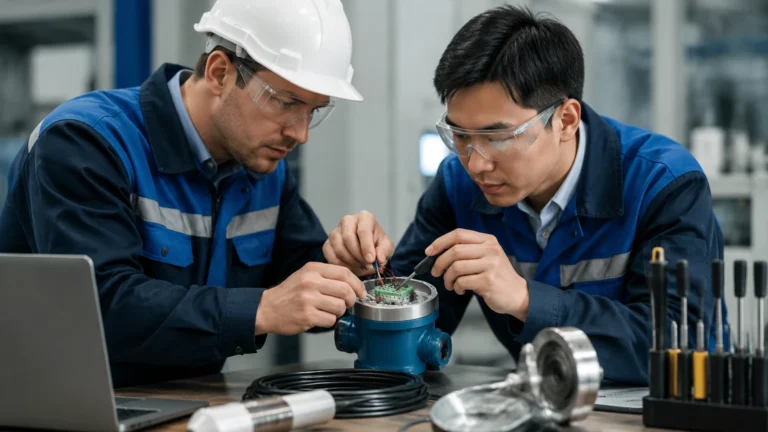
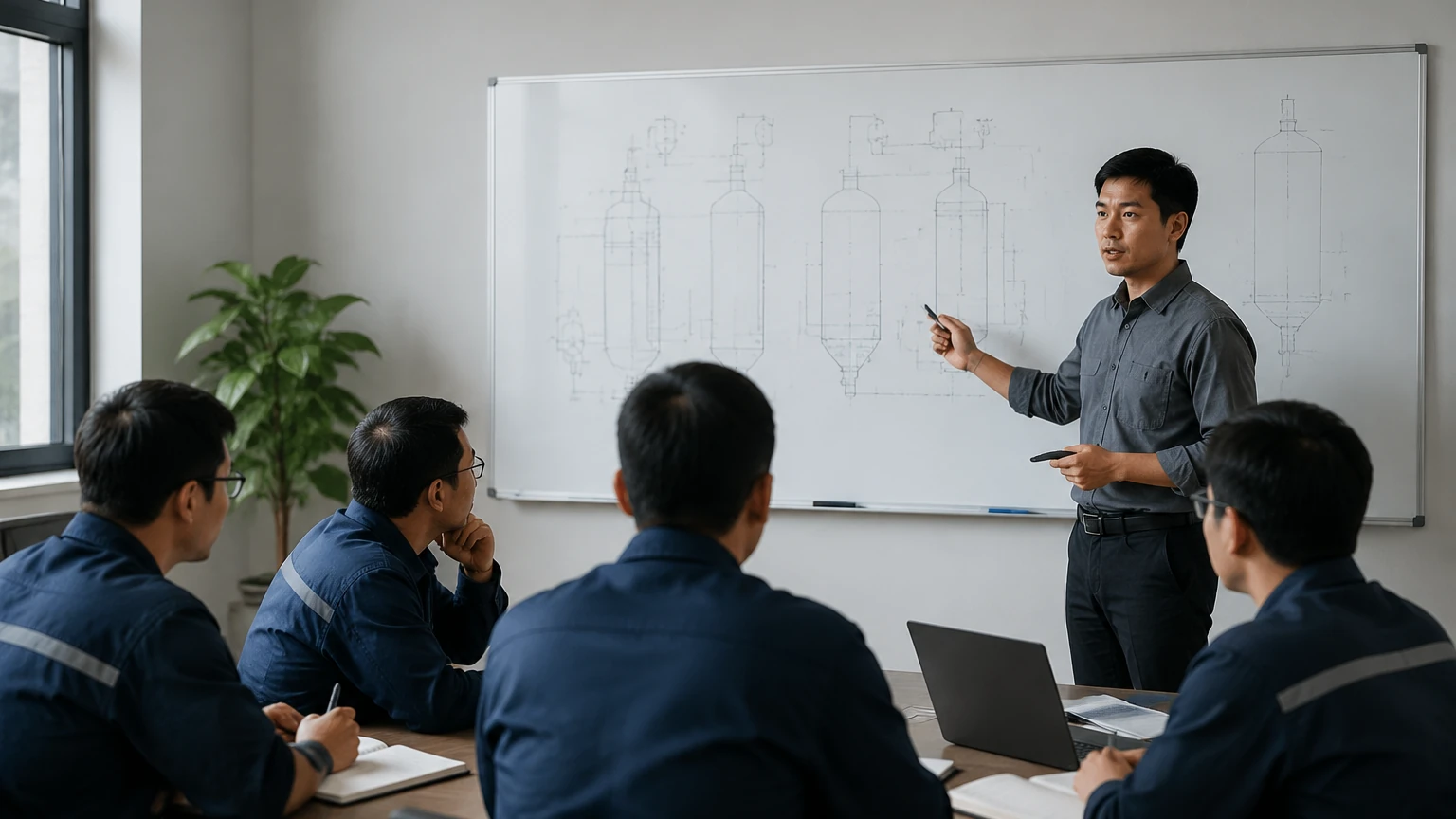
Comprehensive instrumentation and controls training is vital for reducing the "skills gap" in industrial facilities. When technicians understand the "why" behind a measurement, they can diagnose issues faster and prevent costly downtime.
Effective training programs typically cover the following domains:
1. Loop Fundamentals: Understanding the 4-20 mA current loop, which remains the industry standard. This includes calculating spans, zeroing instruments, and understanding how a PLC (Programmable Logic Controller) interprets analog signals.
2. Digital Protocols: Modern training focuses heavily on HART (Highway Addressable Remote Transducer), Modbus, and Profibus. These protocols allow for multi-variable data transmission and remote diagnostics.
3. Final Control Elements: Instrumentation is only half of the equation; the "controls" aspect involves managing valves, pumps, and motors. Training must include the calibration of valve positioners and the tuning of PID (Proportional-Integral-Derivative) loops.
4. Safety Instrumented Systems (SIS): For hazardous environments, training ensures that personnel understand SIL (Safety Integrity Level) ratings and the importance of redundancy in critical level switches.
For organizations looking to upgrade their hardware or refine their control strategies, visiting the Main Page of a dedicated manufacturer provides technical specifications that serve as excellent reference material for training modules.
Selection Criteria for Level Instrumentation
Choosing the wrong technology is a frequent cause of system failure. Instrumentation and controls training emphasizes the use of selection matrices to match sensor physics with process conditions.
| Technology | Typical Media | Max Range (Approx.) | Key Advantage | Major Limitation |
| :— | :— | :— | :— | :— |
| 80 GHz Radar | Liquids, Solids, Slurries | 120 m | High precision, small beam angle | High initial cost |
| Ultrasonic | Water, Wastewater | 15 m | Cost-effective, non-contact | Affected by foam and heavy vapor |
| Hydrostatic | Water, Fuel, Oils | 200 m (Submersible) | Simple installation, reliable | Sensitive to density changes |
| Magnetic Gauge | Chemicals, Boilers | 6 m (Modular) | No power needed for visual | Moving parts can scale or stick |
| Capacitance | Powders, Granules | 30 m | Works in high temps | Requires constant dielectric |
Practical Installation and Calibration Guidelines
Proper installation is often more important than the instrument's inherent accuracy. Training for field technicians should focus on the following physical constraints:
Avoiding Obstructions
For radar and ultrasonic sensors, the "beam angle" is a critical factor. If a sensor is mounted too close to a tank wall or near an agitator, the signal may reflect off these internal structures (false echoes). Modern instruments allow for "False Echo Suppression," where the software is taught to ignore static reflections, but proper positioning is always the preferred solution.
The "Dead Zone" or Blocking Distance
Every non-contact sensor has a minimum distance it cannot measure, known as the dead zone or blocking distance. For an ultrasonic sensor, this might be 0.25 m to 0.5 m. If the liquid level rises into this zone, the sensor will provide erratic readings or "lock" at a specific value. Training should emphasize mounting the sensor high enough to ensure the maximum liquid level never enters this zone.
Nozzle Geometry
When mounting instruments on nozzles, the nozzle diameter and height must be considered. If a nozzle is too narrow and long, it can create significant interference for radar waves. As a rule of thumb, the nozzle should be as short as possible, and the sensor antenna should ideally extend slightly below the nozzle bottom.
Calibration and Verification
Calibration involves comparing the instrument's output against a known reference. In level measurement, this often involves a "wet calibration" (filling the tank to known points) or a "dry calibration" (using a simulator or measuring the distance to the tank bottom). Technicians must be trained to document these procedures to meet ISO quality standards.
Common Risks and Limitations in Level Instrumentation
Even the most advanced instruments have failure modes. Understanding these is a core component of instrumentation and controls training.
* Dielectric Constant (εr): Radar relies on the dielectric constant of the material. Non-conductive liquids like oils have low dielectrics (εr 1.8–2.5), which reflect less energy than water (εr ≈ 80). If the dielectric is too low, the signal may pass through the liquid and reflect off the tank bottom instead.
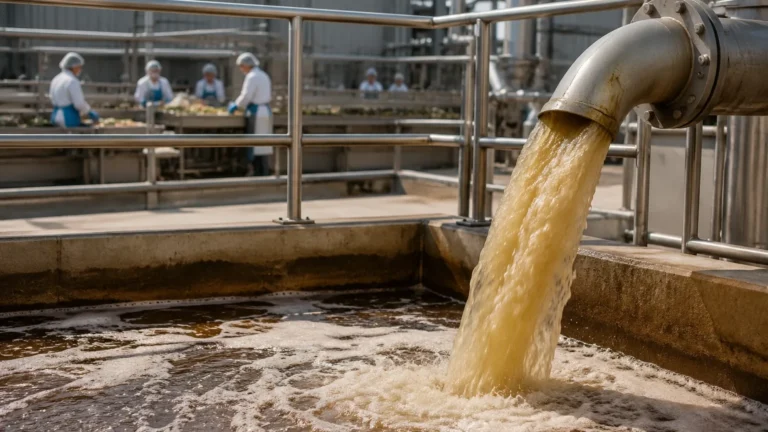
* Foam and Turbulence: Heavy foam can absorb ultrasonic and radar signals, leading to a "Loss of Echo" (LOE) error. In these cases, a stilling well (a pipe that bypasses surface turbulence) or a guided wave radar (GWR) may be necessary.
* Temperature Gradients: In large outdoor tanks, temperature layers can cause sound waves (ultrasonic) to refract, leading to significant errors. Radar is generally immune to this, making it the preferred choice for outdoor chemical storage.
* Build-up and Coating: For contact-based sensors like hydrostatic diaphragms or capacitance probes, the accumulation of sticky media can cause a permanent offset in the reading. Training should include scheduled maintenance cycles for cleaning and re-zeroing.
Instrumentation and Controls Training FAQ
Q: What is the difference between a level transmitter and a level switch?
A: A level transmitter provides a continuous signal (e.g., 4-20 mA) representing the exact level in the tank (0-100%). A level switch is a point-level device that provides a binary signal (on/off) when the liquid reaches a specific height, typically used for high-level alarms or pump control.
Q: How often should level instruments be calibrated?
A: This depends on the industry and the criticality of the measurement. In regulated industries like pharmaceuticals or food production, calibration may be required every 6 to 12 months. In general water treatment, an annual verification is often sufficient unless drift is detected.
Q: Can one instrument measure both level and interface?
A: Yes, certain technologies like Guided Wave Radar (GWR) can detect both the top level and the interface between two liquids (e.g., oil and water), provided the top liquid has a lower dielectric constant than the bottom liquid.
Q: Why is 4-20 mA used instead of 0-10 V?
A: Current loops are less susceptible to electrical noise over long distances and can detect a broken wire (if the current drops to 0 mA, the system knows there is a fault, whereas 0 V could mean either 0% level or a broken wire).
Conclusion
Investing in instrumentation and controls training ensures that the sophisticated hardware provided by manufacturers like Welk is utilized to its full potential. By mastering the principles of radar, ultrasonic, and hydrostatic measurement, and adhering to strict installation and calibration standards, industrial facilities can achieve unprecedented levels of process stability.
For engineers and procurement specialists, the selection of the right tool is the first step toward a successful control strategy. Detailed technical resources and product options can be found by reviewing the Main Page, which serves as a comprehensive reference for industrial level measurement solutions. Whether you are managing a small municipal water plant or a large-scale chemical refinery, the combination of high-quality instrumentation and a well-trained workforce is the key to operational excellence.