Free Chlorine Sensor
Free Chlorine Sensor
In industrial water treatment and process automation, the accurate measurement of disinfectants is critical for ensuring both safety and efficiency. A free chlorine sensor is a specialized analytical instrument designed to monitor the concentration of "free" chlorine—specifically hypochlorous acid (HOCl) and hypochlorite ions (OCl⁻)—in aqueous solutions. Unlike total chlorine, which includes combined forms like chloramines, free chlorine represents the most active and immediate disinfecting power available in a system.
For engineers and facility managers, selecting the correct free chlorine sensor requires a deep understanding of electrochemical principles, the influence of pH, and the specific hydraulic conditions of the application. This guide provides a technical overview of free chlorine measurement technologies, selection criteria, and installation best practices to ensure reliable process control.
Understanding Free Chlorine Measurement Principles
Free chlorine exists in water in a pH-dependent equilibrium between hypochlorous acid (HOCl) and the hypochlorite ion (OCl⁻). HOCl is significantly more effective as a disinfectant than OCl⁻. Most industrial free chlorine sensors are designed to detect HOCl specifically, as it is the primary active agent.
There are two primary methods used in modern industrial sensors: amperometric and colorimetric (DPD).
Amperometric Measurement
Amperometric sensors are the industry standard for continuous, real-time monitoring. They operate on an electrochemical principle where the reduction of chlorine at a sensing electrode generates an electrical current proportional to the concentration of the analyte. These sensors are typically categorized into two types:
1. Membrane-Covered Amperometric Sensors: These utilize a gas-permeable membrane to separate the electrodes and electrolyte from the process water. Only HOCl molecules can diffuse through the membrane, where they are reduced at the gold or platinum cathode. This design protects the electrodes from fouling and minimizes the influence of varying water conductivity.
2. Bare Electrode Amperometric Sensors: These lack a membrane and rely on the direct contact of the water with the electrodes. While they are robust, they are more susceptible to changes in water chemistry and require more frequent cleaning and calibration.
Colorimetric (DPD) Measurement
The DPD (N,N-diethyl-p-phenylenediamine) method is a laboratory-grade chemical reaction automated for field use. A reagent is added to a water sample, causing a color change proportional to the chlorine concentration. An optical sensor then measures the light absorbance. While highly accurate and less sensitive to pH fluctuations than amperometric sensors, DPD systems require a continuous supply of reagents and generate a waste stream, making them higher-maintenance for long-term industrial automation.
Key Selection Criteria for Industrial Applications
Choosing the right free chlorine sensor involves evaluating the chemical and physical environment of the process. When designing a comprehensive monitoring system, engineers often refer to the Main Page for integrated instrumentation solutions that complement analytical sensors, such as level and flow controls.
pH Stability and Compensation
The ratio of HOCl to OCl⁻ shifts dramatically as pH increases. At a pH of 5.0, nearly 100% of free chlorine exists as HOCl. At a pH of 9.0, less than 5% remains as HOCl. Because amperometric sensors primarily measure HOCl, a rise in pH without a change in actual chlorine concentration will result in a lower sensor reading.
To address this, high-end sensors include integrated pH compensation. This involves using a secondary pH probe to measure the acidity/alkalinity and applying a mathematical algorithm within the transmitter to calculate the total free chlorine concentration based on the HOCl measurement.
Flow and Pressure Requirements
Amperometric sensors are flow-dependent. They require a constant flow of water across the membrane (typically between 30 and 60 liters per hour) to maintain a steady supply of chlorine molecules for the electrochemical reaction. If the flow stops or becomes turbulent, the reading will drift or drop to zero. Pressure should also be regulated, usually kept below 1 bar (14.5 psi) for membrane-covered models to prevent mechanical damage.
Selection Table: Amperometric vs. Colorimetric
| Feature | Amperometric (Membrane) | Colorimetric (DPD) |
| :— | :— | :— |
| Measurement Speed | Continuous, real-time | Batch/Interval (e.g., every 5 mins) |
| Reagents Required | None (Electrolyte only) | Yes (Chemical reagents) |
| pH Sensitivity | High (Requires compensation) | Low |
| Maintenance Frequency | Moderate (6-12 months) | High (Monthly reagent replacement) |
| Initial Cost | Moderate | High |
| Typical Applications | Cooling towers, pools, potable water | Wastewater, complex water chemistry |
Installation Considerations and Best Practices
Proper installation is the most significant factor in the longevity and accuracy of a free chlorine sensor. Failure to follow hydraulic guidelines often leads to unstable readings.
1. Use of a Flow Cell: Most sensors must be installed in a dedicated flow cell (bypass assembly). This ensures that the sensor is always submerged, maintains a constant flow rate, and provides a stable environment away from the turbulence of the main process line.
2. Positioning Relative to Dosing: The sensor should be installed downstream of the chlorine injection point, but far enough away to allow for complete mixing. If the sensor is too close to the dosing pump, it will detect "slugs" of high-concentration chlorine, leading to erratic control loops.
3. Air Bubble Prevention: Air bubbles trapped against the sensor membrane will block the diffusion of chlorine, causing false low readings. Flow cells should be designed to vent air naturally, and the sensor should be mounted at an angle (typically 45 to 90 degrees) if recommended by the manufacturer.
4. Electrical Grounding: Amperometric sensors generate very small currents (nanoamperes). Ensure the system is properly grounded to prevent electrical noise from variable frequency drives (VFDs) or pumps from interfering with the signal.
Maintenance and Calibration Protocols
Unlike physical measurement tools like radar level meters, analytical sensors like the free chlorine sensor require periodic chemical validation.
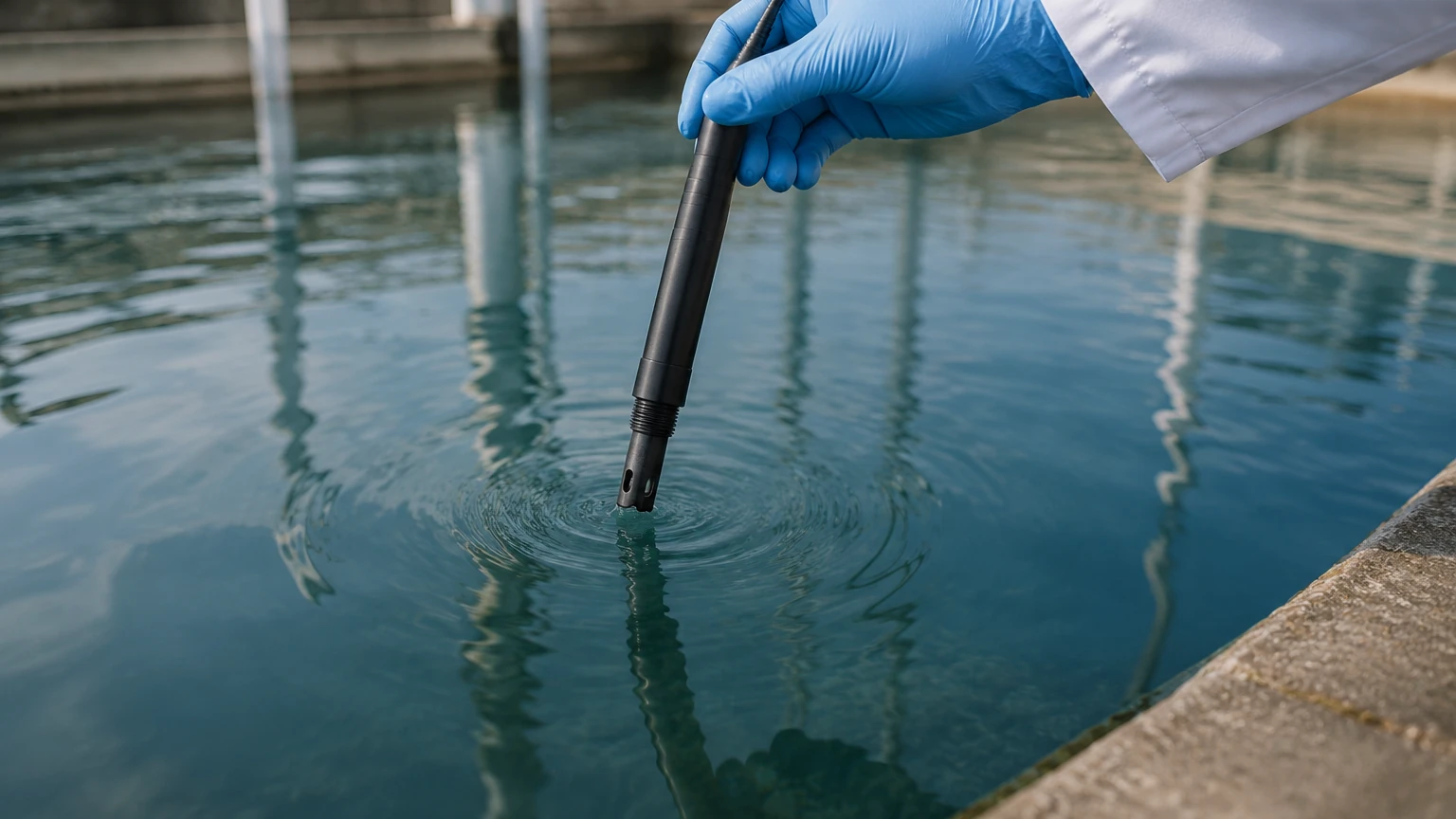
* Zero-Point Calibration: This is performed in chlorine-free water (e.g., distilled water or water filtered through activated carbon) to ensure the sensor does not report a background current.
* Slope Calibration: This is the most common maintenance task. A sample of the process water is taken near the sensor and measured using a portable DPD photometer. The sensor's output is then adjusted to match the photometer's reading. This should be done weekly or bi-weekly depending on the stability of the water chemistry.
* Membrane and Electrolyte Service: For membrane-covered sensors, the electrolyte solution usually needs replenishment every 3 to 6 months. The membrane cap itself should be replaced annually or if it becomes fouled with oils, biofilms, or scale.
Limitations and Operational Risks
While highly effective, free chlorine sensors have specific limitations that must be managed:
* Interfering Substances: Strong oxidants such as ozone, chlorine dioxide, or bromine will be detected by the sensor and reported as chlorine, leading to false high readings. Conversely, high concentrations of surfactants can coat the membrane and prevent measurement.
* Temperature Fluctuations: Electrochemical reaction rates are temperature-dependent. Most modern sensors include an internal NTC or PT1000 thermistor to automatically compensate for temperature changes, but extreme shifts (e.g., >10°C per hour) can still cause temporary instability.
* Biofouling: In applications like cooling water or wastewater effluent, biological growth can accumulate on the sensor membrane. This consumes the chlorine before it reaches the electrode, resulting in a "local" low reading that does not reflect the actual tank concentration.
Frequently Asked Questions
Q: Can a free chlorine sensor measure chlorine in saltwater?
A: Standard free chlorine sensors are often calibrated for fresh water. In saltwater, the sensor will actually measure "free bromine," as chlorine reacts with bromide ions in the water to release bromine. Specialized sensors or specific calibration factors are required for marine applications.
Q: Why does my sensor reading drop when the pH goes up?
A: This is due to the dissociation of hypochlorous acid. As pH rises, HOCl converts into OCl⁻. Since most amperometric sensors are only sensitive to HOCl, they perceive a drop in concentration even if the total amount of free chlorine remains the same. Integrated pH compensation is necessary to correct this.
Q: How long does a free chlorine sensor last?
A: With proper maintenance, the electrode body can last 5 to 10 years. The consumable parts—the membrane cap and electrolyte—typically last 1 to 2 years and 3 to 6 months, respectively.
Q: Is a free chlorine sensor the same as an ORP sensor?
A: No. An ORP (Oxidation-Reduction Potential) sensor measures the total oxidative capacity of the water but cannot distinguish between different chemicals. A free chlorine sensor provides a specific concentration in mg/L or ppm, which is required for regulatory compliance and precise dosing control.
For engineers seeking to integrate these analytical tools into a broader industrial automation framework, including liquid level and pressure monitoring, visiting the Main Page provides access to a wide range of instrumentation designed for harsh process environments.