Digital Ph Probe
Digital Ph Probe
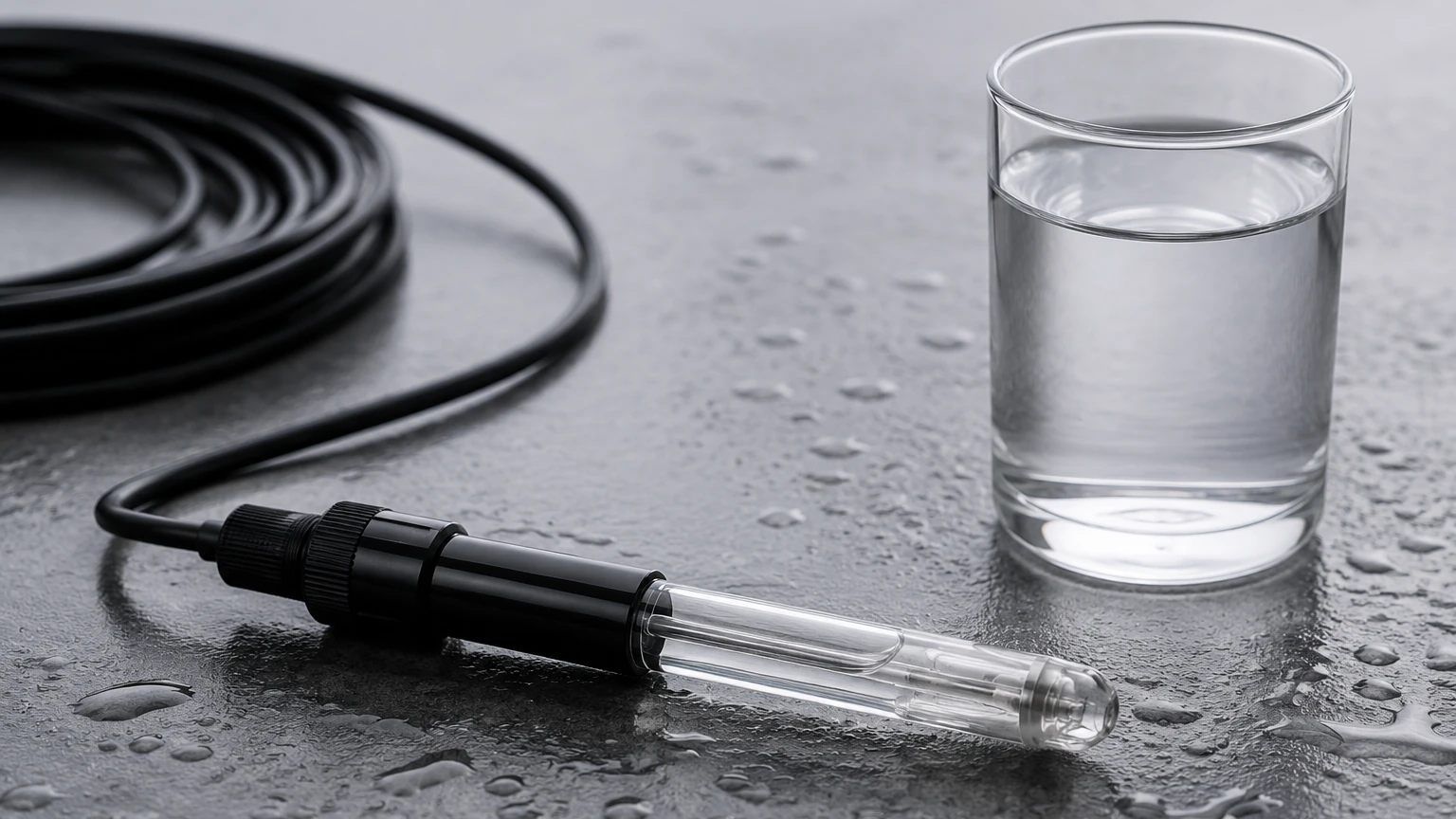
In the landscape of industrial process control, the transition from analog to digital sensing technology has significantly altered how engineers monitor liquid chemistry. A digital pH probe represents the modern evolution of the traditional potentiometric sensor, integrating signal processing and data communication directly into the sensor head. This advancement addresses many of the historical challenges associated with pH measurement, such as signal noise, cable length limitations, and calibration complexities. In industrial environments where water treatment, chemical processing, and automation are paramount, understanding the technical nuances of these probes is essential for maintaining process integrity.
Measurement Principles of pH Sensing
To understand the value of a digital pH probe, one must first understand the underlying electrochemical principles. The measurement of pH is based on the potential difference between a sensing electrode and a reference electrode.
The Potentiometric Method
Most industrial pH probes utilize a glass membrane electrode. When the probe is immersed in a liquid, an ion exchange occurs on the hydrated outer layer of the glass bulb. This creates a voltage (potential) that is proportional to the hydrogen ion activity in the solution. This relationship is defined by the Nernst Equation:
\[ E = E_0 + \frac{2.303 RT}{nF} \log(a_{H+}) \]
Where:
* E is the measured potential.
* E0 is the standard electrode potential.
* R is the gas constant.
* T is the absolute temperature in Kelvin.
* F is the Faraday constant.
* aH+ is the activity of hydrogen ions.
The Reference System
For the sensing electrode to provide a meaningful voltage, it must be compared against a stable reference. Most digital pH probes use a silver/silver chloride (Ag/AgCl) reference system housed in an electrolyte-filled chamber (usually Potassium Chloride, KCl). The reference electrode maintains a constant potential, allowing the transmitter to calculate the pH based on the difference between the two electrodes.
The Digital Transition
In a traditional analog setup, the high-impedance mV signal is sent directly over a cable to a transmitter. This signal is incredibly weak and susceptible to electromagnetic interference (EMI) and moisture. A digital pH probe solves this by converting the analog mV signal into a digital signal (typically RS-485 Modbus RTU or a proprietary protocol) within the sensor body itself. This ensures that the data transmitted to the PLC or controller is immune to environmental noise and can be sent over much longer distances.
The Role of Digital pH Probes in Industrial Automation
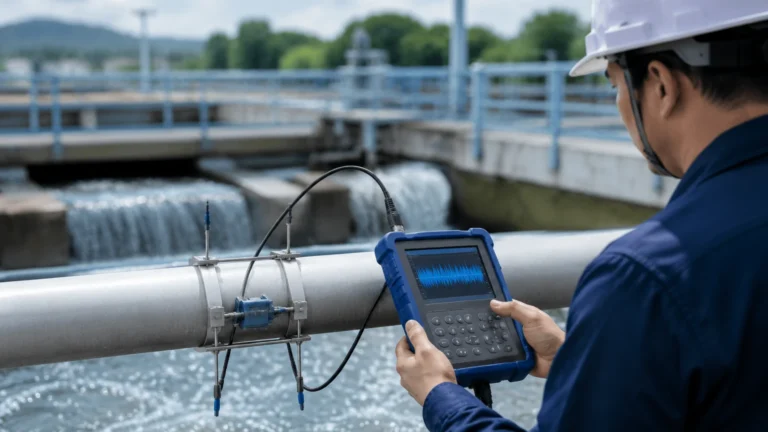
In heavy industries, liquid analysis rarely exists in isolation. It is typically part of a broader control loop that includes flow measurement and level sensing. For instance, in a wastewater neutralization tank, a digital pH probe monitors acidity while level measurement instruments—such as radar or ultrasonic sensors from manufacturers like Welk—ensure the tank does not overflow and that the volume is sufficient for chemical dosing.
Engineers looking to integrate these technologies into a unified automation architecture often review comprehensive instrumentation catalogs. For those seeking reliable level measurement solutions that complement analytical sensing, the Main Page of industrial equipment providers offers a starting point for selecting compatible hardware.
Key Evaluation Criteria for Selection
Selecting the right digital pH probe requires more than just checking the pH range. Industrial applications demand durability and specificity in sensor design.
1. Junction Type: The junction is the point where the internal reference electrolyte meets the process liquid.
* Porous Ceramic: Standard for clean water applications.
* Teflon (PTFE): Resistant to fouling and chemical attack; ideal for wastewater.
* Open Junction: Used for high-viscosity liquids or samples with high solids content to prevent clogging.
2. Glass Membrane Geometry:
* Spherical: High sensitivity, best for general use.
* Flat Surface: Self-cleaning in high-flow environments; resistant to abrasion.
* Hemispherical: Durable for high-pressure applications.
3. Body Material: Common materials include Ryton (PPS), PVDF, or glass. For industrial B2B applications, Ryton is often preferred for its chemical resistance and mechanical strength at temperatures up to 110°C.
4. Integrated Temperature Compensation: Since pH is temperature-dependent, a high-quality digital pH probe must include an integrated temperature sensor (like a Pt100 or Pt1000) to provide Automatic Temperature Compensation (ATC).
Practical Selection Table
| Application Type | Recommended Junction | Body Material | Sensor Type |
| :— | :— | :— | :— |
| Municipal Wastewater | PTFE (Teflon) | Ryton (PPS) | Digital Modbus |
| Pure Water / RO | Ceramic | Glass / Stainless | Digital Low-Impedance |
| Chemical Processing | Open Junction | PVDF | Digital High-Temp |
| Cooling Towers | Porous | Ryton | Digital with Integrated ATC |
Installation Considerations
Proper installation is critical to the longevity and accuracy of a digital pH probe. Unlike level sensors, which are often non-contact (like radar), pH probes must be in direct contact with the process media, making them vulnerable to physical and chemical stress.
* Orientation: Probes should never be installed horizontally or upside down. An angle of at least 15° from the horizontal is required to ensure that the internal electrolyte stays in contact with the pH bulb and that air bubbles do not gather at the sensing tip.
* Flow Velocity: In pipe installations, the flow should be directed toward the sensing face. However, excessive velocity (above 2-3 m/s) can cause "streaming potential" errors and accelerate electrode wear.
* Submersion Depth: Ensure the probe is deep enough to be fully immersed during all process phases, but avoid placing it in "dead zones" where the liquid is stagnant and not representative of the bulk process.
* Cable Routing: While digital signals are robust, it is still best practice to route digital pH probe cables away from high-voltage power lines to prevent any potential induction issues over extremely long runs (e.g., over 500 meters).
Integration with Level Measurement Systems
In many B2B industrial scenarios, the digital pH probe is one half of a critical safety and efficiency pair. In chemical storage and dosing, for example, a Welk ultrasonic level sensor provides continuous feedback on the remaining volume of a neutralizing agent (like caustic soda). Simultaneously, the pH probe monitors the effluent. If the pH deviates from the setpoint, the PLC increases the dosing pump speed, while the level sensor ensures the dosing tank has enough inventory to complete the cycle.
This synergy highlights the importance of choosing sensors that support standard industrial protocols. Digital probes that output Modbus RTU can often reside on the same RS-485 bus as digital level transmitters, simplifying the wiring architecture of the entire plant.
Limitations and Maintenance
Despite their advanced electronics, digital pH probes are still electrochemical devices with a finite lifespan. They are "consumables" in the industrial world.
* Fouling: Oils, fats, and scale can coat the glass bulb, slowing response times. Regular cleaning with appropriate agents (dilute HCl for scale, or detergents for oils) is necessary.
* Dehydration: If a pH probe dries out, the hydrated gel layer on the glass bulb collapses. Probes must be kept wet at all times, usually in a storage solution of 3M KCl.
* Chemical Attack: Strong hydrofluoric acid (HF) will dissolve the glass membrane of a standard pH probe. In such cases, specialized antimony or ISFET (Ion-Sensitive Field-Effect Transistor) sensors must be used.
* Calibration Drift: Even digital probes require periodic calibration. However, digital technology allows for "Lab-to-Process" calibration. You can calibrate the probe in a controlled laboratory environment, and because the calibration data is stored on the sensor's internal chip, it can be moved to the process site without needing recalibration at the transmitter.
Frequently Asked Questions (FAQs)
Q: How long does a digital pH probe typically last?
In standard water treatment applications, a lifespan of 12 to 24 months is common. In harsh chemical environments or high temperatures (above 80°C), this may be reduced to 3 to 6 months.
Q: Can I use a digital pH probe with my existing analog transmitter?
Generally, no. Digital probes require a compatible digital controller or a direct connection to a PLC/SCADA system that supports the probe's communication protocol (e.g., Modbus).
Q: What is the maximum distance for a digital pH probe cable?
Using RS-485 communication, distances of up to 1,000 meters (approx. 3,280 feet) are possible without signal degradation, which is a massive improvement over the 15-20 meter limit of analog probes.
Q: Does a digital pH probe require special storage?
Yes, the sensing tip must remain submerged in a storage solution (usually 3M or 4M KCl). Never store a pH probe in deionized or distilled water, as this will leach ions from the reference electrolyte and the glass membrane.
Conclusion
The adoption of the digital pH probe has brought a new level of reliability to industrial liquid analysis. By moving the signal conversion to the point of measurement, these sensors eliminate the most common failure points of traditional pH systems. When integrated effectively with other process instruments—such as the level measurement technologies found on the Main Page of industrial specialists—digital pH sensors enable precise, automated control of complex chemical environments. For engineers and plant managers, the investment in digital sensing translates directly into reduced maintenance costs, simplified calibration, and higher process uptime.