Thermesthesiometer
Thermesthesiometer
In industrial environments where high-temperature processes are standard, ensuring personnel safety is a critical engineering requirement. While process control instruments, such as those found on the Main Page of level measurement specialists, focus on the internal state of a vessel, the external surfaces of these vessels and their mounted hardware present a different set of challenges. A thermesthesiometer is a specialized instrument designed to bridge the gap between raw surface temperature data and the actual risk of thermal injury to human skin.
Understanding the distinction between a surface's temperature and its "touch temperature" is vital for safety compliance. This article provides a technical overview of the thermesthesiometer, its underlying measurement principles, and its application in industrial safety assessments.
Measurement Principles of the Thermesthesiometer
A thermesthesiometer does not simply measure the temperature of a surface; it simulates the thermal response of human skin when it comes into contact with a hot object. This is a critical distinction because different materials at the same temperature will cause burns at different rates depending on their thermal properties.
Thermal Effusivity and Heat Transfer
The core principle behind a thermesthesiometer is thermal effusivity (also known as thermal inertia). Thermal effusivity ($b$) is defined by the formula:
$$b = \sqrt{k \cdot \rho \cdot c}$$
Where:
- $k$ is thermal conductivity (W/m·K)
- $\rho$ is density (kg/m³)
- $c$ is specific heat capacity (J/kg·K)
When a finger (or a probe simulating one) touches a hot surface, the temperature at the point of contact—the "interface temperature"—depends on the effusivity of both the skin and the material. Metals have high effusivity and transfer heat rapidly, whereas plastics or wood have low effusivity and transfer heat slowly. Consequently, a metal surface at 60°C (140°F) may cause an immediate burn, while a wooden surface at the same temperature might be safe to touch for several seconds.
Simulation of Human Skin
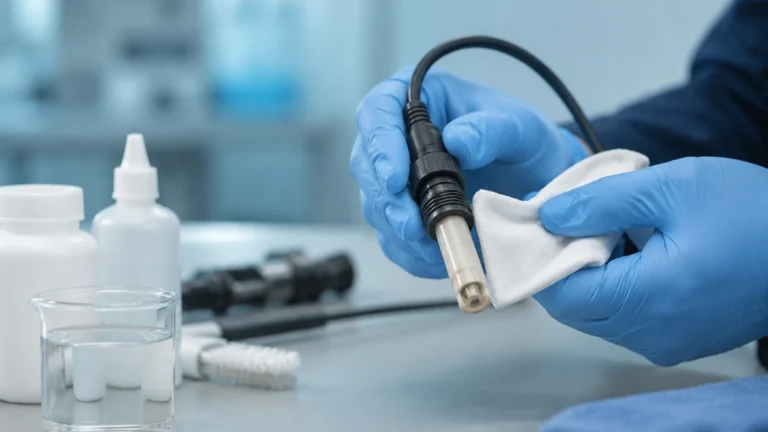
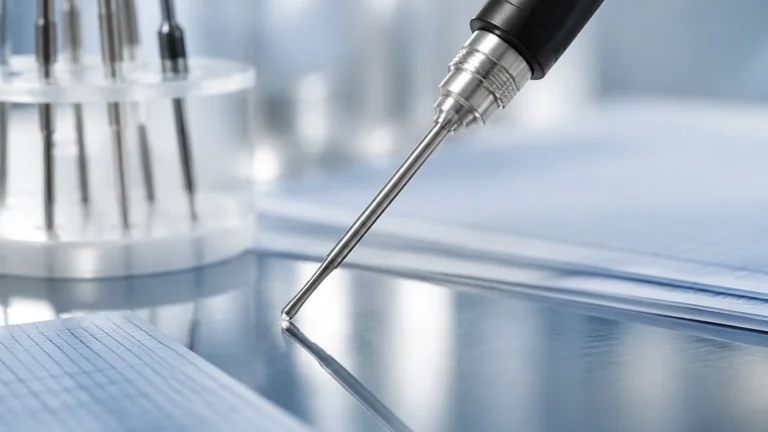
A thermesthesiometer probe is engineered with a specific thermal mass and conductivity that mimics the outer layers of human skin (the epidermis and dermis). The device typically consists of a temperature-controlled heating element that maintains the probe at a standard skin temperature (usually around 33°C to 35°C) and a highly sensitive thermocouple at the contact interface. Upon contact with a test surface, the instrument measures the temperature rise at the interface over a specific duration, usually between 0.5 and 10 seconds.
The Role of ISO 13732-1 in Industrial Safety
The use of a thermesthesiometer is often dictated by international safety standards, most notably ISO 13732-1: "Ergonomics of the thermal environment — Methods for the assessment of human responses to contact with surfaces — Part 1: Hot surfaces."
This standard provides "burn threshold" data for various materials. It defines the maximum temperature a surface can reach before it poses a risk of a skin burn for specific contact periods. Because it is often impractical to know the exact material properties of every painted or coated industrial component, the thermesthesiometer provides a direct, empirical measurement of the contact temperature, which can then be compared against the ISO thresholds.
Applications in Industrial Level Measurement
In the context of industrial automation and level measurement, thermesthesiometry is used to validate the safety of accessible components. Level measurement instruments, such as radar level meters or hydrostatic transmitters, are frequently mounted on tanks containing molten materials, steam, or heated chemicals.
High-Temperature Vessel Monitoring
When a level sensor is installed on a vessel operating at 150°C (302°F), the mounting flange and the sensor housing itself may reach temperatures that exceed safety limits. Safety engineers use thermesthesiometers to:
1. Evaluate Insulation Effectiveness: Determine if the lagging or insulation around a level sensor port is sufficient to protect operators.
2. Assess Housing Safety: Check if the cooling fins or thermal spacers on a high-temperature radar level meter are performing as intended.
3. Validate Safety Labels: Confirm whether a "Caution: Hot Surface" sign is required under local occupational health and safety (OHS) regulations.
For those selecting instrumentation for these demanding environments, reviewing the technical specifications for high-temperature rated sensors on the Main Page is a necessary first step in integrated system design.
Selection Criteria for Thermesthesiometers
When choosing a thermesthesiometer for industrial safety audits, several technical factors must be considered to ensure the data is valid for compliance reporting.
Probe Configuration and Material
The probe must accurately represent the thermal properties of human skin as defined in standards like ASTM C1055 or ISO 13732. Most professional units use a silicone-based or composite tip with a calibrated internal heater.
Measurement Range and Accuracy
| Feature | Requirement | Reason |
| :— | :— | :— |
| Temperature Range | 0°C to 250°C | Covers most industrial touch-hazard surfaces. |
| Interface Accuracy | ± 0.5°C | Precision is required for legal safety compliance. |
| Contact Time | 0.5 to 10 seconds | Matches the standard human reaction time to heat. |
| Data Logging | Required | For audit trails and safety certification reports. |
Pressure Sensitivity
The temperature at the interface can vary based on how hard the probe is pressed against the surface. High-end thermesthesiometers include a pressure sensor to ensure that the measurement is taken at a standardized force (usually around 4 to 5 Newtons), mimicking a firm touch.
Installation and Measurement Considerations
Using a thermesthesiometer requires more than just touching a surface. To obtain repeatable and factual data, the following procedures should be followed:
1. Surface Preparation: The surface should be clean and free of loose scale or debris, which can act as an unintended insulator, skewing the results toward a lower (safer) temperature.
2. Environmental Equilibrium: Measurements should be taken when the process equipment (e.g., a chemical reactor or a water treatment tank) is at its maximum operating temperature to capture the worst-case safety scenario.
3. Probe Calibration: The internal heater of the thermesthesiometer must be allowed to stabilize at the simulated skin temperature before contact is made. This usually takes several minutes after the device is powered on.
4. Angle of Contact: The probe must be held perpendicular to the surface to ensure the entire contact area of the simulated "finger" is engaged with the heat source.

Limitations and Technical Constraints
While the thermesthesiometer is the most accurate tool for assessing burn risks, it has specific limitations that engineers must account for:
* Curved Surfaces: Measuring small-diameter pipes or rounded sensor housings can be difficult. Special adapters or smaller probe tips may be required to maintain the necessary contact area.
* Transient States: The instrument is designed for steady-state surface temperatures. If a surface is rapidly heating or cooling, the thermesthesiometer may provide inconsistent readings.
* Surface Texture: Extremely rough or corrugated surfaces may result in lower contact temperatures due to air gaps between the probe and the material. In these cases, the measurement is considered conservative (i.e., it may under-represent the risk if a person were to grip the surface tightly).
Comparison: Thermesthesiometer vs. Infrared Thermometry
It is a common mistake to use an infrared (IR) thermometer or a standard thermocouple to determine touch safety. The following table highlights why a thermesthesiometer is the preferred tool for B2B safety applications.
| Feature | IR Thermometer | Surface Thermocouple | Thermesthesiometer |
| :— | :— | :— | :— |
| Measured Value | Radiant Temperature | Surface Temperature | Contact (Skin) Temperature |
| Material Awareness | No (requires emissivity) | No | Yes (via thermal effusivity) |
| Safety Compliance | Indirect/Estimative | Indirect/Estimative | Direct (ISO 13732-1) |
| Primary Use | Process Monitoring | Equipment Diagnostics | Personnel Safety Audits |
Frequently Asked Questions (FAQ)
Why can't I just use a standard surface probe?
A standard surface probe measures the temperature of the object itself. It does not account for how quickly that heat will transfer to human tissue. A thermesthesiometer accounts for the "heat sink" effect of the human body, providing a more accurate assessment of whether a burn will actually occur.
At what temperature does a surface become dangerous?
According to ISO 13732-1, for a contact period of 1 second, the burn threshold for uncoated metal is approximately 65°C, while for plastics, it may be as high as 85°C to 90°C. The thermesthesiometer identifies these thresholds empirically.
How often should the probe be calibrated?
In industrial safety environments, annual calibration is recommended. The internal thermocouple and the heating element's ability to maintain the 33°C baseline are critical for accurate data.
Is the thermesthesiometer used for cold surfaces?
Yes. While most commonly used for hot surfaces, the same principles of thermal effusivity apply to cold-contact injuries (frostnip or frostbite). The instrument can be used to assess the safety of cryogenic level measurement installations or refrigerated storage vessels.
Conclusion
The thermesthesiometer is an essential tool for safety engineers working alongside industrial process instrumentation. By simulating the human physiological response to heat, it provides a factual basis for safety decisions that simple temperature measurement cannot offer. When designing or maintaining systems involving level measurement in high-heat applications, integrating thermesthesiometric audits ensures that the facility remains compliant with international safety standards. For further information on selecting level measurement hardware that meets both process and safety requirements, professionals should consult the technical resources available on the Main Page.