High Precision Thermometer
High Precision Thermometer
In the landscape of industrial automation and process control, the accuracy of thermal data is often the deciding factor between operational efficiency and costly downtime. A high precision thermometer is not merely a tool for measuring heat; it is a critical instrument used to ensure the integrity of chemical reactions, the safety of volatile storage, and the precision of volume-to-mass conversions in level measurement. For engineers and procurement specialists, understanding the underlying technology and selection criteria for these instruments is essential for maintaining rigorous industrial standards.
Industrial level measurement often relies on temperature data to compensate for physical changes in the media. For instance, in hydrostatic level sensing, the density of a liquid changes with its temperature. Without a high precision thermometer to provide real-time data for compensation, the calculated level could deviate significantly from the actual value. This article explores the principles, applications, and selection parameters for high-accuracy temperature sensing in B2B environments.
Measurement Principles of High-Precision Sensing
High-precision temperature measurement in industrial settings typically relies on three primary technologies: Resistance Temperature Detectors (RTDs), high-grade thermocouples, and thermistors. Each operates on distinct physical principles that dictate their accuracy, range, and stability.
Resistance Temperature Detectors (RTDs)
RTDs are the industry standard for high precision. They operate on the principle that the electrical resistance of a metal (usually platinum) increases predictably as temperature rises. The Pt100 sensor, which has a resistance of 100 ohms at 0°C, is the most common variant. For applications requiring extreme accuracy, Pt1000 sensors or "fractional DIN" RTDs (such as 1/3 DIN or 1/10 DIN) are employed. These sensors follow the Callendar-Van Dusen equation to provide a highly linear and stable output over a wide range, typically from -200°C to +850°C.
Thermocouples
While generally known for their wide temperature range and durability, specific "Special Limits of Error" (SLE) grade thermocouples can achieve high precision. They operate via the Seebeck effect, where a voltage is generated at the junction of two dissimilar metals. While they are less stable than RTDs over long periods, they are indispensable for high-temperature applications exceeding 1000°C, where RTDs would fail.
Thermistors
Thermistors are ceramic-based semiconductors that exhibit a very high change in resistance for a small change in temperature. While they offer exceptional sensitivity and precision within a narrow range (typically -50°C to 150°C), their non-linear output and susceptibility to drift at high temperatures limit their use to specific controlled environments, such as laboratory monitoring or specialized HVAC applications.
The Relationship Between Temperature and Level Measurement
In the context of industrial instrumentation provided by manufacturers like Welk, temperature measurement is rarely an isolated requirement. It is a fundamental component of accurate level measurement systems.
1. Hydrostatic Pressure: Hydrostatic level transmitters measure the pressure exerted by a liquid column. Since pressure is a function of density ($P = \rho gh$), and density ($\rho$) varies with temperature, a high precision thermometer is required to provide the correction factor. Even a 5°C shift in a large oil storage tank can lead to a level error of several centimeters if not compensated.
2. Radar and Ultrasonic Signal Velocity: In non-contact level measurement, such as radar or ultrasonic sensors, the speed of the signal can be influenced by the composition and temperature of the vapor space. While radar is less affected by temperature than ultrasonic waves, high-precision thermal monitoring of the tank atmosphere ensures the highest possible measurement reliability in pressurized or high-temperature vessels.
3. Magnetic Level Gauges: For high-pressure boilers or chemical reactors, magnetic level gauges often incorporate temperature sensors to monitor the thermal expansion of the float and the liquid, ensuring that the visual and transmitted level data remain synchronized.
For a comprehensive look at how these technologies integrate into broader process control systems, you may review product options and application support on our Main Page.
Key Evaluation Criteria for Industrial Selection
When selecting a high precision thermometer for B2B applications, engineers must look beyond the basic temperature range. The following criteria define the performance of a professional-grade instrument:
Accuracy Classes and Standards
Most industrial RTDs are classified according to IEC 60751. Understanding these classes is vital for procurement:
* Class B: ±(0.30 + 0.005 |t|) °C
* Class A: ±(0.15 + 0.002 |t|) °C
* Class AA (1/3 DIN): ±(0.10 + 0.0017 |t|) °C
* 1/10 DIN: This provides the highest precision, often used as a secondary standard for calibrating other field instruments.
Wiring Configurations
For high precision, the wiring method is as important as the sensor itself.
* 2-Wire: Not recommended for precision as lead wire resistance adds directly to the sensor measurement.
* 3-Wire: The standard for most industrial applications, providing compensation for lead wire resistance assuming all wires have the same resistance.
* 4-Wire: The gold standard for high precision. It completely eliminates the effect of lead wire resistance, making it essential for high-accuracy RTD measurements where the sensor is located far from the transmitter.
Stability and Drift
High precision is only useful if it is maintained over time. Industrial-grade sensors should specify long-term stability, typically expressed as a drift of less than 0.05°C per year. This reduces the frequency of required re-calibrations and ensures consistent process data.
Practical Selection Table for Temperature Sensors
| Feature | RTD (Pt100 Class AA) | Thermocouple (Type K SLE) | Thermistor (Precision) | Digital IC Sensor |
| :— | :— | :— | :— | :— |
| Typical Accuracy | ±0.1°C at 0°C | ±1.1°C or 0.4% | ±0.05°C to ±0.1°C | ±0.5°C |
| Temperature Range | -200 to 600°C | -200 to 1260°C | -50 to 150°C | -40 to 125°C |
| Long-term Stability | Excellent | Fair | Poor at high temps | Good |
| Linearity | High | Low | Very Low | High |
| Response Time | Moderate | Fast | Fast | Slow |
| Best Application | Process Control | High Temp Furnaces | Medical/Lab | Electronics Cooling |
Installation Considerations for Maximum Accuracy
Even the most advanced high precision thermometer will yield inaccurate data if installed incorrectly. The following engineering practices are mandatory for high-accuracy installations:
Immersion Depth
To prevent "stem conduction"—where heat travels along the sensor probe and affects the reading—the sensor must be immersed to a sufficient depth. A general rule of thumb is an immersion depth equal to at least 10 times the diameter of the protection tube or thermowell. In flowing pipes, the sensor should ideally reach the center of the pipe.
Thermowell Selection
In high-pressure or corrosive environments, sensors are housed in thermowells. While necessary for protection, thermowells introduce a thermal lag. To minimize this, the air gap between the sensor and the thermowell wall should be minimized, often by using thermal transfer paste. The material of the thermowell (e.g., 316 Stainless Steel, Hastelloy, or Monel) must be compatible with the process media to prevent pitting and eventual sensor failure.
Transmitter Integration
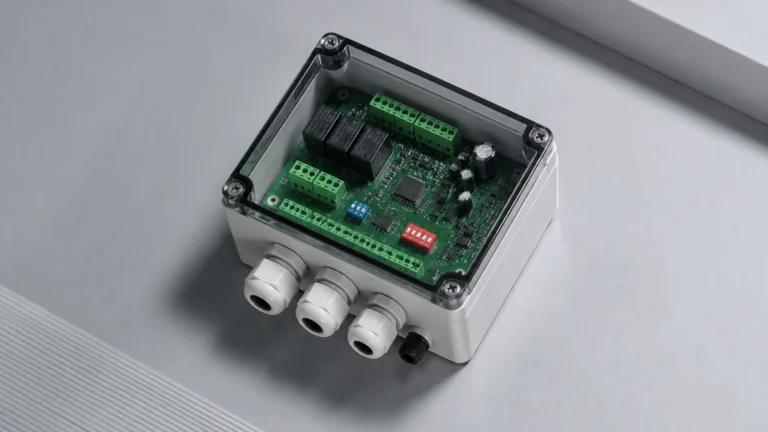
For B2B environments, it is often preferable to use a head-mounted transmitter that converts the resistance or millivolt signal into a 4-20mA, HART, or Modbus signal at the point of measurement. This reduces the risk of electromagnetic interference (EMI) affecting the signal as it travels to the control room.
Limitations and Common Risks
While a high precision thermometer offers significant benefits, it is subject to specific industrial risks:
* Self-Heating: In RTDs, the current used to measure resistance generates a small amount of heat. In high-precision applications, this current must be kept low (typically <1mA) to avoid artificial temperature inflation.
* Vibration: High-precision RTDs contain delicate platinum wire or thin-film elements. In high-vibration environments, such as near pumps or compressors, specialized vibration-resistant sensors must be specified to prevent mechanical failure.
* Chemical Attack: Even microscopic corrosion on the sensor sheath can lead to thermal shunting or drift. Regular inspection of the protective housing is required in aggressive chemical processing.
Frequently Asked Questions (FAQ)
Q: How often should a high precision thermometer be calibrated?
A: In most industrial B2B applications, an annual calibration is standard. However, for critical processes or where high drift is suspected, semi-annual or quarterly checks against a certified reference standard are recommended.
Q: Can I use a high precision RTD with a standard 2-wire transmitter?
A: While possible, it is counterproductive. A 2-wire setup introduces lead resistance errors that will likely exceed the accuracy tolerance of a Class AA or 1/10 DIN sensor. A 4-wire transmitter is required to preserve the sensor's precision.
Q: What is the difference between "Accuracy" and "Precision" in this context?
A: Accuracy refers to how close the measured value is to the true temperature. Precision refers to the repeatability of the measurement. A high precision thermometer must provide both: it must be consistently close to the true value over thousands of measurement cycles.
Q: Are digital thermometers more accurate than analog ones?
A: "Digital" usually refers to the display or output. The underlying accuracy depends on the sensor (RTD, Thermocouple). However, digital transmitters often include sophisticated linearization algorithms that can improve the overall system accuracy compared to pure analog signal conditioning.
Conclusion
Selecting a high precision thermometer requires a balanced evaluation of sensor physics, environmental constraints, and integration requirements. Whether used for thermal compensation in level measurement or for direct process control, these instruments are foundational to modern industrial efficiency. By adhering to strict installation standards and selecting the appropriate accuracy class, facilities can ensure long-term reliability and data integrity. For further technical specifications and to explore our full range of industrial measurement solutions, please visit our Main Page.