Weed Instrument
Weed Instrument
In the landscape of industrial process control, the reliability of instrumentation is the cornerstone of operational safety and efficiency. For decades, specialized manufacturers like Weed Instrument have set benchmarks for performance in the most demanding environments, including nuclear power generation, aerospace, and heavy chemical processing. While the name Weed Instrument is synonymous with high-precision temperature and pressure sensing, modern industrial requirements have expanded to necessitate equally robust level measurement solutions.
Today’s engineering teams must integrate legacy reliability with advanced sensing technologies. This article explores the principles of high-stakes instrumentation, the evolution of sensor technology, and a practical guide to selecting level measurement instruments that meet the rigorous standards established by industry pioneers.
The Role of Specialized Sensors in Process Control
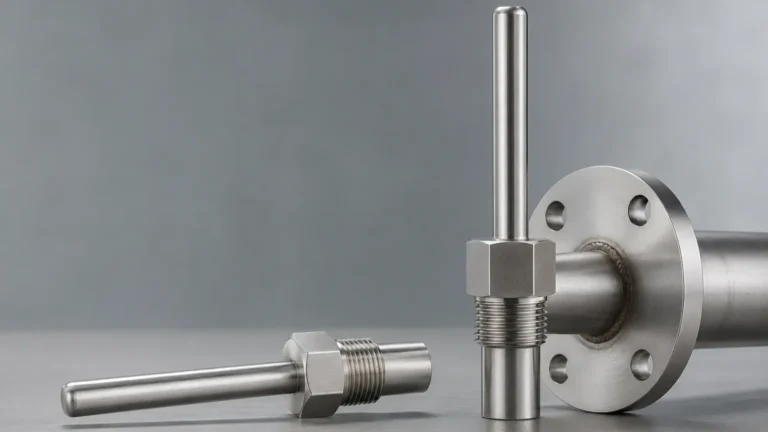
Historically, Weed Instrument established its reputation by producing nuclear-qualified Resistance Temperature Detectors (RTDs) and thermocouples. These instruments were designed to withstand extreme radiation, high pressure, and seismic events. The philosophy behind such engineering—prioritizing material integrity and signal stability—remains vital in modern level measurement.
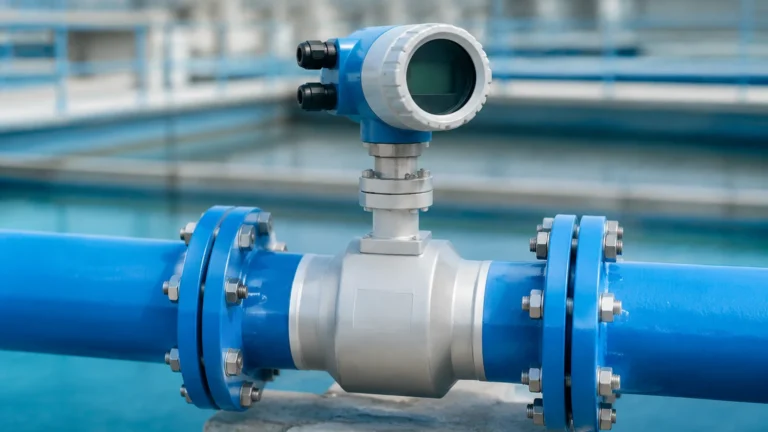
In industrial automation, level measurement is as critical as temperature or pressure. Whether monitoring the inventory of a chemical storage tank or controlling the flow in a water treatment facility, the choice of instrument depends on the physical properties of the medium and the environmental constraints of the application. Modern manufacturers, such as Welk, continue this tradition of precision by applying advanced electronics to radar, ultrasonic, and hydrostatic measurement principles.
For a comprehensive look at current industrial measurement technologies, engineers often consult the Main Page of specialized providers to compare specifications and compatibility.
Fundamental Principles of Level Measurement
Before selecting an instrument, it is essential to understand the physics governing different measurement technologies. Each principle offers distinct advantages depending on the process conditions.
Radar Level Measurement
Radar level meters utilize electromagnetic waves to determine the distance to a liquid or solid surface. There are two primary types: Pulse Radar and Frequency Modulated Continuous Wave (FMCW) Radar.
* Pulse Radar: Sends a microwave signal to the product surface and measures the "Time of Flight" (ToF) for the signal to return.
* FMCW Radar: Transmits a continuous signal with a varying frequency. The difference in frequency between the transmitted and received signal is proportional to the distance.
Radar is highly effective because electromagnetic waves are not influenced by air temperature, pressure, or vacuum. This makes it ideal for volatile chemicals or high-temperature reactors.
Ultrasonic Level Sensing
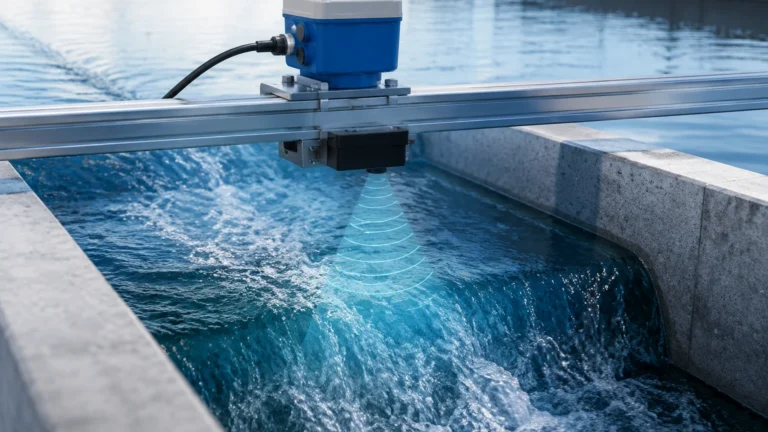
Ultrasonic sensors operate by emitting high-frequency sound waves (typically 20 kHz to 200 kHz) from a piezoelectric transducer. The sensor measures the time interval between the emission of the pulse and the reception of the echo.
Unlike radar, ultrasonic waves require a medium (air) to travel. Consequently, the speed of sound is affected by air temperature. High-quality ultrasonic instruments include integrated temperature compensation to maintain accuracy. These are best suited for water-based liquids and open-channel flow measurement.
Hydrostatic Level Transmitters
Hydrostatic measurement is based on Pascal’s Law, which states that the pressure at a specific point in a static fluid is proportional to the height of the fluid column above it. The formula used is:
P = ρ × g × h
*(Where P is pressure, ρ is fluid density, g is gravity, and h is the height of the liquid.)*
By measuring the pressure at the bottom of a tank, the transmitter can calculate the level. This method is highly reliable for vented tanks where the density of the liquid remains constant.
Technical Comparison and Selection Matrix
Choosing between a legacy-style specialized sensor and a modern level instrument requires an evaluation of the process environment. The following table provides a comparison of common level measurement technologies.
| Technology | Typical Accuracy | Max Range | Media Compatibility | Key Limitation |
| :— | :— | :— | :— | :— |
| Radar (80GHz) | ±1 mm | Up to 120 m | Corrosives, solids, liquids | High initial cost |
| Ultrasonic | ±0.25% of range | Up to 30 m | Water, wastewater, oils | Affected by foam and steam |
| Hydrostatic | ±0.1% to 0.5% | Dependent on pressure | Acids, sludges, clean water | Requires constant density |
| Magnetic Gauge | ±5 mm | Up to 6 m | High-pressure boilers | Mechanical moving parts |
Installation Guidelines for Industrial Instruments
Proper installation is as critical as the instrument’s build quality. Even a high-specification weed instrument or level sensor will fail to provide accurate data if mounting conditions are ignored.
1. Nozzle and Obstruction Clearance
For non-contact sensors like radar and ultrasonic, the "beam angle" is a vital consideration. If the sensor is mounted too close to the tank wall or near internal structures (like ladders or agitators), the instrument may detect "false echoes."
* Radar: Modern 80GHz radar has a very narrow beam (often 3° to 6°), allowing for installation in narrow nozzles.
* Ultrasonic: Typically requires a wider clearance due to a broader beam angle.
2. The Dead Zone (Blocking Distance)
Every non-contact sensor has a "dead zone" directly beneath the transducer where measurement is impossible. For an ultrasonic sensor, this might be 0.25 meters (10 inches) to 0.5 meters (20 inches). Engineers must ensure the maximum liquid level never enters this zone to avoid signal loss.
3. Pressure and Temperature Ratings
In applications similar to those serviced by Weed Instrument—such as steam loops or chemical reactors—the process interface must be rated for the maximum expected pressure and temperature. Hydrostatic transmitters used in deep wells or pressurized tanks must feature high-grade diaphragms (e.g., Tantalum or Hastelloy C) to prevent corrosion.
Limitations and Environmental Factors
No single instrument is universal. Understanding the limitations of each technology prevents costly downtime.
* Foam and Turbulence: Thick foam can absorb ultrasonic signals, leading to a "Loss of Echo" error. In these cases, radar or a bypass magnetic level gauge is preferred.
* Vapor and Condensation: While radar penetrates most vapors, heavy condensation on an ultrasonic transducer face can attenuate the sound wave. Some modern sensors use self-cleaning faces or heated transducers to mitigate this.
* Density Fluctuations: Hydrostatic transmitters are sensitive to changes in fluid density. If a tank holds different fluids at different times, the transmitter must be recalibrated, or a different technology (like radar) should be used.
Maintenance and Calibration Protocols
To maintain the longevity of industrial-grade instruments, a structured maintenance schedule is required. This is particularly true for instruments used in safety-critical loops.
1. Visual Inspection: Check for buildup on the sensor face or corrosion on the housing. In chemical environments, even stainless steel 316L may show signs of pitting over time.
2. Zero and Span Verification: For hydrostatic and pressure instruments, periodic verification against a known reference (like a deadweight tester) ensures the sensor hasn't drifted.
3. Signal Diagnostics: Modern digital instruments (HART, Profibus, or Modbus) provide diagnostic data. Monitoring the "Echo Curve" or "Signal-to-Noise Ratio" can predict a failure before it occurs.
Frequently Asked Questions (FAQs)
Q: Can I use an ultrasonic sensor for boiling liquids?
A: Generally, no. Boiling liquids create heavy steam and surface turbulence, both of which interfere with sound waves. Radar is a much more reliable choice for such applications.
Q: How does a weed instrument for temperature differ from a standard industrial RTD?
A: Instruments specifically branded or qualified under the Weed Instrument legacy often feature enhanced ruggedization, such as specialized ceramic insulation or vibration-resistant construction, specifically for nuclear or aerospace standards (e.g., IEEE 323/344).
Q: What is the maximum distance for a hydrostatic level transmitter?
A: The distance is limited only by the pressure range of the sensor and the length of the cable. Submersible transmitters can be used in boreholes or reservoirs exceeding 200 meters (660 feet) in depth.
Q: Is 80GHz radar better than 26GHz radar?
A: 80GHz radar offers a smaller antenna size, a narrower beam, and better performance on low-dielectric media (like oils). However, 26GHz may still be preferred in extremely dusty environments where a larger wavelength can penetrate particles more effectively.
Conclusion
The legacy of precision established by companies like Weed Instrument continues to influence the design and selection of modern process sensors. Whether you are measuring temperature in a reactor or the level of a wastewater basin, the fundamental requirements remain the same: accuracy, reliability, and environmental compatibility. By understanding the measurement principles and following rigorous installation standards, engineers can ensure their systems operate safely for decades. For those seeking specific product data and engineering support for these technologies, the Main Page remains a primary resource for technical documentation and selection tools.