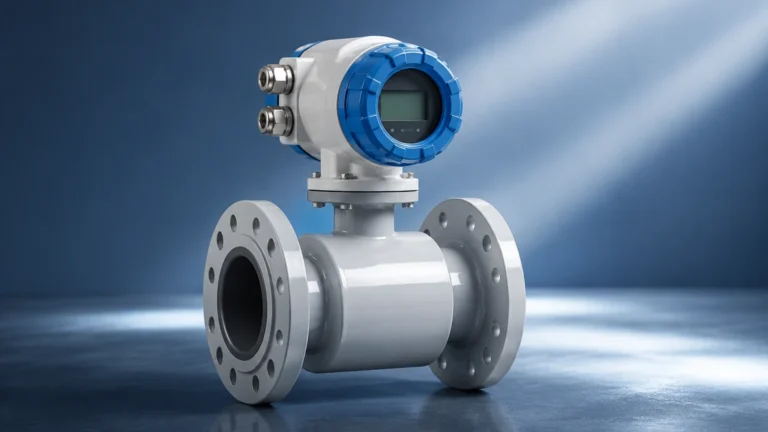
Turbidity Logger
Turbidity Logger
In industrial water management and environmental monitoring, a turbidity logger serves as a critical instrument for quantifying the optical clarity of liquids over extended periods. Unlike a standard handheld turbidity meter, a logger is designed for autonomous operation, capturing and storing data points at predefined intervals to reveal trends, spikes, and baseline shifts in water quality. For engineers and site managers, selecting the correct turbidity logger requires a deep understanding of optical physics, sensor architecture, and the specific demands of the deployment environment.
Effective level and quality monitoring often go hand-in-hand. While instruments from the Main Page focus on the physical volume and height of liquids, a turbidity logger provides the qualitative data necessary to ensure process compliance and environmental safety. This guide examines the technical foundations of turbidity logging, selection strategies, and practical installation requirements for industrial B2B applications.
Measurement Principles of Turbidity Sensors
Before selecting a turbidity logger, it is essential to understand the physical principles that govern how these devices detect suspended solids. Turbidity is not a direct measurement of the mass of suspended particles but rather an expression of the optical property that causes light to be scattered and absorbed rather than transmitted in straight lines through a sample.
Nephelometry (90-Degree Scattering)
Most modern turbidity loggers utilize the nephelometric principle, which is the standard for low-to-medium turbidity levels. A light source (typically an infrared LED at 860 nm to comply with ISO 7027 standards) sends a beam into the water. A detector is positioned at a 90-degree angle to the light path. As the light hits suspended particles, it scatters; the intensity of the light reaching the 90-degree detector is proportional to the concentration of particles. This method is highly sensitive and is the preferred choice for drinking water and clean process water applications.
Light Attenuation (Transmission)
In very high turbidity environments, such as wastewater influent or dredging sites, the 90-degree scattering method can become unreliable due to "multiple scattering," where light hits so many particles that it is absorbed before reaching the detector. In these cases, a transmission sensor is used. This sensor measures the decrease in light intensity as it travels directly across a fixed gap to a receiver. The more turbid the water, the less light reaches the receiver.
Backscatter Technology
For ultra-high concentration monitoring, some loggers use backscatter sensors. In this configuration, the light source and the detector are placed side-by-side. The detector measures light that is reflected back at an angle greater than 90 degrees. This is particularly useful in industrial slurries and heavy sludge monitoring where light cannot penetrate deep into the medium.
Key Components of a Turbidity Logging System
A professional-grade turbidity logger is an integrated system comprising four primary elements:
1. The Optical Sensor: The "business end" of the device, containing the light source and detectors. High-end sensors often include a secondary detector to compensate for fluctuations in light source intensity, ensuring long-term stability.
2. The Data Logger Module: This contains the microprocessor, analog-to-digital converter (ADC), and internal memory. It dictates the sampling rate (e.g., every 1 minute to once every 24 hours) and the storage capacity, which can range from thousands to millions of data points.
3. Power Supply: For remote or submerged deployments, loggers are powered by internal lithium batteries or external solar-recharged lead-acid batteries. Power management is crucial, as the optical sensor requires significant current to fire the LED during each measurement.
4. Housing and Interface: Industrial loggers are typically housed in 316 stainless steel, titanium, or rugged PVC to withstand corrosive environments. Communication interfaces usually include RS-485 (Modbus), SDI-12, or cellular telemetry for real-time data access.
Technical Selection Criteria for Industrial Applications
Selecting the wrong logger can lead to data gaps or frequent sensor failure. Engineers must match the logger's specifications to the expected conditions of the site.
Selection Table: Turbidity Logger Specifications by Application
| Application | Recommended Range | Sensor Type | Key Feature Required |
| :— | :— | :— | :— |
| Drinking Water Treatment | 0–10 NTU | Nephelometric (ISO 7027) | High resolution (0.01 NTU) |
| Environmental Monitoring | 0–1000 NTU | Nephelometric | Integrated Wiper System |
| Dredging & Construction | 0–4000 NTU | Attenuation / Ratio | Ruggedized Housing (Titanium) |
| Industrial Wastewater | 0–10,000+ NTU | Backscatter | Chemical Resistance (PTFE/SS316) |
| Cooling Tower Monitoring | 0–100 NTU | Nephelometric | Modbus RTU Integration |
Measurement Range and Accuracy
Turbidity is measured in Nephelometric Turbidity Units (NTU) or Formazin Nephelometric Units (FNU). It is vital to choose a logger that covers the full expected range of the process. A sensor calibrated for 0–100 NTU will provide high accuracy in clean water but will "flatline" or produce erroneous data if a process upset pushes turbidity to 500 NTU.
Logging Memory and Sampling Logic
For B2B projects involving regulatory compliance, data integrity is paramount. Look for loggers that offer "burst mode" or "event-based logging." For example, the logger can be programmed to sample every 15 minutes normally, but if turbidity exceeds a certain threshold, it switches to 1-minute intervals to capture the peak of the event.
Installation and Deployment Best Practices
The accuracy of a turbidity logger is often more dependent on its installation than its factory calibration. Optical sensors are sensitive to their surroundings.
1. Avoid Wall Interference: When installing a sensor in a tank or a narrow pipe, the light beam can reflect off the walls, creating a false high turbidity reading. Always maintain the manufacturer-recommended clearance (typically 10 cm to 20 cm) from any solid surface.
2. Orientation Against Flow: In flowing water, the sensor face should ideally point downstream or be oriented horizontally to prevent debris from impacting the optical windows. However, in high-velocity flows, air bubbles can form on the sensor face. Bubbles are highly reflective and will cause massive spikes in the data.
3. Shading from Ambient Light: While many loggers use modulated infrared light to ignore ambient sunlight, extreme direct sun in shallow water can still cause interference. Using a shading shroud is a simple and effective precaution.
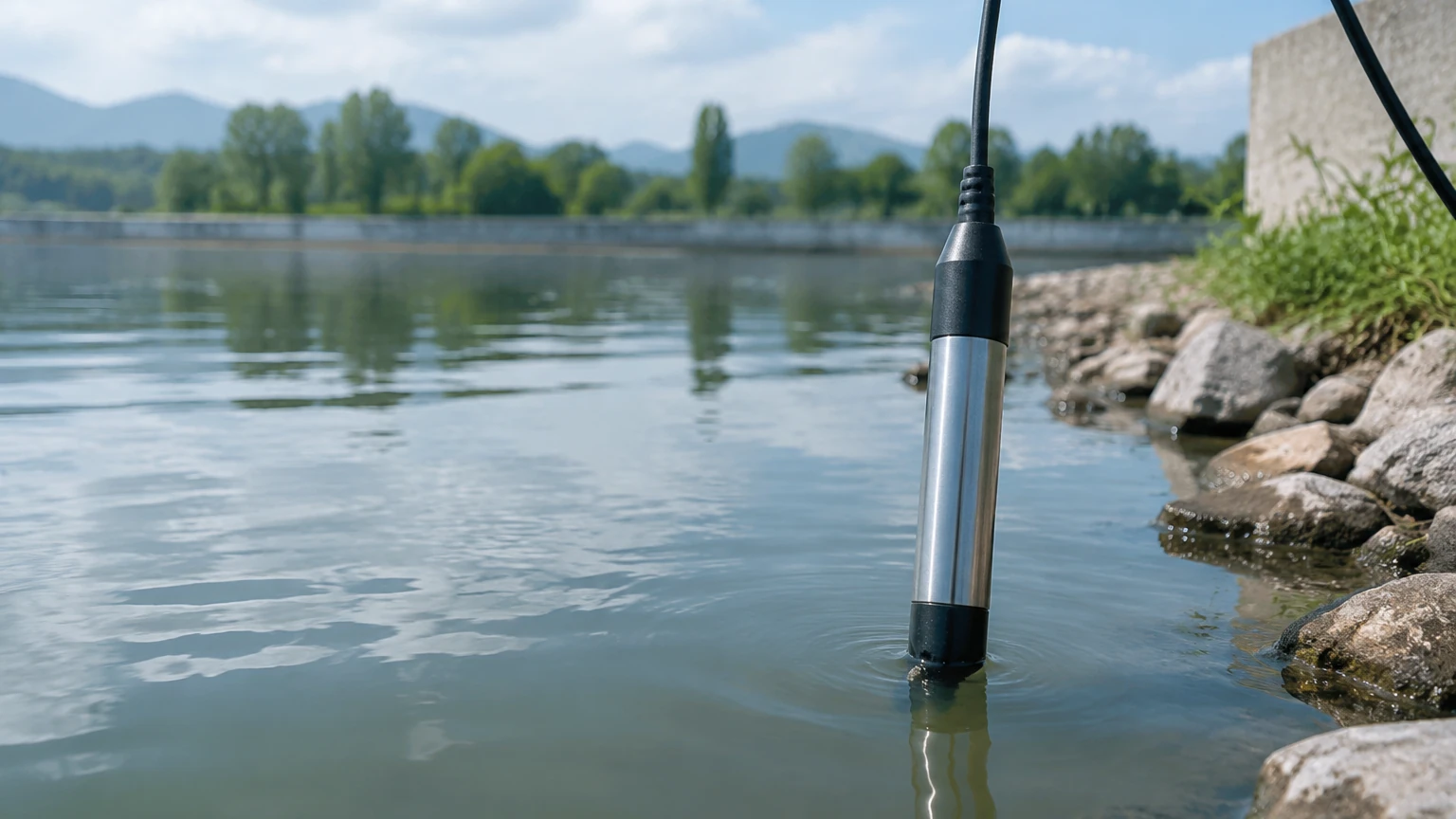
4. Submergence Depth: Ensure the logger's pressure rating exceeds the maximum possible depth at the site. For deep-well or reservoir monitoring, vented cables may be required if the logger also measures water level via hydrostatic pressure.
Maintenance and Calibration Protocols
Turbidity loggers are subject to "drift" caused by two main factors: electronic aging and, more commonly, biofouling.
The Role of Integrated Wipers
In any deployment lasting longer than a few days, biological growth (algae, biofilm) will accumulate on the optical lens. This growth scatters light, leading to a gradual increase in reported turbidity that does not reflect actual water conditions. Industrial turbidity loggers should be equipped with a mechanical wiper system that cleans the lens immediately before each measurement.
Calibration Standards
Calibration should be performed using Formazin, the only universally recognized primary standard. However, because Formazin is toxic and has a short shelf life, many operators use stabilized Formazin (such as StablCal) or secondary polymer bead standards for field checks. For B2B operations, a monthly calibration check is generally recommended, with a full recalibration every six months.
Limitations and Common Challenges
Despite their sophistication, turbidity loggers have inherent limitations that engineers must account for in their data analysis:
* Particle Color and Shape: Two different types of sediment can produce different NTU readings even if their mass concentration (mg/L) is the same. Darker particles absorb more light, while flat, plate-like particles scatter light differently than spherical ones.
* Air Bubbles: As mentioned, bubbles are the primary enemy of optical water quality sensors. In pressurized systems, dissolved air can come out of solution and form micro-bubbles on the sensor lens, leading to "noisy" data.
* Color Interference: If the water has a high concentration of dissolved organic matter (like tannins), it may absorb light at the same wavelength used by the sensor, leading to an underestimation of turbidity. Using an infrared (860 nm) light source helps mitigate this, as most organic color interference occurs in the visible spectrum.
Frequently Asked Questions (FAQs)
Q: What is the difference between NTU and FNU?
A: NTU (Nephelometric Turbidity Units) is generally used when referring to measurements made with a white light source (EPA 180.1 method), while FNU (Formazin Nephelometric Units) refers to measurements made with an infrared light source (ISO 7027 method). In many practical applications, they are treated as equivalent, but for regulatory reporting, the specific method must be noted.
Q: Can a turbidity logger measure Total Suspended Solids (TSS)?
A: A turbidity logger measures light scatter, not mass. However, a correlation can be established between NTU and TSS (mg/L) by taking physical water samples and performing gravimetric analysis in a lab. Once a correlation curve is developed for a specific site, the logger's software can often calculate and log TSS automatically.
Q: How long do the batteries typically last in a remote turbidity logger?
A: This depends heavily on the sampling interval and the use of a wiper. At a 15-minute sampling interval with a wiper cycle, a high-quality internal battery can typically last between 3 to 6 months. Reducing the sampling frequency or using external power can extend this indefinitely.
Conclusion
A turbidity logger is an indispensable tool for modern industrial and environmental oversight. By providing a continuous record of water clarity, these devices allow for proactive process adjustments and ensure compliance with stringent environmental regulations. When selecting a system, engineers should prioritize the measurement principle suited to their turbidity range, ensure robust anti-fouling measures are in place, and consider how the data will integrate with broader site monitoring systems.
For comprehensive solutions in industrial instrumentation, including level measurement and process control, visiting the Main Page provides access to the technical resources and product options necessary to build a complete monitoring infrastructure. Reliable data begins with the right sensor selection, and in the world of turbidity, precision and durability are the keys to long-term success.