Coriolis Meter Cost
Coriolis Meter Cost
In the landscape of industrial process instrumentation, the Coriolis mass flow meter stands as the gold standard for accuracy and versatility. However, for many project managers and procurement specialists, the initial coriolis meter cost remains a significant point of discussion. Unlike simpler volumetric technologies, Coriolis meters provide direct mass flow, density, and temperature measurements in a single device. This guide explores the engineering principles that justify the investment, the variables that influence pricing, and the practical considerations for integrating these instruments into modern industrial systems.
The Working Principle of Coriolis Mass Flow Meters
Before evaluating the coriolis meter cost, it is essential to understand the complex physics and high-precision manufacturing required to produce these instruments. The Coriolis meter operates on the principle of the Coriolis effect, which describes the inertial force acting on objects in motion within a frame of reference that rotates.
The Mechanics of Measurement
In a typical industrial Coriolis meter, the fluid passes through one or two vibrating tubes. These tubes are driven to vibrate at their resonant frequency by an electromagnetic drive coil. When the fluid is at a standstill, the tubes vibrate uniformly. However, as fluid begins to flow, the mass of the moving fluid creates an inertia that resists the vibration of the tubes.
This resistance causes a "twist" or a phase shift in the tube's vibration. Sensors located at the inlet and outlet of the tubes measure this phase shift. The time delay (delta-T) between the two points is directly proportional to the mass flow rate. Simultaneously, the frequency of the vibration changes depending on the density of the fluid; a denser fluid results in a lower resonant frequency. By measuring both the phase shift and the frequency, the meter provides real-time mass flow and density data without requiring external pressure or temperature compensation.
Engineering Complexity and Cost
The requirement for high-frequency vibration sensing and the need for the tubes to withstand process pressures while remaining flexible enough to vibrate explains why the coriolis meter cost is higher than that of magnetic or ultrasonic meters. The internal tubes must be manufactured to extremely tight tolerances, often using exotic alloys to prevent fatigue or corrosion.
Key Factors Driving Coriolis Meter Cost
Several technical specifications and environmental requirements dictate the final price of a Coriolis measurement system. Understanding these factors allows engineers to balance performance requirements with budgetary constraints.
1. Line Size and Flow Capacity
The physical size of the meter is the most direct contributor to cost. Coriolis meters are available from micro-flow sizes (DN1 or 1/25 inch) up to large-scale pipeline sizes (DN300 or 12 inches and larger). As the line size increases, the volume of high-grade material and the complexity of the vibration-dampening housing increase exponentially. A DN15 (1/2 inch) meter for chemical dosing will be significantly less expensive than a DN200 (8 inch) meter used for crude oil custody transfer.
2. Material of Construction
The standard material for Coriolis tubes is 316L stainless steel, which is suitable for many water-based and non-corrosive chemical applications. However, when dealing with aggressive acids, chlorides, or high-temperature fluids, specialized materials are required:
* Hastelloy C22/C276: Essential for highly corrosive chemical processing.
* Titanium: Used for lightweight applications or specific chemical compatibilities.
* Tantalum: Required for the most extreme corrosive environments.
Each step up in material grade significantly increases the coriolis meter cost due to both raw material prices and the specialized welding and testing procedures required for these alloys.
3. Accuracy and Calibration Requirements
Coriolis meters offer varying levels of precision. A standard industrial-grade meter might offer 0.2% accuracy for liquids, while a high-end custody transfer meter can achieve 0.05% accuracy. The cost increases with the precision level because higher accuracy requires more sophisticated electronics, more rigorous factory calibration against primary standards, and more stable mechanical designs.
4. Pressure and Temperature Ratings
Standard meters are typically rated for pressures up to 40 bar (580 psi). If an application involves high-pressure hydraulic systems or high-temperature steam jackets for viscous fluids (like bitumen), the wall thickness of the tubes and the robustness of the secondary containment housing must be increased, adding to the manufacturing cost.
Coriolis Meter Selection and Cost Comparison Table
The following table provides a general overview of how different application requirements impact the relative coriolis meter cost and performance expectations.
| Application Type | Typical Size Range | Material Choice | Accuracy (Liquid) | Relative Cost |
| :— | :— | :— | :— | :— |
| General Utility | DN15 – DN50 | 316L Stainless Steel | 0.2% – 0.5% | Base |
| Chemical Processing | DN10 – DN80 | Hastelloy / Alloy C | 0.1% | 1.8x – 2.5x Base |
| Custody Transfer | DN50 – DN200 | 316L / Super Duplex | 0.05% – 0.1% | 3x – 5x Base |
| High Pressure/Temp | DN15 – DN100 | Specialized Alloys | 0.15% | 2x – 3.5x Base |
*Note: Relative cost is an estimate based on standard industrial configurations. For specific project quotes, engineers should consult the Main Page to review product options and application support.*
Installation and Operational Cost Considerations
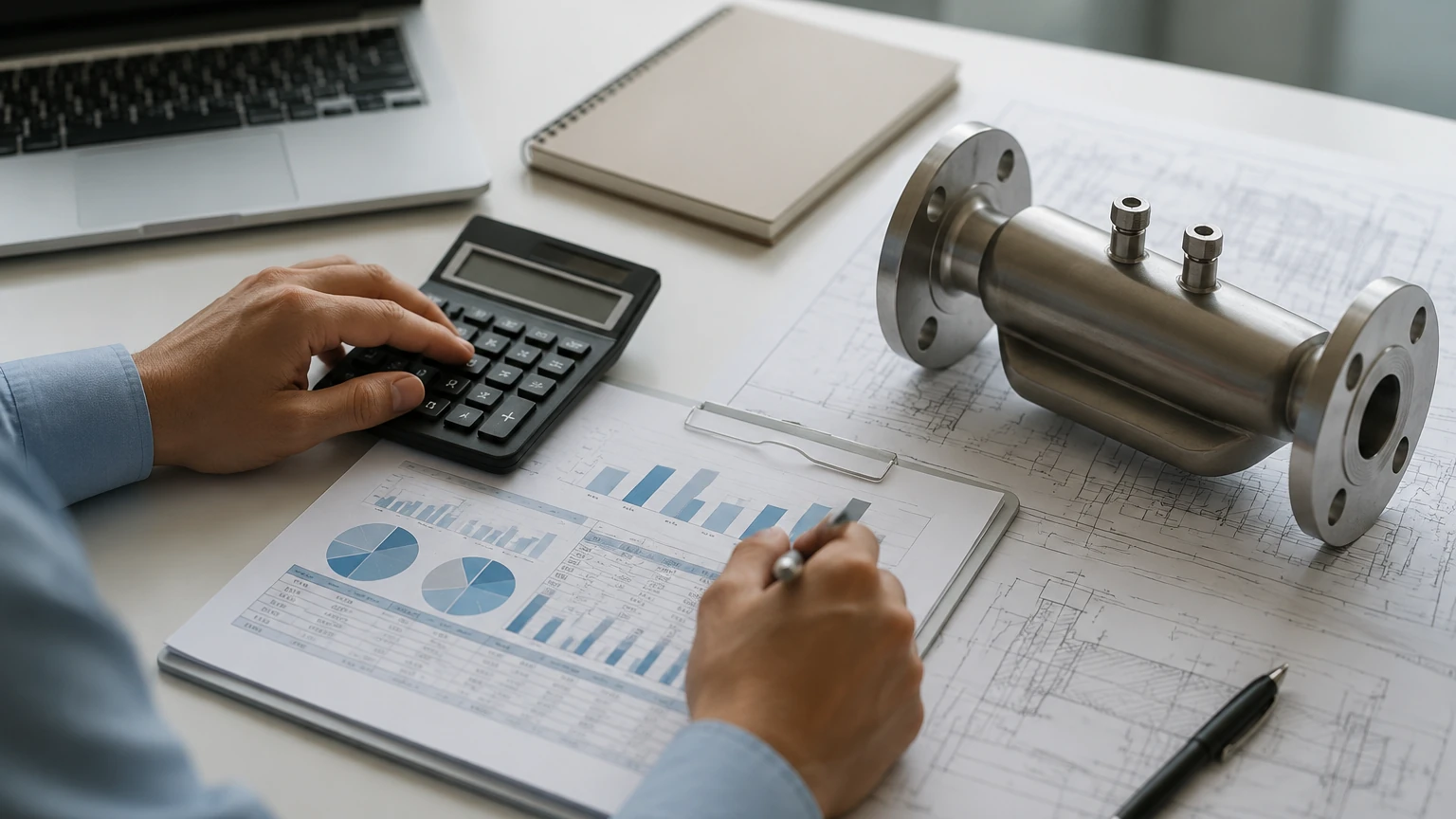
When budgeting for a Coriolis meter, the purchase price is only one component of the total cost of ownership (TCO). Proper installation is critical to ensuring the meter performs to its specified accuracy.
Mechanical Installation
Coriolis meters are sensitive to external vibrations and piping stress. To avoid measurement errors, the meter must be installed with robust supports on both the inlet and outlet sides. In some cases, flexible connectors or vibration-dampening mounts are required. These structural requirements can add to the initial labor and material costs of the installation.
Orientation and Entrained Gas
For liquid applications, the meter is ideally installed in a "U" shape pointing downwards to prevent gas bubbles from becoming trapped in the tubes. For gas applications, the "U" should point upwards to prevent condensate buildup. If the process fluid contains significant entrained gas (slug flow), specialized "Advanced Phase Measurement" electronics may be required to maintain accuracy, which further increases the coriolis meter cost.
Energy Costs (Pressure Drop)
The design of Coriolis meters—especially those with bent tubes—introduces a pressure drop into the system. Engineers must ensure that the pump capacity is sufficient to overcome this resistance. In high-volume applications, the energy cost associated with this pressure drop over several years can be a significant operational expense.
Limitations and Application Constraints
While highly versatile, Coriolis meters are not the optimal solution for every application. Understanding these limitations helps prevent costly misapplications.
* Initial CAPEX: The most obvious limitation is the high upfront cost compared to other technologies. If a simple volumetric measurement with 2% accuracy is sufficient, a Coriolis meter may not be economically justifiable.
* Fluid Cleanliness: While they can handle some solids, large particles can erode the thin-walled internal tubes or cause blockages in dual-tube designs.
* Gas Entrainment: While modern electronics have improved performance in aerated liquids, high levels of entrained gas can still cause the tubes to stop vibrating (stalling), leading to a loss of measurement.
* Weight and Footprint: Large-diameter Coriolis meters are heavy and bulky. They require significant space and structural support compared to compact magnetic or vortex meters.
Frequently Asked Questions (FAQ)
Why is the coriolis meter cost so much higher than an ultrasonic meter?
Coriolis meters provide a direct mass measurement that is independent of fluid properties like viscosity and flow profile. Ultrasonic meters are volumetric and often require straight pipe runs (e.g., 10 diameters upstream) to achieve accuracy. The Coriolis meter's ability to measure mass, density, and temperature simultaneously, combined with its high-precision internal tube assembly, accounts for the price difference.
How often do Coriolis meters need calibration?
One of the benefits that offsets the initial coriolis meter cost is their long-term stability. Because there are no moving parts in the fluid stream (no bearings or gears), mechanical wear is minimal. In many non-erosive applications, Coriolis meters can go several years between calibrations, though regulatory requirements in custody transfer may dictate annual verification.
Can Coriolis meters be used for level measurement?
Indirectly, yes. Because Coriolis meters provide highly accurate density measurements, they are often used in conjunction with hydrostatic pressure sensors to provide a density-corrected level measurement in tanks containing non-homogeneous liquids. This ensures that level readings remain accurate even if the liquid composition changes.
Does the coriolis meter cost include the transmitter?
Usually, the quoted price includes both the sensor (the tubes and housing) and the transmitter (the electronics). However, remote-mounted transmitters, which are used when the sensor is in a high-temperature or hard-to-reach area, typically cost more than integrally mounted versions due to the specialized cabling required.
Conclusion
Investing in Coriolis technology is a strategic decision based on the need for precision, multi-variable data, and long-term reliability. While the initial coriolis meter cost is higher than many alternatives, the reduction in secondary instrumentation (like separate density meters or temperature probes) and the decrease in maintenance requirements often lead to a lower total cost of ownership over the life of the plant. For engineers and facility managers looking to optimize their process control or level measurement strategies, reviewing the full range of available technologies on the Main Page is the recommended next step in the procurement process.