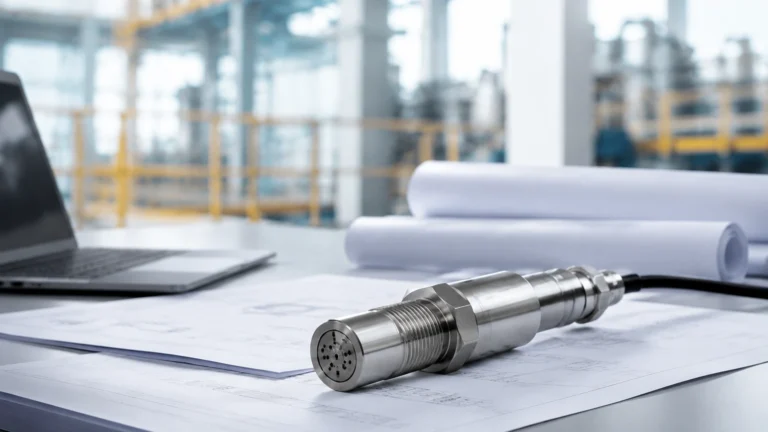
Our Innovative Ud Power Connector Design Enhances Power Conductivity
Our Innovative Ud Power Connector Design Enhances Power Conductivity
In the field of industrial automation and process control, the reliability of level measurement instruments is fundamentally tied to the quality of the electrical connection. Whether deploying high-frequency radar level meters or sensitive ultrasonic sensors, the integrity of the power supply and signal transmission path determines the accuracy of the data collected. At Welk, we recognize that even the most advanced sensor technology can be compromised by poor electrical contact. This is why our innovative ud power connector design enhances power conductivity, ensuring that industrial level meters operate with maximum stability in the most demanding environments.
The Role of Power Conductivity in Level Measurement
Before exploring the specifics of connector design, it is essential to understand the measurement principles of the instruments they support. Most modern level transmitters, including radar, ultrasonic, and hydrostatic types, rely on precise electronic timing and signal processing to convert physical properties into level data.
Radar Level Measurement Principles
Radar level meters, such as Guided Wave Radar (GWR) or non-contact 80GHz radar, operate by emitting electromagnetic pulses. These pulses travel at the speed of light, reflect off the medium's surface, and return to the sensor. The distance is calculated using the formula:
$$D = \frac{c \times t}{2}$$
Where:
* D is the distance to the medium.
* c is the speed of light.
* t is the transit time.
Because the transit time is measured in nanoseconds, any fluctuation in power—often caused by high contact resistance in standard connectors—can introduce electronic noise. This noise interferes with the signal-to-noise ratio (SNR), leading to "ghost echoes" or measurement drift.
Ultrasonic Level Measurement Principles
Ultrasonic sensors utilize the piezoelectric effect to generate sound waves (typically 20 kHz to 200 kHz). The sensor measures the time it takes for the sound pulse to return. Unlike radar, ultrasonic speed is affected by air temperature and density. Maintaining a stable power supply is critical for the internal temperature compensation circuits to function correctly. If power conductivity is inconsistent, the pulse strength may vary, resulting in poor penetration through foam or dust.
How Our Innovative Ud Power Connector Design Enhances Power Conductivity
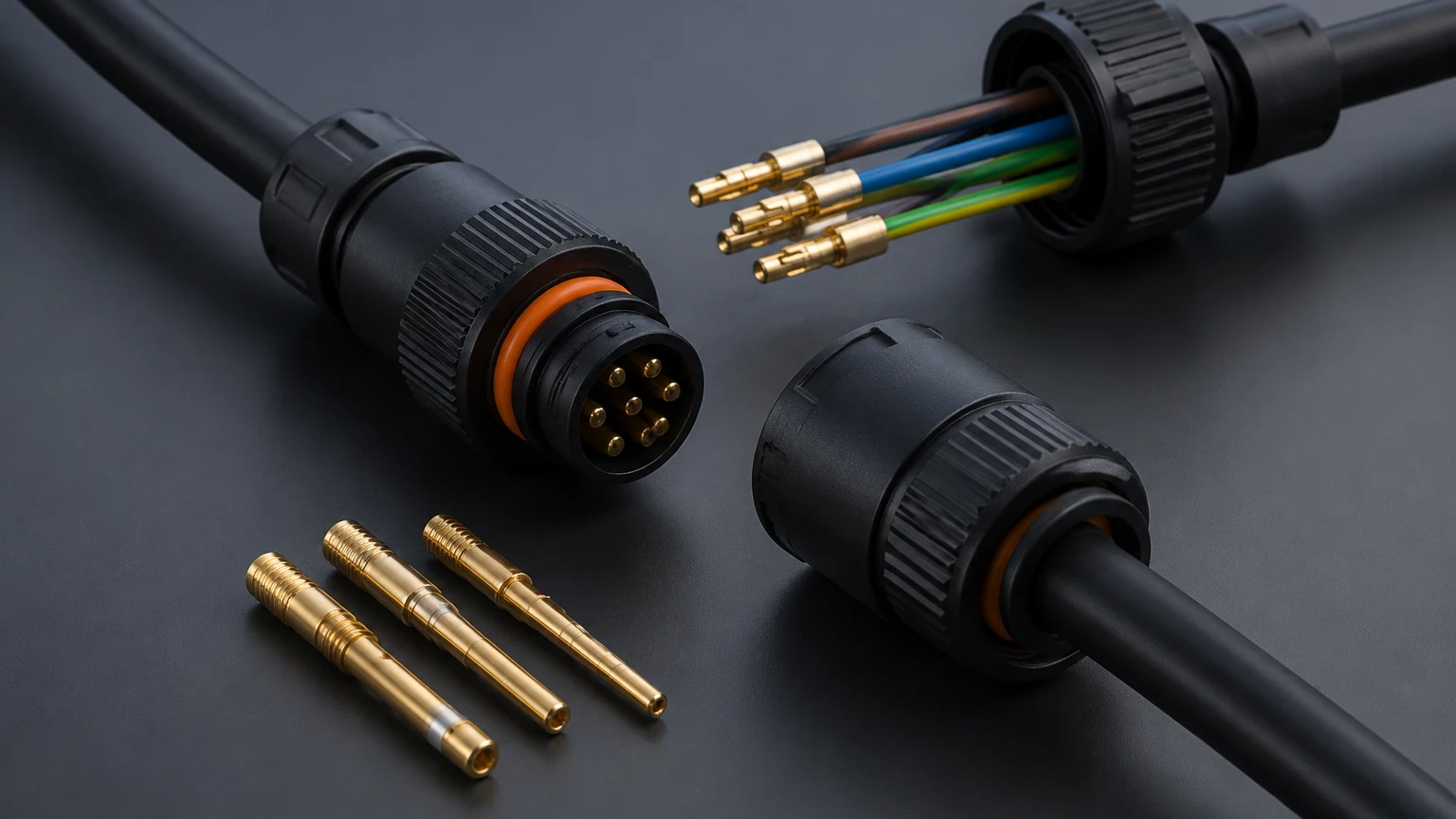
The "UD" (Ultra-Durable) power connector design was developed to address the specific challenges of industrial wiring. In many chemical and water treatment plants, vibration, thermal expansion, and oxidation can degrade standard screw-terminal or plug-in connections over time.
1. Minimized Contact Resistance
Resistance ($R$) in a connector is governed by the material properties and the effective contact area. Our innovative ud power connector design enhances power conductivity by utilizing high-purity copper alloys plated with noble metals. This ensures a low-impedance path for both 24V DC power and 4-20mA / HART signals. Lower resistance means less heat generation and more voltage reaching the internal processor of the level meter.
2. Enhanced Mechanical Grip
Industrial environments are prone to mechanical vibration from pumps and mixers. Standard connectors may loosen, leading to intermittent power loss. The UD design features a multi-point contact geometry that maintains constant pressure against the terminal pins. This mechanical stability ensures that the electrical path remains closed even under continuous vibration of up to 2g.
3. Protection Against Environmental Oxidation
In wastewater treatment or chemical processing, corrosive gases like $H_2S$ can quickly oxidize contact surfaces. Oxidation creates a non-conductive layer that increases resistance. The UD connector incorporates an airtight seal and specialized plating that prevents atmospheric contaminants from reaching the contact interface, thereby maintaining high conductivity throughout the instrument's lifecycle.
Technical Comparison: Standard vs. UD Connector Design
When selecting level measurement hardware, engineers must evaluate the connection interface. The following table highlights the performance differences between traditional industrial connectors and the UD design implemented in Welk instruments.
| Feature | Standard Industrial Connector | UD Power Connector Design |
| :— | :— | :— |
| Contact Material | Brass / Tin Plated | High-Purity Copper / Gold-Nickel Plated |
| Contact Resistance | < 20 mΩ | < 5 mΩ |
| Vibration Resistance | Low (Susceptible to micro-interruptions) | High (Multi-point spring contact) |
| Current Capacity | 2A – 5A | 5A – 10A (Enhanced for heating elements) |
| Oxidation Rating | Moderate | Superior (Airtight interface) |
| Signal Integrity | Prone to EMI/RFI noise | Shielded design for 4-20mA stability |
Selection and Application Considerations
Choosing the right level meter involves more than just selecting a measurement technology; it requires ensuring the entire system architecture supports the application. Because our innovative ud power connector design enhances power conductivity, it is particularly recommended for the following scenarios:
Long-Distance Signal Transmission
In large-scale industrial automation, level meters may be located hundreds of meters away from the PLC (Programmable Logic Controller). In a 4-20mA loop, the total resistance of the wire and the connectors must not exceed the load capacity of the power supply. By reducing connector resistance, the UD design allows for longer cable runs without signal degradation.
Hazardous Area Applications
In oil and gas applications, intrinsically safe (IS) circuits limit the available energy to prevent ignition. In these low-power circuits, every milliohm of resistance matters. High conductivity ensures that the level meter receives enough current to boot up and transmit data reliably while remaining within the safety parameters of the IS barrier.
High-Temperature Environments
As temperature increases, the resistance of most conductors also increases. In applications involving steam or hot chemicals, the connector must handle thermal cycling. The UD design uses materials with low thermal expansion coefficients to ensure that the contact pressure remains uniform at temperatures ranging from -40°C to +150°C.
Installation and Maintenance Guidelines
To ensure that the benefits of the UD power connector are fully realized, proper installation techniques must be followed. Even with superior conductivity, poor field wiring can introduce failures.
1. Cable Stripping: Ensure that the cable jacket is stripped back 10mm to 15mm, and the individual wire insulation is removed without nicking the copper strands. Damaged strands reduce the effective cross-sectional area and negate the benefits of high-conductivity connectors.
2. Torque Specifications: If using the screw-terminal version of the UD connector, use a calibrated screwdriver to apply the manufacturer-recommended torque (typically 0.5 Nm to 0.6 Nm). Over-tightening can deform the contact, while under-tightening leads to high resistance.
3. Shielding and Grounding: To prevent electromagnetic interference (EMI), always connect the cable shield to the designated ground terminal within the connector housing. The UD design provides a dedicated low-impedance path for the shield to drain noise away from the signal wires.
4. Environmental Sealing: Ensure the cable gland is tightened sufficiently to compress the internal gasket around the cable. This prevents moisture from entering the housing and causing electrolytic corrosion on the power terminals.
Limitations and Practical Boundaries
While our innovative ud power connector design enhances power conductivity, it is not a universal fix for all electrical issues. Engineers should be aware of the following limitations:
* Cable Quality: The connector can only optimize the connection point. If the field cabling is of poor quality or has a high gauge (thin wire) over a long distance, the overall loop resistance will still be high.
* Electrolytic Corrosion: If the housing is left open and the connector is submerged in conductive liquid, electrolytic corrosion will occur regardless of the plating. Proper IP67/IP68 sealing is mandatory.
* Current Limits: While the UD design handles higher current than standard connectors, it is designed for instrumentation, not for powering heavy machinery or large heaters. Always check the maximum amperage rating in the product manual.
Frequently Asked Questions (FAQ)
Q: How does improved conductivity affect the accuracy of a 4-20mA signal?
A: A 4-20mA signal is a current loop, which is inherently more robust than a voltage signal. However, if connector resistance is high and unstable, it can cause "noise" or jitter in the reading. High conductivity ensures a clean, stable current flow, which the PLC interprets as a steady level reading.
Q: Is the UD connector compatible with standard industrial cables?
A: Yes, the design is compatible with standard shielded twisted pair cables (typically 0.5 $mm^2$ to 1.5 $mm^2$ or 20-16 AWG) used in industrial automation.
Q: Do I need special tools to install these connectors?
A: No special tools are required. Standard precision screwdrivers or crimping tools are sufficient, though using a torque-limited driver is best practice for long-term reliability.
Conclusion
In the competitive landscape of industrial level measurement, the difference between a reliable system and one prone to frequent downtime often lies in the details. By focusing on the physical layer of the connection, Welk ensures that every radar, ultrasonic, and hydrostatic sensor performs at its theoretical limit. Because our innovative ud power connector design enhances power conductivity, users can expect more stable readings, easier installation, and reduced maintenance costs over the life of the instrument.
For engineers and procurement professionals looking to upgrade their process control systems, understanding these technical nuances is the first step toward achieving operational excellence. To explore our full range of level measurement solutions and technical specifications, please visit our Main Page for comprehensive product options and application support.
Download Our Innovative Ud Power Connector Design Enhances Power Conductivity as a PDF