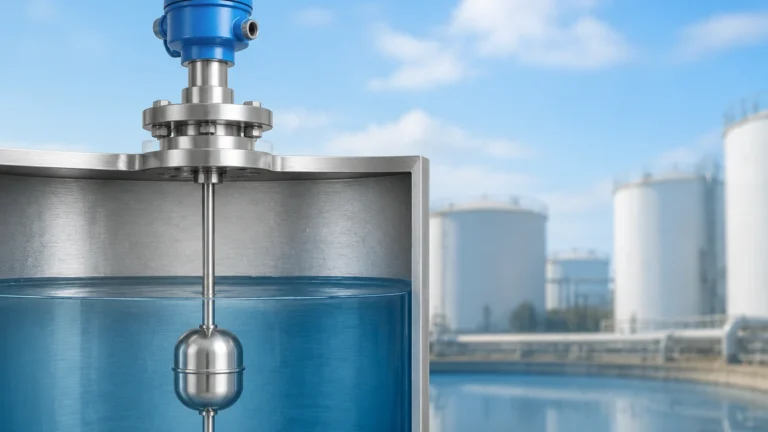
Sealed Pressure Sensor
Sealed Pressure Sensor
In the field of industrial instrumentation, the sealed pressure sensor represents a critical solution for environments where atmospheric venting is either impractical or hazardous. Unlike standard gauge sensors that rely on a vent tube to compensate for changes in barometric pressure, a sealed pressure sensor utilizes a hermetically sealed reference chamber. This design choice significantly impacts the sensor's durability, installation requirements, and accuracy profiles across different pressure ranges. For engineers and system integrators, understanding the nuances of this technology is essential for ensuring long-term reliability in liquid level and process pressure monitoring.
1. Fundamental Measurement Principles
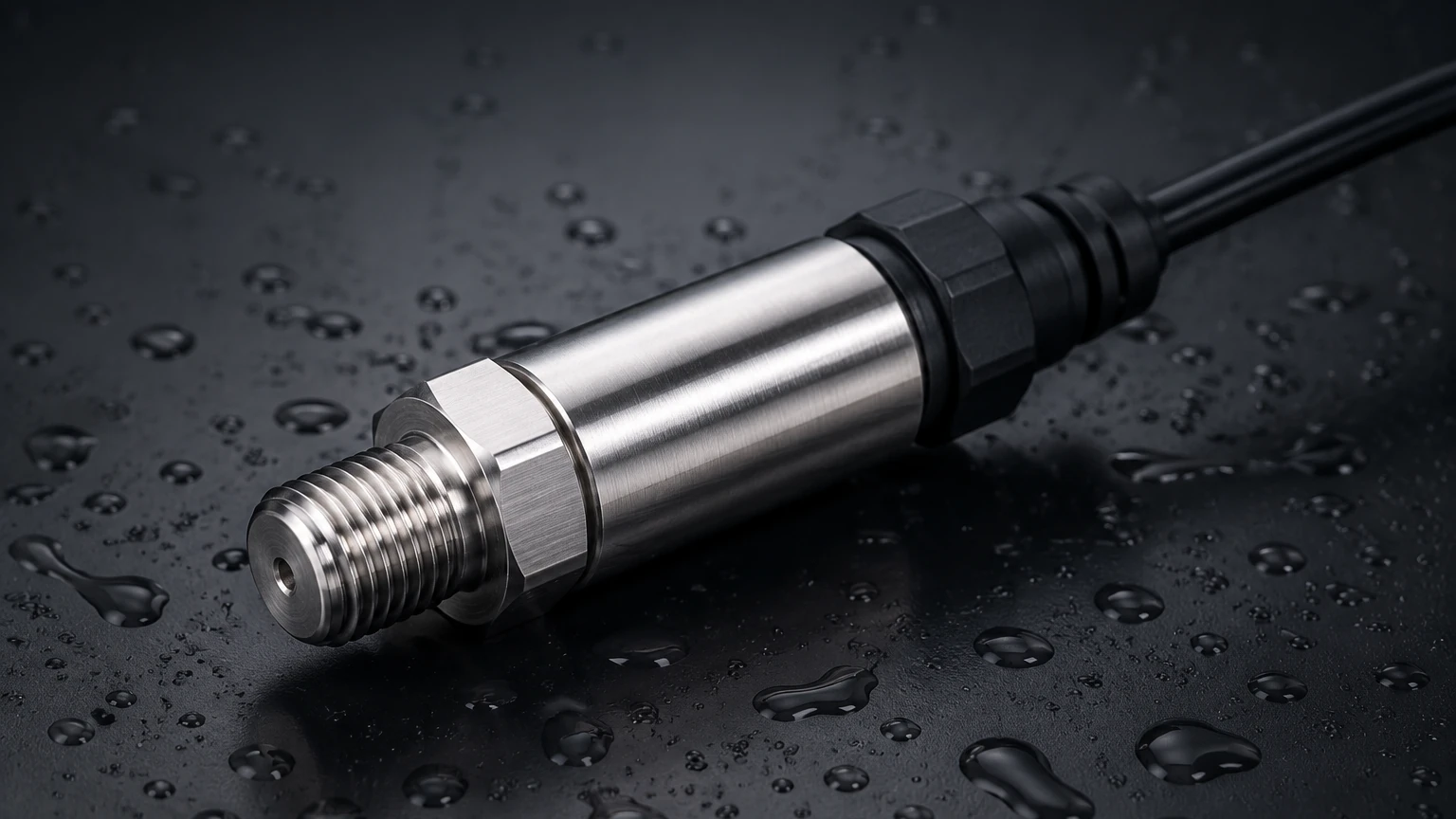
The core function of any pressure sensor is to convert mechanical force into an electrical signal. In the case of a sealed pressure sensor, this is achieved through a sensing element—typically a piezoresistive silicon chip or a ceramic thick-film strain gauge—mounted behind a protective diaphragm.
The Reference Chamber
The defining characteristic of a sealed pressure sensor is its internal reference. During the manufacturing process, the space behind the sensing diaphragm is evacuated or filled with a dry, inert gas (such as nitrogen) and then hermetically sealed. This internal pressure is usually set to standard atmospheric pressure at sea level (approximately 1.013 bar or 14.7 psi).
When process pressure is applied to the external face of the diaphragm, the sensor measures the deflection relative to this fixed internal reference. Because the chamber is sealed, the sensor does not "see" the fluctuations in local barometric pressure caused by weather patterns or changes in altitude. This distinguishes it from a vented gauge sensor, which uses a capillary tube to equalize the internal chamber with the current ambient atmosphere.
Signal Conversion
As the diaphragm deflects, the resistance of the sensing bridge changes (the piezoresistive effect). This change is processed by internal electronics to provide a standardized output, such as 4-20 mA, 0-10 V, or digital protocols like HART and RS485 Modbus. For those looking to integrate these sensors into broader automation systems, you can review product options and application support on our Main Page.
2. Comparing Sealed, Vented, and Absolute Pressure
Choosing the correct reference type is one of the most common points of confusion in pressure instrumentation. The following distinctions are vital for technical selection:
* Vented Gauge (G): Measures pressure relative to the current local atmospheric pressure. It is highly accurate for low-pressure liquid level measurement (e.g., 0-5 meters of water) because it automatically cancels out barometric changes. However, the vent tube can become a path for moisture ingress.
* Absolute Pressure (A): Measures pressure relative to a perfect vacuum. These are used in vacuum processes or barometric monitoring. They are rarely used for standard tank level measurement because the 1-bar offset of the atmosphere must be mathematically removed.
* Sealed Pressure Sensor (SG): Measures pressure relative to a fixed 1-bar reference. It offers the environmental protection of an absolute sensor with the approximate scaling of a gauge sensor. It is the preferred choice for high-pressure applications where the error introduced by barometric fluctuations is negligible compared to the total measurement range.
3. Hydrostatic Level Measurement Applications
In the context of liquid level measurement, the sealed pressure sensor is most frequently deployed as a hydrostatic level transmitter. The principle relies on the relationship between the height of a liquid column and the pressure it exerts at the base: $P = \rho \cdot g \cdot h$, where $P$ is pressure, $\rho$ is the density of the liquid, $g$ is gravity, and $h$ is the height.
Submersible Deep Well Monitoring
In deep groundwater wells (e.g., depths exceeding 100 meters), the pressure exerted by the water column is substantial (over 10 bar). At these ranges, a barometric shift of 30 mbar (0.03 bar) represents an error of only 0.3% of the full scale. The primary concern in these applications is the integrity of the cable and the prevention of water ingress. A sealed pressure sensor eliminates the need for a vent tube in the cable, significantly increasing the lifespan of the instrument in high-humidity or high-pressure underwater environments.
High-Pressure Process Vessels
In chemical processing or oil and gas applications where tanks are pressurized, or where the media is highly corrosive, a sealed gauge sensor provides a robust barrier. Since there is no vent to the atmosphere, there is no risk of process vapors escaping through the sensor or ambient moisture contaminating the internal circuitry.
4. Technical Selection Criteria
When specifying a sealed pressure sensor for industrial use, several parameters must be evaluated to ensure compatibility with the process.
Pressure Range and Overpressure
The nominal range should be selected so that the typical operating pressure falls within 50-75% of the sensor's full scale. However, engineers must also consider "water hammer" or pressure surges. A quality sealed pressure sensor should offer an overpressure rating of at least 1.5x to 2x its rated capacity without permanent calibration shift.
Material Compatibility
The wetted parts—the diaphragm and the housing—must resist the process media.
* 316L Stainless Steel: The standard for water and mild chemicals.
* Ceramic (Al2O3): Excellent for abrasive slurries or highly corrosive acids.
* Tantalum or Hastelloy: Reserved for the most aggressive chemical environments.
Accuracy and Thermal Drift
Because the internal reference gas in a sealed pressure sensor is subject to the Ideal Gas Law ($PV=nRT$), changes in temperature will cause the internal reference pressure to shift slightly. This is known as thermal drift. High-end sensors include internal temperature compensation to mitigate this effect, but it remains a factor to consider in outdoor installations with wide temperature swings.
5. Practical Selection Table
The table below provides a general guide for choosing between sensor types based on common application requirements.
| Feature | Vented Gauge Sensor | Sealed Pressure Sensor | Absolute Pressure Sensor |
| :— | :— | :— | :— |
| Reference Point | Current Atmosphere | Fixed 1 bar (approx.) | Vacuum (0 bar) |
| Best Pressure Range | Low (< 10 bar) | High (> 20 bar) | Any (Process dependent) |
| Moisture Risk | High (via vent tube) | Very Low | Very Low |
| Barometric Error | None | ~30 mbar (max) | Full Barometric Effect |
| Typical Application | Shallow tank level | Deep wells, High-pressure gas | Vacuum distillation, Barometers |
| Maintenance | Requires desiccant | Minimal | Minimal |
6. Installation and Commissioning Guidelines
Proper installation is as critical as the selection of the sensor itself. For a sealed pressure sensor, the following steps are recommended:
Mounting Position
For hydrostatic level measurement, the sensor should be mounted as close to the bottom of the tank or well as possible. In tanks with high turbulence or agitators, the sensor should be installed inside a stilling well (a perforated pipe) to prevent mechanical stress on the diaphragm and to stabilize the readings.
Cable Handling
Even though a sealed pressure sensor does not require a vent tube, the cable should still be handled with care. Avoid sharp bends (minimum bend radius is typically 10x the cable diameter) and ensure the cable entry into the junction box is sealed to prevent "wicking," where moisture travels along the outside of the wires into the electronics.
Zero Calibration
Upon installation, it is important to perform a zero-point check. Since the sealed pressure sensor is referenced to 1 bar at sea level, if your site is at a high altitude (where atmospheric pressure is lower), the sensor will show a negative offset when exposed to the air. This offset must be zeroed out in the PLC or the transmitter's internal software to ensure the level reading starts at zero.
7. Limitations and Potential Risks
While the sealed pressure sensor is exceptionally robust, it is not a universal solution. Engineers should be aware of the following limitations:
1. Low-Level Inaccuracy: In a shallow tank (e.g., 2 meters of water), the pressure is only about 0.2 bar. A barometric change of 0.03 bar would cause an error of 15% in the level reading. In such cases, a vented sensor or a radar level meter is a better choice.
2. Temperature Sensitivity: If the sensor is exposed to direct sunlight, the internal reference gas will expand, potentially causing a slight shift in the zero point. Shrouding the sensor or using a compensated model is necessary for outdoor use.
3. Non-Repairable Reference: If the hermetic seal of the reference chamber is compromised due to extreme mechanical shock or corrosion, the sensor cannot be repaired and must be replaced.
8. Frequently Asked Questions (FAQs)
Q: Can I use a sealed pressure sensor for measuring vacuum?
A: Generally, no. A sealed pressure sensor is designed to measure pressures above its 1-bar internal reference. For vacuum applications, an absolute pressure sensor or a compound gauge sensor is required.
Q: How do I know if my sensor is sealed or vented?
A: Inspect the cable and the sensor body. A vented sensor will have a small, clear plastic tube running through the center of the cable. A sealed sensor will have a solid cable and often a "SG" (Sealed Gauge) designation on the nameplate.
Q: Does altitude affect a sealed pressure sensor?
A: Yes. Because the internal reference is fixed at approximately 1 bar (sea level), the sensor will report a different "zero" value at high altitudes. This must be compensated for during commissioning.
Q: How often should a sealed pressure sensor be calibrated?
A: In stable water applications, annual calibration is usually sufficient. In high-temperature or corrosive chemical processes, semi-annual checks are recommended to monitor for diaphragm fatigue or drift.
9. Conclusion
The sealed pressure sensor is a specialized tool designed to solve the problem of environmental vulnerability in high-pressure and submersible applications. By eliminating the vent tube, it provides a level of ingress protection that vented sensors cannot match, making it the industry standard for deep well monitoring and pressurized process vessels.
When selecting a sensor, engineers must weigh the benefit of this environmental protection against the potential for barometric error at lower pressure ranges. For applications requiring high precision at low levels, alternative technologies such as radar or ultrasonic level sensors may be more appropriate. To explore the full range of measurement technologies and find the right fit for your specific industrial application, visit our Main Page for comprehensive product data and technical support.