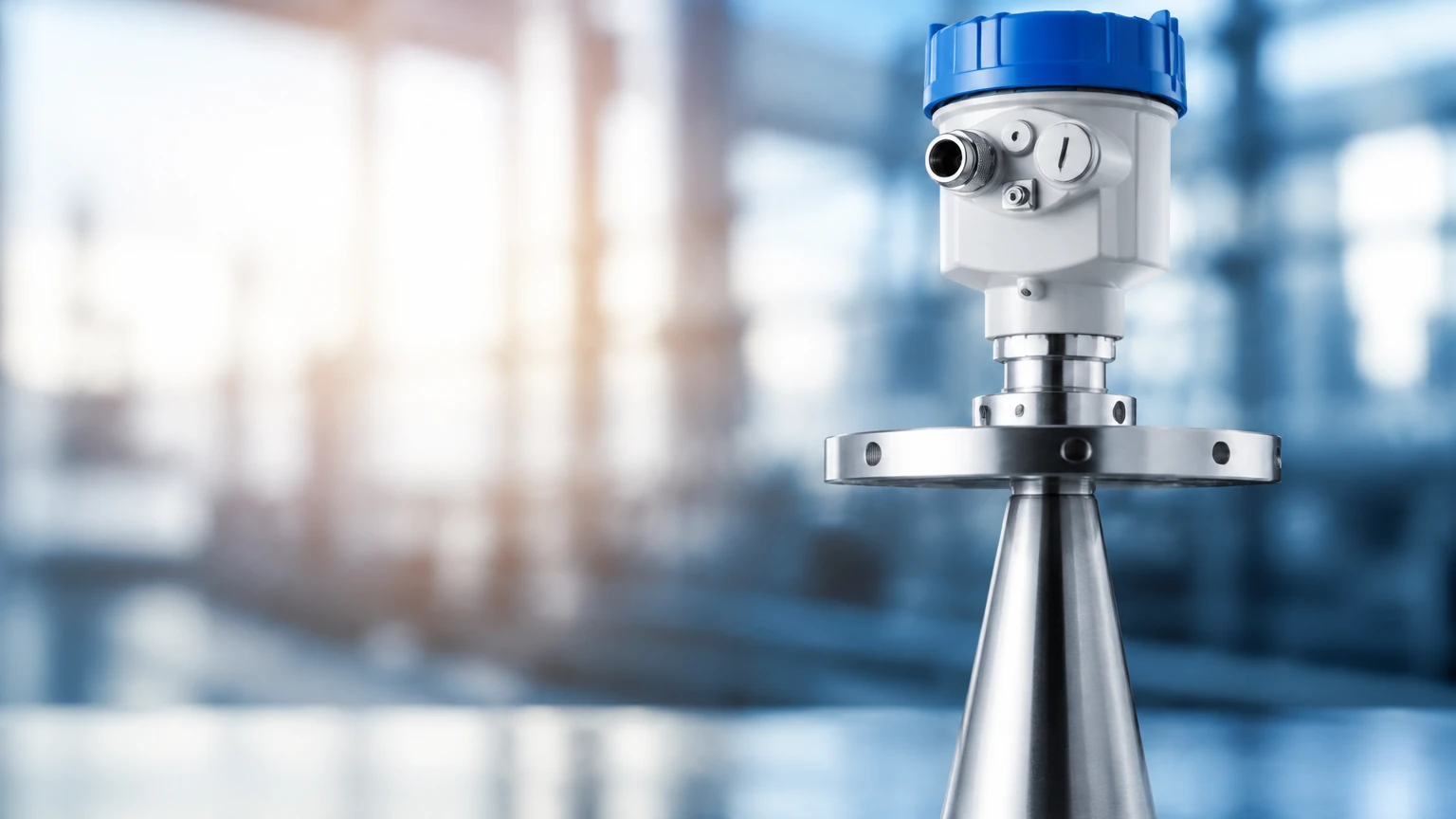
Flowline Echopulse Radar Level Transmitter
Flowline Echopulse Radar Level Transmitter
In the field of industrial process control, selecting the appropriate level measurement technology is critical for operational safety and efficiency. The Flowline EchoPulse radar level transmitter represents a significant category of non-contact liquid and solid level measurement instruments. Utilizing pulse radar technology, these devices provide reliable data in environments where traditional ultrasonic sensors may fail due to vapor, foam, or temperature fluctuations.
This article provides a detailed technical overview of the EchoPulse series, the underlying physics of pulse radar measurement, and practical engineering considerations for selection and installation in industrial environments. For those seeking comprehensive hardware options and technical support, visiting the Main Page of professional manufacturers provides further insight into the broader ecosystem of radar level meters.
Measurement Principle: Pulse Radar Technology
The Flowline EchoPulse radar level transmitter operates on the principle of Time of Flight (ToF). Unlike continuous wave radar, pulse radar emits a series of high-frequency electromagnetic pulses toward the material surface.
1. Emission: The sensor antenna emits a short microwave pulse (typically at 6.3 GHz or 26 GHz frequency).
2. Reflection: The pulse travels through the headspace of the vessel at the speed of light. When it reaches the surface of the medium, a portion of the energy is reflected back toward the sensor. The strength of this reflection depends on the dielectric constant (εr) of the material.
3. Reception: The antenna receives the reflected signal.
4. Calculation: The internal microprocessor measures the time interval between emission and reception. Using the constant speed of light, the transmitter calculates the distance to the product surface.
Because electromagnetic waves do not require a medium for travel and are largely unaffected by air temperature, pressure, or vacuum conditions, radar technology is inherently more robust than ultrasonic measurement in complex process conditions.
Key Evaluation Criteria for EchoPulse Transmitters
When evaluating a flowline echopulse radar level transmitter for a specific application, engineers must consider several technical variables to ensure accuracy and longevity.
Frequency Selection
Frequency determines the beam angle and the ability of the signal to penetrate or reflect off certain surfaces.
* 6.3 GHz (C-Band): These transmitters have a wider beam angle and are more resistant to interference from foam, heavy vapor, or turbulence. They are often used in larger tanks where internal obstructions are minimal.
* 26 GHz (K-Band): These devices offer a much narrower beam and higher precision. The smaller wavelength allows for smaller antenna sizes and better performance in narrow tanks or vessels with internal agitators and pipes.
Dielectric Constant (εr)
The dielectric constant of the liquid or solid is the most critical factor in signal reflection. Materials with high dielectric constants (e.g., water-based liquids, εr > 20) reflect signals strongly. Materials with low dielectric constants (e.g., oils, hydrocarbons, or dry powders, εr < 3) reflect very little energy, requiring more sensitive electronics or specialized antenna configurations like guided wave radar if the signal is too weak for pulse radar.
Process Environment
Consider the presence of:
* Vapor and Condensation: Radar is generally immune to vapor, but heavy condensation on the antenna can attenuate the signal.
* Agitation: Turbulent surfaces scatter the radar signal. Software algorithms in the EchoPulse series help filter this noise, but mechanical stilling wells may be required for extreme turbulence.
* Temperature and Pressure: Ensure the wetted materials (typically PFA, PTFE, or Stainless Steel) are compatible with the process chemistry and thermal limits.
Technical Comparison and Selection Table
The following table outlines the general specifications for common models within the EchoPulse radar level transmitter family to assist in preliminary selection.
| Feature | LR10 Series (General Purpose) | LR15 Series (Chemical/Corrosive) | LR20 Series (Solids/Powders) | LR30 Series (Long Range) |
| :— | :— | :— | :— | :— |
| Measurement Range | Up to 10m (32.8 ft) | Up to 20m (65.6 ft) | Up to 20m (65.6 ft) | Up to 30m (98.4 ft) |
| Frequency | 26 GHz | 26 GHz | 26 GHz | 26 GHz |
| Accuracy | ± 3mm | ± 2mm | ± 3mm | ± 3mm |
| Beam Angle | 12° – 22° | 8° – 12° | 8° | 8° |
| Material | PVDF / Polycarbonate | PFA / PTFE | Stainless Steel / Aluminum | Stainless Steel / PTFE |
| Output | 4-20 mA, HART | 4-20 mA, HART | 4-20 mA, HART | 4-20 mA, HART |
| Typical Application | Water storage, small tanks | Acids, bases, solvents | Grain, plastic pellets | Large silos, tall reservoirs |
Installation Considerations and Best Practices
Proper physical installation is the single most important factor in the performance of a flowline echopulse radar level transmitter. Radar waves spread in a cone shape; any object entering this cone will create a "false echo."
1. Positioning and Clearance
* Avoid the Center: Do not install the transmitter in the exact center of a circular tank. This can lead to multiple reflections from the tank walls that converge at the center, causing signal interference.
* Wall Distance: Maintain a minimum distance from the tank wall, typically 1/6th of the tank diameter or at least 300mm (12 inches), to prevent side-wall interference.
* Nozzle Geometry: The antenna should ideally extend past the bottom of the mounting nozzle. If the nozzle is long and narrow, the radar signal may reflect off the nozzle walls before even entering the tank.
2. Avoiding Obstructions
Internal structures such as ladders, heating coils, agitator blades, and inflow pipes must stay out of the radar's beam path. If an obstruction is unavoidable, many EchoPulse transmitters feature a "False Echo Suppression" or "Echo Mapping" function. This allows the user to program the transmitter to ignore reflections at specific distances corresponding to known fixed obstructions.
3. Orientation
For liquid applications, the transmitter must be mounted perpendicular to the liquid surface. For solids, where the material may form a cone (angle of repose), a swiveling flange mount may be necessary to aim the radar at an angle that maximizes signal return.
Limitations and Challenges
While pulse radar is highly versatile, it is not a universal solution for every level measurement challenge.
* Heavy Foam: While radar can penetrate some light foam, extremely dense or thick foam (such as that found in certain chemical reactors) can absorb the radar signal entirely, resulting in a "Loss of Echo" (LOE) error.
* Low Dielectric Materials: Non-conductive liquids with very low dielectric constants may not reflect enough energy for a reliable reading. In these cases, a guided wave radar (GWR) or a bypass chamber may be more effective.
* Antenna Coating: If the process material is prone to heavy buildup or crystallization, the antenna may become coated. While 26 GHz radar can often "see through" thin films, significant buildup will eventually degrade performance, requiring manual cleaning or the use of a dust shield/air purge system.
Frequently Asked Questions (FAQ)
Q: Can the EchoPulse radar measure through a plastic tank lid?
A: Yes. Because plastic is non-conductive and has a low dielectric constant, radar signals can pass through plastic tank tops. This allows for "non-invasive" measurement where the sensor is mounted outside the tank, though there will be some signal attenuation.
Q: How does radar compare to ultrasonic sensors in terms of cost?
A: Historically, radar was significantly more expensive than ultrasonic technology. However, the gap has narrowed. While radar still carries a premium, its ability to function in the presence of dust, vapor, and vacuum often results in a lower Total Cost of Ownership (TCO) due to reduced maintenance and higher reliability.
Q: Is calibration required for different liquids?
A: Unlike hydrostatic pressure transmitters, which must be calibrated for the specific gravity of the liquid, radar measures distance. Therefore, as long as the dielectric constant is high enough to return a signal, the same radar unit can be used for water, oil, or chemicals without recalibrating the distance parameters.
Q: What is the impact of a vacuum on radar measurement?
A: Radar waves do not require an air medium to travel, so they perform perfectly in a vacuum. This is a major advantage over ultrasonic sensors, which cannot function in a vacuum because sound waves require air or gas to propagate.
Conclusion
The flowline echopulse radar level transmitter is a robust solution for modern industrial level monitoring. By understanding the dielectric properties of the media and adhering to strict installation geometries, engineers can achieve millimeter-level accuracy in challenging environments. Whether managing corrosive chemicals or bulk solids, the EchoPulse series provides the necessary data for automated process control. For further technical specifications and to explore a wider range of industrial measurement tools, professionals are encouraged to consult the Main Page for expert guidance and product selection support.
Download Flowline Echopulse Radar Level Transmitter as a PDF