Def Level
Def Level
In the modern industrial landscape, the management of Diesel Exhaust Fluid (DEF) has become a critical operational requirement for sectors ranging from logistics and transportation to power generation and heavy construction. DEF, a solution comprised of 32.5% high-purity urea and 67.5% deionized water, is the primary reagent used in Selective Catalytic Reduction (SCR) systems to reduce nitrogen oxide (NOx) emissions from diesel engines. Monitoring the def level with high precision is not merely a matter of inventory management; it is a regulatory necessity. If a system detects an empty DEF tank, the engine's Electronic Control Unit (ECU) may trigger "limp mode," significantly reducing power or preventing the engine from starting to ensure environmental compliance.
For engineers and facility managers, selecting the correct instrumentation for DEF storage and dispensing systems requires an understanding of the fluid's unique chemical properties and the environmental challenges associated with its storage. Welk, a professional manufacturer of industrial level measurement instruments, provides specialized solutions designed to handle the corrosive nature and temperature sensitivity of DEF.
Principles of DEF Level Measurement
Before selecting a specific sensor, it is essential to understand the physical principles that govern how these instruments detect the fluid surface. Because DEF is a chemical solution, the choice of technology impacts long-term reliability and maintenance requirements.
Ultrasonic Level Measurement (Non-Contact)
Ultrasonic sensors operate on the "time-of-flight" principle. The sensor, mounted at the top of the tank, emits high-frequency sound pulses (typically between 40 kHz and 75 kHz). These waves travel through the air, reflect off the surface of the DEF, and return to the transducer. By measuring the time taken for the pulse to return and knowing the speed of sound, the device calculates the distance to the liquid.
This method is highly effective for DEF because it is non-contact, meaning the sensor is not exposed to the corrosive urea solution. However, since the speed of sound changes with air temperature, integrated temperature compensation is required to maintain accuracy, especially in outdoor bulk storage tanks.
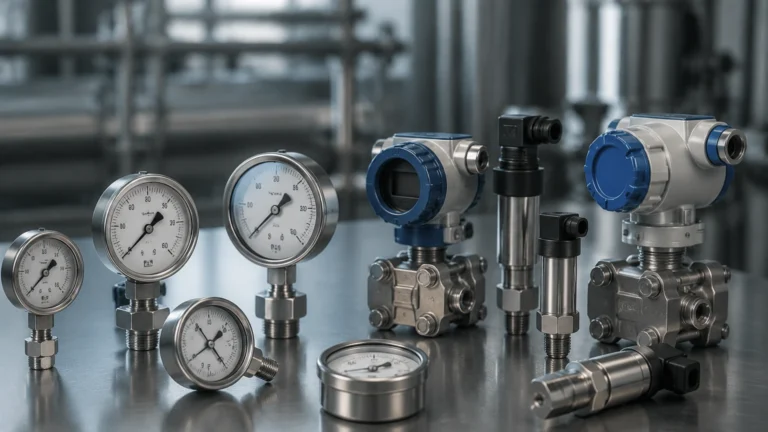
Hydrostatic Pressure Measurement
Hydrostatic level transmitters calculate the def level by measuring the pressure exerted by the liquid column at the bottom of the tank. The relationship is defined by the formula $P = \rho gh$, where $P$ is pressure, $\rho$ (rho) is the density of the DEF, $g$ is gravity, and $h$ is the height of the liquid.
For DEF applications, the density is relatively stable at approximately 1,089 kg/m³ at 20°C (68°F). Submersible pressure transducers or externally mounted threaded sensors are common. Because DEF is corrosive to copper and mild steel, these sensors must be constructed from high-grade stainless steel (SS316L) or specialized plastics.
Radar Level Measurement
Radar sensors, particularly high-frequency 26GHz or 80GHz models, use microwave pulses instead of sound waves. Like ultrasonic sensors, they use time-of-flight calculations but are unaffected by air temperature, pressure, or vapor layers. Radar is the preferred choice for large-scale bulk DEF storage where high precision (up to ±2 mm) is required. It is also highly resistant to the "steam" or vapors that can occur in closed DEF tanks during temperature fluctuations.
Magnetic Level Gauges
Magnetic level gauges utilize a float containing an internal magnet that moves with the liquid level inside a bypass chamber. Outside the chamber, magnetic flags or a guided transmitter track the float's position. This provides a clear visual indication for operators on-site while simultaneously providing a 4-20mA signal for remote monitoring. This is a robust mechanical solution that does not require power for the visual display component.
Technical Selection Criteria for DEF Level Monitoring
When evaluating instrumentation for DEF, several technical factors must be prioritized to ensure the longevity of the equipment and the accuracy of the data.
1. Material Compatibility: DEF is chemically incompatible with many common industrial materials. It aggressively corrodes copper, brass, lead, and zinc. All wetted parts of a level sensor—including seals, diaphragms, and housings—must be made from approved materials such as SS316L, Polyethylene (PE), Polypropylene (PP), or PTFE (Teflon).
2. Crystallization Management: When DEF is exposed to air, the water evaporates, leaving behind white urea crystals. These crystals can build up on contact-type sensors or the face of ultrasonic transducers. Selecting sensors with smooth, non-stick surfaces or using non-contact radar can mitigate this risk.
3. Temperature Sensitivity: DEF freezes at -11°C (12°F). In cold climates, tanks are often heated. Level sensors must be able to operate accurately across a wide temperature range, and hydrostatic sensors must be robust enough to withstand the expansion of the fluid if freezing occurs.
4. Tank Geometry: The shape of the tank (e.g., horizontal cylindrical vs. vertical) and the presence of internal structures like heaters or baffles will dictate whether a contact or non-contact sensor is more appropriate. For complex internal environments, guided wave radar or hydrostatic sensors are often more reliable than open-air ultrasonic waves.
For a detailed overview of specific hardware options and technical specifications, engineers are encouraged to visit the Main Page of Welk's industrial catalog.
Comparison of DEF Level Measurement Technologies
The following table provides a practical reference for selecting the appropriate technology based on typical industrial DEF applications.
| Technology | Accuracy | Mounting | Advantages | Best Use Case |
| :— | :— | :— | :— | :— |
| Ultrasonic | ±0.25% of range | Top-mount | Cost-effective, non-contact | Intermediate Bulk Containers (IBCs) and small day tanks |
| Hydrostatic | ±0.1% to ±0.5% | Bottom/Submerged | Simple installation, no dead zone | Deep underground storage or vented tanks |
| Radar | ±2 mm | Top-mount | Highest precision, unaffected by vapors | Large bulk storage and high-accuracy inventory tracking |
| Magnetic Gauge | ±5 mm | Side-mount | Visual local display, very durable | Process tanks requiring manual operator checks |

Installation Considerations and Best Practices
Proper installation is as critical as sensor selection. Even the most advanced sensor will provide inaccurate data if poorly positioned.
* Dead Zone (Blocking Distance): Ultrasonic and radar sensors have a "dead zone" directly beneath the transducer where measurements cannot be taken. Ensure the sensor is mounted high enough so that the maximum fill level of the DEF does not enter this zone.
* Avoiding Turbulence: If the tank has an inlet that creates significant splashing or turbulence, the sensor should be mounted as far from the fill point as possible. Alternatively, a stilling well can be used to provide a calm surface for the measurement.
* Venting: DEF tanks must be properly vented to prevent vacuum or pressure buildup, which can affect hydrostatic sensors and cause structural damage to the tank. Ensure the vent is equipped with a filter to prevent debris from entering the high-purity fluid.
* Submersible Cable Protection: For hydrostatic sensors used in deep tanks, the cable should be secured to prevent it from moving due to fluid agitation. The vent tube within the cable must remain unobstructed to allow for atmospheric pressure compensation.
Limitations and Operational Challenges
While modern instrumentation is highly reliable, there are inherent limitations to consider when monitoring def level:
* Signal Attenuation: In very tall tanks, heavy urea vapor or condensation on the sensor face can attenuate (weaken) ultrasonic signals. In these instances, 80GHz radar is superior as it easily penetrates vapor.
* Density Shifts: While the density of DEF is generally stable, significant temperature swings can cause slight variations. High-end hydrostatic systems often include a secondary pressure sensor or temperature probe to calculate the exact density in real-time for maximum accuracy.
* Power Supply Stability: In remote locations or mobile applications (such as portable refueling stations), fluctuating power supplies can cause signal noise. Using a 4-20mA loop-powered system with proper shielding is recommended to maintain signal integrity.
Frequently Asked Questions (FAQs)
Q: Can I use a standard water level sensor for DEF?
A: No. Standard sensors often use brass or low-grade stainless steel components that will corrode quickly when exposed to DEF. You must ensure the wetted materials are specifically rated for urea solutions.
Q: How does crystallization affect the sensor?
A: For ultrasonic sensors, urea crystals on the transducer face can scatter the signal, leading to "lost echo" errors. Regular inspection or the use of a radar sensor with a drip-off lens design is recommended in high-evaporation environments.
Q: What is the typical lifespan of a DEF level sensor?
A: When correctly specified with SS316L or plastic housings, a high-quality sensor from a manufacturer like Welk can last 5 to 10 years, depending on the environmental conditions and the frequency of thermal cycling.
Q: Do I need to recalibrate the sensor if the DEF freezes?
A: Most electronic sensors will resume accurate readings once the fluid thaws. However, the physical expansion of ice can damage the sensitive diaphragms of low-quality hydrostatic sensors. It is best to use sensors designed with overpressure protection.
By adhering to these engineering principles and selection criteria, organizations can ensure their DEF infrastructure remains compliant and efficient. For further assistance in selecting the right instrument for your specific application, please refer to the technical resources available on the Welk Main Page.