Lift Station Monitoring
Lift Station Monitoring
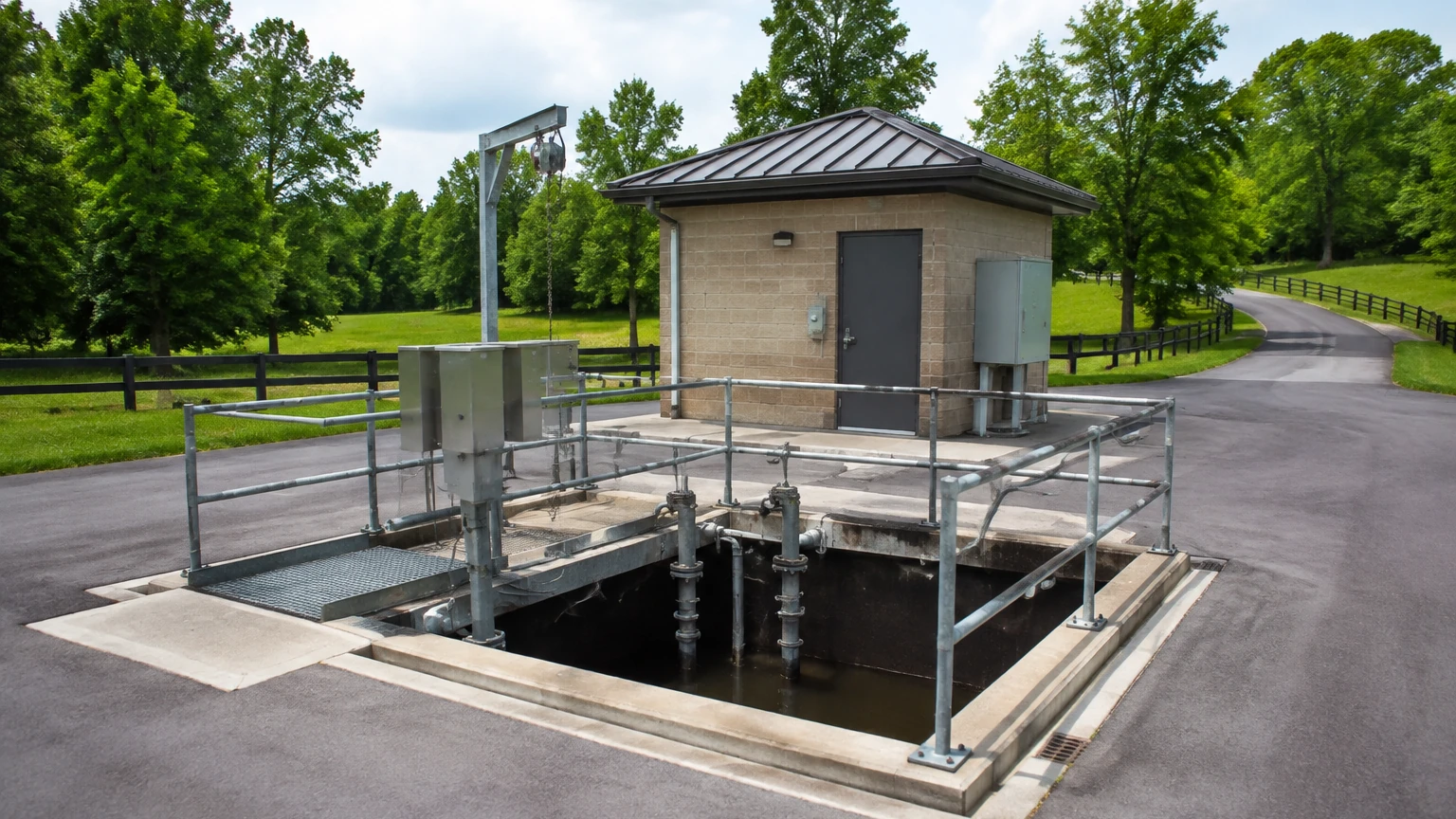
In the infrastructure of municipal and industrial wastewater management, lift stations play a vital role in moving fluids from lower to higher elevations. Because these stations often operate in remote or unmanned locations, effective lift station monitoring is essential to prevent costly overflows, equipment damage, and environmental non-compliance. Reliable level measurement is the cornerstone of any monitoring strategy, providing the data necessary to trigger pumps, activate alarms, and track inflow patterns.
Selecting the appropriate technology for lift station monitoring requires an understanding of the unique challenges posed by wastewater environments, including turbulence, foam, grease buildup, and corrosive gases. This guide examines the primary measurement principles used in the industry and provides engineering considerations for selecting and installing level instruments.
Measurement Principles for Lift Station Monitoring
There is no single "perfect" sensor for every lift station. The choice depends on the specific characteristics of the fluid and the physical constraints of the wet well. The following technologies are the most common solutions provided by manufacturers like Welk to ensure continuous operation.
1. Ultrasonic Level Measurement (Non-Contact)
Ultrasonic sensors are a staple in lift station monitoring due to their non-contact nature. The sensor, mounted at the top of the wet well, emits high-frequency sound pulses toward the liquid surface. By measuring the time it takes for the echo to return (Time-of-Flight), the instrument calculates the distance to the liquid and, subsequently, the level.
* Advantages: No moving parts and no contact with the corrosive wastewater, which minimizes maintenance requirements.
* Limitations: Ultrasonic waves are affected by air temperature and can be scattered by heavy foam or steam. They also have a "dead zone" (blanking distance) directly beneath the sensor where measurement is impossible.
2. Hydrostatic Level Transmitters (Contact)
Hydrostatic sensors are submersible pressure transducers that sit at the bottom of the lift station or are suspended at a fixed depth. They measure the pressure exerted by the liquid column above them. Based on the principle that pressure is proportional to the height of the liquid ($P = \rho gh$), the sensor converts this pressure into a level reading.
* Advantages: They are unaffected by surface foam, vapors, or the physical constraints at the top of the tank. They are often the most cost-effective solution for deep wells.
* Limitations: Because they are in constant contact with the fluid, they are susceptible to fouling from grease, oils, and solids. A clogged diaphragm can lead to inaccurate readings.
3. Radar Level Measurement (Non-Contact)
Radar sensors use high-frequency microwave pulses (typically in the 26GHz or 80GHz range) rather than sound waves. Like ultrasonic sensors, they use the Time-of-Flight principle but are immune to many of the environmental factors that plague ultrasonic devices.
* Advantages: Radar is unaffected by temperature fluctuations, vacuum, high pressure, or heavy steam. 80GHz radar, in particular, offers a very narrow beam angle, making it ideal for narrow wet wells with internal obstructions like ladders or pipes.
* Limitations: Higher initial capital cost compared to ultrasonic or hydrostatic options, though this is often offset by lower long-term maintenance costs.
4. Point Level Switches
While continuous level monitoring is critical, point level switches (such as float switches or conductive probes) are often used as redundant backups. In a lift station monitoring system, these switches are set at critical high and low points to provide emergency pump starts or shut-offs if the primary continuous sensor fails.
Key Evaluation Criteria for Sensor Selection
When designing a system for lift station monitoring, engineers must evaluate several factors to ensure the selected instrument will perform reliably over its service life.
| Criteria | Ultrasonic | Hydrostatic | Radar | Float Switches |
| :— | :— | :— | :— | :— |
| Media Contact | Non-contact | Submerged | Non-contact | Contact |
| Accuracy | High (±0.25%) | Moderate (±0.5%) | Very High (±2mm) | N/A (Point only) |
| Foam Resistance | Poor | Excellent | Good to Excellent | Moderate |
| Grease/Solids | Excellent | Poor (Clogging) | Excellent | Poor (Tangling) |
| Ease of Install | Moderate | Easy | Moderate | Easy |
| Cost | Mid-range | Low to Mid | Higher | Low |
Wastewater Characteristics
The presence of Fats, Oils, and Grease (FOG) is a primary concern. Hydrostatic sensors may require frequent cleaning if grease coats the diaphragm. In such cases, non-contact radar or ultrasonic sensors are preferred. If the lift station experiences significant turbulence due to high-velocity inflow, a hydrostatic sensor or a radar sensor with advanced signal processing is more reliable than an ultrasonic device, which may lose its signal in the surface agitation.
Physical Constraints
The geometry of the wet well influences the choice. Narrow wells with many internal pipes favor 80GHz radar because the narrow beam can be directed to avoid reflections from obstructions. For very deep lift stations, hydrostatic transmitters are often preferred because they do not have the range limitations that some low-power ultrasonic sensors might encounter.
Common Risks and Challenges in Monitoring
Lift station monitoring is fraught with environmental hazards that can compromise data integrity. Identifying these risks early allows for better system design.
1. Hydrogen Sulfide (H2S) Corrosion: Wastewater often generates H2S gas, which is highly corrosive to electronics and metal housings. Sensors used in these environments should feature corrosion-resistant materials such as PVDF, Hastelloy, or high-grade stainless steel.
2. Signal Interference: In non-contact measurement, false echoes from pump housings, brackets, or ladders can lead to "hunting" or incorrect level reporting. Modern instruments allow for "false echo suppression," where the software is trained to ignore static reflections.
3. Power Surges: Lift stations are often located in open areas prone to lightning strikes. Furthermore, the starting and stopping of large pumps can cause voltage spikes. Level transmitters should be equipped with surge protection to prevent premature failure.
4. The "Dead Zone": For ultrasonic sensors, if the liquid level rises into the dead zone (typically 0.2m to 0.5m from the sensor face), the device may report an incorrect level or a loss of signal. This is a critical risk during high-flow events where the station is most at risk of overflowing.
Installation Considerations for Maximum Reliability
Proper installation is as important as selecting the right sensor. To optimize your Main Page equipment performance, follow these engineering best practices:
* Positioning: Always mount non-contact sensors away from the inflow pipe. Falling water creates turbulence and air bubbles that can deflect ultrasonic or radar signals.
* Stilling Wells: In extremely turbulent wells, a stilling well (a vertical pipe that shields the sensor from surface agitation) can be used. This is particularly effective for hydrostatic sensors to prevent them from moving or for ultrasonic sensors to provide a smooth surface for measurement.
* Cable Protection: For hydrostatic transmitters, the cable contains a vent tube to compensate for changes in atmospheric pressure. This tube must be kept clear of moisture and debris. Using a junction box with a desiccant filter is a standard requirement for long-term accuracy.
* Mounting Brackets: Use adjustable stainless steel brackets that allow the sensor to be swung out over the well for measurement and swung back for easy maintenance access without the need for confined space entry.
Information to Confirm Before Implementation
Before finalizing a lift station monitoring project, stakeholders should confirm the following data points to ensure the hardware matches the application:
* Maximum and Minimum Liquid Levels: Determine the full range of measurement, including the distance from the mounting point to the bottom of the well.
* Chemical Composition: Is the wastewater purely domestic, or does it contain industrial run-off? This dictates the material compatibility for diaphragms and housings.
* Connectivity Requirements: Does the monitoring system require a standard 4-20mA signal, or is a digital protocol like Modbus, HART, or Profibus needed for integration into a SCADA system?
* Hazardous Area Rating: Many lift stations are classified as Class I, Div 1 or 2 (ATEX Zone 0 or 1) due to the presence of methane or other flammable gases. Ensure the level sensor carries the appropriate intrinsic safety or explosion-proof certifications.
Frequently Asked Questions (FAQs)
Q: How often should lift station level sensors be calibrated?
A: Most modern digital sensors are factory-calibrated and do not drift significantly. However, a manual check (using a weighted tape measure) should be performed every 6 to 12 months to account for any physical changes in the well or sensor fouling.
Q: Can I use an ultrasonic sensor if there is heavy foam?
A: Standard ultrasonic sensors struggle with foam because the air bubbles absorb the sound energy. If foam is persistent, a hydrostatic transmitter or a high-frequency radar sensor is a much more reliable choice.
Q: What happens if a hydrostatic sensor gets buried in silt?
A: Silt and sludge can block the pressure port of the sensor, leading to a frozen or inaccurate reading. In wells prone to silting, the sensor should be suspended slightly above the bottom or housed in a perforated stilling well.
Q: Is wireless monitoring an option for remote lift stations?
A: Yes, many level transmitters can be integrated with cellular or radio-based telemetry units. This allows for real-time lift station monitoring and SMS/email alerts without the need for expensive trenching and cabling to a central control room.
By understanding the physical principles of level measurement and the specific environmental stressors of wastewater, operators can implement a lift station monitoring strategy that reduces downtime and protects vital infrastructure. For more detailed technical specifications and product comparisons, you may Review product options and application support to find the best fit for your specific project requirements.