Polyethylene Dielectric Constant
Polyethylene Dielectric Constant
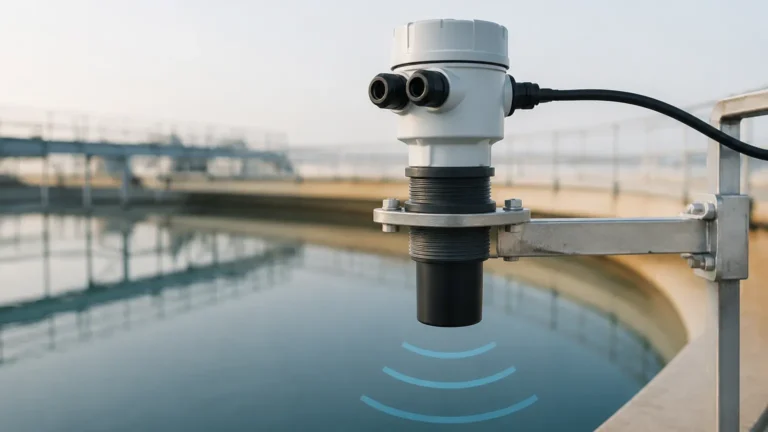
In industrial process automation, accurately measuring the level of polymers like polyethylene (PE) is a critical requirement for inventory management and production efficiency. One of the most decisive factors in selecting and calibrating level measurement instruments for these applications is the polyethylene dielectric constant. This physical property determines how electromagnetic waves, such as those used in radar level meters, interact with the material.
Understanding the dielectric constant—also known as relative permittivity ($ε_r$)—is essential for engineers to ensure reliable signal reflection and avoid measurement errors. This guide explores the technical nuances of polyethylene's dielectric properties, their impact on measurement technologies, and practical selection criteria for industrial environments.
Understanding the Role of Dielectric Constant in Level Measurement
The dielectric constant is a dimensionless measure of a material's ability to store electrical energy in an electric field. In the context of level measurement, it specifically dictates the strength of the reflected signal (echo) received by radar sensors.
Measurement Principles
Most modern level measurement technologies rely on one of two principles related to dielectric properties:
1. Time of Flight (ToF) Radar: Non-contact radar level meters emit electromagnetic pulses. When these pulses hit the surface of the medium, a portion of the energy is reflected back to the sensor. The intensity of this reflection is directly proportional to the dielectric constant of the medium. Materials with a high dielectric constant (e.g., water, $ε_r ≈ 80$) produce very strong reflections, while materials with a low dielectric constant, such as polyethylene, produce much weaker signals.
2. Guided Wave Radar (GWR): This technology uses a physical probe to guide the electromagnetic pulse. While it still relies on the dielectric constant for reflection, the concentrated energy along the probe allows GWR to measure materials with lower dielectric constants more reliably than non-contact radar in certain conditions.
3. Capacitance Sensors: These sensors treat the tank and the medium as a capacitor. The change in capacitance as the level rises is determined by the dielectric constant of the material displacing the air.
For polyethylene, which is a non-polar hydrocarbon, the dielectric constant is notably low. This poses specific challenges for signal detection and requires precise instrument configuration.
Typical Polyethylene Dielectric Constant Values
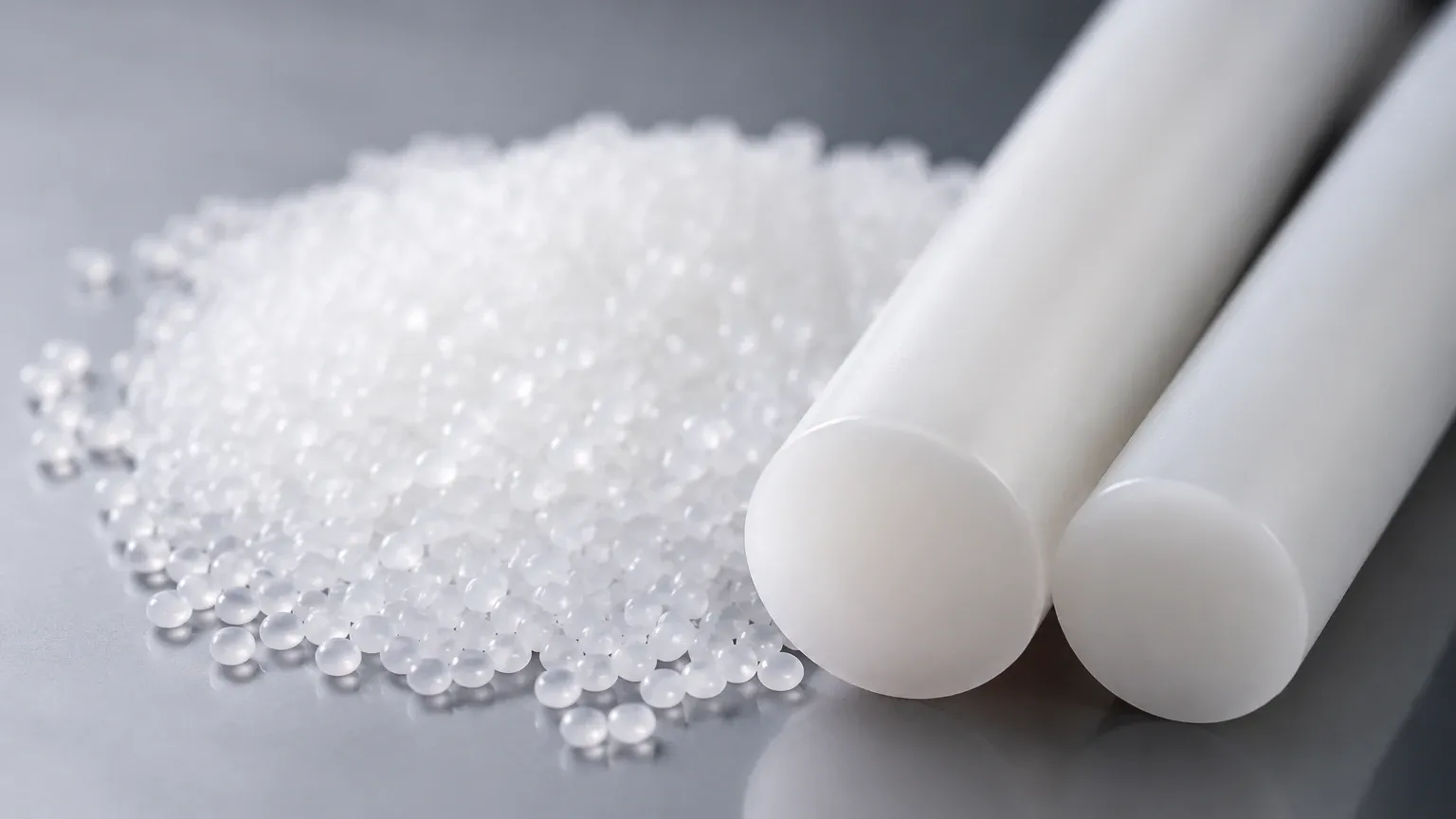
Polyethylene is available in several forms, primarily distinguished by their density and molecular structure. These variations lead to slight differences in the polyethylene dielectric constant. Generally, the values for pure polyethylene range between 2.2 and 2.4.
Dielectric Constants by Polyethylene Type
| Polyethylene Type | Typical Density (g/cm³) | Dielectric Constant ($ε_r$) |
| :— | :— | :— |
| Low-Density Polyethylene (LDPE) | 0.910 – 0.940 | 2.25 – 2.30 |
| High-Density Polyethylene (HDPE) | 0.941 – 0.965 | 2.30 – 2.35 |
| Linear Low-Density Polyethylene (LLDPE) | 0.915 – 0.925 | 2.25 – 2.30 |
| Polyethylene Pellets (Bulk) | 0.500 – 0.600 (Bulk) | 1.45 – 1.70 |
It is important to note that for bulk solids, such as polyethylene pellets or powders stored in silos, the "effective" dielectric constant is lower than that of the solid resin. This is because the sensor measures a mixture of the polymer and air (which has a dielectric constant of 1.0). In such cases, the effective $ε_r$ may drop below 1.7, requiring high-sensitivity radar equipment.
Impact of Dielectric Constant on Radar Signal Reflection
The reflection coefficient ($R$) at the boundary between air and the measured medium can be estimated using the Fresnel equation for normal incidence:
$$R = \frac{\sqrt{ε_r} – 1}{\sqrt{ε_r} + 1}$$
For a material like polyethylene with a dielectric constant of approximately 2.3, the reflection coefficient is relatively small. This means that a significant portion of the radar energy penetrates the material rather than reflecting off the surface. If the material is stored in a large silo, the radar pulse may even travel through the entire volume and reflect off the bottom of the tank, creating a "double-hop" or false echo that must be filtered out by the instrument's software.
In applications involving polyethylene flakes or powders, the surface is often uneven, leading to diffuse reflection. When combined with a low dielectric constant, the return signal can be extremely weak. This necessitates the use of high-frequency radar (such as 80 GHz) which offers better focusing and higher signal dynamics.
Choosing the Right Level Meter for Polyethylene Applications
When selecting a level measurement solution for polyethylene, the choice of technology depends on the physical form of the material (liquid vs. solid) and the vessel geometry.
1. 80 GHz High-Frequency Radar
For most polyethylene silos, 80 GHz radar is the preferred choice. The narrow beam angle (often as small as 3°) minimizes interference from internal tank structures and focuses the energy on the low-dielectric surface. This maximizes the return signal strength even when the polyethylene dielectric constant is low.
2. Guided Wave Radar (GWR)
GWR is highly effective for polyethylene liquids or small bins where a probe can be installed. Because the pulse is confined to the probe, the signal loss is minimized. GWR is particularly useful when the dielectric constant is at the lower limit (e.g., $ε_r < 1.6$ for bulk powders).
3. Ultrasonic Level Sensors
Ultrasonic sensors are independent of the dielectric constant as they rely on sound waves. However, they are sensitive to dust, temperature fluctuations, and vacuum conditions, which are common in polyethylene pneumatic conveying systems. Therefore, they are generally less favored than radar in high-dust plastic applications.
Selection Table for Polyethylene Level Measurement
| Application | Recommended Technology | Advantage |
| :— | :— | :— |
| Large Pellets Silo | 80 GHz Non-contact Radar | High focus, handles dust well |
| Fine PE Powder | Guided Wave Radar | Strongest signal for low $ε_r$ |
| Molten Polyethylene | High-Temp Radar / GWR | Reliable in high-process temps |
| Small Buffer Hoppers | Ultrasonic or Radar | Cost-effective for short ranges |
For a comprehensive overview of available technologies, engineers should consult the Main Page of professional instrumentation providers to compare specific model sensitivities.
Installation Guidelines for Low-Dielectric Materials
Because the polyethylene dielectric constant results in weak signal reflections, installation precision is paramount. Consider the following engineering best practices:
* Avoid Obstructions: Ensure the radar beam path is clear of ladders, pipes, or agitators. Even small obstructions can produce echoes stronger than the polyethylene surface itself.
* Nozzle Design: Use short nozzles to prevent signal attenuation before the wave enters the tank. For low $ε_r$ materials, the antenna should ideally extend slightly into the vessel.
* Angle of Repose: In solids applications, polyethylene forms a cone. The radar should be mounted approximately 1/6th to 1/3rd of the diameter from the wall to capture an average level and ensure the beam hits a relatively flat part of the slope.
* Sensitivity Settings: Configure the "Threshold" or "Echo Tracking" settings in the transmitter to account for the low amplitude of the reflected pulse. Most modern meters have a specific "Low Dielectric" mode.
Factors Influencing Dielectric Stability in Industrial Processes
While the polyethylene dielectric constant is relatively stable, certain process conditions can cause fluctuations that affect measurement accuracy:
1. Moisture Content: Polyethylene is hydrophobic, but surface moisture on pellets can significantly increase the dielectric constant, leading to a sudden shift in the perceived level if the instrument is not properly calibrated.
2. Temperature: As temperature increases, the density of polyethylene decreases, which slightly lowers the dielectric constant. In high-temperature polymerization reactors, this must be compensated for in the transmitter settings.
3. Additives: The inclusion of carbon black, metallic pigments, or flame retardants can drastically alter the dielectric properties. For example, carbon-filled polyethylene may have a much higher dielectric constant than pure PE, requiring a recalibration of the level meter.
4. Bulk Density: In silos, the compaction of pellets at the bottom increases the effective dielectric constant compared to the loose material at the top.
Limitations and Considerations
The primary limitation when dealing with a low polyethylene dielectric constant is the "Minimum Dielectric" rating of the instrument. If the effective $ε_r$ of the bulk material falls below the meter's threshold (typically 1.4 for high-end radars), the sensor may lose the signal entirely when the tank is nearly empty.
In such cases, using a stilling well or a bypass chamber can help. These structures concentrate the radar energy and can boost the effective signal return, allowing for reliable measurement of even the most challenging low-dielectric polymers.
Frequently Asked Questions (FAQs)
Q: Can I use a standard radar meter for polyethylene pellets?
A: Yes, but it must be a high-sensitivity model. Standard radars designed for water-based liquids may struggle with the low reflection from PE pellets. An 80 GHz radar is recommended.
Q: How does the dielectric constant affect the measurement accuracy?
A: In non-contact radar, the dielectric constant primarily affects signal *reliability* rather than accuracy. However, in Guided Wave Radar, if the pulse travels through the medium (e.g., measuring an interface), the dielectric constant is used to calculate the speed of the wave, directly impacting accuracy.
Q: Does the color of the polyethylene affect the measurement?
A: Generally, no. Radar waves are not affected by color. However, the *chemical additives* used to create the color (like carbon black) can change the dielectric constant.
Q: What happens if the dielectric constant is set incorrectly in the device?
A: For most top-down level measurements, the device looks for the strongest echo. If the dielectric constant is set too high, the device might ignore the real (weak) surface echo and instead lock onto a stronger reflection from the tank bottom.
Conclusion
Successful level measurement in polyethylene applications hinges on a thorough understanding of the polyethylene dielectric constant. By recognizing that PE provides a weak radar reflection, engineers can specify the correct frequency, antenna type, and mounting position to ensure long-term operational reliability. Whether managing high-density polyethylene (HDPE) in large silos or low-density polyethylene (LDPE) in process hoppers, selecting an instrument with high dynamic range and specialized signal processing is the key to overcoming the challenges of low-dielectric materials. For further technical specifications and product selection tools, visit the Main Page to explore professional-grade level measurement solutions.