Mobile Silos
Mobile Silos
Mobile silos represent a critical component in modern logistics, construction, and agricultural supply chains. Unlike permanent storage structures, these portable units provide the flexibility to store bulk materials—ranging from cement and lime to grain and plastic pellets—directly at the point of use. However, the mobility of these assets introduces unique challenges for inventory management and process control. Accurate level measurement is essential to prevent overfilling, avoid material stockouts, and optimize the logistics of refilling schedules.
In this technical guide, we examine the engineering requirements for monitoring mobile silos, the measurement principles of various sensor technologies, and the practical considerations for selecting and installing instruments in dynamic industrial environments.
The Role of Mobile Silos in Industry
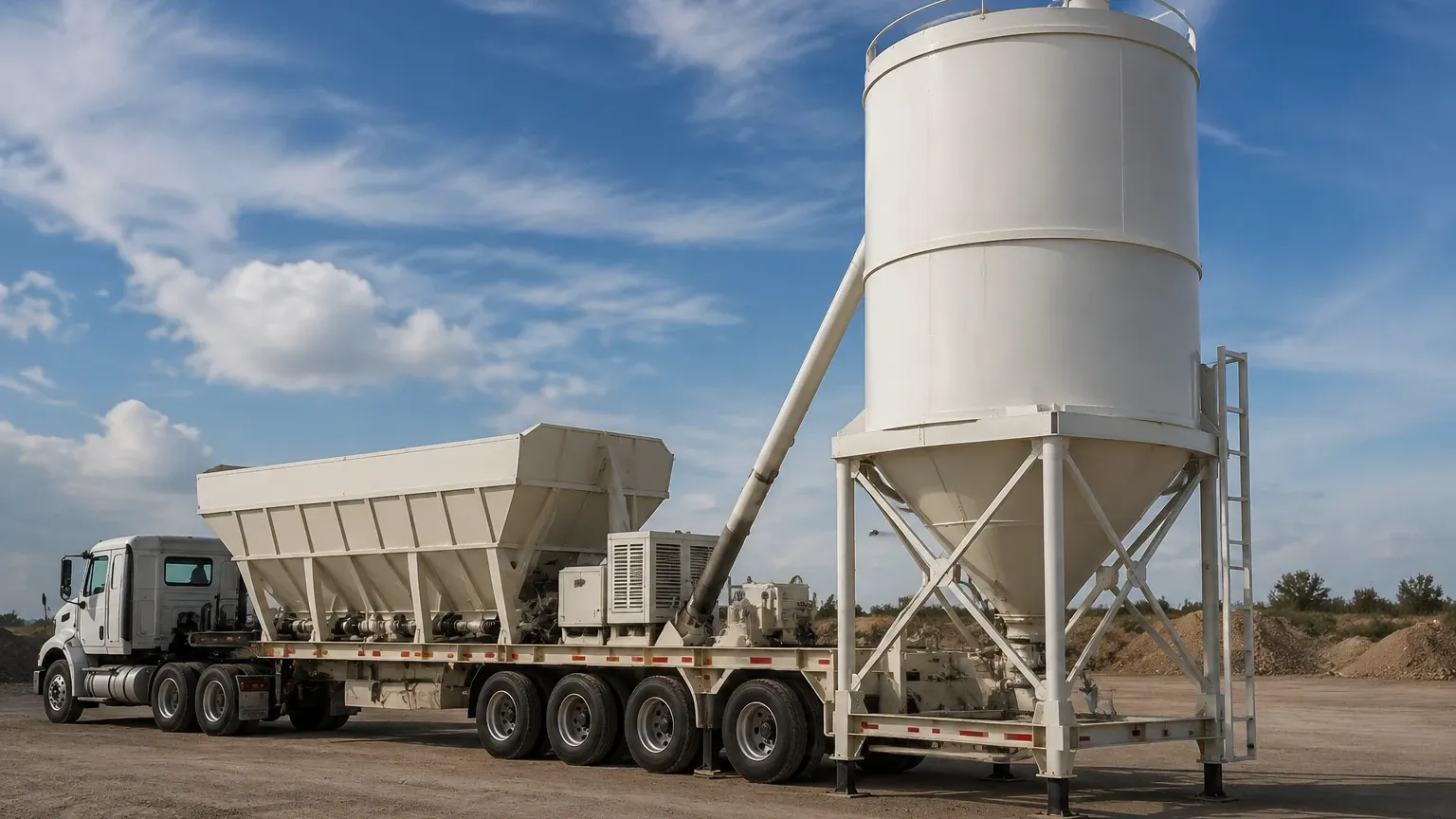
Mobile silos are typically vertical or horizontal pressurized containers designed for easy transport via truck or trailer. They are widely utilized in sectors where project sites shift frequently:
* Construction: Storing dry-mix mortar, cement, and fly ash at building sites.
* Agriculture: Temporary storage for grain, feed, or fertilizers during harvest or planting seasons.
* Chemical and Environmental: Holding lime for water treatment or chemicals for short-term industrial projects.
Because these silos move from site to site, they often lack the stable infrastructure of a factory. Level measurement systems must therefore be robust enough to withstand transport vibrations and flexible enough to operate with varying power sources and connectivity options.
Measurement Principles for Mobile Silo Level Sensing
Before selecting a specific instrument, it is vital to understand the physics behind the most common measurement technologies. For mobile silos, the choice typically narrows down to non-contact methods due to the abrasive or corrosive nature of the bulk solids stored within.
Radar Level Measurement (Time-of-Flight)
Radar sensors, particularly high-frequency 80GHz units, are the gold standard for mobile silos. The principle is based on Time-of-Flight (ToF). The sensor emits a high-frequency microwave signal that travels to the material surface and reflects back to the antenna. The distance is calculated based on the time interval between emission and reception.
Radar is highly effective for mobile silos because microwaves are unaffected by dust, air temperature, or pressure changes—all of which are common during the pneumatic filling of a silo. The narrow beam angle of 80GHz radar allows for precise measurement even in narrow silos with internal reinforcements.
Ultrasonic Level Measurement
Ultrasonic sensors use sound waves instead of electromagnetic waves. The sensor emits an ultrasonic pulse that reflects off the material surface. While cost-effective, ultrasonic technology is sensitive to the environment. In mobile silos, the heavy dust generated during filling can attenuate the sound signal, leading to signal loss. Furthermore, temperature fluctuations can change the speed of sound, requiring integrated temperature compensation for accuracy.
Hydrostatic Level Measurement
For mobile silos used to store liquids (such as liquid fertilizer or chemical additives), hydrostatic pressure transmitters are a reliable choice. The sensor measures the pressure exerted by the liquid column at the bottom of the tank. This pressure is directly proportional to the liquid height and density. While highly accurate for liquids, this method is not applicable to dry bulk solids due to the non-uniform pressure distribution of powders and granules.
Point Level Detection (Switches)
In addition to continuous measurement, mobile silos often require point level switches to act as high-level alarms to prevent overfilling. Common technologies include:
* Vibrating Fork Sensors: These vibrate at a specific frequency; when covered by material, the frequency changes, triggering a switch.
* Rotary Paddle Switches: A motor-driven paddle rotates until it is stalled by the material level.
Selection Criteria for Mobile Silo Instrumentation
Choosing the right sensor requires an evaluation of the material properties and the silo's operational environment. For a comprehensive overview of available technologies, visit the Main Page of Welk’s product catalog.
1. Material Characteristics
* Dielectric Constant (Dk): Radar sensors require a material with a sufficient Dk to reflect waves. Most minerals and grains have adequate Dk values, but extremely low-density powders may require specialized radar configurations.
* Dust Generation: If the silo is filled pneumatically, dust will be intense. Radar is preferred over ultrasonic in these scenarios.
* Angle of Repose: Solids do not sit flat; they form a cone. The sensor must be positioned to account for this to provide a representative volume calculation.
2. Physical Environment
* Vibration: Mobile silos experience significant mechanical stress during transport. Sensors must have high ingress protection (IP66/67 or IP68) and robust mounting hardware.
* Power Supply: Remote sites may lack grid power. Low-power sensors (e.g., 4-20mA loop-powered) that can run on battery or solar power are advantageous.
* Connectivity: Since mobile silos are often used at remote locations, wireless data transmission (such as LoRaWAN, NB-IoT, or cellular) is essential for real-time inventory tracking.
Technical Comparison Table
| Feature | 80GHz Radar | Ultrasonic | Hydrostatic (Liquids Only) | Level Switch (Point) |
| :— | :— | :— | :— | :— |
| Measurement Type | Continuous (Non-contact) | Continuous (Non-contact) | Continuous (Contact) | Point Level |
| Accuracy | ±2 mm (0.08 in) | ±10 mm (0.4 in) | ±0.1% to 0.5% Span | N/A |
| Dust Resistance | Excellent | Poor | N/A | Good |
| Max Range | Up to 120 m (393 ft) | Up to 15 m (49 ft) | Up to 200 m (656 ft) | N/A |
| Maintenance | Very Low | Moderate (Clean sensor face) | Low | Low to Moderate |
| Typical Application | Cement, Grain, Chemicals | Water, Wastewater | Liquid Chemicals, Oil | Overfill Protection |
Installation and Calibration Considerations
Proper installation is paramount to ensuring the reliability of level data in mobile silos. Engineers should follow these guidelines:
1. Mounting Position: The sensor should be mounted away from the filling inlet to avoid direct contact with the material stream. For solids, the sensor is typically positioned at one-third of the radius from the silo wall to compensate for the angle of repose.
2. Nozzle Height: If using a mounting nozzle, ensure the sensor antenna extends slightly beyond the nozzle end to prevent false reflections from the nozzle internal walls.
3. Vibration Dampening: In some cases, using rubber gaskets or dampening mounts can protect the electronics from the shocks associated with moving the silo.
4. Calibration: Most modern sensors, such as those provided by Welk, can be calibrated via Bluetooth or a handheld programmer. This allows technicians to set the "Empty" and "Full" points (e.g., 4mA and 20mA) without needing to fill the silo completely.
Limitations and Risk Mitigation
While advanced instrumentation significantly improves silo management, certain limitations must be managed:
* Material Build-up: Sticky materials can accumulate on the sensor face. While radar is resistant to this, extreme build-up can eventually attenuate the signal. Selecting a sensor with a PTFE (Teflon) face can reduce adhesion.
* Shifting Loads: During transport, the material inside a mobile silo will shift. Level readings taken while the silo is in motion or on an incline will be inaccurate. Measurements should only be considered valid when the silo is stationary and leveled on its jacks.
* Signal Interference: Internal structures like ladders or braces can create "ghost" echoes. Modern radar software includes "False Signal Suppression" or "Echo Mapping" to ignore these fixed obstructions.
Frequently Asked Questions (FAQs)
Q: Can I use one sensor for both liquids and solids in a mobile silo?
A: A non-contact radar sensor is versatile enough to measure both, provided the dielectric constant of the material is sufficient. However, the configuration settings (such as the damping rate and surface type) must be updated when switching between material types.
Q: How do I track silo levels if there is no internet at the construction site?
A: Many mobile silo systems use satellite-linked gateways or local radio frequencies (RF) to transmit data to a central hub. Alternatively, some sensors offer local digital displays for manual checking by site personnel.
Q: Is 80GHz radar better than 26GHz radar for mobile silos?
A: Generally, yes. The 80GHz frequency allows for a much narrower beam (typically 3° to 8°), which is better at avoiding internal silo structures and provides a stronger reflection from the material surface, especially in dusty conditions.
Conclusion
Effective management of mobile silos requires a transition from manual "tap-testing" to automated, high-precision level measurement. By understanding the principles of radar and ultrasonic technologies and accounting for the specific rigors of mobile applications, operators can ensure continuous supply and operational safety. For technical specifications and assistance in selecting the correct instrument for your project, please refer to the Main Page of our engineering resource site.