Thermal Mass Flow Meter Online
Thermal Mass Flow Meter Online
In the modern industrial landscape, the procurement and specification of instrumentation have shifted significantly toward digital platforms. Sourcing a thermal mass flow meter online requires more than just a price comparison; it demands a deep understanding of the underlying physics, application-specific constraints, and the technical nuances that ensure long-term accuracy. For process engineers and facility managers, the ability to evaluate high-precision instruments through digital documentation is essential for maintaining efficient operations in water treatment, chemical processing, and industrial automation.
While flow measurement is a distinct discipline, it is intrinsically linked to level measurement in the broader context of process control. Accurate mass flow data allows for better mass balance calculations, which in turn validates the readings from level sensors in storage and process tanks. For those seeking comprehensive instrumentation solutions, including advanced level measurement technology, visiting a specialized Main Page provides a broader perspective on how these systems integrate to optimize plant performance.
Measurement Principles: How Thermal Mass Flow Meters Work
Before selecting a thermal mass flow meter online, it is critical to understand the thermal dispersion principle that governs its operation. Unlike volumetric flow meters (such as vortex or turbine meters), thermal mass flow meters measure the mass of the fluid directly, typically gases, by monitoring heat transfer.
The Sensor Configuration
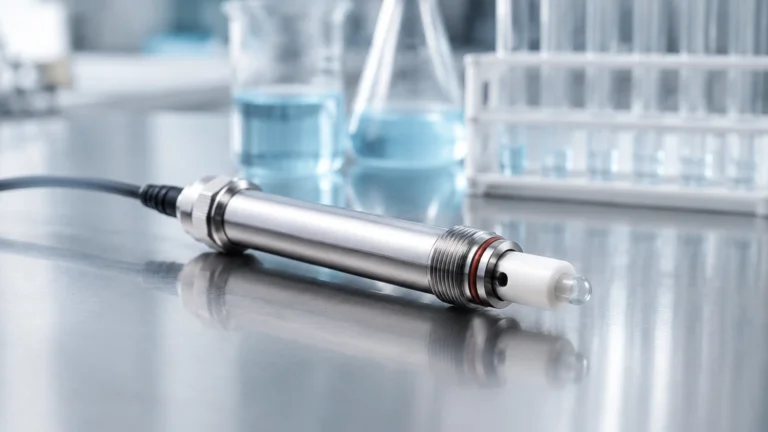
Most industrial thermal mass flow meters utilize two Resistance Temperature Detectors (RTDs). These are typically platinum-wire sensors protected by a stainless steel or Hastelloy thermowell.
1. The Reference Sensor: This sensor measures the actual temperature of the process gas.
2. The Active (Heated) Sensor: This sensor is supplied with power to maintain a specific temperature differential above the reference sensor.
The Physics of Heat Dissipation
As gas flows past the heated sensor, molecules carry heat away from the surface. This is known as convective heat transfer. The rate of heat loss is directly proportional to the mass flow rate of the gas. In a "Constant Temperature Differential" configuration, the electronic circuitry calculates how much power is required to maintain the fixed temperature difference (e.g., a 50°C delta). Since the density and thermal properties of a specific gas are known, the electrical power consumed is converted directly into a mass flow reading (e.g., kg/h or Nm³/h).
This method is particularly effective because it is independent of changes in process pressure or temperature, within the instrument's design limits. This eliminates the need for external pressure and temperature compensation, which is a significant cost and complexity advantage when compared to differential pressure (DP) or vortex flow measurement.
Key Evaluation Criteria for Online Selection
When evaluating a thermal mass flow meter online, technical specifications must be scrutinized to ensure the device matches the process environment. The following criteria are the most critical for B2B procurement.
Gas Composition and Calibration
Thermal mass flow meters are gas-specific. Because the measurement relies on the thermal conductivity and specific heat of the fluid, the meter must be calibrated for the exact gas or gas mixture it will encounter. For example, a meter calibrated for pure Nitrogen will produce significant errors if used for Compressed Air or Biogas. When sourcing online, always confirm if the manufacturer provides factory calibration for specific gas mixtures.
Turndown Ratio and Low-Flow Sensitivity
One of the primary reasons engineers choose thermal technology is its exceptional turndown ratio, often reaching 100:1 or higher. This allows the meter to detect very low flow rates (leakage) as well as peak demand. This is vital in wastewater treatment aeration and flare gas monitoring, where flow rates can fluctuate dramatically.
Digital Communication and Integration
Modern industrial automation relies on seamless data flow. When reviewing specifications, check for compatibility with existing protocols such as:
* 4-20mA with HART: The industry standard for analog-digital hybrid communication.
* Modbus RS485: Ideal for multi-drop configurations and integration into PLC/SCADA systems.
* Profibus/Foundation Fieldbus: For high-speed, complex industrial networks.
Practical Selection Table for Thermal Mass Flow Meters
The following table provides a comparison of common configurations available when browsing for a thermal mass flow meter online.
| Feature | Insertion Type | In-Line Type |
| :— | :— | :— |
| Pipe Diameter | Typically > DN80 (3") up to DN1000+ | Typically DN15 (1/2") to DN100 (4") |
| Installation | Requires a weld-o-let or flange; can use hot-tap | Integrated into the piping via NPT or Flange |
| Maintenance | Can be removed under pressure (with ball valve) | Requires process shutdown or bypass line |
| Cost | More economical for large pipes | Higher precision for small, controlled flows |
| Best Use Case | Large air ducts, stack gas, large headers | Chemical dosing, lab gases, small air lines |
| Pressure Drop | Negligible | Low to moderate (depending on flow body) |
Installation Considerations and Best Practices
Even the most advanced thermal mass flow meter will fail to provide accurate data if installed incorrectly. When planning a purchase through a Main Page or technical catalog, consider the following physical constraints:
Straight Pipe Requirements
Thermal sensors require a fully developed, non-turbulent flow profile to maintain accuracy.
* Upstream: A minimum of 15 to 20 pipe diameters (D) of straight, unobstructed pipe is generally required after elbows, valves, or reducers.
* Downstream: A minimum of 5 to 10 pipe diameters is required before any subsequent disturbance.
* Flow Conditioners: If the installation site lacks sufficient straight runs, flow conditioning plates can be used to artificially stabilize the flow profile, though these introduce a slight pressure drop.
Orientation and Moisture
While thermal mass flow meters are robust, they are sensitive to moisture droplets. In saturated gas applications (like raw biogas or untreated compressed air), the sensors should be installed in a horizontal pipe section. The probe should be inserted from the side (at the 3 o'clock or 9 o'clock position) to prevent condensate from pooling on the sensor tips, which would cause a false high-flow reading due to the high thermal conductivity of water.
Limitations and Common Risks
While searching for a thermal mass flow meter online, it is important to recognize the limitations of the technology to avoid misapplication.
1. Liquid Presence: Thermal mass flow meters are designed for gases. The presence of liquid slugs or heavy mist can cause erratic readings and potential sensor damage.
2. Changing Gas Mixtures: If the composition of the gas changes significantly (e.g., a shift in the ratio of Methane to CO2 in a biogas digester), the meter must be recalibrated or have a multi-gas profile capability. Without this, the accuracy will degrade.
3. Sensor Coating: In "dirty" gas applications, such as coke oven gas or untreated wastewater exhaust, particulate matter can build up on the sensor. This acts as an insulator, slowing the heat transfer and causing the meter to under-report the flow. Regular cleaning or the use of self-cleaning sensor designs is necessary in these environments.
Integration with Level Measurement Systems
In many industrial applications, flow and level measurement work in tandem. For instance, in a chemical storage facility, a thermal mass flow meter may monitor the nitrogen blanketing gas used to prevent oxidation, while a radar level meter monitors the liquid volume.
By sourcing instruments from reliable manufacturers who understand the rigors of industrial automation, such as those found on the Welk Main Page, engineers can ensure that their entire measurement loop—from flow to level—is built on a foundation of accuracy and reliability. This holistic approach to instrumentation reduces the risk of data silos and simplifies maintenance schedules.
Frequently Asked Questions (FAQs)
1. Does a thermal mass flow meter require annual calibration?
While the sensors are highly stable, annual verification is recommended in regulated industries or critical process applications. Many modern units offer "internal self-check" diagnostics that can extend the interval between full factory calibrations by verifying the sensor's electrical integrity.
2. Can I use a thermal mass flow meter for steam?
No. Thermal mass flow meters are generally not suitable for steam due to the high temperatures and the potential for phase changes (condensation) on the sensor. Vortex flow meters or differential pressure meters are the standard choice for steam applications.
3. What is the difference between standard and actual flow?
Thermal mass flow meters typically report in "Standard" units (e.g., Nm³/h or SCFM), which refer to the volume the gas would occupy at a specific temperature and pressure (usually 0°C or 15°C and 1.013 bar). This allows for a consistent mass-based comparison regardless of process fluctuations.
4. How do I handle high-temperature gases?
Standard thermal mass flow meters can often handle temperatures up to 150°C. For high-temperature applications, such as combustion air or exhaust stacks, specialized high-temp versions with remote electronics are available to protect the sensitive circuitry from heat damage.
5. Is it safe to buy a thermal mass flow meter online without a site visit?
Yes, provided you have a complete understanding of your process parameters: gas type, pipe size, flow range, pressure, and temperature. Reputable manufacturers provide detailed configuration worksheets to ensure the meter is factory-calibrated to your specific needs before shipping.
Conclusion
Selecting a thermal mass flow meter online provides engineers with a wealth of data and the ability to specify high-performance equipment efficiently. By focusing on the principles of thermal dispersion, respecting installation requirements, and understanding the specific needs of the process gas, facilities can achieve precise, maintenance-free flow measurement. Whether you are managing aeration in a water treatment plant or monitoring gas consumption in a chemical refinery, integrating these flow solutions with trusted level measurement technology ensures a robust and efficient industrial operation.