Tunable Diode Laser Gas Analyzer
Tunable Diode Laser Gas Analyzer
In the landscape of modern industrial process control and environmental monitoring, the Tunable Diode Laser Gas Analyzer (TDLAS) has emerged as a premier technology for high-precision gas concentration measurement. Unlike traditional extractive methods that often suffer from slow response times and high maintenance requirements, TDLAS offers a non-contact, real-time solution capable of operating in the harshest process environments. For engineers managing complex systems—ranging from chemical reactors to large-scale storage tanks—understanding the intersection of gas analysis and liquid level monitoring is essential for operational safety and efficiency.
Fundamental Principles of TDLAS Technology
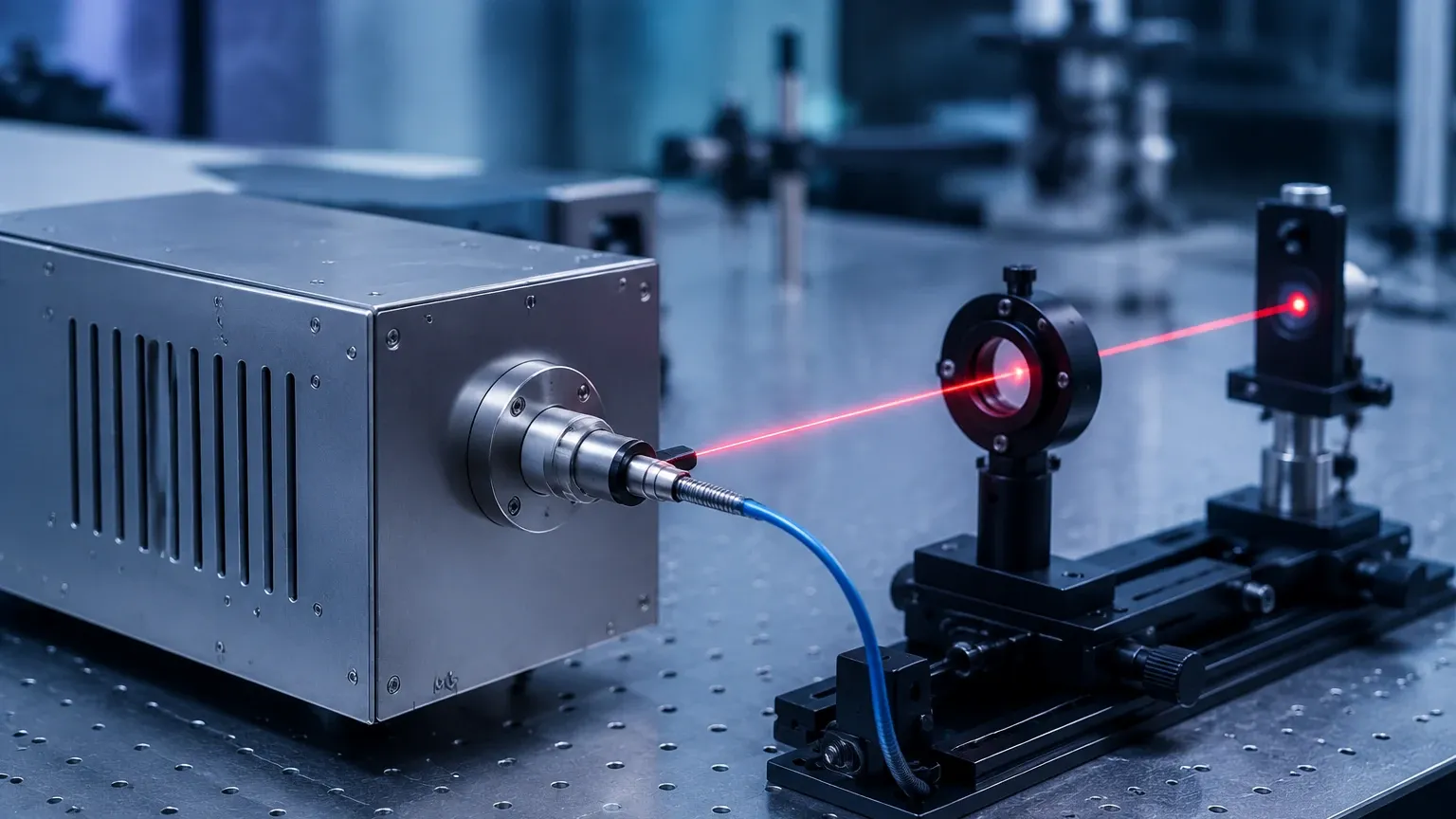
The operation of a tunable diode laser gas analyzer is rooted in the principles of absorption spectroscopy. Every gas molecule possesses a unique "fingerprint" or absorption spectrum, consisting of specific wavelengths of light that it absorbs. TDLAS utilizes a semiconductor laser as its light source, which is engineered to emit light at a very narrow frequency corresponding to a specific absorption line of the target gas.
The Beer-Lambert Law
The quantitative measurement in TDLAS is governed by the Beer-Lambert Law. This physical law relates the attenuation of light to the properties of the material through which the light is traveling. The formula is generally expressed as:
$$I = I_0 \cdot e^{-\alpha L c}$$
Where:
* I is the intensity of the light reaching the detector.
* I₀ is the initial intensity of the laser light.
* α is the absorption coefficient (specific to the gas and wavelength).
* L is the optical path length (the distance the light travels through the gas).
* c is the concentration of the target gas.
By scanning the laser's wavelength across the absorption line (tuning the diode), the analyzer measures the reduction in light intensity. Because the laser's spectral width is significantly narrower than the gas absorption line, the system achieves extremely high selectivity, effectively ignoring interference from other gases present in the process stream.
Key Components and System Architecture
A standard tunable diode laser gas analyzer consists of three primary modules: the transmitter (laser source), the receiver (detector), and the electronics unit for signal processing.
1. The Laser Diode: Typically a Vertical Cavity Surface Emitting Laser (VCSEL) or a Distributed Feedback (DFB) laser. These diodes are controlled by varying the injection current and temperature, allowing for precise wavelength tuning.
2. Optical Components: These include lenses for beam collimation and windows that isolate the instrument from the process medium. In many industrial setups, these windows are protected by purge systems.
3. The Detector: Usually a photodiode (e.g., InGaAs) that converts the received optical signal into an electrical signal.
4. Signal Processing Unit: This unit utilizes techniques such as Wavelength Modulation Spectroscopy (WMS) or Direct Absorption Spectroscopy (DAS) to extract the gas concentration from the raw detector signal, even in the presence of high noise or low light transmission.
Practical Selection Criteria for Industrial Applications
Choosing the right tunable diode laser gas analyzer requires an evaluation of the specific process conditions. Engineers must balance sensitivity requirements with the physical constraints of the installation site. The following table provides a comparison of key evaluation factors for common industrial gases monitored via TDLAS:
| Target Gas | Typical Wavelength (nm) | Common Applications | Detection Limit (ppm) | Path Length Requirements |
| :— | :— | :— | :— | :— |
| Oxygen (O₂) | 760 nm | Combustion control, Safety | 100 – 500 ppm | 0.5m to 15m |
| Ammonia (NH₃) | 1512 nm | DeNOx (SCR/SNCR) | 0.1 – 1 ppm | 1m to 5m |
| Moisture (H₂O) | 1877 nm | Natural gas processing | 1 – 5 ppm | 0.5m to 2m |
| Carbon Monoxide (CO) | 2330 nm | Blast furnace, Combustion | 10 – 50 ppm | 1m to 10m |
| Methane (CH₄) | 1653 nm | Landfill gas, Leak detection | 1 – 10 ppm | 0.5m to 20m |
When selecting an instrument, it is also vital to consider the mounting style. In-situ analyzers measure directly across the process pipe or stack, providing the fastest response time (typically <2 seconds). Extractive TDLAS systems pull a sample into a controlled measurement cell, which is ideal when the process path is too short or the dust load is too high for a direct cross-stack measurement.
Installation and Engineering Considerations
Successful deployment of a tunable diode laser gas analyzer depends heavily on proper mechanical and optical installation. Unlike hydrostatic or magnetic level gauges, which are largely mechanical, TDLAS is an optical precision instrument.
Optical Alignment
For cross-stack installations, the transmitter and receiver must be perfectly aligned. Even a slight structural shift in the stack or pipe due to thermal expansion can cause the laser beam to miss the detector. High-quality mounting flanges with adjustable gimbals are recommended to compensate for these shifts.
Purging Systems
To prevent the buildup of dust, condensate, or corrosive chemicals on the optical windows, a continuous purge of clean, dry air or nitrogen is required. The purge flow rate must be high enough to keep the windows clean but not so high that it significantly dilutes the gas concentration in the measurement path. In high-temperature applications, the purge gas also serves as a coolant for the instrument electronics.
Path Length and Pressure
The optical path length (L) directly affects the sensitivity. Longer paths allow for lower detection limits but are more susceptible to beam steering and attenuation by particulates. Furthermore, gas pressure affects the width of the absorption line (pressure broadening). Modern analyzers include pressure and temperature compensation sensors to adjust the calculation in real-time.
Limitations and Challenges in Harsh Environments
While TDLAS is robust, it is not without limitations. Engineers should be aware of the following challenges:
* High Particulate Loading: If the dust concentration in a stack exceeds a certain threshold (typically >10-50 g/m³ depending on the path length), the laser signal may be completely obscured. In such cases, a bypass or extractive TDLAS system is preferred.
* Background Gas Interference: While TDLAS is highly selective, extreme concentrations of background gases can sometimes cause "spectral overlap" or broaden the target gas line. Choosing the correct absorption line during the design phase is critical.
* Window Fouling: If the purge system fails, the optical windows will quickly become contaminated, leading to a "low light" alarm. Regular maintenance of the purge filters and air supply is mandatory.
Integrating Gas Analysis with Level Measurement Systems
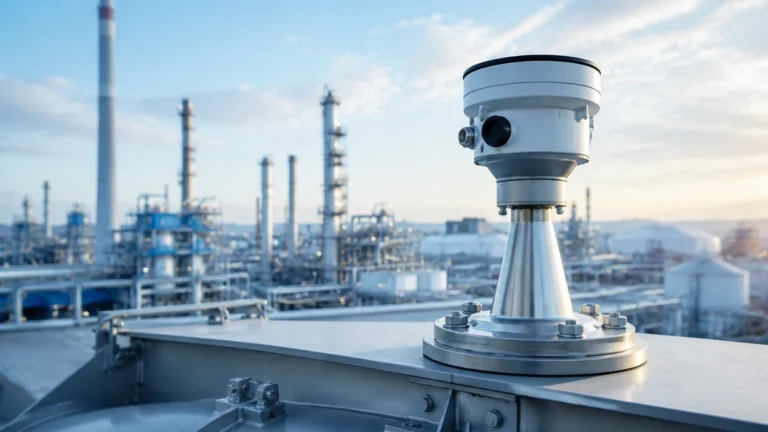
In many B2B industrial environments, gas analysis and level measurement are complementary functions. For instance, in chemical storage tanks, a Main Page level sensor (such as a radar or ultrasonic transmitter) monitors the liquid volume, while a tunable diode laser gas analyzer monitors the headspace for oxygen ingress or toxic gas buildup.
This integration is particularly important in safety-instrumented systems (SIS). If a level meter detects a rapid rise in liquid, and the TDLAS detects a simultaneous spike in volatile organic compounds (VOCs) or a drop in inert gas concentration, the control system can trigger an emergency shutdown with higher confidence than if it relied on a single sensor type.
Furthermore, the gas composition in the headspace can actually affect the accuracy of certain level measurement technologies. For example, ultrasonic level sensors rely on the speed of sound, which varies significantly depending on the gas mixture (e.g., air vs. methane). By using a TDLAS to monitor the gas phase, engineers can provide real-time compensation data to the level measurement system, ensuring higher accuracy in fluctuating environments.
Frequently Asked Questions (FAQs)
Q: How often does a TDLAS require calibration?
A: One of the main advantages of TDLAS is its long-term stability. Most units use an internal reference cell containing a known concentration of the target gas to perform automatic "line locking" and validation. Physical calibration with span gas is typically only required once every 6 to 12 months, depending on local regulations.
Q: Can a single analyzer measure multiple gases?
A: Most TDLAS instruments are designed for a single gas species because the laser diode is tuned to a specific wavelength range. However, some advanced models incorporate multiple laser diodes into a single housing to measure two or three gases (e.g., CO and O₂) simultaneously.
Q: What is the maximum temperature a TDLAS can handle?
A: With proper cooling and high-temperature window materials (like sapphire), in-situ TDLAS systems can operate in process temperatures exceeding 1,200°C (2,192°F), making them ideal for furnace and boiler optimization.
Q: How does TDLAS compare to NDIR (Non-Dispersive Infrared)?
A: NDIR uses a broad-spectrum light source and filters, which are more prone to interference from water vapor and other gases. TDLAS is significantly more selective and faster, though it generally carries a higher initial capital cost.
Conclusion
The tunable diode laser gas analyzer represents a significant leap forward in industrial instrumentation. By providing fast, accurate, and low-maintenance gas concentration data, it allows for tighter process control and enhanced safety. When combined with reliable level measurement solutions, TDLAS enables a comprehensive understanding of the process environment, ensuring that both the liquid and gas phases are monitored with the highest possible precision. For engineers looking to optimize their facilities, evaluating the synergy between gas analysis and level monitoring is a critical step toward operational excellence.