Water Tank Level Switches
Water Tank Level Switches
In industrial water management and process automation, maintaining precise control over liquid volumes is essential for operational safety and efficiency. Water tank level switches serve as fundamental components in these systems, providing point-level detection to prevent overflows, protect pumps from dry running, and automate filling or emptying cycles. Unlike continuous level transmitters that provide a constant data stream of the current volume, level switches act as binary sensors, triggering an electrical signal when the water reaches a specific threshold.
Selecting the appropriate water tank level switches requires an understanding of different sensing technologies, the physical properties of the water being monitored, and the mechanical constraints of the storage vessel. This guide explores the engineering principles, selection criteria, and installation best practices for industrial point-level detection.
Measurement Principles of Level Switches
To choose the right instrument, engineers must first understand the physical principles used to detect the presence or absence of water. Each technology offers distinct advantages depending on the water's purity, temperature, and the presence of turbulence or debris.
Buoyancy (Float Switches)
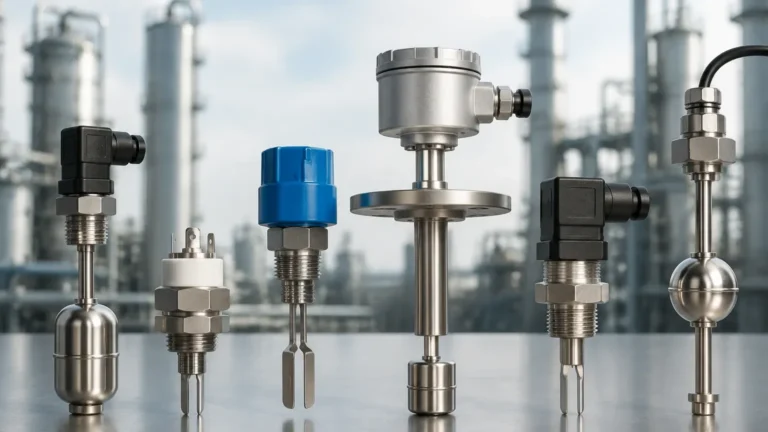
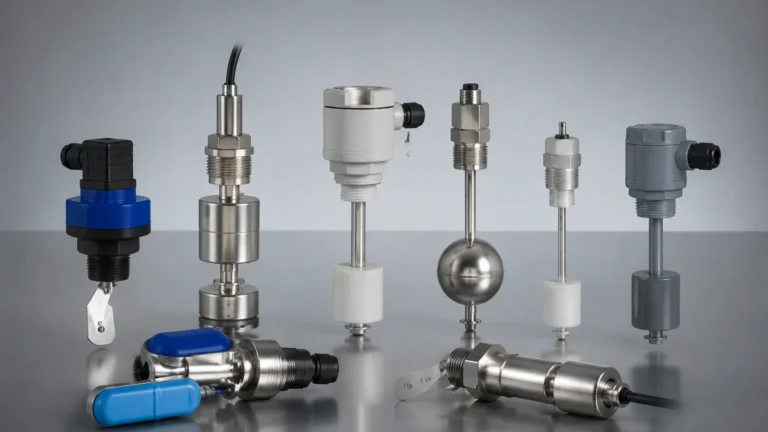
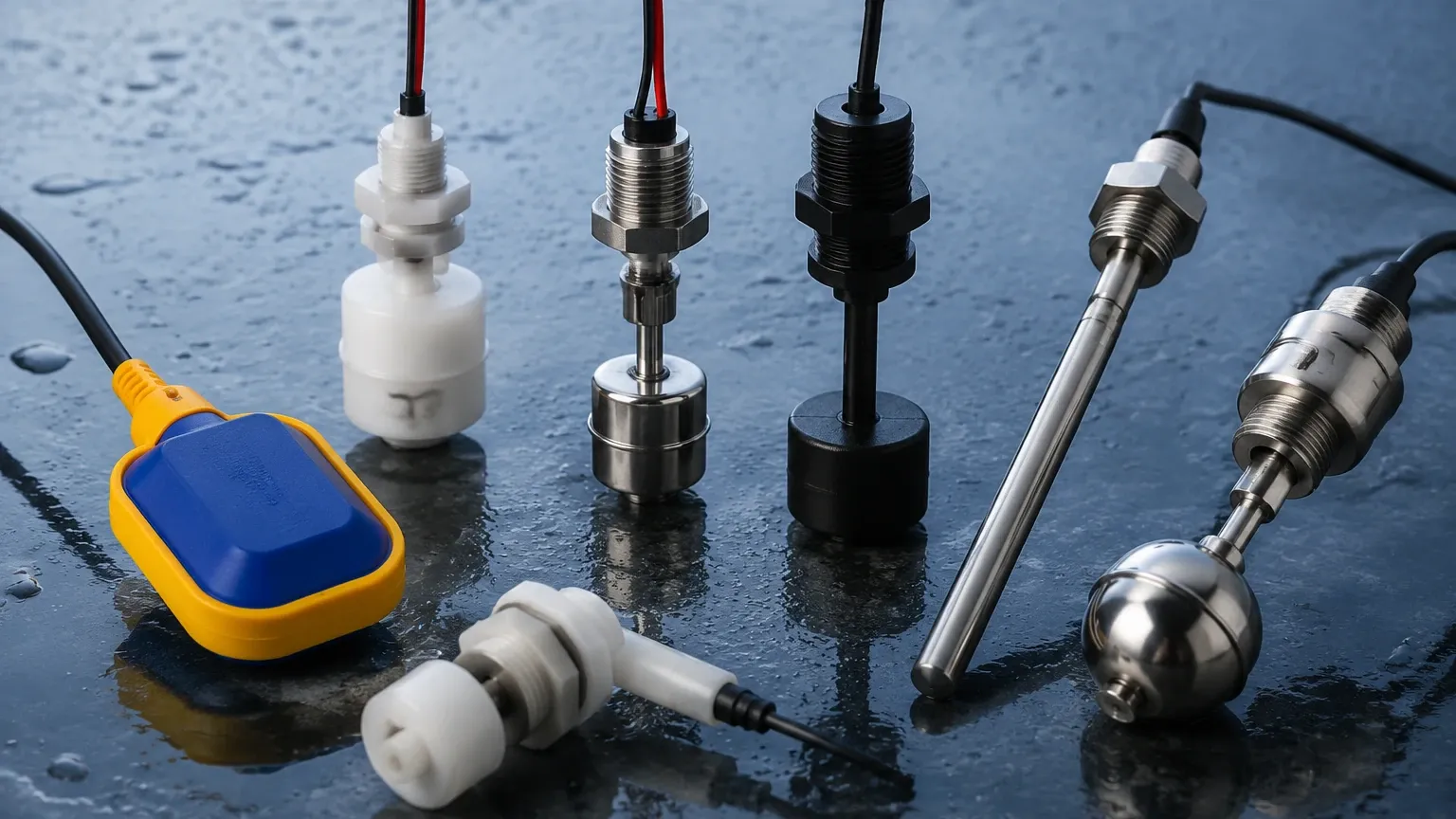
Float switches operate on the principle of buoyancy. A buoyant body, typically made of stainless steel or high-density plastic, houses a magnet or a mechanical microswitch. As the water level rises, the float moves with the surface. When it reaches a predetermined point, the internal magnet actuates a reed switch, or the mechanical tilt triggers a contact. This is one of the most common methods for Level Switches due to its simplicity and low cost.
Vibration (Tuning Fork Switches)
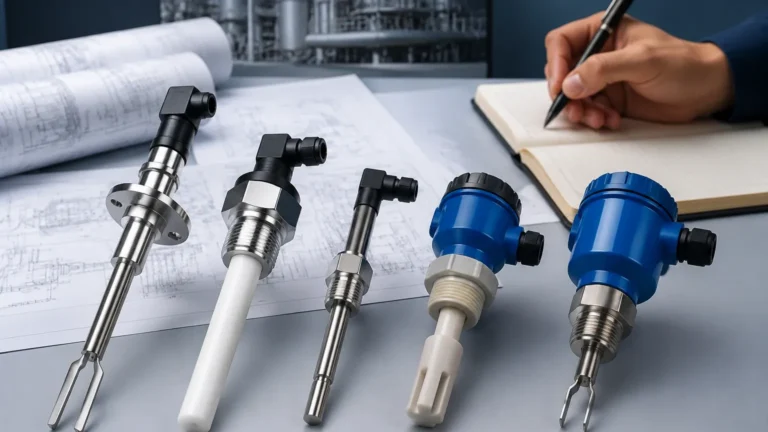
These sensors utilize a fork-shaped sensing element that is vibrated at its natural resonant frequency by piezoelectric crystals. When the fork is immersed in water, the frequency of vibration changes or stops. The internal electronics detect this shift and switch the output state. Tuning fork switches are highly reliable because they are not affected by bubbles, foam, or minor turbulence.
Conductivity
Conductivity level switches use the water itself as part of an electrical circuit. Two or more electrodes are suspended in the tank. When water touches the electrodes, it completes a low-voltage circuit. This technology is highly effective for conductive liquids like tap water or wastewater but cannot be used with deionized or pure water that lacks sufficient conductivity.
Capacitance
Capacitance switches measure the change in electrical capacitance between the sensor probe and the tank wall (or a reference electrode). Water has a much higher dielectric constant than air; therefore, its presence significantly alters the capacitance. This change is converted into a switching signal. These are often used in applications where non-contact through a non-metallic tank wall is required.
Ultrasonic Point Level
Ultrasonic switches emit high-frequency sound waves. In point-level applications, these are often designed as a gap sensor. When water fills the gap between the transmitter and receiver, the ultrasonic signal passes through; when air is in the gap, the signal is attenuated. This provides a solid-state switching solution with no moving parts.
Common Types of Water Tank Level Switches
Industrial water storage varies from small header tanks to massive municipal reservoirs. Consequently, different mechanical configurations are required to meet these physical demands.
Cable-Float Switches
Widely used in wastewater and large sumps, these consist of a weighted float attached to a flexible cable. The switching point is adjusted by changing the length of the cable or the position of a counterweight. They are robust and capable of handling suspended solids, making them ideal water tank level switches for sewage and greywater applications.
Horizontal (Side-Mounted) Switches
These are installed through the side wall of a tank via a threaded or flanged connection. They are typically float-based or tuning fork-based. Side-mounted switches are preferred when the top of the tank is inaccessible or when multiple switching points are needed at specific heights along the vessel wall.
Vertical (Top-Mounted) Switches
Installed through the roof of the tank, these sensors can feature single or multiple switching points on a single stem. Multi-point vertical switches allow for high-high, high, low, and low-low alarms within a single process connection, simplifying wiring and installation.
Selection Criteria for Industrial Applications
When specifying water tank level switches, engineers must evaluate several environmental and process factors to ensure long-term reliability.
| Feature | Float Switches | Tuning Fork | Conductive | Capacitive |
| :— | :— | :— | :— | :— |
| Media Type | Clean water, wastewater | Liquids, slurries | Conductive liquids | Clean/Dirty liquids |
| Viscosity Limit | Low to Medium | High | Low | Medium |
| Moving Parts | Yes | No | No | No |
| Maintenance | Moderate | Low | Low | Moderate |
| Typical Accuracy | ±5mm to 10mm | ±1mm | ±2mm | ±2mm |
| Cost | Low | Medium | Low | Medium |
1. Water Quality and Composition
* Potable Water: Requires food-grade materials such as 316 stainless steel or FDA-approved plastics (PP, PVDF).
* Wastewater/Sewage: Requires non-clogging designs. Cable-float switches are preferred here as they resist fouling from debris.
* Deionized Water: Requires non-conductive sensing like ultrasonic or capacitance, as conductivity probes will not function.
2. Tank Geometry and Material
For metallic tanks, capacitance and conductivity switches can use the tank wall as a ground. For plastic or fiberglass tanks, a reference electrode or a dual-probe sensor is necessary. Additionally, the internal structure of the tank (e.g., baffles, ladders) must not interfere with the movement of float-based switches.
3. Temperature and Pressure
Standard atmospheric water tanks usually operate at ambient temperatures. However, in boiler feed systems or pressurized storage, the switch must be rated for the specific pressure (e.g., 10 bar / 145 psi) and temperature (e.g., up to 150°C / 302°F). Stainless steel floats are generally required for high-pressure environments.
4. Output Requirements
Most industrial level switches provide a SPDT (Single Pole Double Throw) relay output, allowing for integration with PLCs, motor starters, or alarm panels. Solid-state outputs like PNP/NPN are common in high-speed automation or where long mechanical life is a priority.
Installation and Maintenance Considerations
Proper installation is the most critical factor in preventing premature failure of water tank level switches.
Avoid Turbulence
Switches should not be installed directly under a fill pipe. The force of the incoming water can cause mechanical floats to bounce, leading to "chatter" in the relay and potential damage to pumps. If turbulence is unavoidable, a stilling well (a perforated pipe surrounding the sensor) should be used to dampen the water surface.
Mounting Orientation
Vertical switches must be perfectly plumb to ensure the float moves freely along the stem. For horizontal switches, ensure there is enough clearance inside the tank for the float to arc upward or downward without hitting the tank wall or internal supports.
Wiring and Sealing
In outdoor water tanks, moisture ingress into the housing is a common cause of failure. Use high-quality cable glands and ensure the housing cover is tightened to its specified torque. Creating a "drip loop" in the wiring prevents rainwater from running down the cable and into the sensor head.
Maintenance Schedule
While many modern level switches are advertised as maintenance-free, periodic inspection is recommended, especially in water with high mineral content (scaling) or biological growth. Scaling on a tuning fork can change its frequency, while buildup on a float can increase its weight, causing it to sink.
Limitations and Risks
Despite their utility, level switches have limitations that must be addressed during the design phase:
* Mechanical Wear: Any switch with moving parts (like floats) will eventually suffer from mechanical fatigue or sticking if the water contains sticky residues.
* Coating and Buildup: Capacitance and tuning fork switches can be sensitive to heavy coating. If the water contains oils or fats that solidify on the probe, the sensor may indicate a "wet" state even when the tank is empty.
* Foam Interference: Surface foam can trigger some ultrasonic and capacitance switches prematurely. In such cases, tuning forks or mechanical floats are more reliable as they respond to the liquid density rather than the surface layer.
Frequently Asked Questions (FAQs)
Q: Can I use a single switch to control a pump?
A: While a single switch can provide a high or low signal, pump control usually requires two switches (a "start" and a "stop" point) or a single switch with a large hysteresis (differential) to prevent the pump from cycling on and off too rapidly.
Q: What is the difference between N.O. and N.C. contacts?
A: N.O. (Normally Open) means the circuit is open when the switch is in its "rest" state (usually empty). N.C. (Normally Closed) means the circuit is complete. Most industrial switches allow you to choose the configuration or provide both (SPDT).
Q: How do I protect the switch from lightning in outdoor tanks?
A: For large outdoor metal tanks, ensure the tank is properly grounded. Using a surge protector on the signal line between the switch and the control room is highly recommended for installations in lightning-prone areas.
Q: Are plastic switches as durable as stainless steel?
A: For many water applications, plastics like Polypropylene (PP) are excellent because they are immune to corrosion. However, they are more susceptible to UV degradation if exposed to direct sunlight and have lower pressure/temperature limits than stainless steel.
Conclusion
Water tank level switches are indispensable tools for protecting industrial assets and ensuring process continuity. By matching the sensing technology—whether buoyancy, vibration, or conductivity—to the specific requirements of the water type and vessel configuration, engineers can implement a reliable control strategy. For complex applications involving high temperatures, corrosive additives, or restricted space, consulting with a specialist in Level Switches ensures that the selected device will provide years of trouble-free service in the field.