Advanced Wastewater Treatment Technologies Beyond Mbbr
Advanced Wastewater Treatment Technologies Beyond Mbbr
Moving Bed Biofilm Reactor (MBBR) technology has long been a staple in industrial and municipal wastewater treatment due to its small footprint and ease of operation. However, as environmental regulations tighten and the demand for high-quality reclaimed water increases, many facilities are exploring advanced wastewater treatment technologies beyond mbbr. These next-generation systems offer superior nutrient removal, smaller physical footprints, and the ability to handle complex industrial effluents that traditional biofilm processes might struggle to treat.
Selecting the right treatment technology is only half the challenge; ensuring these systems operate efficiently requires precise process control. Central to this control is accurate level measurement. Before evaluating specific treatment alternatives, it is essential to understand the measurement principles that govern the sensors used in these high-stakes environments.
Principles of Level Measurement in Wastewater Applications
In advanced wastewater treatment, level sensors provide the data necessary for pump control, chemical dosing, and cycle timing. Two primary non-contact technologies are typically employed: Ultrasonic and Radar.
Ultrasonic Level Measurement
Ultrasonic sensors operate on the "time-of-flight" principle. The device emits a high-frequency sound pulse that travels through the air, reflects off the liquid surface, and returns to the sensor. The distance is calculated based on the time taken for the echo to return.
* Advantages: Cost-effective and easy to install in open channels or large sumps.
* Limitations: Performance can be degraded by heavy foam, high-temperature vapors, or significant turbulence, all of which are common in advanced biological reactors.
Radar Level Measurement
Radar sensors, particularly high-frequency 80GHz units, use frequency-modulated continuous wave (FMCW) technology. They emit microwave signals that are unaffected by air temperature, pressure, or vapor layers.
* Advantages: Extremely accurate (often within ±2 mm) and highly resistant to foam and steam. The narrow beam angle allows for installation in narrow tanks with internal obstructions like agitators or aeration pipes.
* Limitations: Higher initial capital cost compared to ultrasonic sensors, though often offset by lower maintenance requirements.
For engineers looking to optimize their facility, visiting the Main Page of a dedicated instrumentation provider can help in identifying the specific sensor configurations required for advanced treatment stages.
Membrane Bioreactor (MBR) Technology
One of the most prominent advanced wastewater treatment technologies beyond mbbr is the Membrane Bioreactor (MBR). While MBBR uses plastic carriers to grow biofilm and requires a secondary clarifier for solids separation, MBR combines biological degradation with membrane filtration (typically microfiltration or ultrafiltration).
How it Works
In an MBR system, the membrane modules are either submerged directly into the bioreactor or placed in a separate side-stream tank. The membranes act as a physical barrier, retaining all suspended solids and most pathogens, resulting in an effluent of significantly higher quality than that produced by MBBR.
Level Control Requirements
Level measurement in MBRs is critical for maintaining the "Trans-Membrane Pressure" (TMP). If the liquid level drops too low, the membranes can be exposed to air, leading to irreversible fouling or structural damage. Radar level meters are preferred here due to the high levels of aeration and potential for surface turbulence.
Sequential Batch Reactors (SBR)
The Sequential Batch Reactor (SBR) is a variation of the activated sludge process that carries out all treatment steps in a single tank through a timed sequence. This is a powerful alternative for facilities that have fluctuating flow rates or require high nitrogen and phosphorus removal.
The Process Cycle
1. Fill: Raw wastewater enters the tank.
2. React: Aeration and mixing occur.
3. Settle: Aeration stops, and solids settle to the bottom.
4. Decant: Treated water is removed from the top.
5. Idle: The system prepares for the next cycle.
Level Control Requirements
SBRs are entirely dependent on level and time. The "Fill" and "Decant" stages must be precisely monitored to prevent overfilling or the accidental discharge of settled sludge. Hydrostatic level transmitters or radar sensors are frequently used to provide continuous feedback to the PLC (Programmable Logic Controller) to trigger the next phase of the cycle.
Advanced Oxidation Processes (AOP)
For industrial effluents containing recalcitrant organic compounds (such as pharmaceuticals, pesticides, or dyes) that biological processes like MBBR cannot break down, Advanced Oxidation Processes (AOP) are necessary.
Technology Overview
AOP involves the in-situ generation of highly reactive hydroxyl radicals (·OH). This is typically achieved through combinations of Ozone (O3), Hydrogen Peroxide (H2O2), and Ultraviolet (UV) light. These radicals non-selectively oxidize complex pollutants into simpler, biodegradable molecules or completely mineralize them into CO2 and water.
Level Control Requirements
AOP systems involve chemical storage tanks for H2O2 and reaction chambers where precise dosing is mandatory. Because these chemicals are often corrosive, level sensors must feature high-grade materials like PTFE or PVDF. Non-contact radar is the gold standard here to avoid material degradation from direct chemical contact.
Comparative Analysis of Technologies
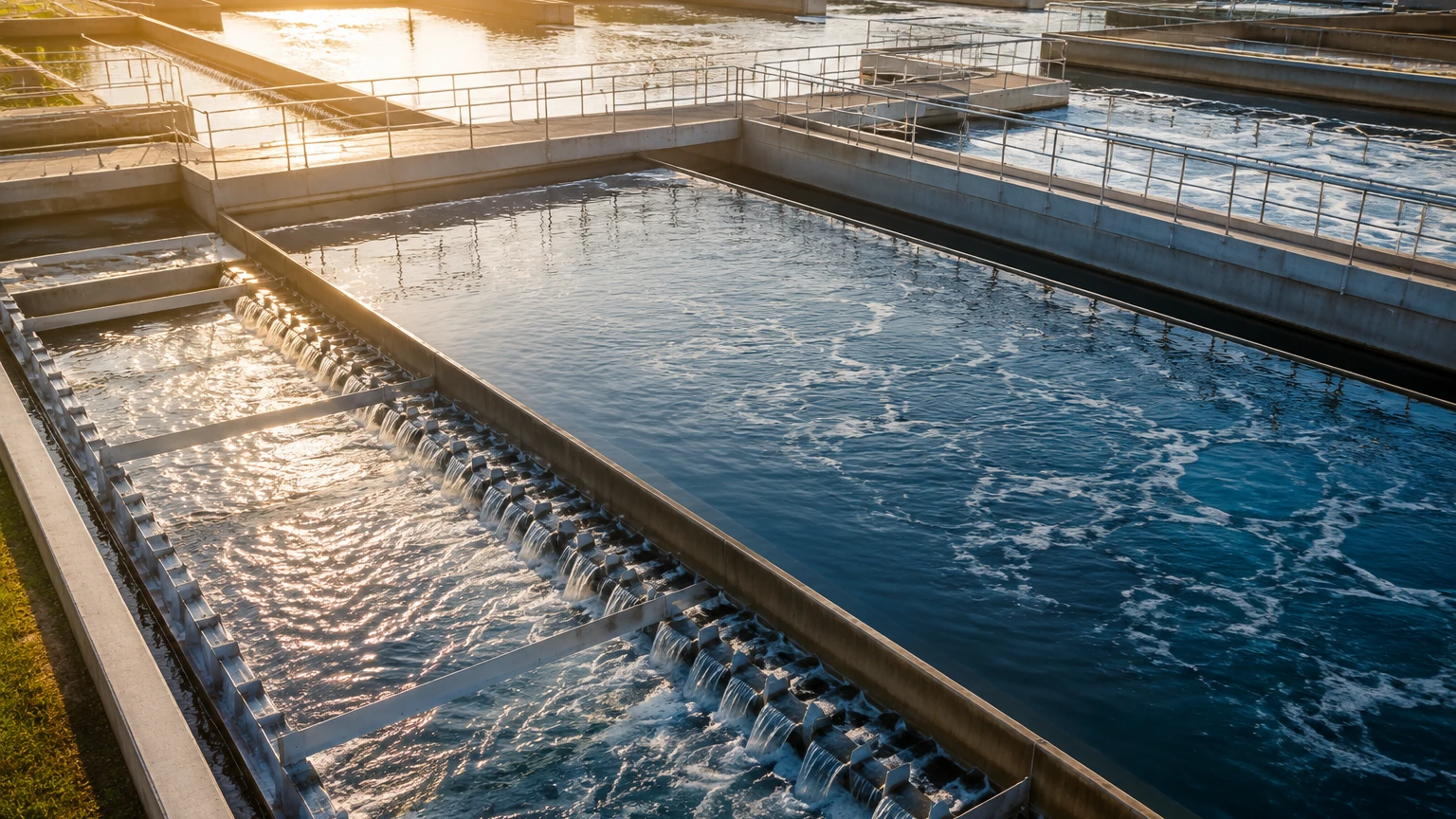
When evaluating advanced wastewater treatment technologies beyond mbbr, engineers must balance effluent requirements against operational complexity.
| Technology | Effluent Quality | Footprint | Operational Complexity | Recommended Level Sensor |
| :— | :— | :— | :— | :— |
| MBBR | Moderate | Medium | Low | Ultrasonic / Radar |
| MBR | Excellent | Very Small | High | 80GHz Radar |
| SBR | High | Small | Moderate | Hydrostatic / Radar |
| AOP | Specialized | Small | High | PTFE-coated Radar |
Installation and Engineering Considerations
Transitioning to advanced treatment technologies requires a shift in how instrumentation is integrated into the plant design.
1. Foam Management: Many advanced biological processes produce biological foam. If using ultrasonic sensors, ensure they are positioned away from aeration headers. Alternatively, switch to radar sensors which can "see through" light foam layers.
2. Turbulence: In MBR and SBR systems, heavy aeration creates a turbulent surface. Level meters should be configured with software damping or installed within a stilling well to ensure a stable reading.
3. Chemical Compatibility: Advanced treatment often involves aggressive cleaning agents (for membranes) or oxidizing agents (for AOP). Ensure all wetted parts of level transmitters are compatible with the pH and chemical composition of the process fluid.
4. Redundancy: For critical stages like MBR membrane protection, redundant level measurement (e.g., a continuous radar sensor paired with a high-level point switch) is highly recommended to prevent catastrophic equipment failure.
Frequently Asked Questions
Q: Why should I choose MBR over MBBR?
A: MBR is the preferred choice if you require high-quality effluent for reuse (irrigation or industrial cooling) or if you have extremely limited space, as it eliminates the need for large secondary clarifiers.
Q: Can I upgrade an existing MBBR plant to an advanced technology?
A: Yes, many MBBR tanks can be retrofitted into MBRs or SBRs, though this requires a significant overhaul of the aeration system, the addition of membrane modules or decanters, and updated level control instrumentation.
Q: What is the most common failure point for level sensors in these systems?
A: In wastewater, the most common issues are build-up on the sensor face (fats, oils, and grease) and signal interference from foam. Selecting a non-contact sensor with a self-cleaning function or a high-frequency signal helps mitigate these risks.
Conclusion
As industrial standards evolve, exploring advanced wastewater treatment technologies beyond mbbr becomes a necessity for many environmental engineers. Whether implementing the high-filtration capabilities of MBR, the batch flexibility of SBR, or the chemical potency of AOP, success depends on the integration of reliable process monitoring. Accurate level measurement ensures that these sophisticated systems operate within their design parameters, protecting both the equipment and the environment. For detailed technical specifications on the instrumentation required for these applications, professionals should consult the Main Page of their equipment provider to ensure optimal technology matching.
Download Advanced Wastewater Treatment Technologies Beyond Mbbr as a PDF