Composite Sampling Wastewater
Composite Sampling Wastewater
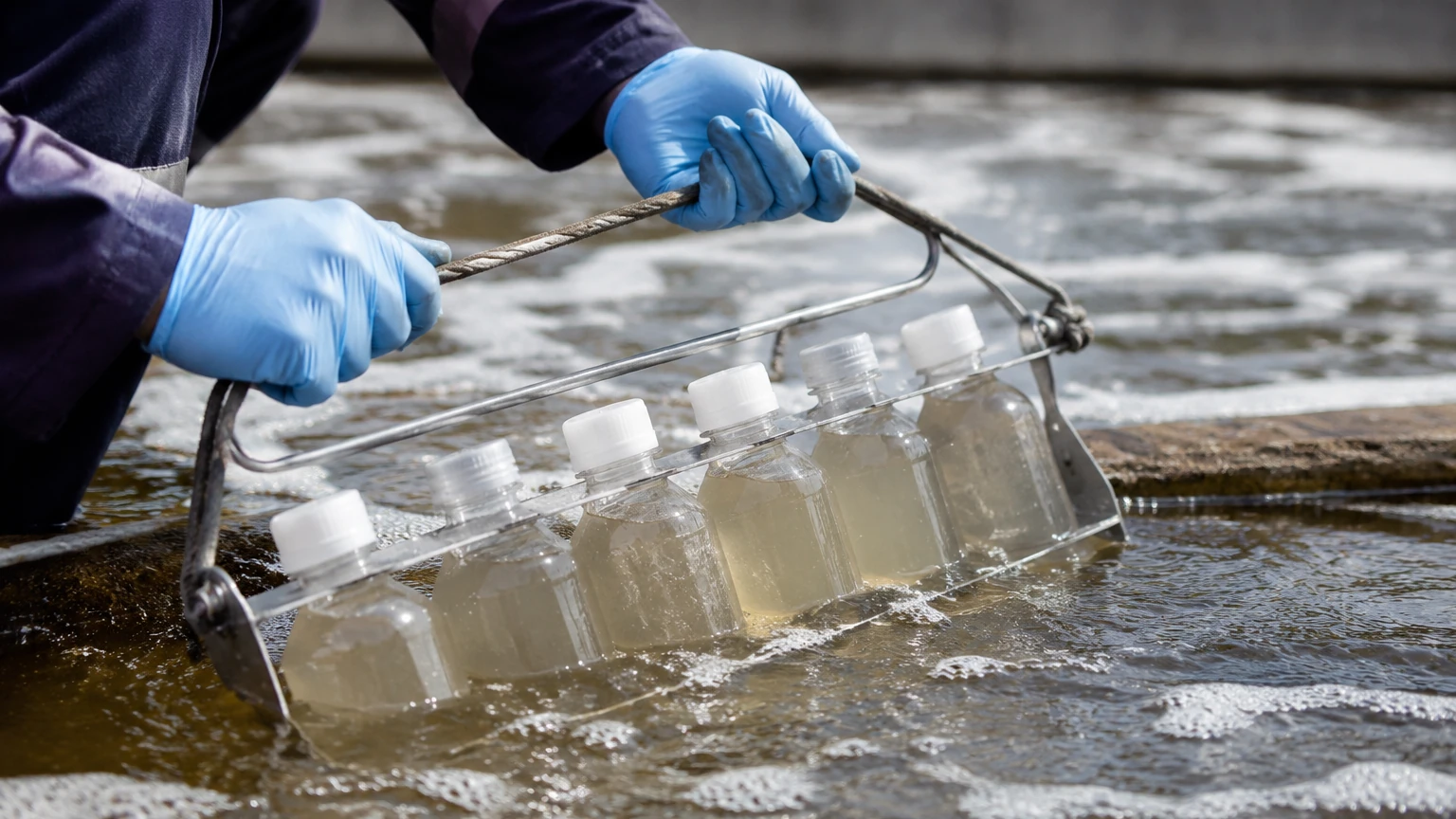
In industrial and municipal wastewater management, obtaining a representative profile of effluent quality is a critical requirement for regulatory compliance, process control, and environmental protection. Composite sampling wastewater is the standardized method used to achieve this by collecting multiple discrete samples over a specific period and combining them into a single representative volume. Unlike grab sampling, which provides a "snapshot" of conditions at a single moment, composite sampling accounts for fluctuations in flow and pollutant concentration over time.
For engineers and plant operators, the effectiveness of a sampling program relies heavily on the integration of accurate flow and level measurement instruments. These devices provide the necessary data to trigger sampling events, ensuring that the final composite sample accurately reflects the total mass loading of the waste stream. To explore the instrumentation required for these systems, professionals can visit the Main Page for detailed technical specifications on level and flow sensors.
Principles of Composite Sampling Wastewater
The fundamental goal of composite sampling is to minimize the impact of temporal variability. Wastewater characteristics in industrial processes rarely remain constant; batch discharges, cleaning cycles, and shifts in production can all cause significant spikes or dips in chemical oxygen demand (COD), total suspended solids (TSS), and pH levels.
Time-Proportional vs. Flow-Proportional Sampling
There are two primary methodologies used to execute composite sampling:
1. Time-Proportional Sampling: This method involves collecting samples of a constant volume at uniform time intervals (e.g., 200 mL every 30 minutes). This is generally suitable for waste streams with relatively constant flow rates. However, if the flow varies significantly, time-proportional sampling may over-represent low-flow periods and under-represent high-flow periods in terms of total pollutant mass.
2. Flow-Proportional Sampling: This is the preferred method for most industrial applications where flow rates fluctuate. It ensures that the sample volume is proportional to the volume of wastewater passing the sampling point. This is achieved in two ways:
* Constant Volume, Variable Time (CVVT): A fixed volume is collected every time a specific volume of water (e.g., 5,000 liters) passes the sensor.
* Variable Volume, Constant Time (VVCT): Samples are taken at fixed time intervals, but the volume of each sample is adjusted based on the flow rate at that moment.
To implement flow-proportional sampling, a flow meter must be integrated with the automatic sampler. This flow meter typically uses level measurement technology (such as ultrasonic or radar) installed over a primary device like a flume or weir to calculate the discharge rate based on the liquid level.
The Role of Level Measurement in Sampling Triggers
Because flow-proportional sampling depends on accurate volume calculations, the selection of the level measurement instrument is paramount. In open channel applications, the level-to-flow conversion follows established mathematical formulas (e.g., the Manning equation or specific flume coefficients).
Ultrasonic Level Sensors
Ultrasonic sensors are the most common choice for wastewater sampling applications. They operate on the time-of-flight principle, emitting a sound pulse that reflects off the liquid surface. The sensor calculates the distance based on the time it takes for the echo to return.
* Advantages: Non-contact measurement, no moving parts, and relatively low cost.
* Limitations: Can be affected by heavy foam, steam, or significant air temperature gradients. In these cases, integrated temperature compensation is required to maintain accuracy.
Radar Level Meters
For more challenging environments, such as those with high turbulence, foam, or varying vapor concentrations, non-contact radar (microwave) technology is used. Radar level meters are unaffected by air temperature or pressure changes and provide a highly focused beam that can ignore internal tank obstructions or narrow flume walls.
Hydrostatic Level Transmitters
In some closed-pipe or deep-well sampling scenarios, hydrostatic pressure sensors are utilized. These sensors measure the weight of the liquid column above the diaphragm to determine the level. While highly accurate, they are in direct contact with the wastewater and may require more frequent cleaning to prevent fouling from solids or grease.
Selection Criteria for Wastewater Sampling Systems
When designing a system for composite sampling wastewater, several technical factors must be evaluated to ensure the equipment survives the environment and provides reliable data.
| Criteria | Considerations | Recommended Technology |
| :— | :— | :— |
| Flow Type | Open channel (flume/weir) vs. Full pipe | Ultrasonic/Radar for open channel; Electromagnetic for full pipe |
| Wastewater Composition | High solids, fats, oils, or corrosive chemicals | Non-contact sensors (Radar/Ultrasonic) to avoid corrosion/clogging |
| Installation Height | Distance from sensor to maximum liquid level | Radar for long ranges (>15 meters); Ultrasonic for standard ranges (0.5–10 meters) |
| Power Availability | Remote locations vs. Plant-wide power | Low-power loop-powered sensors for remote sites |
| Accuracy Requirements | Regulatory discharge limits | High-frequency Radar (80GHz) for millimeter precision |
Installation Considerations and Best Practices
The accuracy of a composite sample is only as good as the installation of the triggering instruments and the sampler intake. Poor placement can lead to biased samples that do not represent the actual effluent quality.
1. Sensor Placement: Level sensors used for flow calculation must be installed at a specific distance upstream of the weir or flume (typically 3 to 4 times the maximum head height). This ensures the measurement is taken in a zone of laminar flow, free from the "draw-down" effect near the crest of the weir.
2. Intake Line Positioning: The sampler suction line should be placed in a well-mixed area of the channel, usually at 60% of the depth from the surface. It should be positioned away from the walls to avoid stagnant zones but high enough to avoid sucking up settled grit and heavy solids from the bottom.
3. Line Velocity: To prevent the settling of suspended solids within the sampler tubing, the intake velocity should be at least 0.6 meters per second (2 feet per second). Most modern automatic samplers use a high-speed peristaltic pump to achieve this.
4. Avoid Cross-Contamination: The system should be programmed to perform a "pre-purge" and "post-purge" of the intake line using air. This clears any residual wastewater from the previous sample cycle, ensuring that each discrete portion of the composite sample is fresh.
Common Risks and Limitations
While composite sampling wastewater is the industry standard, it is not without challenges. Understanding these limitations is essential for maintaining data integrity.
* Volatile Organic Compounds (VOCs): Composite sampling is generally unsuitable for measuring VOCs. The agitation during the pumping process and the long residence time in the composite container can cause these compounds to dissipate. Grab samples are required for VOC analysis.
* Biological Activity: If samples are collected over a 24-hour period, biological degradation can occur, altering the COD or nutrient levels. To mitigate this, samplers should be refrigerated to 4°C (39.2°F) during the collection process.
* Fouling and Maintenance: In wastewater environments, sensors can become coated with grease or biological growth. Even non-contact sensors can suffer from "spider webs" or condensation on the transducer face. Regular inspection and cleaning schedules are mandatory for system reliability.
* Representative Errors: If the wastewater contains large, non-homogenized solids (e.g., rags or large plastic debris), the sampler intake may become blocked, leading to a failed sampling event or an unrepresentative sample that only contains the liquid phase.
Integration with Industrial Automation
Modern wastewater sampling programs are increasingly integrated into broader industrial automation frameworks. Level and flow data are often transmitted via 4-20mA, Modbus, or HART protocols to a Central Control Room (CCR) or a Programmable Logic Controller (PLC). This allows for real-time monitoring of discharge volumes and the ability to trigger "alarm sampling" if a specific parameter (like a pH spike) is detected by an inline sensor.
By utilizing advanced level measurement instruments, facilities can ensure that their composite sampling wastewater program is not just a regulatory hurdle, but a source of high-quality data for process optimization. For example, understanding the exact timing of high-strength waste loads allows for the adjustment of aeration rates in biological treatment stages, leading to significant energy savings.
Frequently Asked Questions (FAQ)
Q: How often should I calibrate the level sensor used for sampling?
A: For regulatory compliance, it is recommended to verify the calibration every 6 to 12 months. However, a monthly check of the "zero point" (the distance from the sensor to the bottom of the channel) is a best practice to account for any physical shifts in the mounting hardware.
Q: Can I use a radar level meter for small flumes?
A: Yes, modern high-frequency radar (80GHz) has a very narrow beam angle, making it ideal for small flumes where older ultrasonic sensors might pick up interference from the side walls.
Q: What is the maximum length for a sampler suction line?
A: While some pumps can pull from 7 to 9 meters (23 to 30 feet) of vertical lift, it is best to keep the line as short as possible. Long horizontal runs should be sloped toward the source to ensure complete drainage during the purge cycle.
Q: Is refrigeration always necessary for composite samples?
A: If the sample is being analyzed for parameters like TSS or metals, refrigeration may not be strictly necessary for short periods. However, for BOD, COD, nitrogen, and phosphorus, refrigeration to 4°C is required by most environmental standards (such as EPA or ISO methods) to inhibit biological changes.
Q: How do I handle sampling in explosive environments (ATEX/Ex zones)?
A: In areas where flammable gases may be present (like sewer manholes), both the level sensor and the automatic sampler must be certified as intrinsically safe or explosion-proof. Always check the local hazardous area classifications before installation.
For more information on selecting the right instrumentation for your wastewater application, including radar and ultrasonic solutions, visit the Main Page to consult with technical experts.