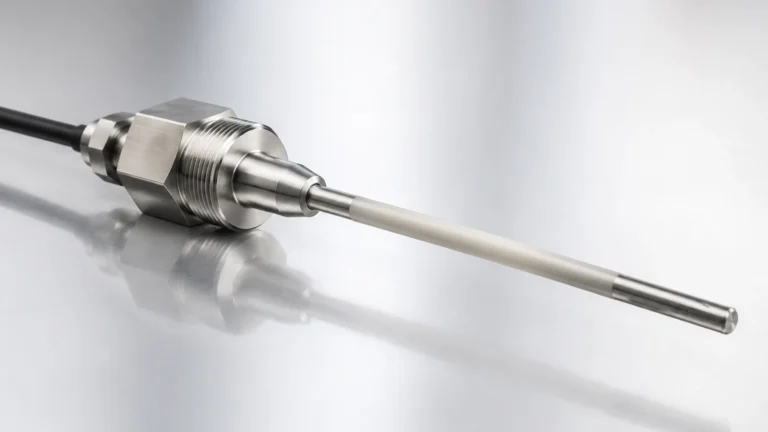
Cps11e
Cps11e
In the landscape of industrial process automation, the transition from analog to digital sensing has redefined how engineers approach liquid analysis. The CPS11E represents a significant evolution in pH measurement technology, utilizing the Memosens 2.0 protocol to bridge the gap between laboratory precision and harsh industrial environments. While often categorized strictly as a chemical analysis tool, the CPS11E is a critical component in integrated process control systems, frequently working in tandem with level measurement instruments to ensure both the quantity and quality of stored media are strictly monitored.
For engineers managing complex tank farms or water treatment facilities, understanding the technical nuances of the CPS11E is essential for maintaining system integrity. This guide explores the measurement principles, technical specifications, and practical installation strategies required to successfully deploy this digital pH sensor alongside standard industrial level measurement solutions.
Measurement Principles of Digital pH Sensors
Before selecting a sensor for a specific application, it is vital to understand the electrochemical principles that govern its operation. The CPS11E is a glass electrode designed for standard applications in process and environmental technology.
The Potentiometric Principle
The measurement of pH is based on the potentiometric method, which utilizes a pH-sensitive glass membrane. When this membrane comes into contact with a liquid, a potential (voltage) is generated at the interface between the glass and the medium. This potential is proportional to the concentration of hydrogen ions (H+) in the liquid.
According to the Nernst equation, this relationship is linear. The sensor compares the potential at the glass membrane with a stable reference potential provided by a reference electrode (typically silver/silver chloride). The difference between these two potentials is converted into a pH value by the transmitter.
Memosens 2.0 Technology
What distinguishes the CPS11E from traditional analog sensors is the Memosens 2.0 technology. In an analog system, the high-impedance signal from the pH glass is susceptible to moisture, electromagnetic interference (EMI), and cable length limitations.
In the CPS11E, the signal is digitized within the sensor head itself. The connection between the sensor and the cable is inductive (non-contact), meaning there are no metallic contacts to corrode or short-circuit. This digital approach allows for:
* Calibration in the Lab: Sensors can be calibrated under controlled conditions and then hot-swapped in the field without requiring re-calibration at the point of measurement.
* Data Storage: The sensor stores its own calibration data, operating hours, and extreme temperature exposures, enabling proactive maintenance.
* Signal Integrity: Digital signals are immune to the environmental noise that often plagues industrial sites.
Integration with Level Measurement Systems
In most industrial B2B applications, pH measurement does not exist in a vacuum. It is part of a broader process control loop that includes the monitoring of liquid volumes. For instance, in a chemical neutralization tank, a radar level meter or ultrasonic sensor provides the volume data necessary to calculate the required dosage of neutralizing agents, while the CPS11E provides the real-time feedback on the chemical reaction's progress.
When designing a system, engineers often refer to a comprehensive Main Page of instrumentation to ensure that the level transmitters and analytical sensors are compatible in terms of material resistance and communication protocols. The synergy between a Welk level meter and a digital pH sensor allows for automated safety shutdowns; for example, if a level sensor detects a tank is near empty, the pH control loop can be deactivated to prevent the sensor from drying out.
Selection Criteria and Technical Specifications
Choosing the correct version of the CPS11E requires an analysis of the process temperature, pressure, and chemical composition. The sensor is available with different glass types and reference systems to suit various industrial needs.
Selection Table: CPS11E Glass and Electrolyte Options
| Feature | Option A (Standard) | Option B (High Temp/Alkali) | Option C (Low Temp) |
| :— | :— | :— | :— |
| Glass Type | A-glass | B-glass | L-glass |
| pH Range | 0 to 14 | 0 to 14 | 0 to 12 |
| Temp. Range | -15 to 80°C | 0 to 135°C | -30 to 70°C |
| Application | General water treatment | Chemical processes, CIP | Cold water, brine |
| Reference | Gel-filled (Ag/AgCl) | Pressurized Gel | Liquid KCl (optional) |
Material Compatibility
The sensor body is typically made of process-grade glass, but the seals (O-rings) must be selected based on the chemical compatibility of the medium. Common options include FKM (Viton) or EPDM. For highly aggressive media, perfluoroelastomer (FFKM) seals may be required to prevent leakage into the reference system.
Installation and Mounting Considerations
Proper installation is the single most important factor in ensuring the longevity and accuracy of a pH sensor. Unlike level meters, which can often be mounted non-contact (like radar), pH sensors must be in direct contact with the process medium.
Orientation
The CPS11E must be installed at an angle of at least 15° from the horizontal. This ensures that the air bubble inside the glass bulb does not settle against the pH-sensitive membrane, which would interrupt the electrical circuit and lead to erratic readings.
Flow and Velocity
In pipe installations, the sensor should be positioned where the flow is turbulent enough to provide a representative sample but not so fast that it causes physical abrasion of the glass.
* Minimum Flow: 0.1 m/s (to prevent fouling).
* Maximum Flow: Generally 2-3 m/s depending on the solids content.
Immersion and Bypass
For tank installations, immersion assemblies are used to reach the desired depth. It is critical to coordinate this with the level measurement system. If the liquid level drops below the sensor's immersion depth, the glass membrane will dry out, potentially causing permanent damage or requiring a lengthy rehydration process.

Maintenance and Calibration Protocols
While Memosens technology simplifies maintenance, it does not eliminate it. The CPS11E requires periodic cleaning and calibration to compensate for "slope" and "zero point" shifts.
1. Cleaning: Depending on the medium, the sensor may accumulate scale, oils, or biological growth. Dilute HCl (3-5%) is often used for mineral scale, while detergents or alcohols are used for organic fouling.
2. Calibration: Using standard buffer solutions (typically pH 4.0 and 7.0), the sensor's digital electronics calculate the current slope. A theoretical slope is 59.16 mV/pH at 25°C. If the slope drops below 80% of the theoretical value, the sensor should be replaced.
3. Storage: When not in use, the sensor must be stored in a 3M KCl solution. Never store a pH sensor in deionized (DI) water, as this will leach ions from the reference electrolyte and the glass membrane.
Limitations and Operational Boundaries
Despite its robustness, the CPS11E has specific limitations that engineers must account for in their project designs:
* Hydrofluoric Acid (HF): Glass electrodes are rapidly etched by HF. In applications where HF is present above 10 mg/l, non-glass pH sensors (ISFET) should be considered.
* High Pressure: Standard versions are rated up to 17 bar (246 psi) at 25°C. As temperature increases, the maximum allowable pressure decreases significantly.
* Deionized Water: Measuring pH in high-purity water (conductivity < 10 µS/cm) is challenging due to the lack of ions. Specialized reference systems with high outflow rates are required for these applications.
Frequently Asked Questions (FAQ)
Q: How long does a CPS11E sensor typically last?
A: In clean water applications, a sensor may last 2 to 3 years. In aggressive chemical processes with high temperatures, the lifespan may be reduced to 3 to 6 months. The Memosens "health status" indicator helps track this.
Q: Can I use the CPS11E with an old analog transmitter?
A: No. The CPS11E is a digital Memosens sensor and requires a compatible digital transmitter that can provide power to the sensor head and interpret the inductive signal.
Q: Does the sensor require temperature compensation?
A: Yes. pH measurement is highly temperature-dependent. The CPS11E includes an integrated NTC 30K temperature sensor that allows the transmitter to perform automatic temperature compensation (ATC).
Q: Is the inductive connection waterproof?
A: Yes, the Memosens coupling is rated IP68. It can operate while submerged and is unaffected by moisture or corrosion, which are the leading causes of failure in analog pH systems.
Conclusion
The CPS11E is a cornerstone of modern analytical instrumentation, providing the reliability needed for critical B2B process environments. By utilizing digital signal processing and robust electrochemical design, it minimizes the traditional headaches associated with pH monitoring. When integrated into a comprehensive process control strategy—alongside reliable level measurement instruments and automation hardware—it ensures that industrial operations remain both efficient and compliant with environmental standards. For those looking to optimize their entire tank monitoring suite, reviewing the full range of available technologies on the Main Page is a recommended next step in the engineering process.