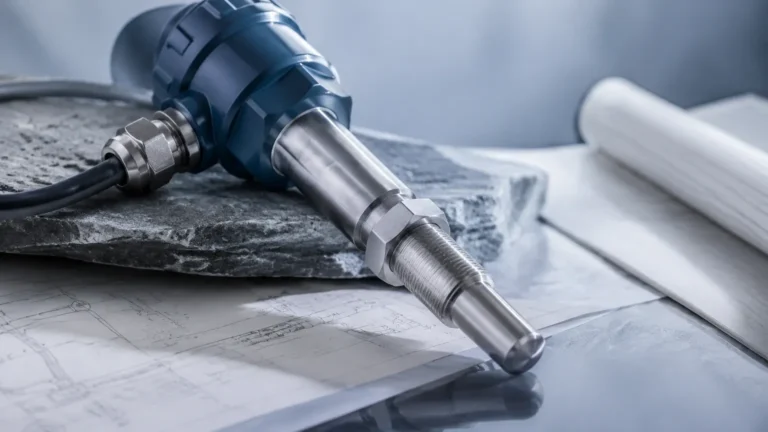
Edge Device
Edge Device
In the modern industrial landscape, the transition from simple analog monitoring to data-driven decision-making has redefined how facilities manage liquid and solid levels. At the center of this digital transformation is the edge device, a hardware component that serves as the bridge between field-level instrumentation and high-level data ecosystems. For engineers and plant managers, understanding the integration of edge computing with level measurement is essential for optimizing process efficiency, ensuring safety, and reducing operational costs.
An edge device in a level measurement context is designed to collect, process, and analyze data at the "edge" of the network—directly at or near the source of the data—rather than transmitting raw information to a centralized cloud or a remote data center for processing. This localized approach is particularly critical in industrial automation, where latency, bandwidth constraints, and security are paramount.
Measurement Principles and Data Generation
Before an edge device can process information, the data must be accurately captured by field instruments. Welk manufactures a range of sensors that serve as the primary data sources for these systems. Understanding the underlying measurement principles is the first step in designing an effective edge-integrated architecture.
Radar Level Measurement
Radar level meters utilize Time of Flight (ToF) technology. The sensor emits high-frequency microwave pulses (typically in the 26 GHz or 80 GHz range). These pulses reflect off the surface of the medium and return to the antenna. The device measures the time interval between emission and reception to calculate the distance. Because microwaves travel at the speed of light, the edge device must be capable of handling high-resolution digital outputs to maintain the precision of the sensor, which can be as accurate as ±1 mm.
Ultrasonic Level Measurement
Ultrasonic sensors function by emitting acoustic pressure waves. The time taken for the sound wave to bounce off the material surface and return to the transducer determines the level. Unlike radar, ultrasonic waves are mechanical and are influenced by air temperature and vapor density. An edge device often performs the critical role of temperature compensation, taking inputs from auxiliary sensors to correct the distance calculation in real-time.
Hydrostatic Level Measurement
Hydrostatic transmitters measure the pressure exerted by a liquid column. Based on the principle that pressure is proportional to the height of the liquid multiplied by its density ($P = \rho \cdot g \cdot h$), these sensors provide a continuous 4-20mA or digital signal. When integrated with an edge device, the system can automatically adjust for changes in fluid density or tank geometry, converting raw pressure data into accurate volume or mass readings.
The Role of the Edge Device in Level Monitoring
In traditional setups, a level transmitter sends a 4-20mA signal to a Programmable Logic Controller (PLC). While effective for basic control, this method often leaves valuable diagnostic data stranded at the field level. An edge device enhances this setup by providing several key functions:
1. Protocol Conversion: Many industrial sensors communicate via Modbus RTU, HART, or Profibus. An edge device translates these industrial protocols into IT-friendly formats such as MQTT (Message Queuing Telemetry Transport) or OPC UA, allowing for seamless integration with ERP and SCADA systems.
2. Data Normalization and Filtering: Level sensors in turbulent tanks or agitated vessels can produce "noisy" data. The edge device can run localized algorithms—such as moving averages or Kalman filters—to smooth the signal before it reaches the control room.
3. Local Analytics and Alarming: By processing data locally, the edge device can trigger immediate safety shutdowns or alarms if a critical high-level threshold is reached, ensuring a response time that is independent of cloud connectivity or network latency.
4. Bandwidth Optimization: Instead of streaming constant data points to the cloud, the edge device can be programmed to send only significant changes or hourly summaries, significantly reducing data transmission costs.
For those evaluating how to implement these technologies across various industrial applications, the Main Page offers a detailed look at compatible hardware and integrated measurement solutions.
Selection Criteria for Industrial Edge Devices
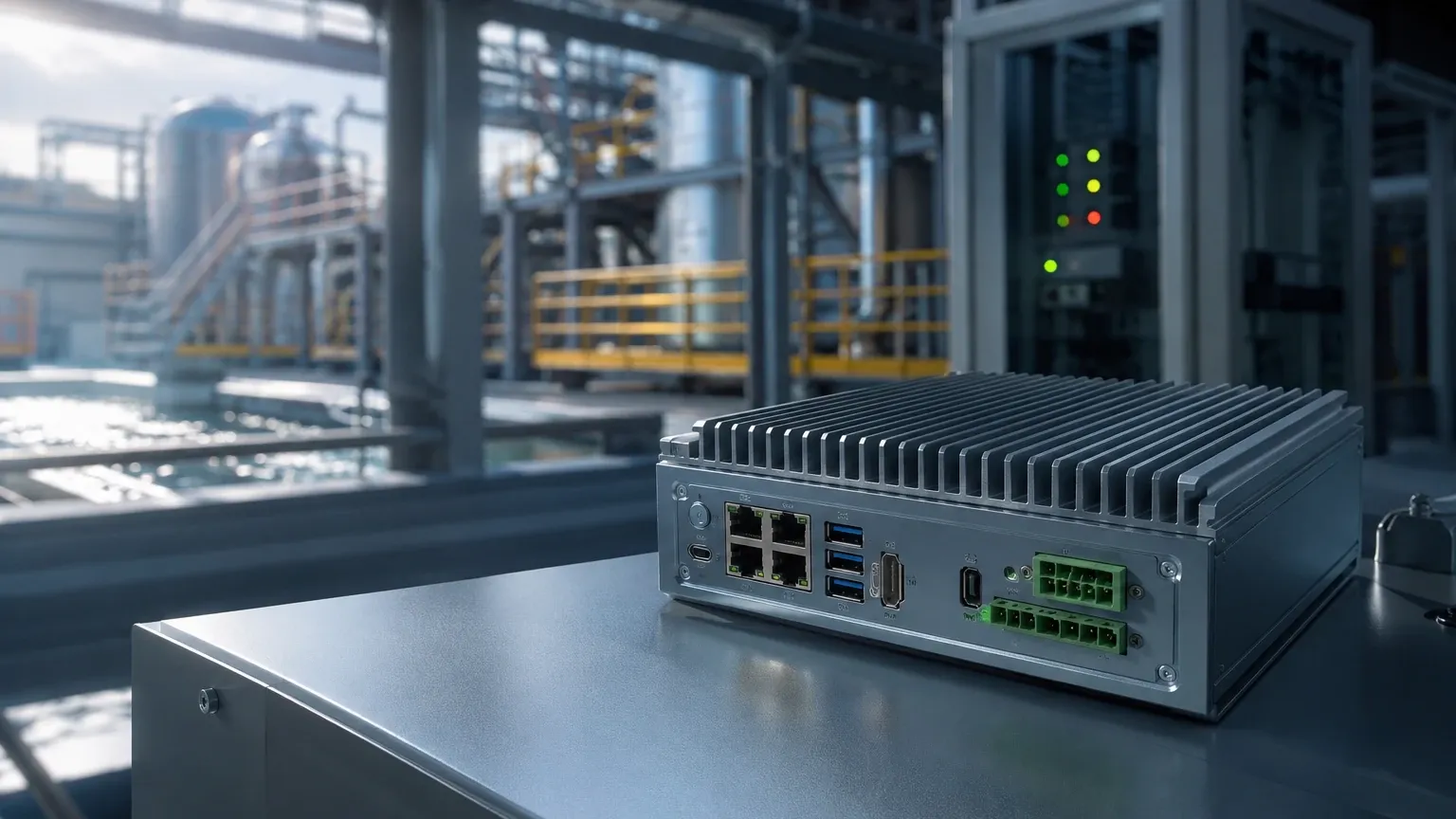
Choosing the right edge device requires a balance between processing power, connectivity, and environmental resilience. The following table provides a comparison of common edge integration strategies used in industrial level measurement.
Selection Table: Edge Integration Strategies
| Feature | Edge Gateway | Smart Sensor (Integrated Edge) | Industrial PC (IPC) |
| :— | :— | :— | :— |
| Primary Use | Connecting multiple legacy sensors to the cloud. | Single-point monitoring with built-in logic. | Complex multi-variable analysis and local HMI. |
| Connectivity | Modbus, HART, Wi-Fi, Cellular, Ethernet. | Usually Bluetooth or LoRaWAN. | High-speed Ethernet, PCIe expansion. |
| Processing Power | Moderate; suitable for data filtering. | Low; optimized for low power consumption. | High; capable of running AI/ML models. |
| Environmental Rating | Often IP20 (Cabinet) or IP66 (Field). | Typically IP67/IP68 (Submersible). | Usually requires IP65/66 enclosure. |
| Scalability | High; can support 32+ devices. | Low; one device per sensor. | Very High; manages entire plant sections. |
Installation and Engineering Considerations
Successful deployment of an edge device depends heavily on the physical and electrical environment of the installation site. Engineers should prioritize the following factors:
Power Supply and Stability
Industrial edge devices typically require a stable 24V DC power supply. In remote locations, such as water reservoirs or remote oil fields, solar power with battery backup is common. It is vital to ensure that the edge device has a wide input voltage range to handle the fluctuations often found in industrial power grids.
Signal Integrity and EMC
Level sensors often operate in environments with high electromagnetic interference (EMI) from large motors or variable frequency drives (VFDs). Edge devices should be installed using shielded twisted-pair cables for RS485/Modbus communication. Proper grounding of the device chassis is mandatory to prevent data corruption or hardware damage from transient surges.
Physical Placement
While the goal of an edge device is to be close to the sensor, it must remain accessible for maintenance. If the sensor is located at the top of a 30-meter silo, the edge gateway is often mounted at the base in a weather-proof enclosure (IP66 or better) to facilitate easier firmware updates and physical inspections. For hazardous areas, the device must carry appropriate ATEX or IECEx certifications.
Limitations and Common Risks
While edge devices offer significant advantages, they are not without limitations. Acknowledging these risks is essential for a robust system design.
* Cybersecurity Vulnerabilities: Any device connected to a network is a potential entry point for cyberattacks. It is critical to select edge devices that support hardware-based encryption, secure boot, and regular firmware updates. Default passwords should be changed immediately upon installation.
* Hardware Obsolescence: The pace of development in edge computing is much faster than in traditional mechanical level gauges. A magnetic level gauge may last 20 years, but an edge device may require a hardware refresh or significant software updates within 5 to 7 years to remain compatible with evolving network protocols.
* Configuration Complexity: Unlike a simple 4-20mA loop, edge devices require programming or configuration via web interfaces or specialized software. This necessitates a higher level of technical expertise among the maintenance staff.
Frequently Asked Questions (FAQs)
Q: Can I use an edge device with an existing analog 4-20mA level transmitter?
A: Yes. Many edge gateways include analog-to-digital (ADC) input modules specifically designed to convert traditional 4-20mA signals into digital data for processing and transmission.
Q: How does an edge device handle data if the internet connection is lost?
A: Most industrial-grade edge devices feature "Store and Forward" capabilities. They have internal storage (SD cards or eMMC flash) to log data locally during a network outage and will automatically upload the buffered data once the connection is restored.
Q: Is an edge device the same as a PLC?
A: Not exactly. While there is some overlap, a PLC is primarily designed for real-time deterministic control (turning pumps on/off). An edge device is focused on data processing, protocol translation, and communication with higher-level systems. However, many modern "Edge Controllers" combine both functions.
Q: What is the maximum distance between the level sensor and the edge device?
A: This depends on the communication protocol. For RS485 (Modbus), the distance can be up to 1,200 meters without a repeater. For analog 4-20mA signals, distances of 300 to 500 meters are common, provided the cable resistance does not exceed the transmitter's drive capability.
By carefully selecting and installing an edge device, industrial operators can transform their level measurement hardware from simple sensors into intelligent nodes within a global data network. This integration not only improves accuracy but also provides the predictive insights necessary to maintain a competitive advantage in today’s automated industries.