Electric Press with Monitoring
Electric Press with Monitoring
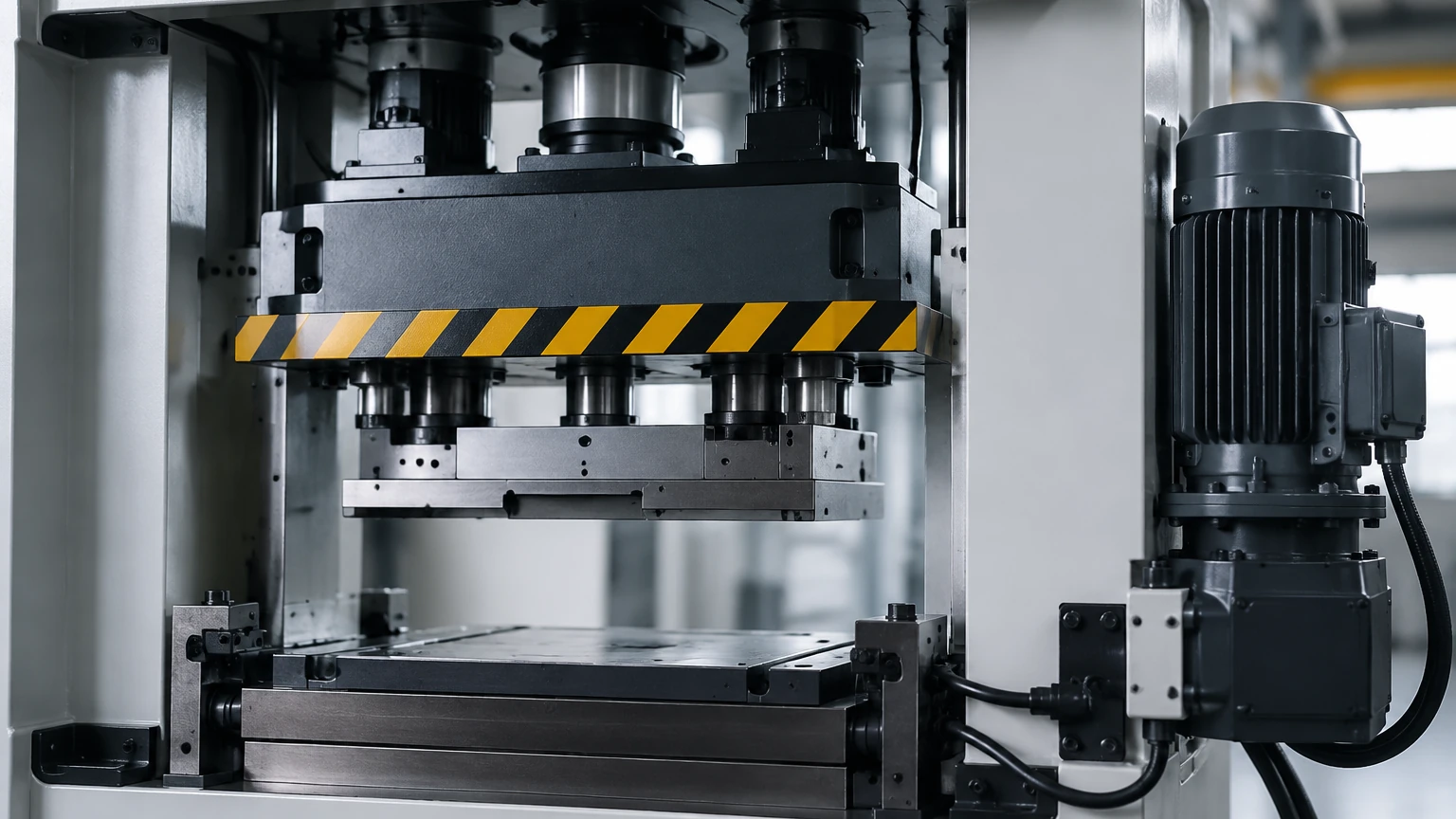
In the modern landscape of industrial automation, the shift from traditional hydraulic and pneumatic systems toward electric-driven solutions has redefined precision manufacturing. An electric press with monitoring—often referred to as a servo press—integrates advanced motor control with real-time data acquisition to ensure that every pressing operation meets stringent quality standards. Unlike legacy systems that rely on mechanical stops or pressure relief valves, electric presses provide granular control over force and displacement, making them indispensable in industries such as automotive assembly, electronics manufacturing, and medical device production.
This guide explores the engineering principles behind electric press monitoring, selection criteria for industrial applications, and the critical role of auxiliary sensor integration—including level measurement for supporting systems—to ensure long-term operational reliability.
Measurement Principles of Electric Press Monitoring
The fundamental advantage of an electric press is its ability to monitor and control variables throughout the entire stroke. This is achieved through a closed-loop feedback system involving several key measurement components.
Force Measurement (Load Cells)
Most electric presses utilize strain-gauge-based load cells or piezo-electric sensors integrated into the ram or the tooling plate. These sensors convert the physical resistance encountered during the press cycle into an electrical signal. In a monitored system, the controller samples this data at high frequencies (often up to 10 kHz) to create a force profile. This allows the system to detect minute deviations, such as a slightly oversized component or a missing washer, which would be invisible to a standard hydraulic gauge.
Displacement Measurement (Encoders)
To correlate force with position, electric presses use high-resolution encoders. These can be rotary encoders mounted on the servo motor or linear encoders mounted directly to the press ram for higher accuracy. By measuring position in increments as small as 0.001 mm (0.000039 inches), the system can precisely determine when a part has reached its "home" position or a specific interference fit depth.
The Force-Distance Curve
The primary output of an electric press with monitoring is the force-distance curve (also known as a signature). The monitoring software establishes "windows" or "envelope curves" around a master profile. If the real-time data falls outside these boundaries, the system triggers an immediate alarm and prevents the part from moving to the next stage of assembly.
Selection Criteria for Electric Press Systems
Choosing the right electric press requires a balance between mechanical capacity and the sophistication of the monitoring suite. Engineers must evaluate the specific requirements of their assembly process before finalizing hardware specifications.
| Feature | Specification Range | Industrial Application Example |
| :— | :— | :— |
| Pressing Force | 0.5 kN to 500 kN (112 lbf to 112,400 lbf) | Bearing insertion, riveting, crimping |
| Stroke Length | 100 mm to 600 mm (3.9 in to 23.6 in) | Deep-draw forming, long-reach assembly |
| Position Repeatability | ±0.01 mm to ±0.001 mm | Electronics micro-assembly |
| Monitoring Channels | 1 to 8 Channels | Multi-point force monitoring for complex jigs |
| Data Interface | Profinet, EtherNet/IP, Modbus TCP | Integration with factory PLC and MES systems |
Application-Specific Considerations
When selecting a system, consider the "stiffness" of the press frame. High-force applications require a C-frame or H-frame design that minimizes deflection. If the frame flexes during monitoring, the displacement data will be skewed, leading to false rejects. Furthermore, the integration of external sensors, such as those found on the Main Page of specialized instrument providers, is often necessary for monitoring the broader environment in which the press operates.
The Role of Level Measurement in Press Operations
While the electric press itself is a dry, electromechanical system, the infrastructure supporting high-duty-cycle industrial presses often involves fluids that require precise monitoring. An electric press with monitoring does not operate in a vacuum; it is part of a larger machine cell that must be maintained to ensure the accuracy of the press results.
Lubrication System Monitoring
High-speed servo presses require consistent lubrication for the ball screws and linear guides. Automated lubrication units use reservoirs that must be monitored to prevent dry-running, which can lead to mechanical failure and catastrophic loss of calibration. Hydrostatic level transmitters or small-scale ultrasonic sensors are typically used to ensure that lubricant levels remain within optimal parameters.
Cooling Systems for High-Capacity Motors
In heavy-duty applications (above 100 kN), the servo motors and drive controllers generate significant heat. Liquid cooling systems are frequently employed to maintain thermal stability. Monitoring the coolant level in the header tank is vital; a drop in level could indicate a leak, leading to thermal expansion of the press components. This expansion can introduce errors of several microns into the displacement monitoring data, undermining the precision of the electric press.
Installation and Calibration Considerations
Proper installation is the foundation of accurate monitoring. An electric press with monitoring is only as reliable as its physical setup and its periodic calibration.
1. Rigid Mounting: The press must be mounted on a vibration-damped, level surface. Any oscillation in the base can manifest as "noise" in the force-distance curve.
2. Alignment: The ram must be perfectly perpendicular to the worktable. Misalignment causes side-loading on the load cell, which introduces measurement errors and accelerates wear on the internal bearings.
3. Shielding and Grounding: Because servo motors operate using Pulse Width Modulation (PWM), they can generate significant electromagnetic interference (EMI). Monitoring cables must be shielded and separated from high-voltage power lines to prevent signal degradation.
4. Calibration Cycles: Industrial standards typically require annual calibration of the load cell and encoder using traceable reference standards. For high-precision aerospace or medical applications, semi-annual calibration may be necessary.
Limitations and Common Risks
Despite their advantages, electric presses with monitoring have limitations that engineers must address during the design phase.
* Initial Capital Expenditure: Electric presses generally have a higher upfront cost compared to simple pneumatic cylinders. However, the reduction in scrap rates and the elimination of external QC stations often result in a lower Total Cost of Ownership (TCO).
* Thermal Drift: As the press operates, heat can cause the mechanical components to expand. Advanced monitoring systems include thermal compensation algorithms, but these must be correctly configured based on the ambient environment.
* Overload Sensitivity: Unlike hydraulic systems that simply stall at their pressure relief limit, an electric press can potentially damage its ball screw if it hits a hard stop at high velocity. Monitoring software must include "Fast-Stop" triggers to protect the hardware.
Frequently Asked Questions (FAQ)
Q: Can an electric press with monitoring replace a hydraulic press for all applications?
A: While electric presses cover a wide range of forces, extremely high-tonnage applications (above 1000 kN) are still often dominated by hydraulics due to the sheer size and cost of the required electric motors. However, for most assembly tasks, the electric press is superior in terms of data collection and energy efficiency.
Q: How does the monitoring system handle different parts on the same line?
A: Modern controllers allow for multiple "recipes." When a new part arrives, the PLC signals the press to switch to a different force-distance profile, allowing for seamless high-mix, low-volume production.
Q: What happens to the data collected during monitoring?
A: In an Industry 4.0 setup, the data is exported via industrial Ethernet to a centralized server. This allows for long-term trend analysis, enabling predictive maintenance and providing a full digital birth certificate for every manufactured component.
Q: Do I need specialized level sensors for the cooling systems of these presses?
A: Yes, for reliability, it is recommended to use industrial-grade sensors. For example, ultrasonic level sensors provide non-contact measurement that is unaffected by the viscosity of lubricants or the conductivity of coolants. Detailed specifications for such auxiliary sensors can be found by visiting the Main Page of reputable measurement technology manufacturers.
Conclusion
The integration of an electric press with monitoring represents a significant step forward in manufacturing quality control. By capturing and analyzing force and displacement data in real-time, manufacturers can transition from reactive sampling to 100% in-process inspection. To maintain the integrity of these high-precision systems, engineers must also attend to the auxiliary systems—such as lubrication and cooling—where reliable level measurement ensures that the press operates within its designed environmental variables. Through careful selection, rigorous installation, and holistic system monitoring, the electric press becomes the cornerstone of a zero-defect production strategy.