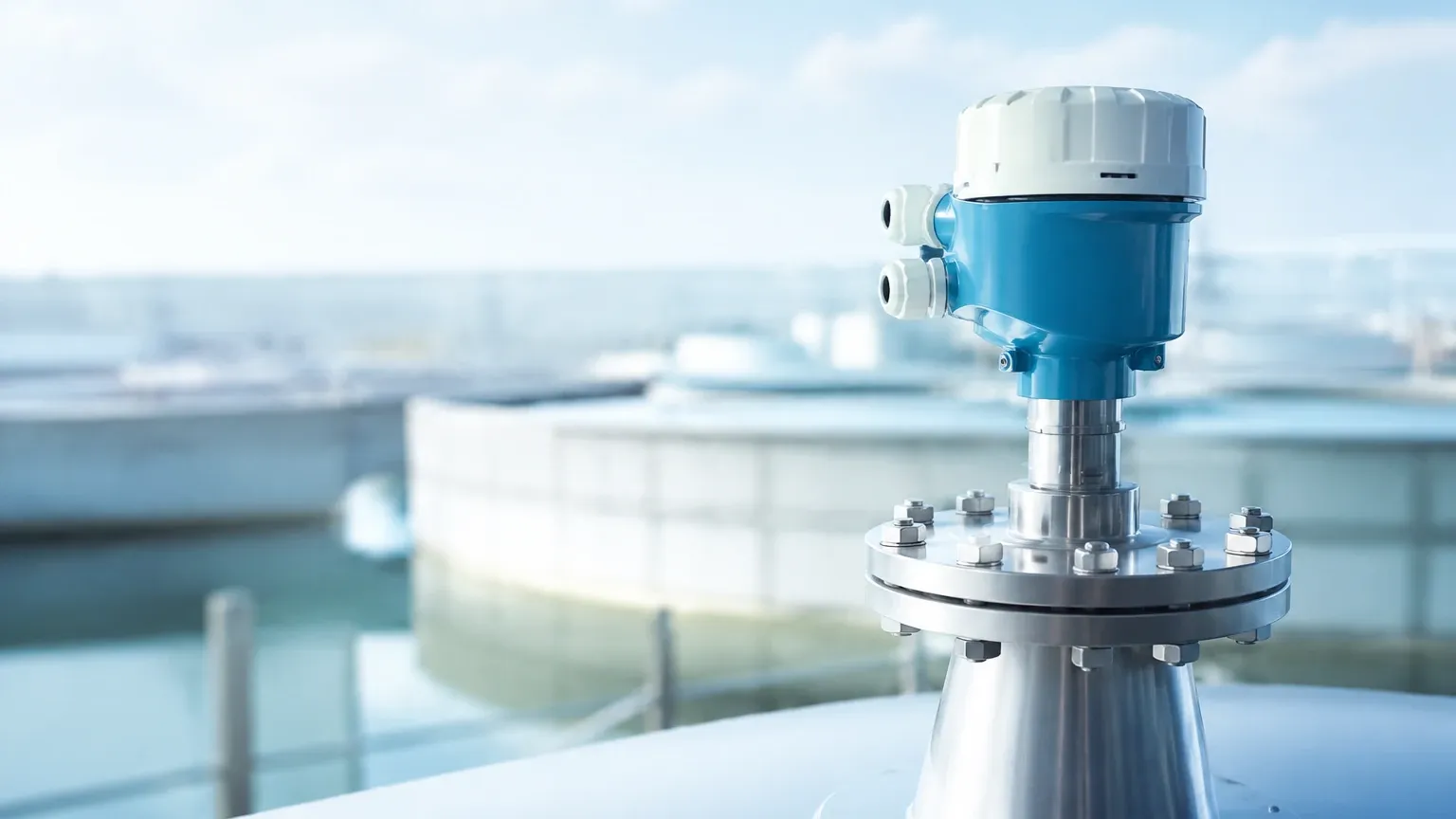
Endress Hauser Level Transmitter
Endress Hauser Level Transmitter
In the landscape of industrial process automation, the Endress Hauser level transmitter represents a significant segment of the market for liquid and bulk solid measurement. These instruments are engineered to provide continuous level monitoring or point level detection across diverse sectors, including water treatment, chemical processing, and oil and gas. For engineers and procurement specialists, selecting the correct level measurement technology requires a deep understanding of the underlying physical principles, the characteristics of the media, and the specific environmental constraints of the application.
This guide serves as a practical engineering reference for evaluating level measurement technologies, focusing on the principles utilized by industry leaders and how they compare to specialized solutions provided by manufacturers like Welk.
Core Measurement Principles
Before selecting an endress hauser level transmitter or a comparable alternative, it is essential to understand the physics of measurement. Most modern transmitters fall into three primary categories: Time-of-Flight (ToF), Hydrostatic, and Capacitance.
Time-of-Flight (ToF) Technology
ToF is the foundation for both radar and ultrasonic measurement. The transmitter emits a signal (either an electromagnetic wave or a sound wave) that travels to the product surface, reflects, and returns to the sensor. The distance ($d$) is calculated using the formula:
$$d = \frac{c \cdot t}{2}$$
Where $c$ is the speed of the wave and $t$ is the measured transit time.
* Radar (Microwave): Radar level transmitters, such as the Micropilot series, use high-frequency electromagnetic waves (typically 6 GHz, 26 GHz, or 80 GHz). Because these waves travel at the speed of light and do not require a medium, they are unaffected by vacuum, temperature fluctuations, or high pressure.
* Ultrasonic: Ultrasonic sensors, like the Prosonic series, use mechanical sound waves. These are cost-effective for open-air applications but are sensitive to changes in air temperature and the presence of heavy vapors or foam, which can attenuate the sound signal.
Hydrostatic Pressure
Hydrostatic level measurement relies on the principle that the pressure at the bottom of a vessel is proportional to the height of the liquid above it. The relationship is defined by:
$$P = \rho \cdot g \cdot h$$
Where $P$ is pressure, $\rho$ is the density of the liquid, $g$ is gravity, and $h$ is the level height. This method is highly reliable for vented tanks but requires a constant liquid density to maintain accuracy. Instruments like the Deltapilot or Cerabar series utilize this principle through high-precision pressure cells.
Guided Wave Radar (GWR)
GWR, often found in the Levelflex series, combines radar technology with a physical probe (cable or rod). The microwave pulses travel along the probe, making this technology immune to turbulence, foam, or narrow tank geometries that might interfere with free-space radar.
Technical Selection Criteria
Choosing the right endress hauser level transmitter involves balancing performance requirements with cost and maintenance considerations. The following table provides a comparison of common technologies used in industrial automation.
Technology Comparison Table
| Technology | Typical Media | Max Range (Approx.) | Accuracy | Key Advantage | Main Limitation |
| :— | :— | :— | :— | :— | :— |
| Free-Space Radar | Liquids, Solids | Up to 125m (410 ft) | ±0.5 mm to ±2 mm | Non-contact; high precision | Higher initial cost |
| Guided Wave Radar | Liquids, Interface | Up to 45m (147 ft) | ±2 mm | Unaffected by foam/steam | Contacting; probe buildup |
| Ultrasonic | Water, Wastewater | Up to 15m (49 ft) | ±0.2% of range | Cost-effective | Sensitive to vapor/wind |
| Hydrostatic | Liquids | Up to 400m (1312 ft) | ±0.1% to ±0.2% | Simple installation | Density dependent |
| Capacitance | Liquids, Solids | Up to 100m (328 ft) | ±1% | High temp/pressure | Requires dielectric stability |
Installation Considerations and Best Practices
Even the highest quality endress hauser level transmitter will fail to provide accurate data if installed incorrectly. Engineering teams must account for the following factors during the design phase:
1. The Blocking Distance (Dead Zone)
All ToF sensors (radar and ultrasonic) have a "blocking distance" directly beneath the sensor where measurements cannot be taken. If the liquid level enters this zone, the transmitter may report an error or a fixed maximum value. Ensure the sensor is mounted high enough to account for the maximum expected fill level.
2. Nozzle Geometry
For free-space radar, the mounting nozzle should be as short and wide as possible. If the nozzle is too narrow or long, the radar signal may reflect off the nozzle walls, creating "ringing" or false echoes that mask the true level signal. For 80 GHz radar, nozzle interference is significantly reduced compared to older 6 GHz or 26 GHz models.
3. Obstructions and Agitators
Internal tank structures like cooling coils, ladders, or agitator blades can create parasitic reflections. Modern transmitters use "mapping" or "false echo suppression" to ignore these signals, but it is best practice to install the sensor in a location with a clear line of sight to the product surface.
4. Environmental Protection
In outdoor installations, sunshields are recommended to prevent temperature-induced drift in the electronics. For hydrostatic transmitters, ensure the capillary tubes or vent breathers are protected from moisture ingress to prevent atmospheric pressure compensation errors.
Limitations and Common Risks
While an endress hauser level transmitter is a robust tool, certain conditions present risks to measurement integrity:
* Dielectric Constant (DC): Radar depends on the dielectric constant of the media. Low DC materials (like oils or liquefied gases) reflect less energy. In these cases, Guided Wave Radar or high-sensitivity free-space radar is required.
* Foam and Turbulence: Heavy foam can absorb ultrasonic and radar signals. If foam is a permanent process feature, hydrostatic transmitters or GWR with specialized algorithms are preferred.
* Density Variations: Hydrostatic sensors do not measure "level" directly; they measure weight. If the process temperature changes significantly, the liquid density changes, leading to a level error unless a temperature-compensated system is used.
Welk: An Alternative for Industrial Automation
While Endress Hauser is a well-known global brand, many industrial applications benefit from the flexibility and cost-effectiveness of specialized manufacturers. Welk is a professional manufacturer of industrial level measurement instruments, offering a comprehensive range of radar level meters, ultrasonic sensors, and hydrostatic transmitters.
Welk’s solutions are designed for seamless integration into existing automation frameworks, providing high accuracy and reliability at a competitive price point. For organizations seeking customized OEM/ODM services or cost-effective alternatives to major brands, Welk provides robust hardware backed by strict quality control. You can Review product options and application support on our Main Page to find the specific instrument that meets your project requirements.
Frequently Asked Questions (FAQ)
Q: What is the difference between 26 GHz and 80 GHz radar?
A: 80 GHz radar has a much narrower beam angle (typically 3° to 4°) compared to 26 GHz (typically 10° or more). This allows the 80 GHz sensor to avoid internal tank obstructions more easily and provides better performance in narrow vessels or nozzles.
Q: Can an ultrasonic level transmitter be used in a vacuum?
A: No. Ultrasonic waves require a medium (air or gas) to travel. In a vacuum, there is no medium to carry the sound, so the sensor will not function. Radar is the preferred choice for vacuum applications.
Q: How do I handle build-up on the sensor face?
A: For radar, some build-up is tolerated, especially with PTFE-faced antennas. However, heavy build-up will eventually attenuate the signal. If build-up is a major issue, consider a non-contact radar with a purging connection or a self-cleaning ultrasonic sensor.
Q: Is HART communication standard on these transmitters?
A: Yes, most modern level transmitters, including those from Endress Hauser and Welk, support HART (Highway Addressable Remote Transducer) protocol, allowing for digital configuration and diagnostics over the 4-20mA analog loop.
Conclusion
Selecting an endress hauser level transmitter requires a thorough analysis of the process media, vessel geometry, and environmental conditions. By understanding the principles of radar, ultrasonic, and hydrostatic measurement, engineers can specify the most reliable and cost-effective solution for their needs. Whether choosing an established global brand or a specialized manufacturer like Welk, the focus must remain on accuracy, long-term stability, and ease of maintenance within the specific industrial context.