Flomotion Systems Inc
Flomotion Systems Inc
In the landscape of industrial fluid handling and chemical metering, precision is the primary driver of operational efficiency. Organizations such as Flomotion Systems Inc have established a presence by providing integrated solutions that combine pumping technology with sophisticated monitoring instrumentation. For engineers and plant managers, understanding the synergy between fluid delivery systems and level measurement is critical for maintaining process integrity, ensuring safety, and optimizing chemical consumption.
Effective level measurement serves as the "eyes" of a chemical feed system. Whether managing corrosive acids, viscous polymers, or volatile solvents, the integration of accurate sensors ensures that pumps do not run dry and tanks do not overflow. This article explores the technical foundations of level measurement technologies, selection criteria for industrial applications, and the engineering considerations necessary when integrating these components into broader systems like those associated with Flomotion Systems Inc.
Fundamental Principles of Level Measurement
Before selecting an instrument for a chemical feed or storage application, it is essential to understand the physics behind the primary measurement technologies. In modern industrial automation, four main categories dominate the market: Radar, Ultrasonic, Hydrostatic, and Magnetic.
1. Radar Level Measurement (ToF)
Radar transmitters operate on the Time-of-Flight (ToF) principle. The device emits high-frequency microwave pulses (typically in the 26 GHz or 80 GHz range) that travel at the speed of light. When these pulses hit the surface of the medium, they are reflected back to the sensor. The distance is calculated based on the time interval between transmission and reception.
* Advantages: Non-contact, unaffected by vacuum, pressure, or temperature fluctuations. High-frequency 80 GHz radar offers a narrow beam angle, which is ideal for tanks with internal obstructions like agitators.
* Key Consideration: The dielectric constant ($ε_r$) of the liquid affects the strength of the reflected signal. Low dielectric fluids (like oils) reflect less energy than water-based chemicals.
2. Ultrasonic Level Measurement
Similar to radar, ultrasonic sensors use the ToF principle but utilize sound waves instead of electromagnetic waves. A transducer emits an ultrasonic pulse that bounces off the liquid surface.
* Advantages: Cost-effective and non-contact. Excellent for water and wastewater applications.
* Limitations: Sound speed is affected by air temperature, requiring integrated temperature compensation. It is also sensitive to heavy foam, dust, and vapors which can attenuate the acoustic signal.
3. Hydrostatic Level Measurement
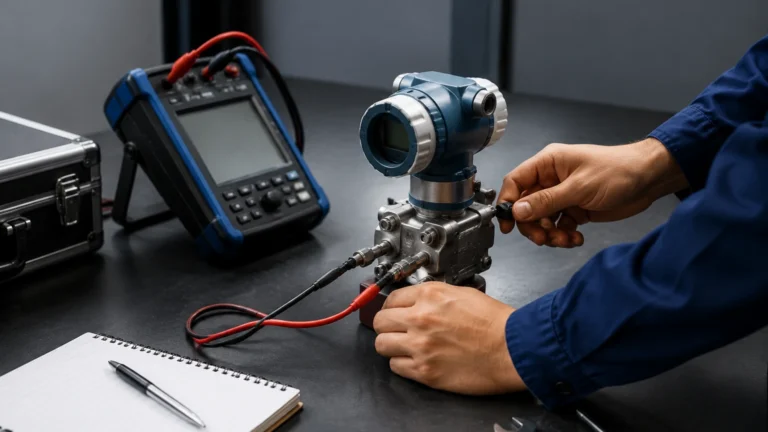
This is a contact-based method where a pressure transmitter is installed at the bottom of a tank or submerged in the liquid. It measures the head pressure exerted by the liquid column. The level is calculated using the formula: $P =
ho imes g imes h$ (where $P$ is pressure, $
ho$ is density, $g$ is gravity, and $h$ is height).
* Advantages: Simple, reliable, and highly accurate for vented tanks.
* Limitations: Changes in liquid density (due to temperature or concentration shifts) will introduce measurement errors unless the system is calibrated to compensate for these changes.
4. Magnetic Level Gauges (MLG)
MLGs consist of a bypass chamber attached to the side of a vessel. A float containing a permanent magnet moves up and down with the liquid level, flipping mechanical flags or interacting with a reed-chain transmitter on the outside of the chamber.
* Advantages: Provides a clear visual indication without requiring power. Highly durable for high-pressure and high-temperature environments.
Integration with Chemical Feed Systems
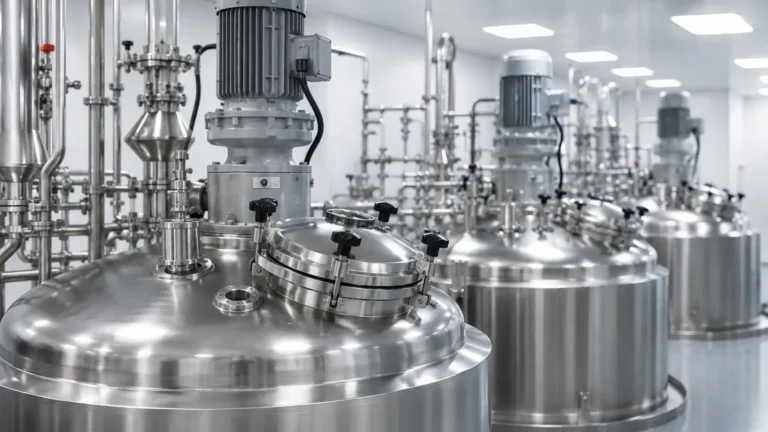
Systems integrated by firms like Flomotion Systems Inc often prioritize the automation of chemical dosing. For these systems to function autonomously, the level sensor must communicate seamlessly with a Programmable Logic Controller (PLC) or a pump controller.
For instance, in a peristaltic pump skid used for sodium hypochlorite dosing, a radar level transmitter provides real-time volume data. If the level drops below a programmed setpoint, the controller can trigger an automated refill cycle or shut down the pump to prevent air binding. You can Review product options and application support on our Main Page to see how various transmitter outputs (4-20mA, HART, Modbus) facilitate this level of integration.
Technical Selection Criteria
Choosing the correct instrument requires a detailed analysis of the process environment. The following table provides a general guide for technology selection based on common industrial variables:
| Application Variable | Radar (80 GHz) | Ultrasonic | Hydrostatic | Magnetic Gauge |
| :— | :— | :— | :— | :— |
| Corrosive Chemicals | Excellent (PTFE Lens) | Good (Plastic) | Fair (Requires Alloy) | Good (Lined) |
| Foaming Liquids | Excellent | Poor | Excellent | Excellent |
| Heavy Vapors/Steam | Excellent | Poor | Excellent | Excellent |
| Vacuum Conditions | Excellent | Not Recommended | Good | Excellent |
| Deep Tanks (>15m) | Excellent | Fair | Good | Fair |
| Budget Sensitivity | Moderate/High | Low | Low/Moderate | Moderate |
Media Compatibility
In the chemical industry, compatibility is paramount. For aggressive media like sulfuric acid or hydrochloric acid, non-contact sensors (Radar/Ultrasonic) with PVDF or PTFE wetted parts are preferred. If using hydrostatic sensors, the diaphragm must be constructed from exotic materials like Tantalum or Hastelloy-C to prevent premature failure.
Tank Geometry
Small-diameter tanks or tanks with internal heating coils pose a challenge for wide-beam sensors. Ultrasonic sensors typically have a beam angle of 10° to 12°, whereas an 80 GHz radar can achieve a beam angle as narrow as 3°. This narrow focus allows the radar to "avoid" internal obstacles, providing a cleaner signal.
Installation Considerations and Best Practices
Even the most advanced sensor will fail if installed incorrectly. Engineering teams working with Flomotion Systems Inc components should adhere to the following installation guidelines:
1. Blocking Distance (Dead Zone): Every ToF sensor (Radar and Ultrasonic) has a minimum distance near the sensor face where it cannot measure. Ensure the maximum expected liquid level does not enter this zone. For most radar units, this is approximately 50mm to 100mm (2 to 4 inches).
2. Nozzle Dimensions: If mounting on a nozzle, the nozzle height should be kept as short as possible. Long, narrow nozzles can cause internal reflections (ringing) that interfere with the primary signal.
3. Positioning: Sensors should never be mounted in the center of a tank (to avoid multiple reflections from the tank walls) or directly above the fill stream (to avoid turbulence and false readings).
4. Stilling Wells: In tanks with extreme agitation or heavy foam, installing the sensor inside a vertical pipe (stilling well) can provide a calm surface for accurate measurement.

Limitations and Common Risks
While modern instrumentation is robust, certain environmental factors introduce risks:
* Condensation: In outdoor tanks or heated processes, condensation can form on the sensor face. While radar is less affected, heavy droplets can cause signal drift. Selecting a sensor with a convex (drip-off) lens design mitigates this.
* Build-up: Crystallizing chemicals can build up on contact probes or hydrostatic diaphragms. Regular maintenance or the use of non-contact radar is recommended for these fluids.
* Ambient Noise: In wastewater plants, high-frequency acoustic noise from nearby machinery can occasionally interfere with ultrasonic sensors. Shielding or switching to radar usually resolves this.
Frequently Asked Questions (FAQ)
Q: Can radar level meters measure solids like lime or carbon powder?
A: Yes. However, solids require a high-frequency radar (80 GHz) with a high dynamic range to account for the irregular surface and low reflectivity of the bulk material.
Q: How often do hydrostatic transmitters need calibration?
A: In stable environments, annual calibration is standard. However, if the chemical concentration (and thus density) changes frequently, the system may require more frequent zero/span adjustments or a dual-sensor setup for density compensation.
Q: Is it possible to use ultrasonic sensors in pressurized tanks?
A: It is generally not recommended. Changes in pressure alter the density of the air/gas through which the sound travels, significantly impacting the accuracy of the ToF calculation. Radar is the superior choice for pressurized vessels.
Q: What is the benefit of a 4-20mA HART output?
A: HART (Highway Addressable Remote Transducer) allows for digital communication over the same two wires used for the 4-20mA analog signal. This enables remote diagnostics, configuration, and the transmission of secondary variables (like internal temperature).
Conclusion
For professionals utilizing solutions from Flomotion Systems Inc, the selection of level measurement technology is a critical step in system design. By understanding the underlying physics of radar, ultrasonic, and hydrostatic measurement, engineers can specify instruments that not only provide accurate data but also withstand the rigors of industrial chemical environments.
Whether the goal is to optimize chemical dosing, prevent environmental spills, or ensure process continuity, the right level sensor is the foundation of a successful fluid handling strategy. For further technical specifications and to explore our full range of industrial measurement solutions, please visit our Main Page.