Flow Meter Transmitter
Flow Meter Transmitter
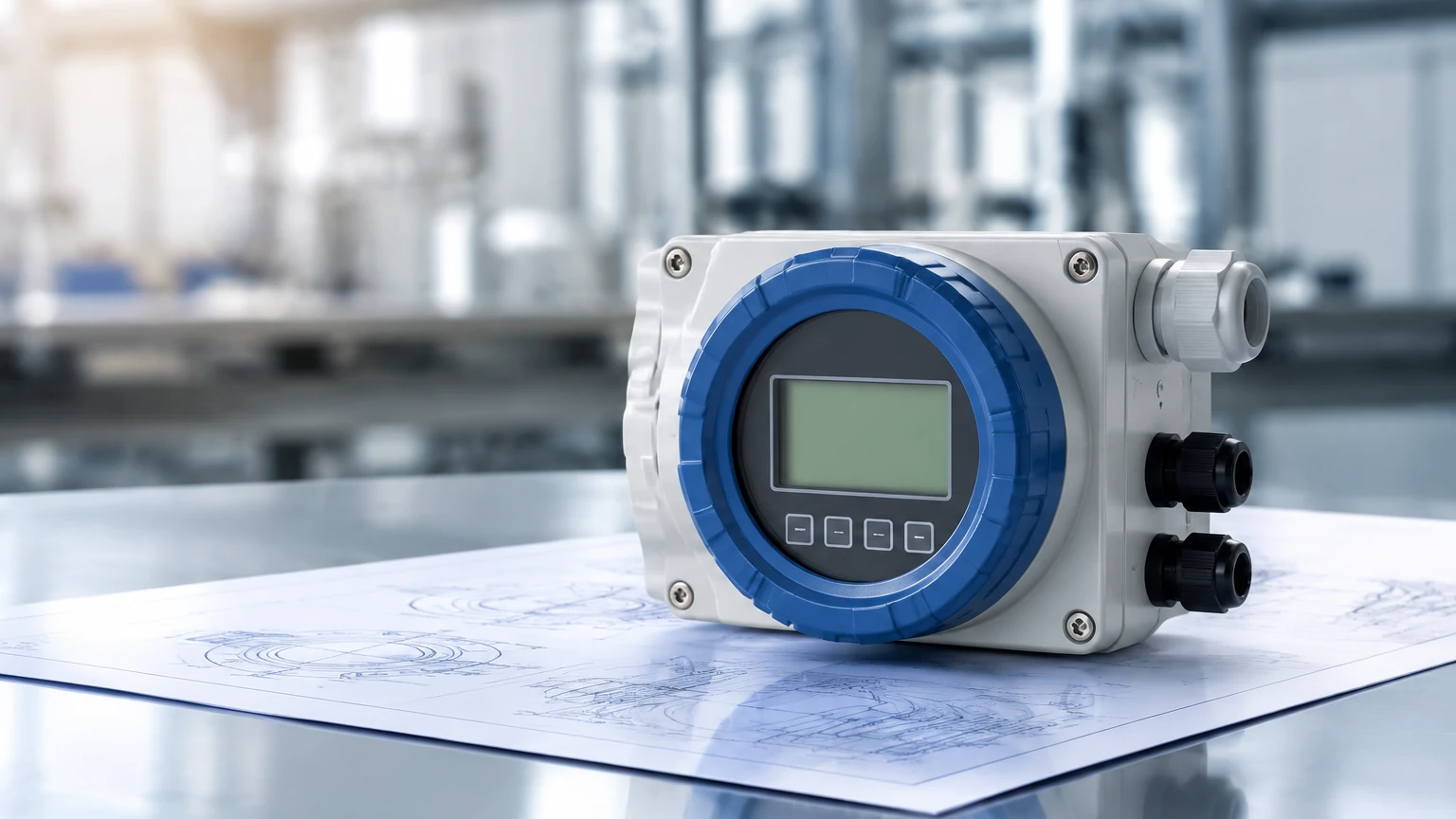
In industrial process control, the flow meter transmitter serves as the critical communication link between the physical measurement of fluid movement and the control system. While a flow sensor detects the physical change—be it a pressure drop, a frequency shift, or a magnetic disturbance—the transmitter is responsible for processing that raw signal, compensating for environmental variables, and outputting a standardized signal such as 4-20mA, HART, or Modbus. For engineers and plant managers, selecting the right flow meter transmitter is essential for ensuring data integrity in water treatment, chemical processing, and industrial automation.
Understanding Measurement Principles
Before selecting a transmitter, it is vital to understand the physics of the measurement. Different fluid properties and pipe conditions dictate which principle is most effective.
Differential Pressure (DP)
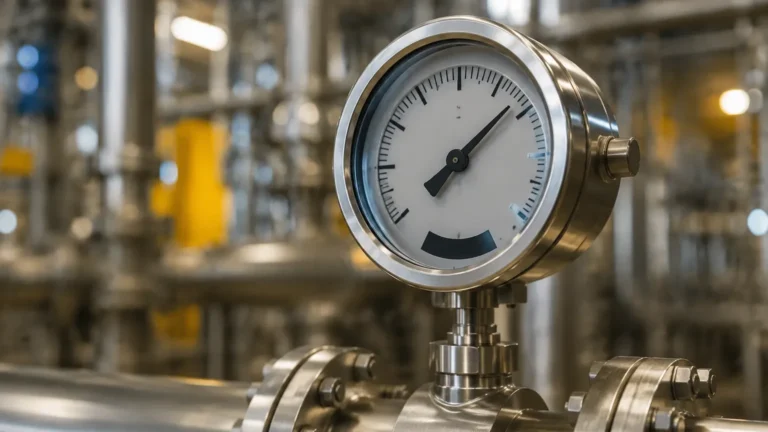
Differential pressure transmitters operate on Bernoulli’s principle. When a fluid passes through a restriction (like an orifice plate or Venturi tube), its velocity increases and its pressure decreases. The transmitter measures the pressure difference between the upstream and downstream sides. The flow rate is proportional to the square root of this pressure difference.
Electromagnetic Principle
Based on Faraday’s Law of Electromagnetic Induction, these transmitters are used for conductive liquids. As a conductive fluid flows through a magnetic field generated by the meter, it induces a voltage. The transmitter detects this voltage, which is directly proportional to the flow velocity.
Ultrasonic (Transit-Time and Doppler)
Ultrasonic flow meter transmitters use sound waves to determine velocity. In transit-time systems, the transmitter measures the time difference between signals sent upstream and downstream. In Doppler systems, the transmitter measures the frequency shift caused by sound reflecting off particles or bubbles in the fluid. This non-invasive method is highly valued for retrofitting existing systems.
Open Channel Flow (Level-to-Flow Conversion)
In many water treatment and environmental monitoring applications, flow is measured in open channels, flumes, or weirs. Here, the flow meter transmitter is often an ultrasonic or radar level sensor. The transmitter uses programmed primary element curves (such as Parshall flume or V-notch weir formulas) to convert the measured liquid level (head) into a volumetric flow rate. This is a core area of expertise for manufacturers like Welk, where precision level measurement directly translates to accurate flow data. To explore specific instrumentation for these applications, professionals often visit the Main Page for technical specifications.
The Role of the Transmitter in Signal Processing
The "transmitter" portion of the device is more than just a wire terminal. Modern digital transmitters perform several complex functions:
1. Signal Linearization: Many sensors have non-linear outputs (e.g., the square root relationship in DP flow). The transmitter linearizes this signal for the PLC/DCS.
2. Temperature and Pressure Compensation: For gas or steam flow, density changes with pressure and temperature. Multi-variable transmitters incorporate additional sensor inputs to provide a "compensated" mass flow reading.
3. Local Display and Totalization: Transmitters often include an LCD to show instantaneous flow rates and cumulative totals (totalization), which is critical for billing and inventory management.
4. Diagnostics: Advanced transmitters monitor the health of the sensor electrodes or crystals, alerting operators to coating, air bubbles, or electronic failure.
Practical Selection Table
Choosing the correct flow meter transmitter requires balancing accuracy, fluid compatibility, and cost. The following table provides a comparison of common industrial types.
| Technology | Suitable Fluids | Accuracy (Typical) | Typical Output | Primary Advantage |
| :— | :— | :— | :— | :— |
| Electromagnetic | Conductive liquids, slurries | ±0.5% | 4-20mA, Pulse | No moving parts, low pressure drop |
| Ultrasonic | Clean liquids (Transit), Dirty (Doppler) | ±1.0% to 2.0% | 4-20mA, Modbus | Non-invasive, no process downtime |
| Differential Pressure | Liquids, Gases, Steam | ±1.0% | 4-20mA, HART | Universal application, high temp/pressure |
| Open Channel (Level) | Water, Wastewater | ±2.0% to 5.0% | 4-20mA, Relay | Ideal for large-scale water movement |
| Vortex | Steam, Low-viscosity liquids | ±1.0% | 4-20mA, HART | Excellent for high-temperature steam |
Installation Considerations
A flow meter transmitter is only as accurate as its installation. Even the most expensive instrument will provide erroneous data if hydraulic conditions are ignored.
* Straight Pipe Runs: Most flow technologies require a specific length of straight pipe upstream (usually 10 to 20 diameters) and downstream (3 to 5 diameters) to eliminate turbulence and swirl. If space is limited, flow conditioners may be required.
* Orientation: For liquid applications, the pipe must always be full. In horizontal pipes, the transmitter should be installed so that the sensor is not at the very top (where air pockets collect) or the very bottom (where sediment settles).
* Grounding: For electromagnetic transmitters, proper grounding is essential. If the pipe is plastic or lined, grounding rings must be used to ensure the fluid is at the same electrical potential as the transmitter electronics.
* Vibration and Interference: Electronic transmitters should be shielded from high-frequency interference (VFDs) and excessive mechanical vibration, which can introduce noise into the signal.
Limitations and Common Risks
While versatile, flow meter transmitters have distinct limitations that can lead to project failure if ignored:
* Fluid Conductivity: Electromagnetic transmitters will not work with deionized water, oils, or hydrocarbons because these fluids lack the necessary conductivity to induce a voltage.
* Minimum Flow (Turndown Ratio): Every transmitter has a "low-flow cutoff." If the flow rate falls below a certain velocity, the transmitter may read zero or become highly inaccurate. This is especially common in DP and Vortex meters.
* Scaling and Coating: In chemical or wastewater applications, material can build up on the sensor (electrodes or ultrasonic transducers). This "coating" insulates the sensor and leads to signal drift. Choosing a transmitter with self-cleaning diagnostics or non-contacting (radar/ultrasonic) technology can mitigate this risk.
* Ambient Temperature: The electronics in the transmitter housing have temperature limits (typically up to 60°C or 140°F). In high-heat applications, a remote-mounted transmitter is preferred to protect the circuitry from the process heat.
Frequently Asked Questions (FAQs)
Q: Can a level transmitter be used as a flow meter transmitter?
A: Yes, in open channel applications. By measuring the height of the liquid in a flume or weir of known dimensions, the transmitter uses an internal library of formulas to calculate the flow rate. This is common in municipal wastewater discharge.
Q: What is the difference between a flow meter and a flow transmitter?
A: Technically, the flow meter is the entire assembly. The "meter" or "sensor" is the part in contact with the fluid, while the "transmitter" is the electronic component that processes the signal and sends it to a remote location.
Q: How often should a flow meter transmitter be calibrated?
A: For most industrial applications, an annual calibration check is standard. However, in regulated industries like pharmaceutical or food production, semi-annual calibration may be required. Many modern transmitters offer "verification" routines that check the electronics without removing the meter from the line.
Q: Does pipe material affect ultrasonic transmitters?
A: Yes. For clamp-on ultrasonic transmitters, the sound must travel through the pipe wall. Liners, heavy corrosion, or concrete-lined pipes can attenuate the signal, making measurement difficult or impossible.
Conclusion
Selecting a flow meter transmitter involves a deep understanding of both the fluid dynamics within the pipe and the electronic requirements of the control room. Whether you are managing a simple water line or a complex chemical reactor, the transmitter is the foundation of your data. For those integrating level and flow systems, consulting authoritative resources like the Main Page ensures that the selected hardware meets the rigorous demands of industrial environments. By prioritizing correct measurement principles and adhering to strict installation guidelines, engineers can achieve long-term reliability and process efficiency.