Food and Beverage Production Optimization
Food and Beverage Production Optimization
In the modern industrial landscape, food and beverage production optimization is no longer a luxury but a necessity for maintaining competitiveness. Optimization in this sector focuses on maximizing yield, ensuring consistent product quality, and minimizing waste through precise process control. At the heart of these efforts is the accurate measurement and monitoring of raw materials, intermediates, and finished products. Level measurement instruments play a critical role in this ecosystem, providing the data necessary to automate inventory management, prevent tank overflows, and ensure that batch processing remains within strict tolerances.
For engineers and facility managers, achieving optimization requires a deep understanding of the technologies available and how they interact with the unique challenges of food-grade environments. This guide explores the principles of level measurement, selection criteria for hygienic applications, and practical strategies for integrating these tools into an optimized production line.
Principles of Level Measurement Technologies
Before selecting a device for food and beverage production optimization, it is essential to understand the underlying physical principles of common measurement technologies. Each method has distinct advantages depending on the physical properties of the media and the vessel environment.
Radar Level Measurement (Non-Contact)
Radar level meters, particularly those operating at high frequencies such as 80 GHz, utilize the Time-of-Flight (ToF) principle. The sensor emits a high-frequency microwave signal toward the product surface. The signal reflects off the surface and returns to the sensor. The distance is calculated based on the time interval between emission and reception.
In food production, non-contact radar is highly valued because it does not touch the product, reducing the risk of contamination. High-frequency radar offers a narrow beam angle, which is advantageous in narrow tanks or vessels with internal obstructions like agitators or spray balls.
Ultrasonic Level Measurement
Similar to radar, ultrasonic sensors use the ToF principle but employ sound waves instead of electromagnetic waves. A transducer emits an ultrasonic pulse that bounces off the liquid or solid surface. This technology is cost-effective for many water-based applications in the beverage industry. However, it is sensitive to air temperature fluctuations, heavy foam, and vacuum conditions, which can attenuate the sound signal.
Hydrostatic Level Measurement
Hydrostatic transmitters measure the pressure exerted by a liquid column at the bottom of a tank. The level is calculated using the formula: $P = \rho \cdot g \cdot h$, where $P$ is pressure, $\rho$ is the density of the fluid, $g$ is gravity, and $h$ is the height of the liquid. This method is highly reliable for vented tanks but requires precise knowledge of the fluid's density. In food applications, these sensors must feature flush-mounted diaphragms to prevent bacterial growth in recesses.
Magnetic Level Gauges
Magnetic level gauges consist of a float containing a permanent magnet that moves with the liquid level inside a bypass chamber. Outside the chamber, a series of magnetic flags or a transmitter responds to the float's position. This provides both a visual indication and an electronic signal for remote monitoring, making it a robust choice for boiler feed water or large storage silos.
Selection Criteria for Hygienic Environments
Food and beverage production optimization relies on equipment that can withstand rigorous cleaning cycles while maintaining accuracy. When evaluating level measurement solutions, the following criteria are paramount:
1. Hygienic Design and Materials: All wetted parts must be made of non-toxic, corrosion-resistant materials such as 316L stainless steel, PEEK, or PTFE. Surfaces must be polished (typically Ra < 0.8 μm) to prevent microbial adhesion.
2. CIP and SIP Compatibility: Clean-in-Place (CIP) and Sterilization-in-Place (SIP) processes involve high temperatures (up to 140°C / 284°F) and aggressive chemical agents. Sensors must be rated to survive these cycles without losing calibration or suffering seal failure.
3. Process Connections: Standard threaded connections are often avoided in favor of Tri-Clamp, Varivent, or hygienic flange connections that eliminate dead spaces where product could stagnate.
4. Media Characteristics: Consider whether the product is prone to foaming, has a high viscosity, or contains solids. For example, radar is generally better at penetrating foam than ultrasonic technology.
Technology Comparison Table
| Technology | Accuracy | Contact Type | Best For | Limitations |
| :— | :— | :— | :— | :— |
| 80GHz Radar | ±1 mm | Non-contact | Syrups, oils, agitator tanks | High initial cost |
| Ultrasonic | ±0.25% of range | Non-contact | Water storage, wastewater | Affected by steam/foam |
| Hydrostatic | ±0.1% to 0.5% | Contact | Milk, juices, beer | Density dependent |
| Magnetic Gauge| ±5 mm | Contact | Steam boilers, large tanks | Mechanical wear over time |
Optimizing Specific Food and Beverage Processes
Different segments of the industry require tailored approaches to level measurement to achieve production optimization.
Dairy Production
In dairy processing, milk and cream are prone to foaming and build-up. Hydrostatic transmitters with flush diaphragms are commonly used for balance tanks. For large raw milk silos, non-contact radar provides an accurate inventory count without the need for internal cleaning of a submerged probe.
Brewing and Fermentation
Fermentation tanks present a challenge due to the presence of CO2 and thick foam blankets. Radar level meters are preferred here because their signals can often penetrate light foam to reach the liquid surface. Precise level monitoring during fermentation allows for better control over yeast harvesting and tank utilization.
Soft Drinks and Juices
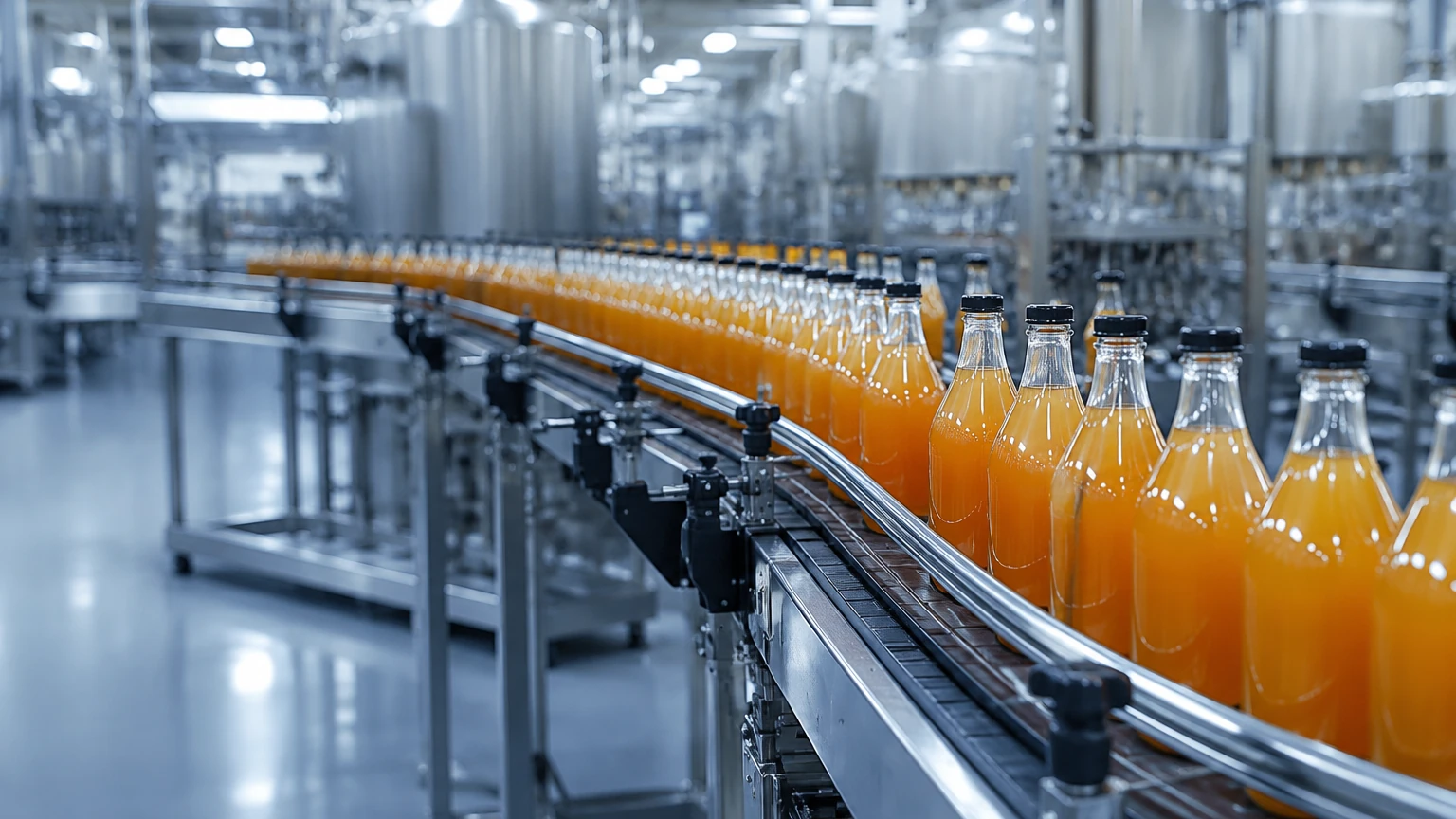
For syrup blending, accuracy is critical for maintaining flavor profiles. High-precision radar or hydrostatic sensors ensure that the ratio of concentrate to water is exact. In these applications, optimizing the level control directly impacts the reduction of expensive ingredient waste.
To explore specific instrument configurations for these applications, engineers can refer to the Main Page for detailed technical specifications and product options.
Installation and Engineering Best Practices
Even the most advanced sensor will fail to deliver if installed incorrectly. To ensure food and beverage production optimization, follow these engineering guidelines:
* Avoid the Filling Stream: Never install a level sensor directly in the path of the inflowing product. This creates turbulence and false echoes that can disrupt readings.
* Nozzle Geometry: For radar and ultrasonic sensors, the nozzle height and diameter must be optimized to prevent the signal from reflecting off the nozzle walls. A shorter, wider nozzle is generally preferred.
* Agitator Interference: If a tank has an agitator, position the sensor so the beam path avoids the blades. Modern radar sensors allow for "false signal suppression," where the electronics are programmed to ignore reflections from known internal structures.
* Venting: For hydrostatic measurement in closed tanks, a differential pressure setup or a compensated sensor is required to account for the headspace pressure, which would otherwise be added to the liquid level reading.
Managing Risks and Limitations
While technology has advanced significantly, certain environmental factors remain risks to measurement accuracy:
* Condensation and Steam: In hot processes, condensation can form on the sensor face. While many radar sensors are designed to shed droplets, heavy buildup can still attenuate the signal. Integrated air purges or specialized antenna designs can mitigate this.
* Build-up and Scaling: In processes involving chocolate, honey, or thick sauces, product can dry on the sensor. Regular inspection and ensuring the sensor is included in the CIP circuit are necessary.
* Ambient Temperature Swings: For ultrasonic sensors, large changes in ambient temperature can change the speed of sound, leading to errors. Always use sensors with integrated temperature compensation.
Frequently Asked Questions (FAQ)
Q: Can I use a standard industrial level sensor in a food plant?
A: Generally, no. Food-grade sensors must have specific certifications (such as FDA compliance or EHEDG) and hygienic process connections to prevent contamination and ensure they can withstand cleaning protocols.
Q: How does foam affect radar level measurement?
A: It depends on the foam's density and dielectric constant. Dry, airy foam is often transparent to radar, allowing measurement of the liquid below. Dense, wet foam may reflect the signal, measuring the top of the foam layer. In the latter case, specialized signal processing or different frequencies may be required.
Q: Is non-contact radar always better than hydrostatic measurement?
A: Not necessarily. While non-contact is more hygienic, hydrostatic sensors are often more cost-effective and simpler to maintain for basic liquid level tasks where the density is constant. The choice depends on the specific goals of your food and beverage production optimization strategy.
Q: What is the maintenance requirement for these sensors?
A: Non-contact sensors like radar require very little maintenance beyond periodic verification. Contact sensors like hydrostatic diaphragms should be inspected for physical damage or scaling during scheduled plant shutdowns.
Conclusion
Achieving food and beverage production optimization is a multifaceted challenge that begins with reliable data. By selecting the appropriate level measurement technology—whether it be high-frequency radar for complex mixing tanks or robust hydrostatic transmitters for storage vessels—manufacturers can significantly improve their process efficiency. Understanding the principles of measurement, adhering to hygienic standards, and following best practices for installation will ensure that these instruments provide the long-term accuracy required for a modern, optimized production facility. For further technical support and to review specific measurement solutions, visiting the Main Page provides access to a comprehensive range of industrial instrumentation tailored for these demanding environments.