Gauge Pressure Sensors
Gauge Pressure Sensors
In the landscape of industrial automation and process control, gauge pressure sensors serve as fundamental components for monitoring fluid dynamics and liquid levels. Unlike absolute pressure sensors, which measure pressure relative to a perfect vacuum, gauge pressure sensors measure the difference between the process pressure and the local atmospheric pressure. This distinction is critical in industrial applications where vessels are vented to the atmosphere, ensuring that level and pressure readings remain accurate despite fluctuations in barometric conditions.
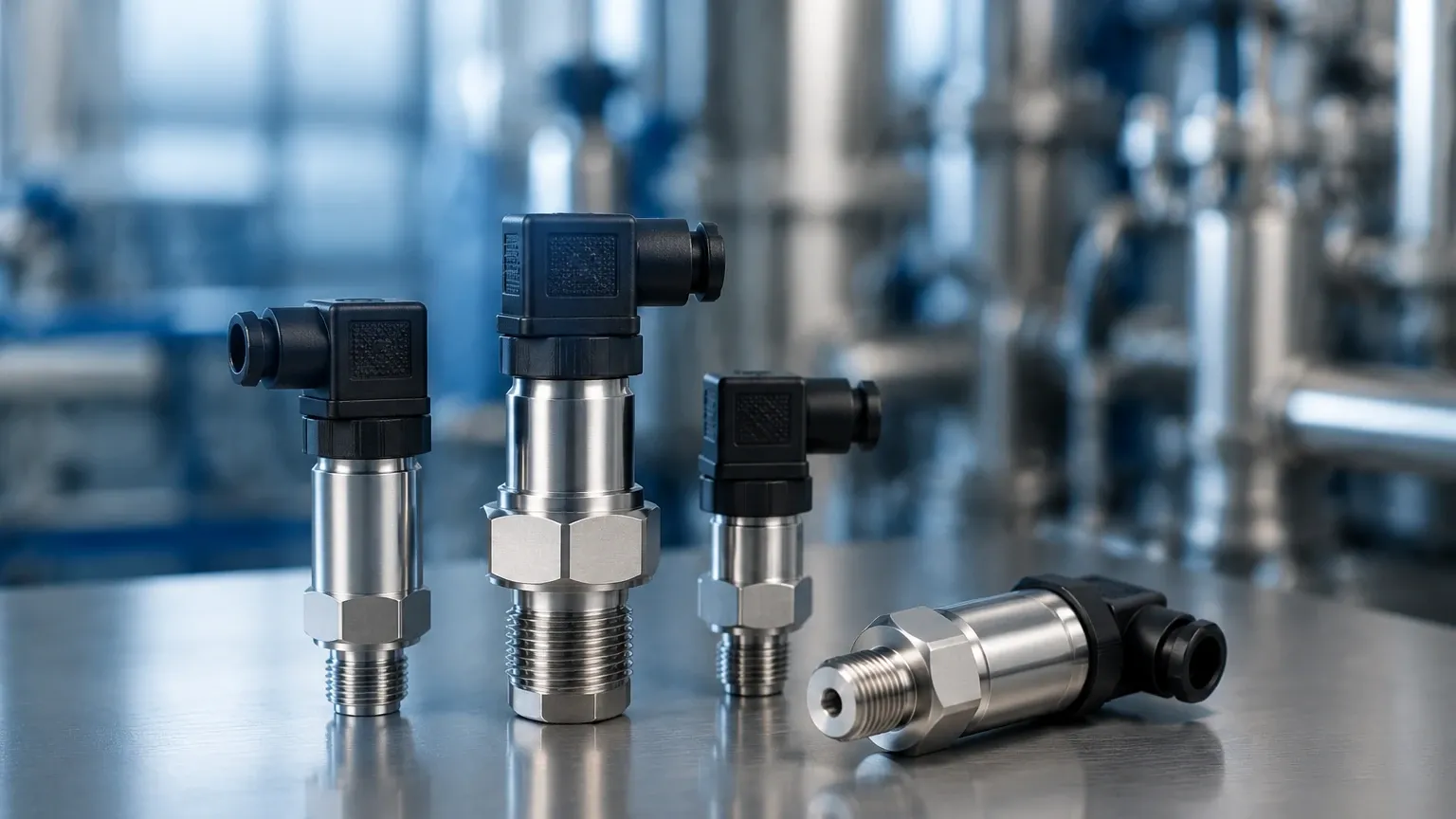
For engineers and system integrators, selecting the appropriate gauge pressure sensors requires a deep understanding of sensing technologies, material compatibility, and the specific requirements of the installation environment. As a professional manufacturer, Welk provides a range of instrumentation designed to meet these rigorous industrial standards. To explore specific product configurations, you can visit our Main Page.
Understanding the Physics of Gauge Pressure Measurement
The primary characteristic of a gauge pressure sensor is its reference to the ambient atmosphere. This is typically achieved through a vent tube or a breathable membrane integrated into the sensor housing or cable. This design allows the backside of the sensing element to "breathe," effectively canceling out the effects of atmospheric pressure changes on the measurement.
Piezoresistive Sensing Technology
Most modern gauge pressure sensors utilize piezoresistive technology. This involves a silicon or ceramic diaphragm with integrated strain gauges. When pressure is applied to the diaphragm, it deflects, causing a change in the electrical resistance of the strain gauges. This change is proportional to the applied pressure. Piezoresistive sensors are favored for their high sensitivity, stability, and compact size.
Capacitive Sensing Technology
In capacitive sensors, the diaphragm acts as one plate of a capacitor. As pressure moves the diaphragm closer to or further from a fixed backplate, the capacitance changes. These sensors are known for their robustness and ability to handle high overpressure conditions, making them suitable for heavy-duty industrial environments.
Application in Hydrostatic Liquid Level Sensing
One of the most common applications for gauge pressure sensors in B2B sectors is hydrostatic level measurement. This method relies on the principle that the pressure at the bottom of a liquid column is directly proportional to the height of the liquid and its density.
The Hydrostatic Formula
The relationship is defined by the formula:
P = ρ · g · h
Where:
* P is the hydrostatic pressure.
* ρ (rho) is the density of the liquid (e.g., 1000 kg/m³ for water).
* g is the acceleration due to gravity (approximately 9.81 m/s²).
* h is the height of the liquid column.
Because gauge pressure sensors automatically subtract the atmospheric pressure pressing down on the surface of the liquid in an open tank, the resulting measurement represents only the pressure exerted by the liquid itself. This allows for an accurate calculation of the level (h) regardless of whether the plant is at sea level or in a high-altitude region.
Technical Evaluation and Sensor Selection Criteria
When specifying gauge pressure sensors for a project, several technical parameters must be evaluated to ensure long-term reliability and accuracy.
Pressure Range and Overpressure Rating
It is essential to select a sensor with a range that closely matches the maximum expected pressure of the application. Operating a sensor at the lower end of its range can lead to decreased accuracy, while exceeding the range can damage the diaphragm. The overpressure rating indicates the maximum pressure the sensor can withstand without permanent damage or calibration shift. For example, a sensor rated for 10 bar (145 psi) might have an overpressure limit of 20 bar (290 psi).
Accuracy and Linearity
Accuracy is typically expressed as a percentage of the Full Scale (FS). Industrial-grade sensors often provide accuracies ranging from ±0.1% to ±0.5% FS. This includes the combined effects of linearity, hysteresis, and repeatability. For high-precision chemical dosing or custody transfer, higher accuracy classes are required.
Output Signals and Communication
Standard industrial outputs include 4-20 mA analog signals, which are highly resistant to electrical noise over long cable runs. Digital protocols such as HART, Modbus RS485, or Profibus are increasingly common, allowing for remote configuration and diagnostic feedback.
Material Science and Media Compatibility
The longevity of a gauge pressure sensor depends heavily on the compatibility between the sensor's wetted parts and the process media. Corrosive chemicals, abrasive slurries, and extreme temperatures can quickly degrade improper materials.
| Component | Common Materials | Application Suitability |
| :— | :— | :— |
| Diaphragm | 316L Stainless Steel | General purpose, water, oils, mild chemicals. |
| Diaphragm | Ceramic (Al2O3) | Highly abrasive fluids, aggressive acids. |
| Diaphragm | Tantalum / Hastelloy | Extremely corrosive media, strong acids/bases. |
| Housing | 316L SS / PVDF | Industrial environments / Corrosive atmospheres. |
| Seals/O-rings | Viton (FKM) / EPDM | High temperature / Water and steam applications. |
For wastewater treatment or chemical processing, using a flush diaphragm design is often recommended to prevent solids from clogging the pressure port.
Engineering Guidelines for Installation and Maintenance
Proper installation is as critical as sensor selection. Failure to follow engineering best practices can result in measurement drift or premature sensor failure.
1. Venting and Moisture Protection: Since gauge pressure sensors require a vent to the atmosphere, the vent tube must be protected from moisture ingress. If water enters the vent tube, it can block the atmospheric reference or damage the internal electronics. Desiccant filters or specialized vent bellows are often used in humid environments.
2. Mounting Position: For hydrostatic level measurement, the sensor should be mounted at the lowest point of the tank. If the sensor is installed on a pipe leading from the tank, any horizontal offset must be accounted for in the calibration if the pipe is not level with the tank bottom.
3. Surge Protection: In outdoor installations or large industrial plants, sensors are susceptible to lightning strikes and electrical surges. Utilizing sensors with integrated surge protection or installing external lightning arrestors is a standard safety requirement.
4. Temperature Compensation: Rapid temperature changes can cause thermal expansion in the sensor components, leading to measurement errors. High-quality sensors include internal temperature compensation circuits to mitigate this effect across a specified range (e.g., -20°C to +80°C).
Identifying Risks and Operational Limitations
While gauge pressure sensors are versatile, they are not suitable for every application. Engineers must be aware of the following limitations:
* Closed/Pressurized Tanks: In a sealed tank with a pressurized gas blanket, a standard gauge pressure sensor will measure the sum of the liquid head and the gas pressure. In these cases, a differential pressure (DP) sensor or two synchronized gauge sensors (electronic DP) must be used to subtract the headspace pressure.
* Density Variations: Since hydrostatic measurement depends on liquid density, any change in the fluid's composition or temperature (which affects density) will result in a level error. If the density is not constant, a secondary measurement or automated compensation is required.
* Turbulence and Agitation: In tanks with high-speed mixers or significant turbulence, the pressure at the sensor face may fluctuate rapidly. Installing the sensor in a stilling well or using software-based damping can help stabilize the output.
Practical Selection Table: Gauge Pressure Sensor Types
| Feature | Submersible Gauge Sensors | Threaded/Flanged Gauge Sensors |
| :— | :— | :— |
| Typical Use | Deep wells, reservoirs, open sumps. | Process piping, tank side-walls. |
| Installation | Suspended by cable into the liquid. | Screwed or bolted into a process port. |
| Maintenance | Easy to pull up for cleaning. | May require tank drainage or isolation valves. |
| Protection | IP68 (Permanent submersion). | IP65/IP67 (Splash/Dust proof). |
| Max Depth | Up to 200m (approx. 656 ft). | Limited by flange/thread rating. |
Frequently Asked Questions (FAQs)
Q: Can I use a gauge pressure sensor to measure vacuum?
A: Yes, many gauge pressure sensors are capable of measuring "negative gauge pressure" or vacuum. However, you must ensure the sensor is calibrated for the specific vacuum range required (e.g., -1 bar to 0 bar).
Q: How often should gauge pressure sensors be calibrated?
A: For most industrial applications, an annual calibration check is recommended. In critical processes or harsh environments, semi-annual checks may be necessary to ensure the sensor has not drifted due to diaphragm fatigue or environmental stress.
Q: What is the difference between a gauge sensor and a sealed gauge sensor?
A: A standard gauge sensor is vented to the current atmosphere. A sealed gauge sensor is referenced to a fixed pressure (usually 1 atmosphere) sealed within the sensor. Sealed gauge sensors are used in high-pressure applications (typically above 50 bar) where atmospheric fluctuations are negligible compared to the measured pressure.
Q: How do I prevent clogging in wastewater applications?
A: Use a sensor with a large, flat flush diaphragm rather than a small pressure port. This prevents debris and sludge from accumulating and blocking the sensing element.
For technical support in selecting the right gauge pressure sensors for your specific industrial application, or to review our full catalog of radar and ultrasonic level meters, please refer to our Main Page. Welk offers customized OEM/ODM services to ensure our instruments meet the precise needs of your automation projects.