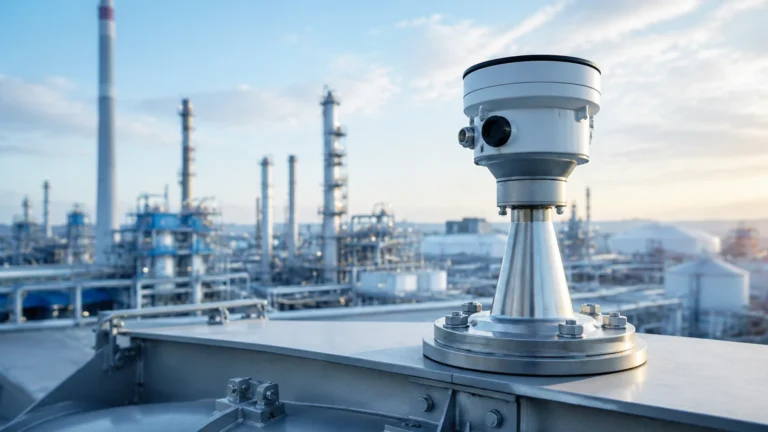
High Precision Pressure Sensor
High Precision Pressure Sensor
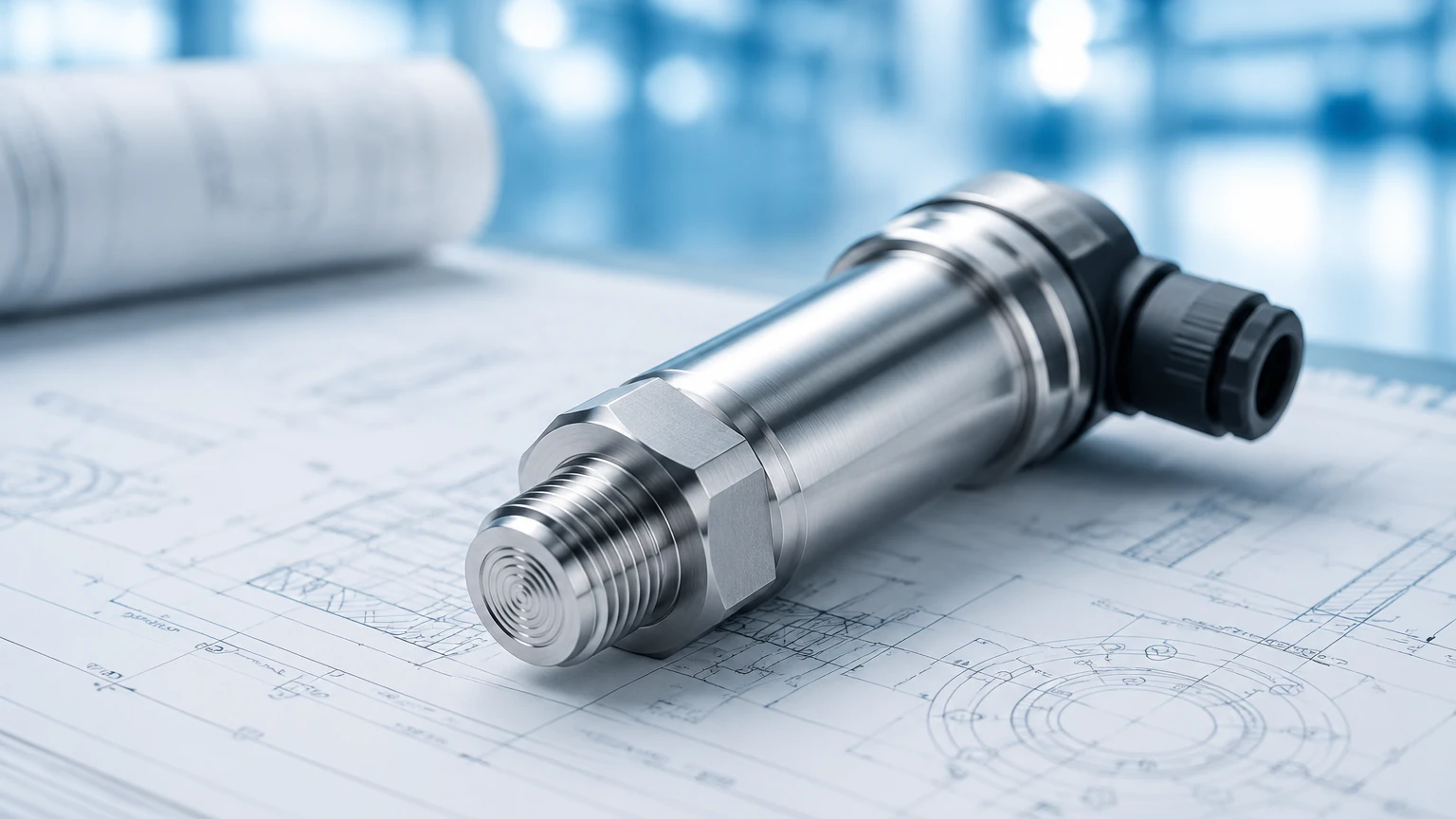
In the landscape of industrial automation and process control, the high precision pressure sensor serves as a foundational component for ensuring safety, efficiency, and quality. Whether used for direct pressure monitoring in a pipeline or as the sensing element in a hydrostatic level transmitter, the accuracy of these devices determines the reliability of the entire control loop. For engineers and procurement specialists, selecting a high precision pressure sensor requires a deep understanding of the underlying measurement principles, environmental influences, and the specific requirements of the application.
This guide provides a technical overview of high precision pressure sensing technologies, their role in level measurement, and the critical factors that distinguish a standard industrial sensor from a high-precision instrument.
Measurement Principles of High Precision Pressure Sensors
To achieve high precision—typically defined as having a total error band or accuracy of 0.1% Full Scale (FS) or better—sensors must utilize stable sensing elements and sophisticated signal processing. The primary technologies used in high-end industrial applications include piezoresistive, capacitive, and resonant sensing.
Piezoresistive Sensing
Piezoresistive sensors are among the most common in the industry. They utilize a silicon diaphragm with integrated resistors. When pressure is applied, the diaphragm deforms, changing the electrical resistance of the bridge circuit. In a high precision pressure sensor, the silicon chip is often isolated from the process media by a thin stainless steel or Hastelloy diaphragm and a fill fluid (such as silicone oil). The precision is achieved through advanced micromachining and digital compensation for non-linearity and temperature effects.
Ceramic Capacitive Sensing
Capacitive sensors measure the change in electrical capacitance between a flexible diaphragm and a fixed backplate. Ceramic (Al2O3) is frequently used because of its extreme hardness and resistance to chemical attack. These sensors are inherently stable and exhibit very low hysteresis. Because the diaphragm movement is minimal, they are highly resistant to overpressure and mechanical fatigue, making them ideal for vacuum applications and high-precision requirements.
Silicon-on-Sapphire (SoS)
For extreme environments, SoS technology bonds a silicon piezoresistive element to a sapphire diaphragm. Sapphire is chemically inert and maintains its elastic properties over a wide temperature range. This results in a sensor with exceptional long-term stability and high accuracy, even in high-temperature or high-pressure applications where standard silicon might drift.
The Role of Pressure in Level Measurement
While pressure sensors are used for monitoring gases and liquids in pipes, they are also the core technology behind hydrostatic level measurement. According to the hydrostatic principle, the pressure at the bottom of a liquid column is directly proportional to the height of the liquid and its density:
P = ρ × g × h
Where:
* P is the hydrostatic pressure (Pa or Bar).
* ρ (rho) is the density of the liquid (kg/m³).
* g is the gravitational constant (approx. 9.81 m/s²).
* h is the height of the liquid column (m).
In these applications, a high precision pressure sensor is required because even a small error in pressure reading can lead to significant errors in volume calculation, especially in large-diameter storage tanks. For example, in a tank 10 meters high, a 0.5% error represents a 5 cm discrepancy, whereas a high-precision 0.05% sensor reduces that error to just 5 mm. For comprehensive level measurement solutions, including radar and ultrasonic options, engineers often refer to the Main Page of specialized manufacturers to compare technologies.
Key Evaluation Criteria for High Precision Sensors
When evaluating a high precision pressure sensor, the "accuracy" figure on a datasheet is only the beginning. To ensure the sensor performs in a real-world B2B environment, several other factors must be considered.
1. Total Error Band (TEB)
Many manufacturers list "Best Fit Straight Line" (BFSL) accuracy, which only accounts for linearity, hysteresis, and repeatability at a constant temperature. A high-precision application requires looking at the Total Error Band, which includes the effects of temperature changes over a specified range. A sensor might be 0.05% accurate at 25°C but drift to 0.5% at 50°C if not properly compensated.
2. Long-Term Stability
Precision is worthless if the sensor drifts over time. High-quality sensors specify stability as a percentage of Full Scale per year (e.g., <0.1% FS/year). This is critical for reducing calibration frequency and ensuring the longevity of the installation.
3. Turndown Ratio (Ranging)
A high precision pressure sensor often allows for "turndown," where the calibrated range is smaller than the sensor's physical limit. For instance, a 10 Bar sensor might be ranged to 2 Bar. While turndown is useful, it can amplify the base error of the sensor, so the resulting accuracy at the turned-down range must be verified.
4. Wetted Materials
The sensor diaphragm and housing must be compatible with the process media. While 316L stainless steel is standard, aggressive chemicals in the chemical or oil and gas industries may require Hastelloy C, Monel, or Tantalum coatings.
Comparison Table: Sensor Technology Selection
| Feature | Piezoresistive (Silicon) | Ceramic Capacitive | Silicon-on-Sapphire (SoS) |
| :— | :— | :— | :— |
| Typical Accuracy | 0.1% to 0.05% FS | 0.1% to 0.075% FS | 0.1% to 0.025% FS |
| Long-term Stability | Good | Excellent | Superior |
| Overpressure Limit | Moderate (2x – 4x) | High (up to 10x) | Moderate |
| Chemical Resistance | Medium (requires isolation) | Very High (inherent) | High |
| Best Use Case | General industrial, oil/gas | Corrosive media, vacuum | High temp, aerospace, lab |
| Cost | Economical to Mid-range | Mid-range | High |
Installation and Engineering Considerations
To maintain the inherent accuracy of a high precision pressure sensor, the installation must be executed according to best engineering practices.
* Venting and Atmospheric Pressure: For gauge pressure sensors (measuring relative to atmosphere), the back of the diaphragm must be vented. In submersible level applications, this is usually done via a vent tube in the cable. If this tube is blocked or saturated with moisture, the sensor will show significant errors as atmospheric pressure changes.
* Orientation Effects: High-precision sensors are sensitive enough to detect the weight of their own internal components. Mounting a sensor horizontally versus vertically can cause a zero-shift. Always zero the sensor in its final mounting orientation.
* Pressure Snubbers: In systems prone to water hammer or rapid pressure spikes (such as pump discharge lines), a snubber should be used to protect the delicate high-precision diaphragm from mechanical shock.
* Thermal Isolation: If measuring high-temperature steam or fluids, use a siphon or impulse piping to ensure the process temperature at the sensor face remains within the compensated temperature range.
Limitations and Potential Risks
Despite their advanced technology, high precision pressure sensors are not infallible. Users should be aware of the following risks:
1. Media Buildup: In wastewater or viscous chemical applications, material can build up on the diaphragm. This adds mass or restricts movement, leading to sluggish response and drift. In these cases, a flush-diaphragm design is preferred over a recessed port.
2. Hydrogen Permeation: In high-pressure hydrogen applications, hydrogen molecules can diffuse through metallic diaphragms and enter the fill fluid, causing bubbles and permanent offset errors. Gold-plated diaphragms are often required to mitigate this.
3. Electrical Interference: High-precision signals (especially 4-20mA or 0-10V) can be affected by electromagnetic interference (EMI) from nearby Variable Frequency Drives (VFDs) or motors. Shielded cabling and proper grounding are mandatory.
Frequently Asked Questions (FAQ)
Q: How often should a high precision pressure sensor be calibrated?
A: For most industrial B2B applications, an annual calibration is standard. However, if the sensor is used in a critical safety system or a high-value custody transfer application, semi-annual checks may be required. Always monitor the "Zero" point, as this is where drift is most easily detected.
Q: What is the difference between Gauge, Absolute, and Sealed Gauge pressure?
A: Gauge pressure is referenced to the current atmospheric pressure. Absolute pressure is referenced to a perfect vacuum. Sealed Gauge is referenced to a fixed atmospheric pressure sealed within the sensor; it is used in high-pressure applications where atmospheric fluctuations are negligible compared to the measured pressure.
Q: Can a pressure sensor be used for non-linear tanks?
A: Yes, but the conversion from pressure to volume must be handled by the control system (PLC/DCS) using a strapping table or a mathematical formula for the tank geometry (e.g., horizontal cylindrical tanks).
Conclusion and Next Steps
Selecting a high precision pressure sensor is a balance between technical requirements and cost-effectiveness. For many industrial automation tasks, the reliability of the instrument is paramount to preventing downtime and ensuring product consistency. Before finalizing a specification, project managers should confirm the exact chemical composition of the media, the expected temperature fluctuations, and the required communication protocol (such as 4-20mA HART, RS485 Modbus, or Profibus).
For those integrating these sensors into broader level control systems, consulting with a manufacturer that offers a range of technologies—from hydrostatic to radar—ensures the most appropriate tool is selected for the specific environment. To review product options and application support, visit the Main Page of an established industrial instrument provider to explore the full spectrum of level and pressure measurement solutions.