High Temperature Flow Meter
High Temperature Flow Meter
In industrial process control, measuring the flow of fluids at elevated temperatures presents a unique set of engineering challenges. Standard flow meters often rely on electronic components and sealing materials that degrade or fail when exposed to temperatures exceeding 100°C (212°F). A high temperature flow meter is specifically engineered to maintain accuracy and structural integrity in environments ranging from 150°C to over 500°C, such as those found in steam distribution, thermal oil systems, and chemical synthesis.
Selecting the correct technology requires an understanding of how heat affects fluid dynamics, material expansion, and sensor longevity. This guide examines the primary measurement principles, selection criteria, and installation requirements for high-temperature flow applications.
Understanding High Temperature Flow Measurement Principles
Before selecting a specific instrument, it is essential to understand the physical principles used to derive flow rates in high-heat environments. Most high-temperature flow meters utilize one of the following four principles:
1. Vortex Shedding Principle
The vortex flow meter operates on the Kármán vortex street principle. When a fluid flows past a non-streamlined body (a bluff body), it creates alternating vortices. The frequency of these vortices is directly proportional to the flow velocity. For high-temperature applications, the sensor typically uses a piezoelectric crystal isolated from the process heat or a mechanical sensor that transmits vibrations to a remote transducer.
2. Differential Pressure (DP) Principle
This is one of the most established methods for high-temperature measurement. By placing a primary element, such as an orifice plate, Venturi tube, or Pitot tube, in the flow stream, a pressure drop is created. The square root of this pressure difference is proportional to the flow rate. The advantage here is that the sensitive electronics (the DP transmitter) can be mounted at a distance from the hot pipe using impulse lines, which allow the fluid to cool before reaching the sensor.
3. Ultrasonic Transit-Time Principle
Ultrasonic meters measure the time difference between signals sent upstream and downstream. While standard transducers are limited by temperature, high-temperature ultrasonic meters use specialized waveguides. These metallic rods conduct the ultrasonic signal from the pipe wall to the transducer while providing a thermal buffer that protects the electronics from the process temperature.
4. Electromagnetic Principle (Magmeters)
Electromagnetic flow meters use Faraday’s Law of Induction. They are ideal for conductive liquids. In high-heat scenarios, the limitation is usually the liner material. While PTFE liners are limited to approximately 120°C-150°C, specialized ceramic liners and high-grade electrodes allow these meters to operate in processes reaching 250°C or higher.
Key Technologies for High Temperature Flow Meters
Different technologies excel in specific fluid states (liquid, gas, or steam). The following table provides a comparison of common high-temperature flow measurement technologies.
Practical Selection Table
| Technology | Max Temperature (Typical) | Suitable Fluids | Primary Advantage | Primary Limitation |
| :— | :— | :— | :— | :— |
| Vortex Meter | Up to 400°C-450°C | Steam, Gases, Low-viscosity liquids | No moving parts; excellent for steam. | Requires minimum Reynolds number; sensitive to vibration. |
| Orifice Plate (DP) | Limited only by pipe material (>500°C) | All fluids and steam | Extremely robust; transmitter is isolated. | Permanent pressure loss; narrow turndown ratio (3:1 or 4:1). |
| Ultrasonic (Waveguide) | Up to 260°C (Specialized to 400°C) | Clean liquids, some gases | Non-intrusive; no pressure drop. | Requires consistent fluid properties; higher initial cost. |
| Thermal Mass | Up to 300°C-450°C | Clean gases, compressed air | Direct mass flow; high sensitivity at low flows. | Not for liquids; sensitive to gas composition changes. |
| Turbine Meter | Up to 200°C (Specialized) | Clean, low-viscosity liquids | High accuracy and repeatability. | Moving parts subject to wear; requires high maintenance. |
Technical Selection Criteria for High-Heat Applications
When evaluating a high temperature flow meter for a project, engineers must look beyond the maximum temperature rating. Several secondary factors influence the reliability of the measurement.
1. Material Compatibility and Thermal Expansion
At high temperatures, the mechanical strength of metals decreases. A meter rated for 40 bar at 20°C may only be rated for 25 bar at 300°C. Furthermore, different components (e.g., the meter body and the internal sensor) may expand at different rates. Ensure the meter body is constructed from 316L Stainless Steel, Hastelloy, or specialized alloys that match the piping system's thermal expansion coefficients.
2. Electronics Isolation
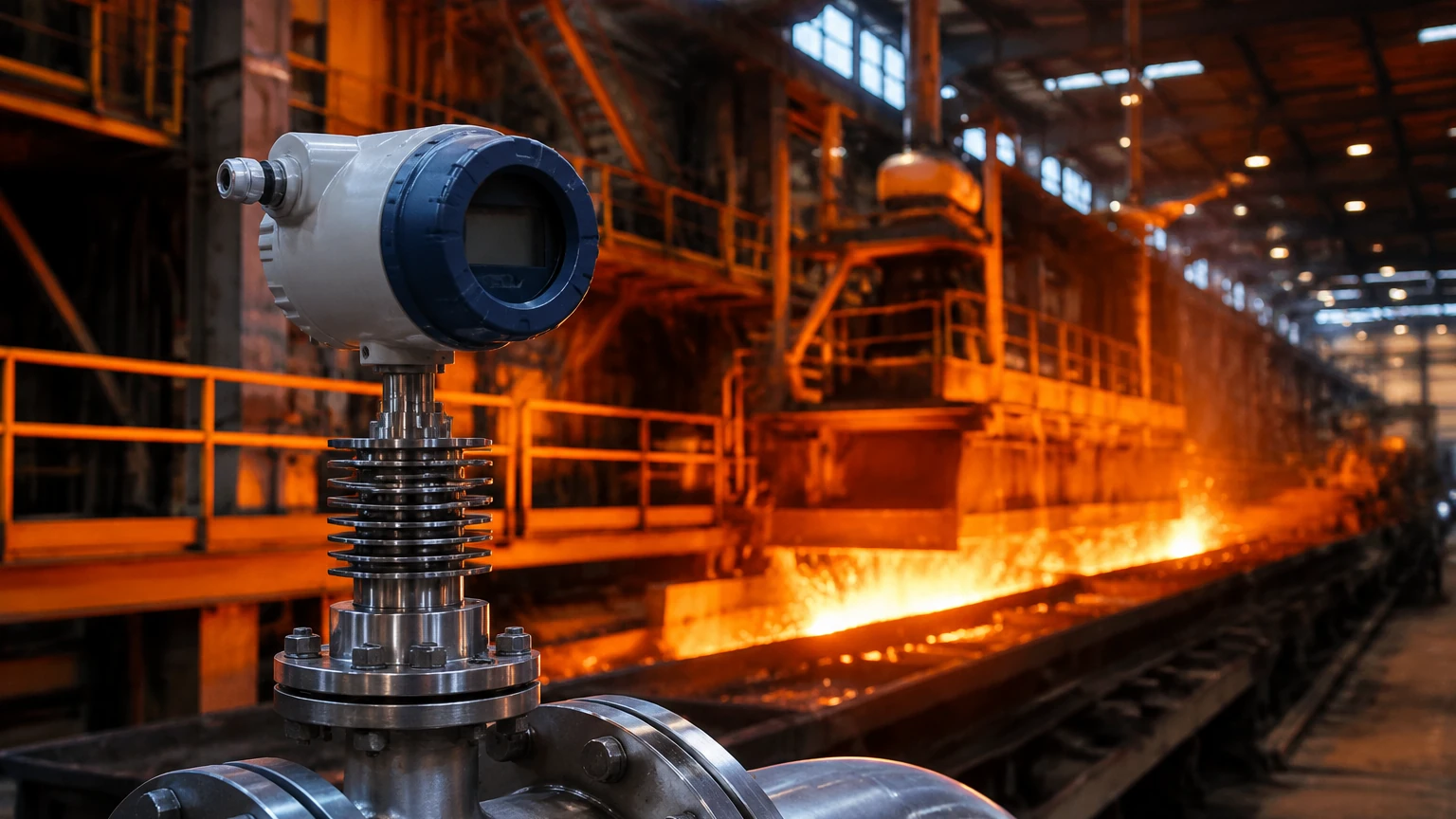
Heat is the primary enemy of circuit boards. High-temperature meters must feature an "integral-offset" or "remote-mount" design. In an integral-offset design, the transmitter head is raised away from the pipe on a neck or cooling fins. In a remote-mount configuration, the sensor is connected to the transmitter via a high-temperature cable, allowing the electronics to be installed in a controlled environment several meters away.
3. Fluid Phase Changes
In high-temperature gas or steam applications, temperature fluctuations can cause phase changes (e.g., condensation in steam lines). This can lead to "water hammer," which can physically destroy flow sensors. For steam measurement, ensure the meter is designed to handle saturated or superheated conditions and consider integrated temperature and pressure compensation for accurate mass flow calculation.
For more detailed specifications on industrial instrumentation and to Review product options and application support, consulting technical data sheets is a necessary step in the procurement process.
Installation Best Practices and Thermal Protection
Correct installation is as critical as the technology choice itself. Improper mounting can lead to premature sensor failure or significant measurement drift.
* Orientation: For liquid applications, the pipe must always be full. For high-temperature steam, vortex meters are often installed horizontally with the transmitter head pointed to the side or downward to prevent rising heat from cooking the electronics.
* Straight Pipe Runs: Most high-temperature meters require significant straight runs (typically 10 to 20 diameters upstream and 5 diameters downstream) to ensure a stable flow profile. High heat can increase turbulence, making these requirements even more critical.
* Insulation Considerations: While it is tempting to insulate the entire meter to prevent heat loss, the cooling fins or the neck of the transmitter must remain uninsulated. These components are designed to dissipate heat before it reaches the electronics.
* Impulse Lines (for DP Meters): When using differential pressure meters, impulse lines should be long enough to allow the process fluid to cool to a temperature compatible with the DP transmitter (usually below 60°C). In very high-heat applications, a "seal pot" or "condensate pot" is used to protect the transmitter from direct steam contact.
Common Risks and Operational Limitations
Engineers should be aware of the following risks when deploying high-temperature flow meters:
1. Thermal Shock: Rapid changes in temperature (e.g., during a system startup) can cause ceramic liners to crack or metal components to warp. Systems should be brought up to temperature gradually.
2. Calibration Drift: High temperatures can alter the physical dimensions of the flow element (like the diameter of an orifice or the width of a bluff body). This changes the meter factor (K-factor). High-end meters often include compensation algorithms to account for these dimensional changes.
3. Seal and Gasket Failure: Standard O-rings (like Nitrile or Viton) will fail at high temperatures. Specialized Graphite, Kalrez, or metal-to-metal seals are required. Always verify that the wetted seal materials are rated for the maximum possible excursion temperature, not just the operating temperature.
4. Signal Noise: In high-temperature gas flows, the increased kinetic energy can create acoustic noise that interferes with ultrasonic or vortex sensors. Filtering and signal processing become vital in these scenarios.
Frequently Asked Questions (FAQ)
Q: Can I use a standard flow meter if I just move the electronics away?
A: No. While remote electronics help, the wetted parts (the parts inside the pipe) must still withstand the heat. Standard sensors may melt, lose their magnetic properties (Curie point), or suffer from rapid oxidation and mechanical failure.
Q: What is the best flow meter for superheated steam at 400°C?
A: Vortex shedding flow meters and Differential Pressure meters (with orifice plates) are the industry standards for superheated steam. Vortex meters are preferred for their lack of moving parts and lower maintenance, while DP meters are preferred for extreme temperatures and pressures where a simple orifice plate is the most robust option.
Q: How does temperature affect accuracy?
A: Temperature affects fluid density and viscosity. If a meter measures volume flow but the user needs mass flow (common in steam and gas), a change in temperature will cause a large error unless the system includes a temperature sensor and a flow computer to perform real-time compensation.
Q: Are there non-intrusive options for high temperatures?
A: Yes, high-temperature clamp-on ultrasonic flow meters can be used. These utilize waveguides to isolate the transducers from the pipe surface, allowing for measurement without cutting the pipe or stopping the process, provided the pipe material is a good conductor of sound.
Conclusion
Deploying a high temperature flow meter requires a balance between robust mechanical design and sensitive electronic measurement. By selecting a technology that matches the fluid state and ensuring the electronics are properly isolated from the process heat, operators can achieve reliable flow data even in the most demanding thermal environments. For engineers seeking specific technical parameters or custom solutions for industrial automation, visiting the Main Page of a specialized manufacturer provides access to the necessary engineering support and product documentation to ensure a successful installation.