Ingress Resistant Magmeter
Ingress Resistant Magmeter
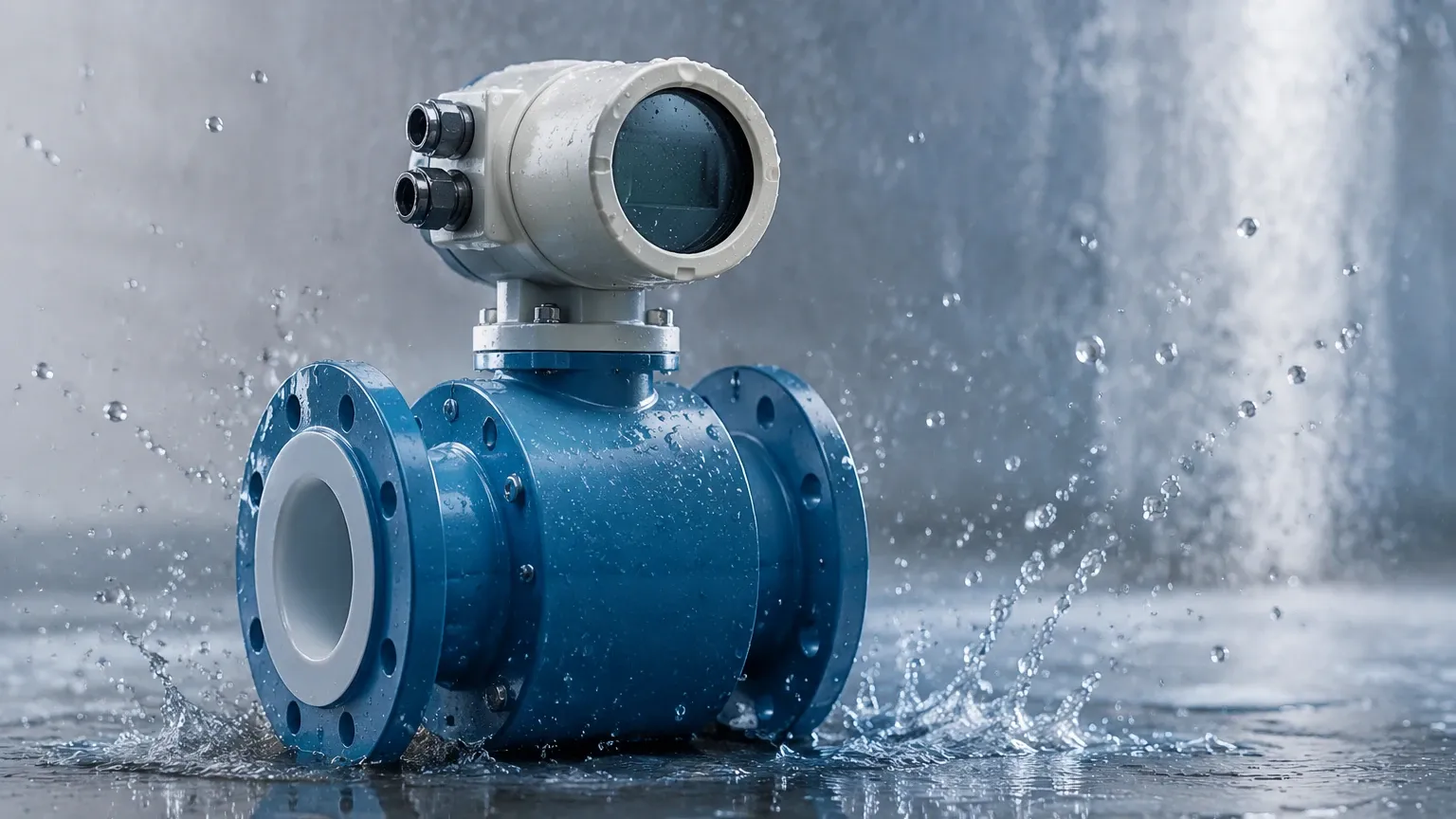
In industrial process control, the reliability of flow measurement instrumentation is often dictated by the environment in which it operates. For applications involving high-pressure washdowns, outdoor exposure, or potential submersion, the use of an ingress resistant magmeter is essential. These instruments, formally known as electromagnetic flow meters, utilize Faraday’s Law of Induction to measure the flow of conductive liquids. However, the internal electronics and magnetic coils are highly sensitive to moisture and particulate matter. Ensuring high levels of Ingress Protection (IP) is critical for maintaining accuracy and extending the service life of the meter in demanding B2B sectors such as water treatment, chemical processing, and industrial automation.
Measurement Principles of Electromagnetic Flow Meters
Before selecting an ingress resistant magmeter, it is necessary to understand the physics governing its operation. The electromagnetic flow meter operates based on Faraday’s Law of Induction, which states that a voltage is induced when a conductive fluid moves through a magnetic field.
The basic formula is expressed as:
E = B × v × D
Where:
* E is the induced voltage (proportional to the velocity).
* B is the magnetic field strength generated by the internal coils.
* v is the average velocity of the liquid.
* D is the internal diameter of the pipe (the distance between electrodes).
In a practical application, the meter consists of a non-ferromagnetic tube lined with an insulating material. Two magnetic coils are placed on the outside of the tube (or embedded within it), and two electrodes are inserted through the pipe wall, flush with the liner. As the conductive liquid flows through the magnetic field, the electrodes pick up the induced electromotive force (EMF). Because the magnetic field strength and the pipe diameter are constants, the voltage detected is directly proportional to the flow velocity. This signal is then processed by a transmitter to provide volumetric flow data.
It is important to note that this technology requires the fluid to have a minimum electrical conductivity, typically ≥ 5 μS/cm. It cannot measure non-conductive fluids like oils, distilled water, or gases.
Defining Ingress Resistance: IP Ratings and Standards
For an ingress resistant magmeter, the "resistance" is defined by the IEC 60529 standard, which classifies the degrees of protection provided by mechanical casings and electrical enclosures. This is commonly known as the IP (Ingress Protection) rating.
The IP Rating System
An IP rating consists of two digits:
1. First Digit (Solid Ingress): Ranges from 0 to 6, indicating protection against solid objects and dust. A rating of 6 means the device is "dust-tight."
2. Second Digit (Liquid Ingress): Ranges from 0 to 9K, indicating protection against water.
Common ratings for industrial magmeters include:
* IP65: Protected against dust and low-pressure water jets from any direction. Suitable for indoor use with occasional splashing.
* IP67: Protected against dust and the effects of temporary immersion in water (up to 1 meter for 30 minutes). This is a standard requirement for outdoor installations.
* IP68: Protected against dust and continuous submersion in water under specified pressures. This is the gold standard for an ingress resistant magmeter used in pits, manholes, or areas prone to flooding.
Welk, as a professional manufacturer, ensures that these ratings are achieved through precision engineering of the housing, high-quality gaskets, and specialized potting compounds that encapsulate the internal electronics.
Key Evaluation Criteria for Ingress Resistant Magmeters
When specifying an ingress resistant magmeter, engineers must evaluate several technical factors beyond just the IP rating. The longevity of the device depends on how well the materials and construction match the process environment.
1. Housing Material and Construction
For high-ingress environments, the housing material is the first line of defense. While cast aluminum with epoxy coating is common, 304 or 316 stainless steel is preferred for corrosive atmospheres or food-grade applications. A fully welded construction is superior to bolted housings, as it eliminates potential leak paths through gaskets.
2. Liner and Electrode Selection
The liner must protect the internal coils from the process fluid while maintaining an airtight seal. Common materials include:
* PTFE/PFA: Excellent chemical resistance and high-temperature tolerance.
* Hard Rubber/Neoprene: Ideal for water treatment and abrasive slurries.
* Ceramic: Used for highly abrasive or extremely high-temperature applications.
Electrodes must be chosen based on chemical compatibility. Options include 316L Stainless Steel, Hastelloy C, Titanium, and Tantalum.
3. Connection and Sealing
The integrity of the cable entry points is the most frequent failure point in ingress resistant magmeters. The use of high-quality, liquid-tight cable glands and potentially the use of remote transmitters (where the electronics are separated from the sensor body) can significantly reduce the risk of failure in submerged environments.
Practical Selection Table for Industrial Environments
The following table provides a general guideline for selecting the appropriate protection level based on the installation site.
| Application Environment | Minimum IP Rating | Recommended Housing | Configuration |
| :— | :— | :— | :— |
| Indoor Factory Floor | IP65 | Aluminum | Compact (Integral) |
| Outdoor (Exposed to Rain) | IP67 | Aluminum or SS304 | Compact or Remote |
| Coastal/Salt Spray Areas | IP67 | SS316 | Remote Recommended |
| Underground Pits/Manholes | IP68 | Fully Welded SS316 | Remote Transmitter |
| High-Pressure Washdown | IP69K | SS316 (Polished) | Compact (Sanitary) |
For a comprehensive overview of available models and technical specifications tailored to these environments, professionals can visit the Main Page of the manufacturer’s technical catalog.
Installation and Maintenance Considerations
An ingress resistant magmeter is only as effective as its installation. Even the highest-rated IP68 meter can fail if the installation process introduces vulnerabilities.
Cable Gland Management
If using a remote configuration, the cables connecting the sensor to the transmitter must be sealed perfectly. Installers should use a "drip loop"—a downward curve in the cable before it enters the gland—to ensure gravity pulls water away from the entry point rather than toward it. For IP68 applications, the junction box on the sensor should be filled with a two-part silicone or epoxy potting compound after wiring is complete.
Grounding Requirements
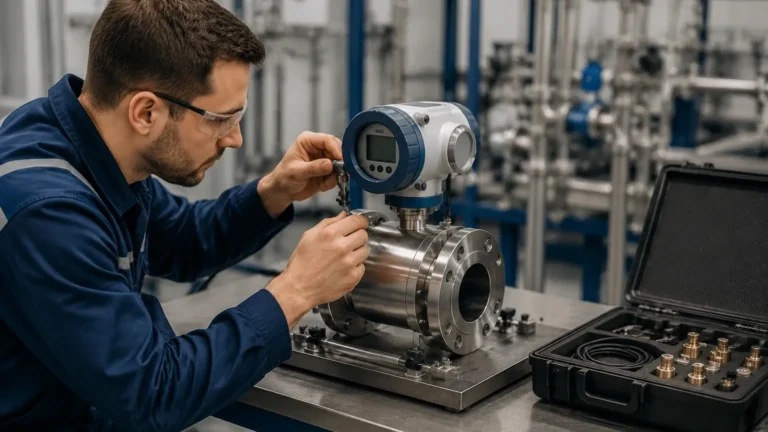
Magmeters are sensitive to electrical noise. To ensure accurate measurement, the fluid, the sensor, and the transmitter must be at the same electrical potential. In plastic or lined pipes, grounding rings or grounding electrodes are required. Ingress resistant models often feature additional grounding lugs to maintain shell-to-earth integrity even in damp conditions.
Pipe Orientation
To maintain the accuracy of the Faraday principle, the pipe must be completely full of liquid. The ideal installation is in a vertical pipe with upward flow. If installed horizontally, the electrodes should be on a horizontal plane (3 o'clock and 9 o'clock positions) to prevent air bubbles (at the top) or sediment (at the bottom) from interfering with the signal.
Limitations and Common Operational Risks
While an ingress resistant magmeter is robust, it is not invincible. Engineers should be aware of the following limitations:
* Vacuum Conditions: Some liners, particularly PTFE, can collapse or peel away from the tube wall under vacuum conditions. If the process involves vacuum, a PFA liner with a stainless steel mesh reinforcement is often required.
* Conductivity Thresholds: As mentioned, these meters cannot measure hydrocarbons or pure chemicals with low conductivity. Always verify the fluid's conductivity at the operating temperature.
* Temperature Extremes: While the housing may be ingress resistant, high process temperatures can transfer heat to the electronics in compact models. In applications exceeding 80°C (176°F), a remote transmitter is usually necessary to protect the circuitry.
* Moisture in the Junction Box: Even with an IP67 rating, if the cover is opened during a humid day and then sealed, condensation can form inside. Using desiccant packs inside the housing is a common B2B best practice.
Frequently Asked Questions (FAQs)
Q: Can an IP68 magmeter be permanently buried?
A: Yes, provided it is a fully welded stainless steel design and the cables are protected by a sealed conduit. It is highly recommended to use a remote transmitter located in an accessible cabinet above ground.
Q: What is the difference between an integral and a remote magmeter?
A: In an integral (compact) magmeter, the transmitter is mounted directly on the sensor. In a remote magmeter, the transmitter is connected via a signal cable and can be located up to 100 meters (328 feet) away. Remote versions are preferred for high-vibration, high-temperature, or submerged environments.
Q: Does ingress resistance affect the accuracy of the meter?
A: No. Ingress resistance refers to the mechanical protection of the internals. The accuracy (typically ±0.5% or ±0.2% of rate) is determined by the calibration and the stability of the magnetic field and electrode signal.
Q: How often should the seals on an ingress resistant magmeter be inspected?
A: In standard environments, an annual inspection of cable glands and housing gaskets is sufficient. In high-vibration or extreme temperature cycling environments, semi-annual checks are recommended to ensure seals have not degraded.
Conclusion
Selecting an ingress resistant magmeter is a critical decision for ensuring the long-term success of industrial flow measurement projects. By matching the IP rating to the specific environmental hazards—whether they be dust, moisture, or full submersion—and adhering to strict installation protocols, facilities can significantly reduce downtime and maintenance costs. For further technical guidance and to explore specific measurement solutions, engineers are encouraged to consult the Main Page for detailed product documentation and application support.