Instrumentation Classes Online
Instrumentation Classes Online
The industrial landscape is undergoing a rapid digital transformation, often referred to as Industry 4.0. At the heart of this shift is the need for precise, reliable data from the field. For engineers, technicians, and maintenance professionals, staying current with the latest measurement technologies is no longer optional. Instrumentation classes online have emerged as a vital resource, providing the theoretical and practical knowledge required to design, install, and maintain complex process control systems without the need for extensive travel or downtime.
Understanding the nuances of level, pressure, flow, and temperature measurement is fundamental to process safety and efficiency. This guide explores the core principles of instrumentation, with a specific focus on level measurement technologies, and provides a framework for evaluating online educational programs in this field.
The Evolution of Industrial Training
Traditionally, instrumentation training required hands-on workshops and physical laboratory time. While tactile experience remains valuable, modern instrumentation classes online have integrated high-fidelity simulations and virtual reality (VR) environments to bridge the gap. These programs cater to a global B2B audience, from plant managers looking to upskill their workforce to individual contractors seeking specialized certifications.
The curriculum of a robust online program typically covers the entire lifecycle of an instrument, from the physics of the sensing element to the integration of the 4-20mA or digital signal (such as HART, Modbus, or Profibus) into a Distributed Control System (DCS) or Programmable Logic Controller (PLC).
Core Principles of Process Level Measurement
Before selecting a training program or an instrument, one must understand the underlying physics of the measurement. In the B2B sector, level measurement is one of the most critical variables. Here are the primary principles taught in advanced instrumentation classes online:
1. Radar Level Measurement (ToF)
Radar level meters operate on the Time-of-Flight (ToF) principle. The instrument emits a high-frequency electromagnetic wave (typically in the 26GHz or 80GHz range) toward the material surface. The wave reflects off the product and returns to the sensor. The distance is calculated based on the time interval between transmission and reception.
* Non-contact Radar: Ideal for corrosive or high-temperature media as the sensor does not touch the material.
* Guided Wave Radar (GWR): Uses a probe to guide the signal, making it highly effective for low dielectric constants or turbulent surfaces.
2. Ultrasonic Level Sensing
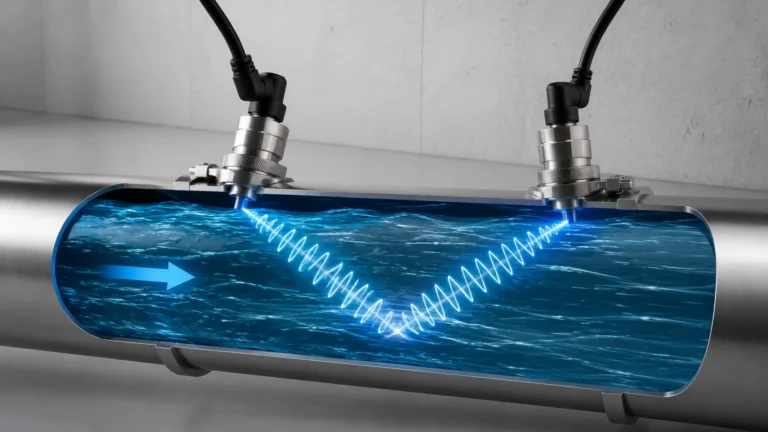
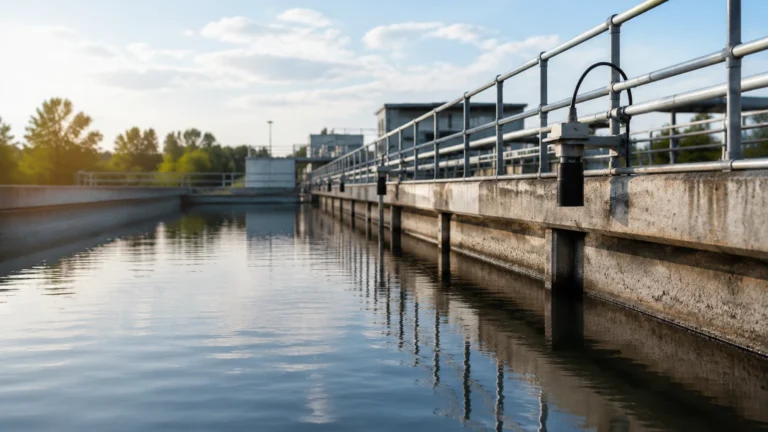
Similar to radar, ultrasonic sensors use ToF but employ sound waves instead of electromagnetic waves. A transducer emits an ultrasonic pulse that bounces off the target. This method is cost-effective for water treatment and simple chemical storage but is sensitive to air temperature, heavy foam, and vacuum conditions, as sound requires a medium to travel.
3. Hydrostatic Pressure
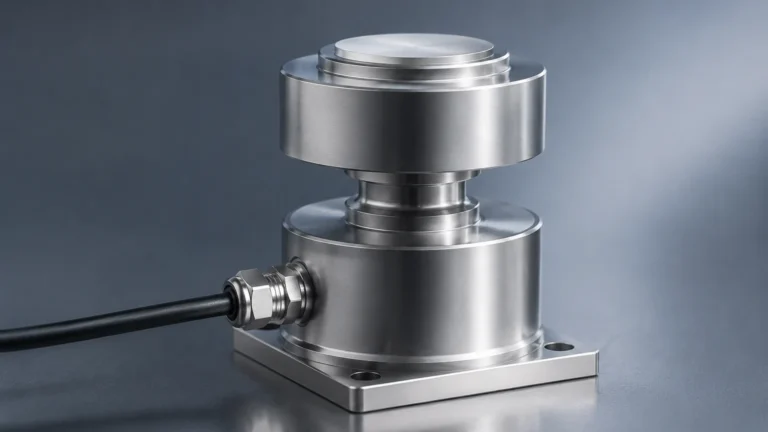
This principle relies on the relationship between the height of a liquid column and the pressure it exerts at the base. By measuring the head pressure and knowing the liquid's density, the level can be accurately calculated. This is a staple in tank level monitoring where the liquid density remains relatively constant.
4. Magnetic Level Gauges
Utilizing the principle of buoyancy and magnetic coupling, these devices feature a float containing a magnet that moves with the liquid level. This magnet interacts with an external indicator or transmitter. It provides a clear visual indication and is highly reliable for high-pressure or hazardous liquid applications.
Selecting the Right Curriculum for Instrumentation Classes Online
When evaluating online training, professionals should look for modules that go beyond basic theory. A comprehensive course should include:
* Signal Processing: Understanding how raw sensor data is filtered and converted into a standardized industrial signal.
* Loop Tuning: Practical exercises in PID (Proportional-Integral-Derivative) control loops.
* Digital Communication Protocols: Training on HART, Foundation Fieldbus, and Industrial Ethernet.
* Hazardous Area Classification: Knowledge of ATEX, IECEx, or SIL (Safety Integrity Level) ratings, which are crucial for chemical and oil and gas environments.
For those seeking to apply these principles using industrial-grade hardware, reviewing the Main Page of established manufacturers like Welk can provide a practical look at the specifications and certifications required in modern facilities.
Technical Comparison of Level Measurement Technologies
Choosing the right technology is a core skill developed through instrumentation classes online. The following table summarizes the selection criteria for the most common level measurement instruments.
| Technology | Measurement Principle | Ideal Media | Max Range (Typical) | Accuracy | Main Limitation |
| :— | :— | :— | :— | :— | :— |
| 80GHz Radar | Electromagnetic ToF | Liquids, Solids, Corrosives | Up to 120m | ±1mm | High initial cost |
| Ultrasonic | Acoustic ToF | Water, Wastewater | Up to 30m | ±0.25% of range | Affected by foam/vapor |
| Hydrostatic | Pressure | Clean liquids, Slurries | Varies by sensor | ±0.1% to 0.5% | Dependent on density |
| Magnetic Gauge | Buoyancy/Magnetic | Hazardous liquids | Up to 6m (Sectional) | ±5mm to 10mm | Moving parts (float) |
| Guided Wave Radar | Contact ToF | Low dielectric liquids | Up to 75m | ±2mm | Probe buildup/coating |

Practical Installation and Maintenance Considerations
Technical knowledge gained from instrumentation classes online must be applied with precision during field installation. Incorrect mounting is the leading cause of instrument failure or inaccuracy.
Installation Guidelines
1. Nozzle Geometry: For radar and ultrasonic sensors, the nozzle height and diameter must be considered to avoid internal reflections (ringing). Usually, the sensor should protrude slightly into the tank or follow specific "dead zone" (blocking distance) requirements.
2. Obstructions: Avoid placing sensors near agitators, ladders, or inflow streams. If obstructions are unavoidable, many modern instruments offer "False Echo Suppression" software to mask these signals.
3. Stilling Wells: In applications with heavy turbulence or foam, installing a radar or ultrasonic sensor inside a stilling well (a vertical pipe) can provide a calm surface for accurate measurement.
4. Environmental Protection: Ensure cable glands are tightened and drip loops are used to prevent moisture from entering the electronics housing (IP67/IP68 ratings).
Maintenance and Calibration
Modern digital instruments require less frequent calibration than older analog devices, but they are not "set and forget." Online classes emphasize the importance of:
* Zero and Span Verification: Periodically checking the 4mA and 20mA points.
* Signal-to-Noise Ratio (SNR) Monitoring: Using diagnostic software to check the health of the echo in radar systems.
* Cleaning: Removing buildup from ultrasonic transducers or radar antennas in dusty or crystallizing applications.
Limitations and Challenges of Remote Learning
While instrumentation classes online offer flexibility and a wealth of information, they have inherent limitations. The primary challenge is the lack of physical interaction with the hardware. Understanding the "feel" of a torque wrench when securing a flange or the tactile process of wiring a terminal block in a cramped enclosure is difficult to replicate digitally.
Furthermore, troubleshooting complex electrical interference (EMI/RFI) often requires physical presence and the use of handheld oscilloscopes or multimeters in a real-world environment. To mitigate this, many professionals supplement online learning with short-term on-site workshops or by utilizing demo units provided by manufacturers.
Frequently Asked Questions (FAQ)
Q: Can I get a professional certification through instrumentation classes online?
A: Yes, many accredited institutions and industry bodies (such as ISA or various technical colleges) offer certifications that are recognized globally. Always verify that the program meets the standards required by your specific industry (e.g., IEC for electrical standards).
Q: What is the difference between a level switch and a level transmitter?
A: A level switch (point level) provides a discrete output (on/off) when a certain level is reached, used primarily for overfill protection or pump control. A level transmitter (continuous level) provides a constant signal representing the exact level across a range.
Q: Is 80GHz radar always better than 26GHz radar?
A: Not necessarily. While 80GHz offers a narrower beam and better resolution for small tanks or through-valve measurements, 26GHz may be more robust in applications with heavy dust or condensation where a wider beam can "see around" some interference.
Q: How do I handle measurement in a pressurized tank?
A: For pressurized vessels, non-contact radar is often preferred as it is unaffected by pressure changes. If using hydrostatic methods, a differential pressure (DP) transmitter is required to compensate for the headspace pressure.
For engineers looking to source high-quality instrumentation that aligns with the technical standards taught in professional courses, the Main Page of specialized manufacturers offers a comprehensive overview of available technologies and their specific application ranges.
By combining the theoretical depth of instrumentation classes online with the practical application of advanced sensing technology, industrial facilities can achieve higher levels of safety, reduced waste, and optimized production cycles.