Kadź
Kadź
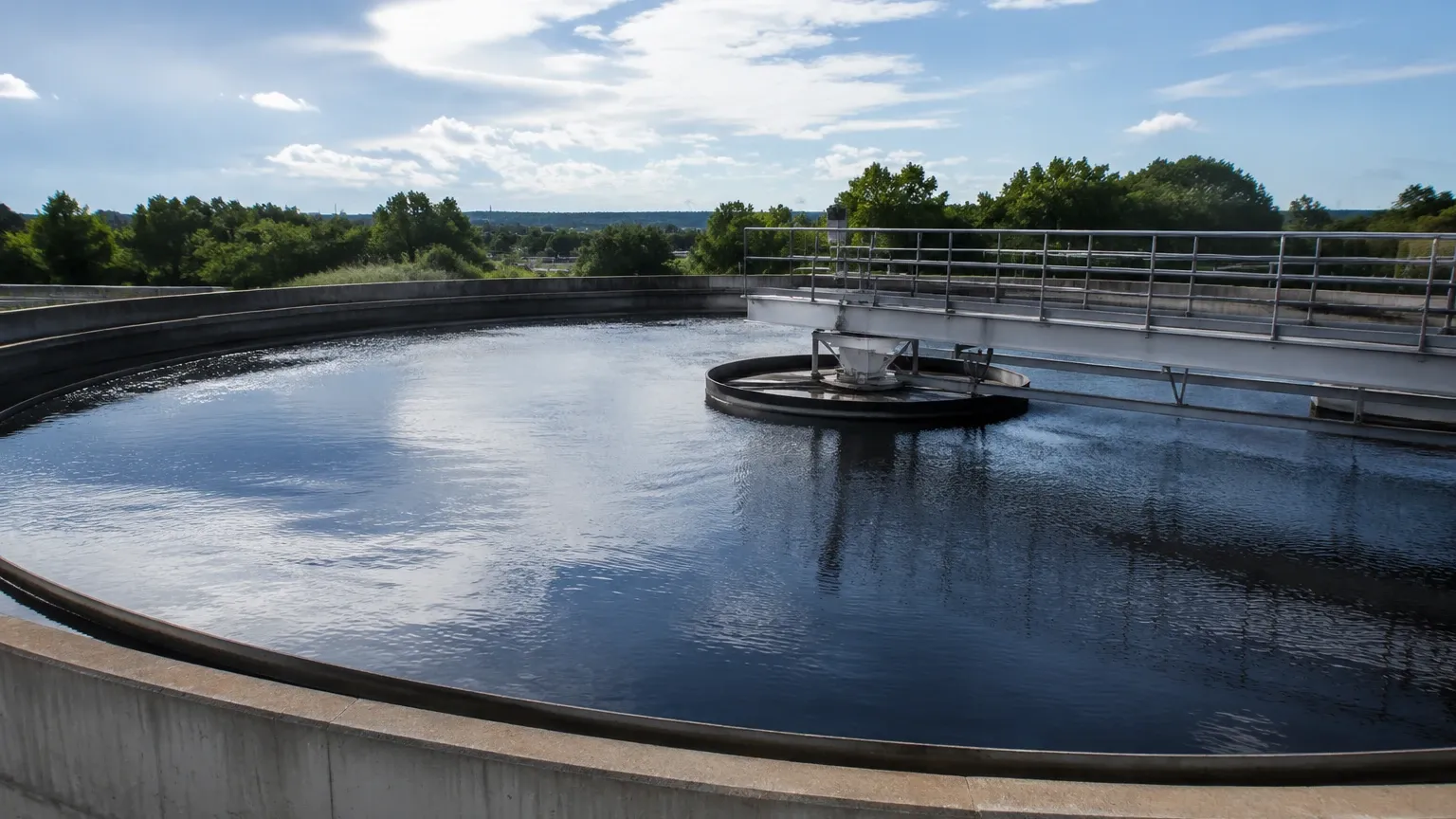
In the landscape of industrial process engineering, the term "kadź"—referring to a large-scale vat, tub, or process vessel—represents a fundamental component across diverse sectors including brewing, chemical manufacturing, food processing, and wastewater treatment. Whether it is a mash tun in a brewery, a mixing tank in a chemical plant, or a storage basin for industrial fluids, the effective management of a kadź relies heavily on precise level measurement. Monitoring the volume within these vessels is not merely a matter of inventory; it is critical for process safety, batch consistency, and operational efficiency.
Selecting the appropriate instrumentation for a kadź requires a deep understanding of the physical properties of the medium, the environmental conditions within the vessel, and the mechanical constraints of the installation. This guide explores the principles of level measurement technology as applied to industrial vats and provides a framework for engineers to select the most reliable solutions.
Understanding the Industrial Vat (Kadź) in Process Engineering
An industrial kadź is rarely a simple container. Depending on the application, it may be equipped with agitators (stirrers), heating or cooling jackets, internal baffles, and various inlet/outlet configurations. The term encompasses several specific vessel types:
* Brewing Vats: Used for mashing, boiling, and fermentation. These often involve high temperatures, steam, and the presence of foam.
* Chemical Mixing Vats: These vessels may contain corrosive substances, requiring sensors with high chemical resistance (e.g., PTFE or PVDF coatings).
* Storage Vats: Used for raw materials or finished products, where the primary goal is accurate inventory tracking.
Because these vessels are central to production, any failure in level monitoring can lead to overflows, dry running of pumps, or ruined batches. Therefore, understanding the measurement principles is the first step toward optimization.
Level Measurement Principles for Industrial Vats
There is no universal sensor that fits every kadź. Instead, several distinct technologies are employed based on the specific challenges of the application.
Radar Level Measurement (Non-Contact)
Radar technology is widely considered the gold standard for high-precision level measurement in industrial vats. It operates on the Time-of-Flight (ToF) principle. The sensor emits high-frequency microwave pulses (typically in the 26 GHz or 80 GHz range) that travel to the surface of the medium, reflect, and return to the sensor.
* Advantages: It is non-contact, meaning it is unaffected by the density, pressure, or temperature of the liquid. Modern 80 GHz radar sensors have a very narrow beam angle, which is ideal for a kadź equipped with internal agitators or heating coils, as the beam can be directed to avoid these obstructions.
* Considerations: While radar can penetrate some foam, extremely thick or dense foam may absorb the signal, necessitating a guided wave radar (GWR) approach or specialized high-frequency units.
Ultrasonic Level Sensing
Ultrasonic sensors also use the ToF principle but utilize sound waves instead of microwaves. The sensor measures the time it takes for an ultrasonic pulse to bounce off the liquid surface and return.
* Advantages: This is a cost-effective, non-contact solution suitable for many water-based applications in open or vented vats.
* Limitations: Ultrasonic waves are mechanical and require a medium (air) to travel. Their accuracy is heavily influenced by air temperature, heavy steam, or vapors, which change the speed of sound. In a boiling kadź or a vessel containing volatile chemicals, ultrasonic sensors may provide unreliable data.
Hydrostatic Pressure Measurement
Hydrostatic sensors measure the pressure exerted by the liquid column at the bottom of the kadź. The pressure is proportional to the height of the liquid and its density ($P = \rho \cdot g \cdot h$).
* Advantages: These sensors are robust and easy to install, often via a flange or thread at the bottom of the vessel. They are excellent for vats where the top of the vessel is crowded with pipes and manways.
* Limitations: If the density of the liquid changes (e.g., during a chemical reaction or temperature shift), the level reading will drift unless the system is compensated for density changes.
Magnetic Level Gauges
Magnetic level gauges are used for side-mounting on a kadź. They consist of a bypass chamber containing a float with an internal magnet. As the liquid level rises and falls, the float moves, flipping external magnetic flaps or triggering an electronic transmitter.
* Advantages: They provide a clear visual indication without requiring power and are highly reliable for high-pressure or high-temperature vessels.
* Limitations: They require side-process connections (nozzles) and are not suitable for liquids that may clog the bypass chamber or contain magnetic particles.
Selection Criteria for Level Instrumentation in a Kadź
When evaluating the best instrument for your specific vessel, consider the following technical parameters:
1. Medium Characteristics: Is the liquid corrosive, viscous, or prone to crystallization? For corrosive media in a chemical kadź, non-contact radar or PTFE-lined hydrostatic transmitters are preferred.
2. Process Conditions: What are the maximum temperature and pressure? High-temperature brewing processes (up to 100°C or higher) require sensors with appropriate thermal ratings.
3. Vessel Geometry: Is the kadź tall and narrow or short and wide? Does it have a conical bottom? The mounting position must ensure the sensor has a clear "view" of the liquid surface.
4. Agitation and Turbulence: If the vat has a high-speed stirrer, the liquid surface will be turbulent. Radar sensors with advanced signal processing algorithms can filter out the noise caused by waves and agitator blades.
For a comprehensive overview of available technologies and specific product specifications, engineers should consult a professional manufacturer's Main Page to compare different sensor models.
Practical Selection Table for Common Applications
| Application Type | Recommended Technology | Key Benefit | Potential Limitation |
| :— | :— | :— | :— |
| Brewing Mash Tun | 80 GHz Radar | Ignores steam and heat | High-density foam may require tuning |
| Chemical Storage | Ultrasonic (Plastic) | Low cost, corrosion resistant | Not for pressurized/hot vessels |
| Acid Mixing Vat | PTFE-coated Hydrostatic | Reliable in aggressive media | Requires constant density |
| High-Pressure Tank | Magnetic Level Gauge | Visual safety redundancy | Requires side-wall mounting |
| Wastewater Basin | Submersible Hydrostatic | Easy installation, no mounting | Sediment buildup on sensor diaphragm |
Installation Guidelines and Best Practices
Proper installation is as critical as sensor selection. Even the most advanced radar sensor will fail if placed incorrectly in a kadź.
* Avoid the Filling Stream: Never install a level sensor directly above the inlet where the liquid enters the vat. The turbulence and the falling stream will cause false readings.
* Nozzle Design: For radar and ultrasonic sensors, the mounting nozzle should be as short and wide as possible. If the nozzle is too long and narrow, it can create internal reflections (ringing) that interfere with the signal.
* Agitator Clearance: Ensure the sensor’s signal beam does not hit the agitator shaft or blades. If this is unavoidable, use a sensor with "False Signal Suppression" or "Background Subtraction" capabilities to map out the stationary obstructions.
* Stilling Wells: In cases of extreme turbulence or heavy foam, installing the sensor inside a stilling well (a vertical pipe submerged in the liquid) can provide a calm surface for accurate measurement.
Addressing Common Challenges: Foam, Agitation, and Steam
Industrial processes involving a kadź often present environmental challenges that can disrupt electronic sensors.
Managing Foam
Foam is perhaps the most common challenge in brewing and chemical vats. Low-frequency radar (6 GHz) tends to penetrate foam better, while high-frequency radar (80 GHz) is more likely to reflect off the top of the foam. If the goal is to measure the liquid level *below* the foam, guided wave radar (GWR) is often the most effective solution, as the probe guides the signal through the foam layer.
Dealing with Steam and Condensation
In hot processes, condensation can form on the sensor face. Welk radar sensors often feature a convex lens design or PTFE drippers that allow condensation to bead off, preventing signal attenuation. Ultrasonic sensors are generally discouraged in high-steam environments because the steam significantly alters the speed of sound, leading to large measurement errors.
Agitation
Mechanical stirrers create two problems: physical obstruction and surface vortexing. A vortex changes the surface profile, making it difficult for a sensor to find a flat reflection point. In these cases, installing the sensor off-center (away from the vortex eye) or using a hydrostatic transmitter at the bottom is the preferred engineering approach.
Frequently Asked Questions (FAQ)
Q: How do I measure the level in a kadź if the density of the liquid changes during the process?
A: If density is variable, avoid hydrostatic pressure sensors. Instead, use non-contact radar or ultrasonic sensors, as these measure distance and are independent of fluid density.
Q: Can I use a radar sensor in a plastic kadź?
A: Yes. Radar signals can pass through plastic. In some cases, you can even mount the radar sensor *above* a plastic tank and measure through the top cover without a hole, provided the plastic is not conductive.
Q: What is the maintenance requirement for these sensors?
A: Non-contact sensors (radar and ultrasonic) require very little maintenance since they do not touch the medium. Hydrostatic sensors should be checked periodically for sediment buildup on the diaphragm, especially in wastewater or slurry applications.
Q: Is it possible to get a digital output for automation?
A: Most modern level instruments provide a 4-20mA signal with HART protocol, Modbus RS485, or Profibus. This allows for seamless integration into a PLC or SCADA system for automated control of the kadź.
Conclusion
Selecting the right instrumentation for an industrial kadź is a balance of technology, environment, and budget. While radar offers the highest precision and versatility, hydrostatic and ultrasonic solutions remain valuable for simpler applications. By understanding the measurement principles and following rigorous installation standards, operators can ensure their process vessels operate at peak efficiency. For more detailed technical specifications and to explore the full range of industrial level measurement solutions, visit the Welk Main Page to find the right fit for your specific application requirements.