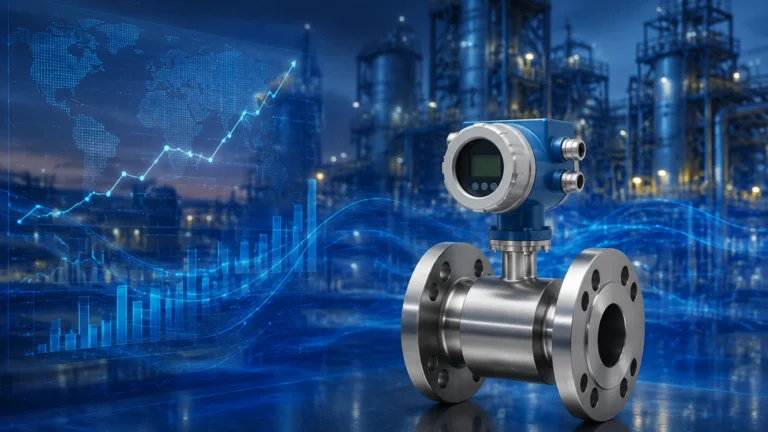
Micropilot Fmr10
Micropilot Fmr10
In the landscape of industrial automation, the demand for non-contact level measurement has shifted from high-end chemical reactors to more localized, utility-based applications. The Micropilot FMR10 represents a significant evolution in this sector, providing a compact, cost-effective radar solution designed specifically for the water and wastewater industry, as well as utility applications across various manufacturing plants. This radar sensor utilizes 26 GHz Frequency Modulated Continuous Wave (FMCW) technology to deliver precise measurements without the physical contact required by traditional hydrostatic or mechanical methods.
For engineering teams and procurement officers, understanding the technical nuances of the Micropilot FMR10 is essential for ensuring long-term reliability in the field. This guide explores the measurement principles, technical capabilities, and practical installation requirements of this instrument, while providing a comparative framework for selecting the right level measurement technology from the Main Page of our industrial catalog.
Understanding the Measurement Principle of Compact Radar
The Micropilot FMR10 operates on the principle of radar technology, specifically using the Time-of-Flight (ToF) method integrated with Frequency Modulated Continuous Wave (FMCW) signal processing. Unlike older pulse-radar systems that measure the time it takes for a single pulse to travel to the surface and back, FMCW radar emits a continuous signal with a constantly changing frequency.
The FMCW Advantage
In an FMCW system, the transmitter sends a signal that sweeps across a specific frequency bandwidth. When the signal reflects off the medium's surface and returns to the sensor, there is a frequency difference between the emitted signal and the received signal. This frequency shift is directly proportional to the distance the signal has traveled.
By analyzing this frequency difference through Fourier transform algorithms, the Micropilot FMR10 can calculate the distance to the product surface with high precision. This method is inherently more robust than simple pulse radar because it allows for better signal-to-noise ratios and more sophisticated filtering of "false echoes" caused by tank internal structures like ladders or agitators.
26 GHz Frequency Band
The choice of 26 GHz as the operating frequency is a strategic balance for the FMR10. While 80 GHz radars are often used for very narrow tanks or solids, the 26 GHz frequency provides a wider beam angle that is often more forgiving in applications where the surface may be turbulent or where foam is present. It offers sufficient precision for liquid level measurement while maintaining a compact antenna design that fits into standard 1.5-inch or 2-inch process connections.
Key Technical Specifications and Performance Data
The Micropilot FMR10 is engineered for simplicity and durability. Its technical profile reflects its intended use in outdoor environments and utility storage tanks.
| Feature | Specification (Metric) | Specification (Imperial) |
| :— | :— | :— |
| Measuring Range | Up to 5m or 8m (depending on version) | Up to 16.5ft or 26ft |
| Accuracy | ±5 mm | ±0.2 in |
| Operating Temperature | -40°C to +60°C | -40°F to +140°F |
| Process Pressure | -1 to +3 bar | -14.5 to +43.5 psi |
| Housing Material | PVDF (Polyvinylidene fluoride) | PVDF |
| Ingress Protection | IP66 / NEMA 4X (IP68 optional) | IP66 / NEMA 4X |
| Output Signal | 4 to 20 mA | 4 to 20 mA |
| Communication | Bluetooth® wireless technology | Bluetooth® wireless technology |
One of the standout features of the FMR10 is its integration of Bluetooth® technology for commissioning and maintenance. In many industrial settings, level sensors are mounted in hard-to-reach locations, such as the top of a tall storage silo or over a deep wet well. The ability to configure the device via a smartphone or tablet using the SmartBlue app significantly reduces the risk to personnel by eliminating the need for climbing or specialized handheld terminals.
Application Scenarios in Industrial Water Management
The Micropilot FMR10 is particularly well-suited for applications where environmental conditions or the nature of the liquid make ultrasonic sensors unreliable. Typical use cases include:
1. Storage Tanks and Buffer Vessels
In chemical processing or food and beverage production, buffer tanks often contain liquids that vary in temperature. Because radar signals are electromagnetic, they are unaffected by air temperature fluctuations, vacuum, or high pressure—factors that frequently cause ultrasonic sensors to fail due to changes in the speed of sound.
2. Open Channel Flow and Weirs
For environmental monitoring and wastewater treatment, measuring the head level in a flume or weir is critical for calculating flow rates. The FMR10 provides a stable reading even in the presence of wind or ambient noise, ensuring accurate data for regulatory compliance.
3. Plastic Tank Measurement (Through-Wall)
Because radar signals can penetrate non-conductive materials, the FMR10 can often measure the level inside a plastic IBC (Intermediate Bulk Container) or a polyethylene storage tank from the outside. This allows for level monitoring without breaking the seal of the container, which is ideal for corrosive or high-purity liquids.
Installation Guidelines for Optimal Signal Integrity
To achieve the ±5 mm accuracy specified by the manufacturer, proper installation is paramount. Radar sensors are sensitive to their surroundings, and the "beam angle" must be considered during the engineering phase.
1. Avoid the Center of the Tank: Do not mount the sensor in the exact center of a cylindrical tank. This can cause multiple reflections to converge, leading to signal interference. Positioning the sensor at 1/6th of the tank diameter from the wall is generally recommended.
2. Nozzle Height and Diameter: The antenna should ideally extend slightly below the mounting nozzle to prevent the nozzle edge from creating a large "initial echo" that masks the true level. If the nozzle is long, a mapping (false echo suppression) must be performed.
3. Obstruction Clearance: Ensure that the 26 GHz signal beam does not intersect with pipes, heating coils, or ladders. The FMR10 has a beam angle of approximately 40 degrees. If an obstruction is unavoidable, the software's "envelope curve" mapping feature can be used to tell the sensor to ignore those specific reflections.
4. Blocking Distance: Like all radar sensors, the FMR10 has a "dead zone" or blocking distance (typically 250 mm or 9.8 inches) directly below the sensor where measurement is not possible. The mounting position must account for the maximum possible fill level to prevent the liquid from entering this zone.

Comparative Analysis: Radar vs. Ultrasonic Technology
When browsing the Main Page for level measurement solutions, engineers often weigh the pros and cons of radar versus ultrasonic technology. While ultrasonic sensors are generally more affordable, radar technology like that found in the Micropilot FMR10 offers superior performance in several key areas:
| Parameter | Radar (FMR10) | Ultrasonic Sensors |
| :— | :— | :— |
| Medium Influence | Unaffected by gas layers or vapors | Highly sensitive to vapor and gas density |
| Temperature Sensitivity | No compensation required | Requires temperature compensation |
| Dust/Steam | High resistance | Signal can be absorbed or reflected |
| Vacuum/Pressure | Works in vacuum and under pressure | Cannot function in a vacuum |
| Surface Turbulence | Very robust | Can lose signal in heavy turbulence |
| Cost | Mid-range | Low-range |
For utility applications where the liquid is mostly water and the temperature is stable, an ultrasonic sensor may suffice. However, for any process where steam, dust, or varying gas compositions (such as methane in a digester) are present, the FMR10 is the technically superior choice.
Limitations and Operational Considerations
While the Micropilot FMR10 is a versatile tool, it is not a "one-size-fits-all" solution. Engineers must be aware of its factual boundaries:
* Dielectric Constant (εr): Radar measurement depends on the reflectivity of the medium. Materials with a very low dielectric constant (like certain oils or liquefied gases) may not reflect enough energy for the FMR10 to detect. The FMR10 is optimized for liquids with εr > 4.
* Heavy Foam: While radar can penetrate some foam, extremely dense, thick foam (like shaving cream consistency) can absorb the radar signal entirely or reflect it prematurely, leading to an incorrect "high" reading.
* Agitators: If a tank has a high-speed agitator, the resulting vortex and turbulent surface can scatter the radar signal. In such cases, a stilling well may be required to provide a calm surface for measurement.
Frequently Asked Questions (FAQ)
Q: Can the Micropilot FMR10 be used for solids measurement?
A: The FMR10 is primarily designed for liquids. While it may work on some fine-grained solids over very short distances, its 26 GHz frequency and software algorithms are optimized for liquid surfaces. For solids, we recommend higher-frequency 80 GHz radar units found on our Main Page.
Q: Does the device require a license for the Bluetooth connection?
A: No, the Bluetooth communication uses the SmartBlue app, which is a free download. The connection is encrypted and password-protected to prevent unauthorized access to the sensor configuration.
Q: How does the FMR10 handle condensation on the antenna?
A: The PVDF encapsulated antenna is designed to be drip-off. Small droplets of condensation typically do not affect the signal. However, if the sensor is completely submerged or covered in a thick layer of crystalline buildup, the signal will be lost.
Q: What is the power requirement for the FMR10?
A: It is a 2-wire loop-powered device, typically requiring 10 to 30 VDC. This makes it easy to integrate into existing 4-20mA control loops without additional power cabling.
Conclusion
The Micropilot FMR10 bridges the gap between basic level switches and high-end process radar. By providing a maintenance-free, non-contact measurement in a compact PVDF housing, it offers a reliable alternative to mechanical and ultrasonic devices. Its ease of use, facilitated by Bluetooth commissioning, makes it a favorite among maintenance teams looking to modernize their facilities.
When selecting a level measurement solution, it is vital to match the sensor's frequency and technology to the specific dielectric and environmental properties of the application. For a full range of radar, ultrasonic, and hydrostatic level instruments tailored to industrial automation, please consult the product experts and technical resources available on our Main Page.