Ph Measuring Unit
Ph Measuring Unit
In industrial process control, monitoring the chemical composition of liquids is as critical as monitoring their physical volume. A pH measuring unit is an essential analytical instrument used across various sectors—including water treatment, chemical manufacturing, and food processing—to determine the acidity or alkalinity of a solution. While level measurement instruments like radar or ultrasonic sensors track the quantity of a substance, the pH measuring unit provides vital data regarding the quality and reactivity of the medium.
Understanding the technical nuances of a pH measuring unit is vital for engineers tasked with maintaining process stability, ensuring regulatory compliance, and protecting downstream equipment from corrosion. This guide explores the principles, components, and selection criteria for industrial-grade pH measurement systems.
Measurement Principles of pH
The term pH stands for "potential of hydrogen." It is a logarithmic scale, typically ranging from 0 to 14, that measures the molar concentration of hydrogen ions (H+) in a solution. A pH of 7.0 is neutral, while values below 7 are acidic and values above 7 are alkaline.
The Electrochemical Reaction
An industrial pH measuring unit operates on the principle of potentiometry. It measures the voltage (electrical potential) difference between two electrodes immersed in a solution:
1. The Glass Electrode (Sensing Electrode): This electrode has a specialized glass membrane sensitive to hydrogen ions. When immersed, a thin hydrated layer forms on the glass surface. Hydrogen ions in the process liquid exchange with ions in this layer, creating a potential difference relative to the internal buffer solution of the electrode.
2. The Reference Electrode: This electrode provides a stable, constant potential regardless of the pH of the solution. It typically uses a silver/silver chloride (Ag/AgCl) system and a concentrated potassium chloride (KCl) electrolyte that makes contact with the process liquid through a porous junction.
The Nernst Equation
The relationship between the measured voltage and the pH value is defined by the Nernst Equation. At a standard temperature of 25°C (298.15 K), a change of one pH unit corresponds to a change of approximately 59.16 millivolts (mV). Because this voltage-to-pH relationship is temperature-dependent, modern pH measuring units incorporate Automatic Temperature Compensation (ATC) using a built-in RTD (Resistance Temperature Detector) like a Pt100 or Pt1000 sensor.
Components of an Industrial pH Measuring Unit
A complete industrial pH measuring unit consists of three primary components that must work in harmony to provide accurate data.
1. The pH Sensor (Electrode)
Industrial sensors are built to withstand harsher conditions than laboratory versions. They often feature "composite" or "combination" designs where both the sensing and reference electrodes are housed in a single body. Key variations include:
* Junction Types: Porous Teflon or ceramic junctions allow the electrolyte to flow into the process. In high-pressure or high-contamination environments, solid polymer electrolytes or double-junction designs are preferred to prevent "poisoning" of the reference electrode.
* Glass Shapes: Bulb-shaped glass is standard for general use, while flat-surface glass is used for high-solids or abrasive slurries to minimize fouling.
2. The Transmitter/Analyzer
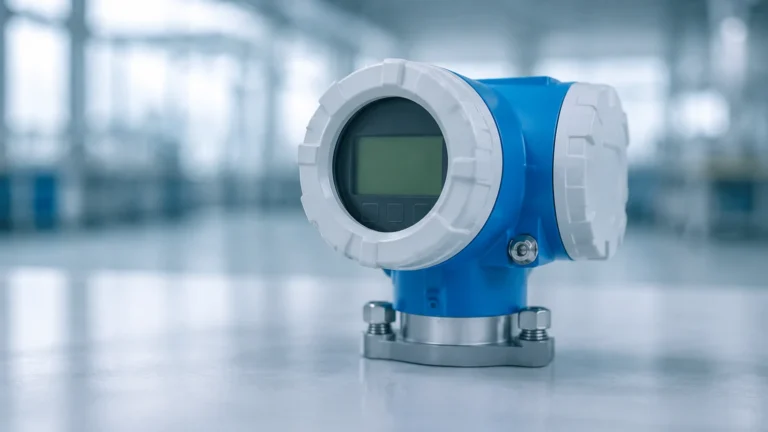
The transmitter is the "brain" of the ph measuring unit. It receives the high-impedance mV signal from the sensor and converts it into a standardized industrial output. High-quality transmitters provide diagnostic tools, such as "glass impedance monitoring," which alerts operators if the electrode is cracked or fouled.
3. The Sensor Housing and Cable
Housings (or assemblies) protect the sensor and facilitate its insertion into pipes or tanks. Common materials include 316L stainless steel, PVDF, or CPVC. Specialized low-noise cables are required because the raw signal from a pH electrode is extremely sensitive to electromagnetic interference.
Integration with Level Measurement Systems
In many industrial applications, pH measurement is inextricably linked to level control. For instance, in a neutralization tank, a Main Page level transmitter (such as a Welk ultrasonic or radar level meter) ensures the tank does not overflow while the pH measuring unit controls the dosing of acid or caustic agents.
Integrating these two data points allows for automated batch processing. If the level sensor detects a specific volume, the PLC (Programmable Logic Controller) can calculate exactly how much neutralizing agent is required based on the current pH reading. This synergy is common in wastewater treatment plants where inflow levels and chemical composition fluctuate constantly.
Selection Criteria for Industrial Applications
Choosing the right ph measuring unit requires an analysis of the process environment. Engineers should consider the following factors:
| Criteria | Consideration | Recommended Solution |
| :— | :— | :— |
| Temperature | High temperatures accelerate glass aging. | Use high-temperature glass rated up to 130°C. |
| Pressure | High pressure can force process liquid into the reference junction. | Use pressurized reference electrodes or solid electrolytes. |
| Chemical Compatibility | Hydrofluoric acid (HF) dissolves standard glass. | Use HF-resistant glass membranes. |
| Conductivity | Low-conductivity water (pure water) causes signal drift. | Use specialized low-impedance glass and flowing junctions. |
| Fouling/Solids | Oils and precipitates clog junctions. | Use flat-surface electrodes or automatic cleaning systems. |

Installation Guidelines
Proper installation is paramount to the longevity and accuracy of a ph measuring unit.
* Mounting Angle: Sensors should never be installed horizontally or upside down. An angle of at least 15° above the horizontal is required to ensure the internal electrolyte remains in contact with the glass membrane and to prevent air bubbles from being trapped.
* Submersion: In tanks, use immersion assemblies that keep the sensor below the minimum liquid level at all times. If the sensor dries out, the hydrated layer on the glass membrane will be damaged.
* Flow Velocity: In pipeline installations, the sensor should be placed in a location with steady flow (typically 0.5 to 2 m/s). Excessive velocity can cause "streaming potentials" (noise), while stagnant flow leads to slow response times.
* Grounding: To prevent ground loops and electrical interference, the process liquid and the transmitter should be properly grounded. Many industrial pH probes include a solution ground (liquid earth) pin.
Maintenance and Calibration
Unlike level meters, which may require minimal maintenance once calibrated, a pH measuring unit requires regular attention due to the consumable nature of the electrochemical sensor.
1. Cleaning: Depending on the process, sensors should be cleaned weekly or monthly. Dilute hydrochloric acid (5%) is often used to remove scale, while mild detergents are used for oils.
2. Calibration: Sensors must be calibrated using standard buffer solutions (typically pH 4.0, 7.0, and 10.0). A two-point calibration is standard, where the "zero" (pH 7) and the "slope" (pH 4 or 10) are adjusted.
3. Hydration: If a sensor is removed from the process, it must be stored in a storage solution (usually 3M KCl) to keep the membrane active.
Limitations and Common Challenges
* Sensor Aging: The sensitivity of the glass membrane naturally declines over time. Most industrial sensors have a lifespan of 6 to 18 months, depending on the severity of the application.
* Response Time: As a sensor ages or becomes fouled, its response time increases. This can lead to "hunting" in automated dosing systems, where the controller overshoots the target pH.
* Sodium Error: At very high pH levels (above pH 12), the sensor may respond to sodium ions as if they were hydrogen ions, leading to a lower-than-actual pH reading.
Frequently Asked Questions (FAQs)
Q: Can I use a standard pH sensor in high-pressure pipelines?
A: Standard sensors are usually rated for up to 6 bar (approx. 87 psi). For higher pressures, you must use a sensor with a pressurized reference chamber or a solid-state electrolyte to prevent process ingress.
Q: How often should I calibrate my ph measuring unit?
A: This depends on the required accuracy and the process conditions. In stable water treatment applications, once a month may suffice. In aggressive chemical processes, daily or weekly calibration might be necessary.
Q: Why is my pH reading drifting?
A: Drift is often caused by a clogged reference junction, a depleted electrolyte, or electrical interference. Check the junction for discoloration and ensure the cable shielding is intact.
Q: What is the difference between an analog and a digital pH sensor?
A: Analog sensors send a raw mV signal, which is prone to noise over long distances. Digital sensors (Smart sensors) convert the signal to a digital protocol (like Modbus or a proprietary signal) within the sensor head, allowing for longer cable runs and easier plug-and-play replacement.
By selecting the appropriate ph measuring unit and integrating it with reliable level measurement solutions, industrial operators can achieve a high degree of process automation and safety. For further technical specifications on liquid measurement instrumentation, reviewing professional engineering resources and product options is recommended to ensure the selected hardware meets the specific demands of the application.