Single Use Flowmeters
Single Use Flowmeters
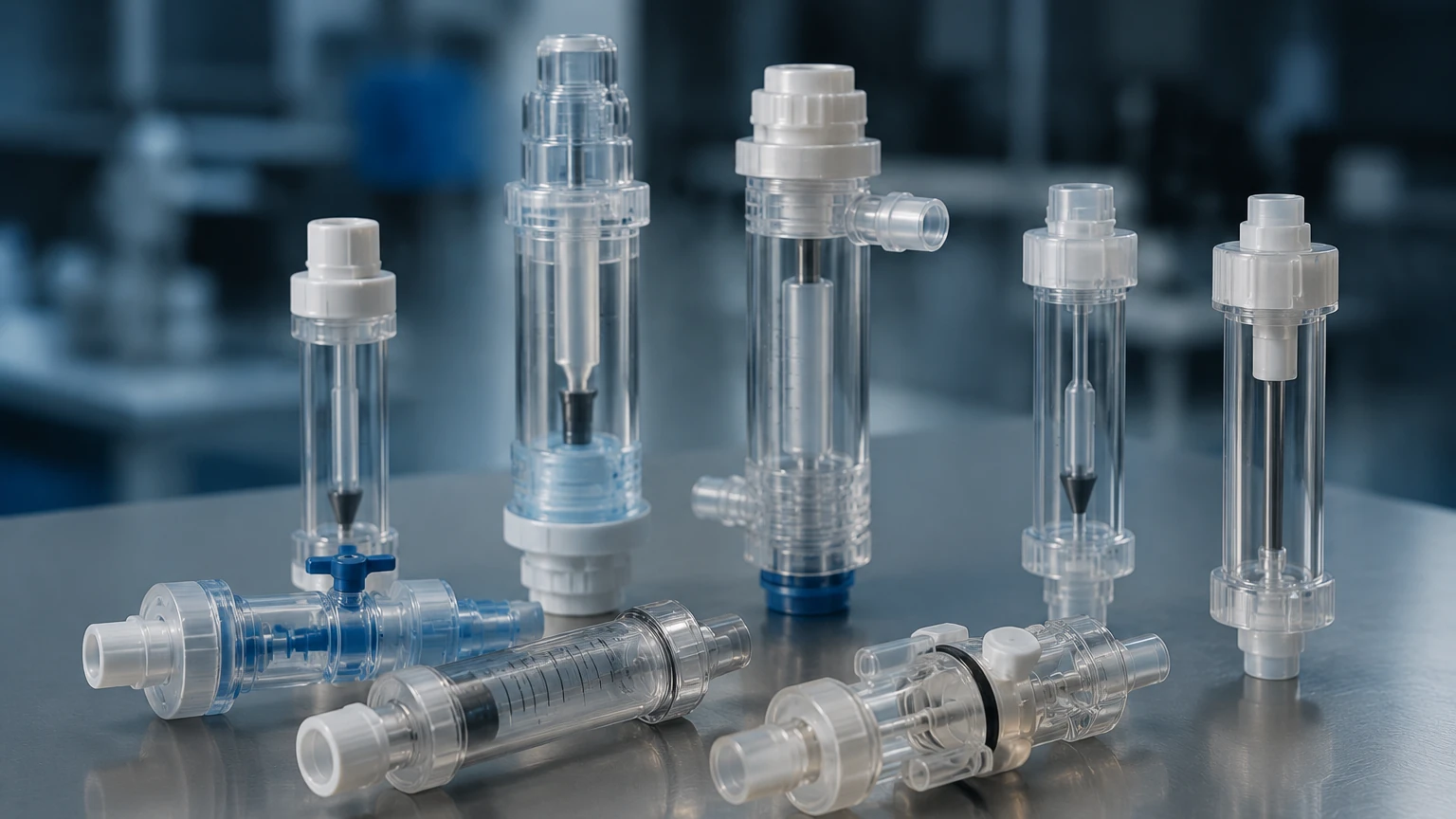
In the modern landscape of biopharmaceutical manufacturing and specialty chemical processing, the shift toward flexible, modular production has led to the widespread adoption of single-use technology (SUT). Among the most critical components in these systems are single use flowmeters. These instruments provide the precise data necessary for dosing, filtration, and media transfer while eliminating the need for the rigorous cleaning and sterilization cycles required by traditional stainless-steel instrumentation.
As a professional manufacturer of industrial level measurement instruments, Welk recognizes that flow and level measurement are often two sides of the same coin in process automation. While our core expertise lies in radar and ultrasonic level sensors, understanding the mechanics and application of single use flowmeters is essential for engineers designing integrated fluid management systems. This guide explores the principles, selection criteria, and practical installation considerations for disposable flow measurement technology.
Measurement Principles of Single Use Flowmeters
Unlike permanent flow sensors, single use flowmeters must balance high precision with the economic reality of being discarded after a single production run or batch. The technology generally falls into three primary categories: ultrasonic, Coriolis, and turbine-based systems.
Ultrasonic (Time-of-Flight)
Ultrasonic flowmeters are the most common choice in single-use applications. They operate by sending acoustic waves through the fluid path. In a "time-of-flight" configuration, two transducers act as both transmitters and receivers. One signal is sent upstream and the other downstream. The difference in the time it takes for these signals to travel between the transducers is directly proportional to the flow velocity.
In single-use systems, this is often implemented in two ways:
1. Clamp-on Sensors: The transducers are clamped onto the outside of a flexible plastic tube. This keeps the sensor completely isolated from the process fluid.
2. Integrated Flow Cells: A disposable plastic flow tube with integrated mirrors or windows is inserted into a permanent sensor housing. This often provides higher accuracy as the geometry of the flow path is fixed and calibrated.
Coriolis Technology
Coriolis flowmeters are the gold standard for mass flow measurement. They work by vibrating a tube through which the fluid flows. The inertia of the moving fluid causes a slight twisting or phase shift in the tube’s vibration, which is measured to determine the mass flow rate. While traditionally expensive and heavy, recent engineering breakthroughs have produced single-use Coriolis sensors where the fluid-wetted path is a gamma-stable plastic or thin-walled metal tube that can be detached from the electronic transmitter and discarded.
Turbine and Paddlewheel
These are mechanical meters where the fluid flow rotates a small rotor. The speed of the rotation is detected by a magnetic or optical sensor outside the flow path. In single-use formats, the entire turbine assembly is integrated into a plastic housing that is pre-sterilized. These are cost-effective but may be limited by the potential for particle generation or mechanical wear over long durations.
Key Evaluation Criteria for Selection
When selecting single use flowmeters, engineers must look beyond simple flow range. The following table summarizes the primary technical considerations for different technologies:
| Feature | Ultrasonic (Clamp-on) | Ultrasonic (Inline) | Coriolis (Single-Use) | Turbine (Single-Use) |
| :— | :— | :— | :— | :— |
| Accuracy | ±2% to 5% | ±1% | ±0.5% | ±1% to 2% |
| Wetted Material | None (Tube only) | Polyethylene/PEEK | Gamma-stable Plastic | PEEK/Polypropylene |
| Flow Range | 30 mL/min – 100 L/min | 1 mL/min – 50 L/min | 0.1 kg/min – 20 kg/min | 0.5 L/min – 100 L/min |
| Pressure Limit | Dependent on Tubing | Up to 5 bar (72 psi) | Up to 6 bar (87 psi) | Up to 4 bar (58 psi) |
| Risk of Shear | Zero | Low | Low | Moderate |
Regulatory and Material Compliance
Because these sensors are used in sensitive bioprocessing environments, the materials must meet strict regulatory standards. Ensure that any single-use flow cell or wetted component is:
* USP Class VI Compliant: Ensures the plastic does not produce a biological response.
* BSE/TSE Free: Confirms no animal-derived components were used in manufacturing.
* Gamma Compatible: Many single-use assemblies are sterilized via gamma irradiation (typically 25–45 kGy). The flowmeter materials must not degrade or leach chemicals after exposure.
Advantages of Single-Use vs. Traditional Flowmeters
The primary driver for single-use technology is the reduction of "Total Cost of Ownership" (TCO) in specific applications. Traditional stainless-steel flowmeters require Clean-in-Place (CIP) and Steam-in-Place (SIP) validation. This involves significant water consumption, chemical use, and energy for steam generation.
1. Elimination of Cross-Contamination: Since the fluid-wetted path is replaced for every batch, the risk of carryover between different products is virtually zero.
2. Reduced Downtime: Switching to a new batch involves simply swapping the disposable manifold, which can take minutes compared to the hours or days required for CIP/SIP and validation.
3. Lower Capital Expenditure: While the recurring cost of disposables is higher, the initial investment in stainless steel infrastructure, piping, and sterilization equipment is significantly reduced.
Installation and Practical Considerations
To ensure accurate measurement, single use flowmeters require careful installation, particularly when using flexible tubing.
Straight Pipe Requirements
Just like permanent meters, single-use variants are sensitive to turbulence. It is a standard engineering rule to provide at least 10 diameters (10D) of straight tubing upstream and 5 diameters (5D) downstream of the sensor. If the tubing is kinked or curved immediately before the sensor, the velocity profile will be distorted, leading to inaccurate readings.
Air Bubble Management
Ultrasonic flowmeters are particularly sensitive to air bubbles. Large bubbles can break the acoustic signal, causing the meter to "drop out." In single-use bioreactor setups, it is common to install the flowmeter at a low point in the system or after a debubbler to ensure the flow path remains fully primed with liquid.
Calibration and Zeroing
Most single-use flow cells come with a calibration constant (K-factor) provided by the manufacturer. This value is entered into the transmitter. However, because flexible tubing can change shape under pressure, it is often necessary to perform a "zero-flow" calibration once the system is primed and pressurized but before the actual process begins.
Limitations of Single-Use Flow Technology
Despite their benefits, single use flowmeters are not a universal solution. Engineers should be aware of the following limitations:
* Pressure and Temperature Constraints: Plastic components cannot withstand the high pressures (e.g., >10 bar) or extreme temperatures that stainless steel can handle.
* Extractables and Leachables (E&L): There is always a risk of trace chemicals migrating from the plastic into the process fluid. Comprehensive E&L data from the manufacturer is required for risk assessment.
* Environmental Impact: The disposal of plastic components increases the facility's solid waste stream, though this is often offset by the reduction in water and chemical waste from cleaning.
Integrating Flow and Level Measurement
In a typical B2B industrial environment, flowmeters and level meters work in tandem. For example, in a buffer preparation tank, a Main Page radar level sensor provides the primary measurement of the total volume in the tank. Simultaneously, a single use flowmeter on the inlet line monitors the rate of addition.
This redundancy allows for mass balance calculations. If the level sensor shows a volume increase that does not match the integrated flow data from the flowmeter, it can trigger an alarm for a potential leak or a pump malfunction. In single-use systems where tanks are often flexible "bags" housed in rigid containers, non-contact level measurement (like radar) combined with single-use flow measurement provides a complete, sterile monitoring solution.
Frequently Asked Questions (FAQ)
Q: Can single-use flowmeters be reused?
A: While technically possible in some non-sterile applications, they are designed and validated for a single batch. Reusing them voids the manufacturer's accuracy guarantees and increases the risk of material fatigue or contamination.
Q: How do I handle different fluid viscosities?
A: Ultrasonic meters are generally less affected by viscosity than turbine meters. However, if the viscosity is significantly higher than water, a Coriolis meter is the preferred choice for maintaining accuracy.
Q: Are single-use flowmeters pre-calibrated?
A: Yes, most high-quality disposable flow cells are factory-calibrated using NIST-traceable equipment. The calibration data is often provided via a barcode or RFID tag on the sensor itself.
Q: What is the maximum flow rate for these sensors?
A: Currently, most single-use systems are optimized for tubing sizes up to 1 inch (25.4 mm), supporting flow rates up to approximately 100 L/min. For larger industrial scales, traditional instrumentation remains the standard.
Conclusion
Single use flowmeters represent a pivotal shift in how process industries approach fluid dynamics. By prioritizing sterility and flexibility, these instruments allow for faster production cycles and safer pharmaceutical manufacturing. When selecting a flow solution, engineers must carefully weigh the accuracy requirements against the physical constraints of the single-use manifold. By combining these advanced flow technologies with reliable level measurement systems, operators can achieve a high degree of process control and transparency. For further technical specifications on level measurement and integrated sensor solutions, you may Review product options and application support to see how these technologies align with modern industrial standards.