Small Pressure Transmitter
Small Pressure Transmitter
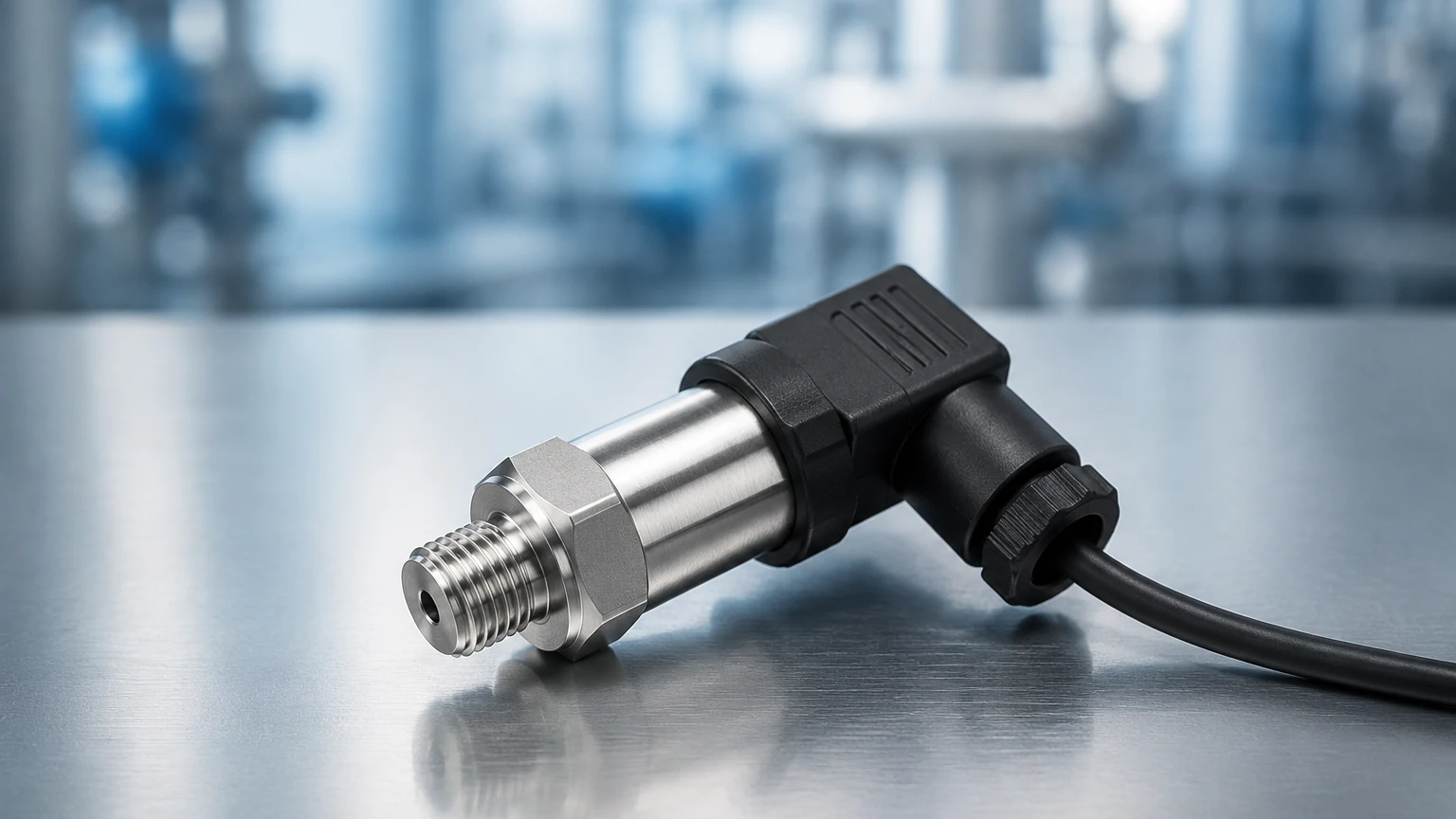
In the landscape of industrial automation and process control, the demand for miniaturization has led to the widespread adoption of the small pressure transmitter. These compact devices are engineered to provide precise pressure measurements in environments where space is at a premium, such as integrated hydraulic manifolds, medical equipment, and compact water treatment skids. Despite their reduced footprint, these instruments must maintain high levels of accuracy, stability, and durability to meet the rigorous demands of modern engineering. This guide explores the technical foundations, selection criteria, and practical implementation of small pressure transmitters within industrial frameworks.
Understanding the Measurement Principles of Small Pressure Transmitters
Before selecting a small pressure transmitter, it is essential to understand the underlying sensing technologies that allow these devices to function within a compact housing. The most common principles utilized in small-scale pressure measurement include piezoresistive silicon and ceramic capacitive sensing.
Piezoresistive Silicon Sensors
The majority of small pressure transmitters utilize piezoresistive technology. This involves a silicon diaphragm with integrated resistors formed through a diffusion process. When pressure is applied, the diaphragm deforms, causing a change in the electrical resistance of the resistors (the piezoresistive effect). This change is typically measured using a Wheatstone bridge circuit. The primary advantage of this technology is its high sensitivity and the ability to manufacture extremely small sensing elements, making it ideal for compact transmitter designs. These sensors are often isolated from the process media by a thin stainless steel diaphragm and a filling fluid (such as silicone oil) to ensure chemical compatibility.
Ceramic Capacitive Sensors
Ceramic capacitive sensors operate by measuring the change in capacitance between a moving ceramic diaphragm and a fixed ceramic substrate. As pressure moves the diaphragm, the distance between the electrodes changes, altering the capacitance. Ceramic sensors are inherently robust and offer excellent resistance to corrosion and mechanical wear. While they are sometimes slightly larger than silicon-based elements, advancements in manufacturing have allowed for "small" variants that are highly effective in aggressive chemical environments where metallic diaphragms might fail.
Thin-Film Strain Gauges
For high-pressure applications in a small form factor, thin-film strain gauges are often employed. These sensors consist of a metal substrate with a thin layer of resistive material sputtered onto the surface. They offer exceptional long-term stability and resistance to high-pressure spikes and vibrations, which are common in hydraulic systems.
Key Evaluation Criteria for Compact Pressure Sensing
Selecting the right small pressure transmitter requires a balanced evaluation of technical specifications and environmental constraints. Engineers must look beyond the physical dimensions to ensure the device can perform reliably over its service life.
1. Pressure Range and Type
Transmitters are available in absolute, gauge, and sealed gauge configurations. For small transmitters, gauge pressure (referenced to atmospheric pressure) is most common. It is vital to select a transmitter with a range that covers the maximum expected process pressure while maintaining a safety margin for overpressure events. Typical ranges for small units span from 0–1 bar (0–14.5 psi) up to 0–600 bar (0–8700 psi).
2. Accuracy and Thermal Stability
Accuracy is usually defined as a percentage of the Full Scale (FS), often ranging from ±0.25% to ±0.5% FS in standard industrial models. However, because small transmitters often have less internal space for complex temperature compensation circuitry, checking the "Total Error Band" or thermal drift coefficient is critical. A transmitter that is accurate at 25°C (77°F) may deviate significantly at 80°C (176°F) if not properly compensated.
3. Electrical Output Signals
Small pressure transmitters must interface with Control Systems (PLCs) or data loggers. Common outputs include:
* 4-20 mA: The industrial standard for long-distance transmission and noise immunity.
* 0-10 V / 0-5 V: Common in HVAC and laboratory equipment.
* Ratiometric (0.5-4.5 V): Often used in automotive and OEM applications where the output is a percentage of the supply voltage.
* Digital (I2C or Modbus): Increasingly popular for smart sensors and IoT integration.
4. Material Compatibility
The wetted parts—usually the diaphragm and the process connection—must be compatible with the fluid being measured. Stainless steel 316L is the standard for most water and oil applications. For corrosive chemicals, specialized coatings or ceramic sensors may be required.
Selection Table for Industrial Small Pressure Transmitters
The following table provides a comparison of typical specifications for small pressure transmitters used in various industrial sectors.
| Feature | General Industrial | Hydraulic/Heavy Duty | HVAC/OEM |
| :— | :— | :— | :— |
| Typical Range | 0 to 40 bar | 0 to 600 bar | 0 to 10 bar |
| Accuracy | ±0.5% FS | ±0.25% to ±0.5% FS | ±1.0% FS |
| Output Signal | 4-20 mA | 4-20 mA or 0-10 V | Ratiometric or 0-5 V |
| Housing Material | 304/316L Stainless Steel | 316L Stainless Steel | Brass or Plastic/Composite |
| Electrical Conn. | DIN 43650 / M12 | M12 / Integral Cable | Packard / Molex |
| Process Conn. | G1/4" or NPT1/4" | G1/4" or M14x1.5 | G1/8" or Push-fit |
| IP Rating | IP65 | IP67 / IP69K | IP65 |
For a broader range of measurement solutions and technical support, engineers can Review product options and application support at the Welk main site.
Installation Guidelines and Best Practices
Correct installation is paramount to ensuring the longevity and accuracy of a small pressure transmitter. Because these devices are compact, they are often installed in tight clusters, which presents unique challenges.
Mounting Orientation
While many small transmitters can be mounted in any orientation, it is best practice to mount them vertically to prevent the accumulation of sediment or air bubbles against the diaphragm. If mounted horizontally, ensure the process connection is designed to drain naturally.
Mechanical Stress and Torque
Small transmitters often use small process connections, such as G1/4" or 1/4" NPT. Over-torquing during installation can deform the sensor housing, leading to zero-point shifts or even permanent damage to the sensing element. Always use a calibrated torque wrench and follow the manufacturer’s specifications. Additionally, avoid mounting the transmitter directly to high-vibration machinery without using a flexible capillary or vibration-dampening mount.
Electrical Wiring and Shielding
To prevent Electromagnetic Interference (EMI), especially in environments with Variable Frequency Drives (VFDs) or large motors, use shielded cables. The shield should be grounded at the controller end only to avoid ground loops. For small transmitters with M12 connectors, ensure the mating cable is properly seated to maintain the IP rating.
Environmental Protection
Even if a transmitter is rated IP67, constant exposure to high-pressure washdowns or steam can cause moisture ingress over time. In such cases, using a transmitter with a potted electronics chamber or a vented cable (for gauge pressure) with a moisture filter is recommended.
Limitations and Common Application Risks
While small pressure transmitters are versatile, they are not a universal solution. Understanding their limitations is key to avoiding premature failure.
* Temperature Extremes: Small housings have less thermal mass and less surface area for heat dissipation. If the process temperature exceeds the rated limit (typically 85°C to 100°C for standard units), a cooling siphons or capillary tube must be used to protect the electronics.
* Pressure Spikes and Water Hammer: In hydraulic systems, rapid valve closures can create pressure spikes many times the operating pressure. Small transmitters may require internal snubbers (restrictors) to protect the sensitive diaphragm from these transients.
* Clogging: Small process connections are susceptible to clogging if the media contains solids, high viscosity, or crystallizing substances. In these instances, a flush diaphragm transmitter—though often slightly larger—is a safer choice.
* Long-Term Drift: Because the sensing elements are small, they can be more sensitive to material fatigue or aging. Regular calibration cycles (annually or bi-annually) are necessary to maintain system integrity.
Frequently Asked Questions (FAQs)
Q: Can a small pressure transmitter be used for level measurement?
A: Yes, through the principle of hydrostatic pressure. If the density of the liquid is known, the pressure at the bottom of a tank (measured by the transmitter) can be converted to a level reading. However, for vented tanks, a gauge pressure transmitter is required to compensate for atmospheric changes.
Q: What is the difference between a pressure transducer and a pressure transmitter?
A: In common industrial parlance, a transducer typically provides a low-level voltage output (like mV or 0-5V), while a transmitter provides a high-level current signal (like 4-20mA) that is more robust for industrial environments. Small pressure transmitters often contain integrated signal conditioning to provide these 4-20mA signals.
Q: How do I handle a small pressure transmitter in a vacuum application?
A: You must ensure the transmitter is rated for absolute pressure or specifically designed for vacuum ranges. Standard gauge transmitters may not be calibrated to provide accurate readings below atmospheric pressure and could potentially be damaged if the diaphragm is not designed for reverse stress.
Q: Is it possible to repair a small pressure transmitter?
A: Generally, no. Due to their compact, often laser-welded or potted construction, these units are considered consumable components. If a unit fails or drifts beyond calibration limits, replacement is usually the only cost-effective option.
Conclusion
The small pressure transmitter is a cornerstone of modern industrial design, enabling sophisticated control in increasingly confined spaces. By understanding the measurement principles—whether piezoresistive or capacitive—and carefully evaluating factors like thermal stability, material compatibility, and electrical output, engineers can integrate these devices effectively. While they offer significant advantages in terms of size and cost, attention to installation details and an awareness of environmental limitations are essential to ensure reliable performance in the field. For those seeking specialized level and pressure instrumentation, Welk provides a range of solutions tailored to water treatment, chemical processing, and industrial automation.