Small Silos
Small Silos
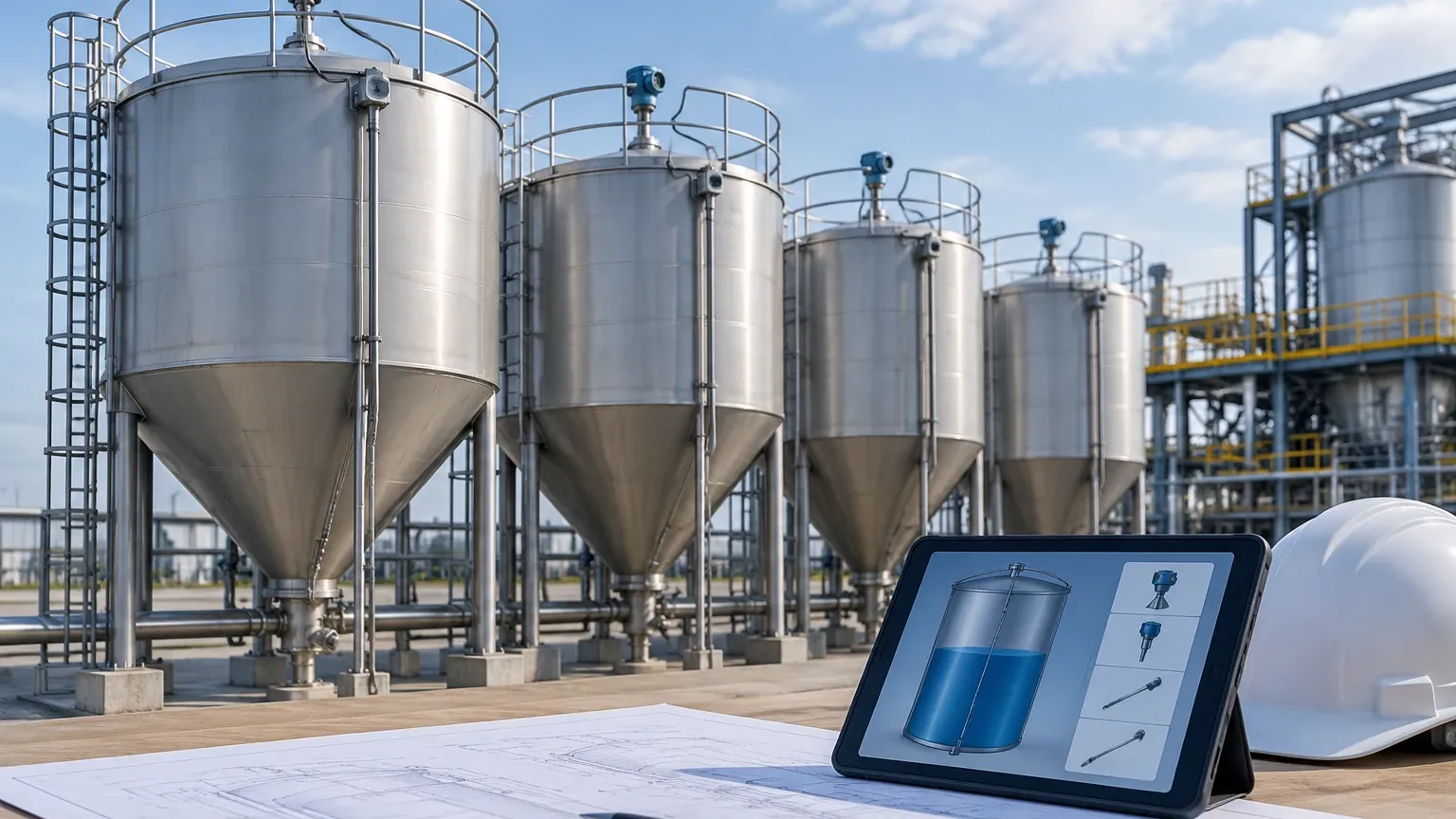
In industrial process environments, small silos—typically defined as storage vessels with heights ranging from 2 to 10 meters (approximately 6.5 to 33 feet) and relatively narrow diameters—present a unique set of challenges for level measurement. Unlike large-scale grain elevators or massive cement terminals, small silos are often integrated into precision batching systems, additive dosing lines, or localized water treatment facilities. The confined geometry of these vessels requires a nuanced understanding of sensor physics to ensure that measurements are accurate, repeatable, and free from interference caused by wall reflections or internal obstructions.
Selecting the appropriate instrumentation for small silos is not merely a matter of scale; it is a matter of precision engineering. Factors such as the material’s angle of repose, the presence of dust, and the sensor's "dead zone" become significantly more critical when the total measurement range is limited. This guide explores the technical principles, selection criteria, and installation requirements for monitoring levels in small-scale industrial storage.
Understanding Level Measurement in Small Silos
The primary objective in small silo management is often inventory control or process automation. Because these vessels are frequently used for high-value additives or rapid-turnover materials, even a small margin of error can lead to process inconsistencies or unexpected downtime.
In a small silo, the distance between the sensor and the material surface is short. This proximity means that the sensor must have a fast response time and a very small "blocking distance" (the area directly below the sensor where measurement is impossible). Furthermore, the narrow diameter of these silos increases the risk of the measurement signal hitting the silo walls or internal ladders, which can create false echoes. Therefore, the focus for small silo applications is on signal focus and beam angle control.
Core Measurement Technologies for Compact Storage
Several technologies are commonly employed to monitor levels in small silos, each operating on distinct physical principles. Understanding these principles is the first step toward making an informed recommendation.
80GHz High-Frequency Radar
Radar level meters operate on the principle of Time Domain Reflectometry (TDR) or Frequency Modulated Continuous Wave (FMCW). In small silos, 80GHz radar has become the industry standard. The high frequency allows for a very narrow beam angle (often as low as 3 degrees). This narrow beam ensures that the energy is directed specifically at the material surface, avoiding the silo walls and internal structures.
Radar is a non-contact technology, meaning it is unaffected by the physical properties of the material, such as density or corrosiveness, provided the dielectric constant is sufficient to reflect the microwave signal. For more information on specific radar configurations, you may Review product options and application support on our Main Page.
Ultrasonic Level Sensors
Ultrasonic sensors utilize sound waves to measure distance. The sensor emits an ultrasonic pulse that travels through the air, reflects off the material surface, and returns to the transducer. The level is calculated based on the time of flight. While cost-effective, ultrasonic technology is sensitive to air temperature fluctuations, heavy dust, and surface turbulence. In small silos containing liquids or non-dusty solids, ultrasonic sensors are a reliable choice, provided the temperature is relatively stable or the sensor includes integrated temperature compensation.
Hydrostatic Pressure Transmitters
For small silos used to store liquids (such as chemical dosing tanks), hydrostatic pressure measurement is a common choice. This method relies on the principle that the pressure at the bottom of a vessel is directly proportional to the height of the liquid column and its density. A pressure transmitter installed at the base of the silo provides a continuous level reading. This is a contact-based method and is highly accurate for homogenous liquids.
Point Level Switches
In many small silo applications, continuous measurement is supplemented or replaced by point level detection. Tuning fork switches or rotary paddle switches are used to detect high, mid, or low levels. These are essential for preventing overfills or ensuring that a pump does not run dry. They act as a fail-safe mechanism alongside continuous transmitters.
Technical Challenges Unique to Small Silos
Small silos introduce specific physical constraints that are less prevalent in larger vessels. Addressing these challenges is critical for system reliability.
1. The Dead Zone (Blocking Distance)
Every non-contact sensor has a minimum distance it can measure, known as the dead zone. For an ultrasonic sensor, this might be 250mm to 500mm (10 to 20 inches). In a silo that is only 3 meters (10 feet) tall, a 500mm dead zone represents a significant loss of usable storage capacity. High-frequency radar sensors typically have much smaller dead zones, sometimes as low as 50mm (2 inches), making them superior for very short vessels.
2. Internal Obstructions
Small silos are often equipped with agitators, heating coils, or reinforcement struts. Because the volume is small, these objects are often in the direct path of the measurement signal. If a sensor with a wide beam angle is used, it will detect the agitator as the "full" level. Using a narrow-beam 80GHz radar allows the signal to "sneak" past these obstructions to reach the actual material surface.
3. Material Angle of Repose
When solids are loaded into a silo, they form a cone. In a narrow silo, the slope of this cone (the angle of repose) can be steep. A sensor mounted in the center might measure the peak of the cone, while a sensor mounted near the edge might measure the valley. This can lead to volume calculation errors. Advanced level meters allow for the input of silo dimensions and material characteristics to apply a linearization curve, correcting the volume reading based on the expected cone shape.
Selection Criteria and Comparison Table
Choosing the right sensor requires balancing performance requirements with budget constraints. The following table provides a comparison of the primary technologies used in small silos.
| Feature | 80GHz Radar | Ultrasonic | Hydrostatic (Liquids Only) |
| :— | :— | :— | :— |
| Measurement Range | Up to 120m (Effective at 1m+) | 0.25m to 15m | 0.5m to 20m |
| Accuracy | ±1mm to ±2mm | ±0.25% of range | ±0.1% to ±0.5% of span |
| Beam Angle | 3° to 8° (Very Narrow) | 10° to 15° (Wide) | N/A (Contact) |
| Dust Resistance | Excellent | Poor to Moderate | N/A |
| Dead Zone | Very Small (<100mm) | Moderate (250mm+) | None |
| Cost | Higher | Lower | Moderate |
| Common Use | Fine powders, chemicals, pellets | Water, wastewater, oils | Acid tanks, buffer tanks |
Installation Best Practices for Accurate Readings
Even the most advanced sensor will fail if installed incorrectly. For small silos, the following installation guidelines are mandatory for achieving factual accuracy.
Mounting Position
* Avoid the Fill Stream: Never mount a sensor directly above the inlet where material enters the silo. The falling material will interfere with the signal and may damage the sensor over time.
* Distance from Walls: Sensors should generally be mounted at 1/3 to 1/2 of the silo radius from the wall. Mounting too close to the wall can cause signal interference, while mounting exactly in the center can sometimes lead to multiple-bounce reflections in perfectly cylindrical tanks.
* Perpendicularity: The sensor must be mounted perpendicular to the material surface. For solids, this usually means aiming the sensor toward the middle of the radius to average the angle of repose.
Nozzle Geometry
In small silos, the mounting nozzle (the pipe segment the sensor sits on) can interfere with the signal. If the nozzle is too long or too narrow, the sensor may detect the edge of the nozzle rather than the material. It is recommended that the sensor antenna extends slightly past the bottom of the nozzle into the vessel space.
Environmental Protection
For outdoor small silos, sunshades are recommended to prevent electronic overheating and to minimize temperature-induced measurement drift in ultrasonic units. In humid environments, ensure the cable entry is pointed downwards and use a drip loop to prevent moisture from entering the sensor housing.
Maintenance and Operational Limitations
While modern level meters are designed for long-term stability, they are not maintenance-free.
1. Buildup and Scaling: In silos containing sticky powders or liquids that crystallize, material can build up on the sensor face. While radar can often "see through" thin layers of buildup, heavy accumulation will eventually attenuate the signal. Regular visual inspections are necessary.
2. Vapor and Condensation: In liquid storage, condensation on the sensor face can act as a barrier for ultrasonic waves. Radar is less affected by condensation, but heavy droplets can still cause signal scattering. Many sensors for small silos now feature PTFE or PEEK faces to encourage moisture runoff.
3. Pressure and Temperature Limits: Always verify that the sensor's process connection and housing materials are compatible with the silo's internal pressure and temperature. Small silos in chemical processing may operate under vacuum or slight pressure, which requires specialized sealing.
Frequently Asked Questions (FAQ)
Q: Can I use a radar sensor in a small silo made of plastic?
A: Yes. However, radar signals can pass through plastic. If the sensor is mounted outside or near the edge, it might detect objects outside the silo. Metal silos are generally easier for radar measurement as they act as a Faraday cage, containing the signal. For plastic tanks, ensure the sensor is properly aimed and consider using a flange mount.
Q: What is the best way to measure level in a silo containing very light plastic pellets?
A: Light plastic pellets often have a low dielectric constant, which makes them poor reflectors for radar. In these cases, a high-sensitivity 80GHz radar or a guided wave radar (GWR) is recommended. GWR uses a probe to guide the signal, ensuring a strong reflection even from low-dielectric materials.
Q: How do I handle heavy dust during the filling process?
A: Dust is the primary enemy of ultrasonic sensors. For dusty small silos, 80GHz radar is the preferred solution because the microwave signal is not significantly attenuated by airborne particles. If using ultrasonic, you must significantly over-specify the range of the sensor to compensate for signal loss.
Q: Is it necessary to calibrate the sensor for different materials?
A: For radar and ultrasonic, you do not calibrate for the material itself, but you must calibrate for the silo's geometry (empty and full distances). For hydrostatic sensors, you must calibrate for the specific gravity (density) of the liquid being stored.
For engineers and project managers looking to optimize their inventory management, selecting the right technology for small silos is a balance of physics and practical application. For further technical specifications and to explore our full range of industrial level measurement instruments, please visit our Main Page. Providing reliable, accurate, and cost-effective level measurement solutions is essential for the efficiency of modern industrial automation.