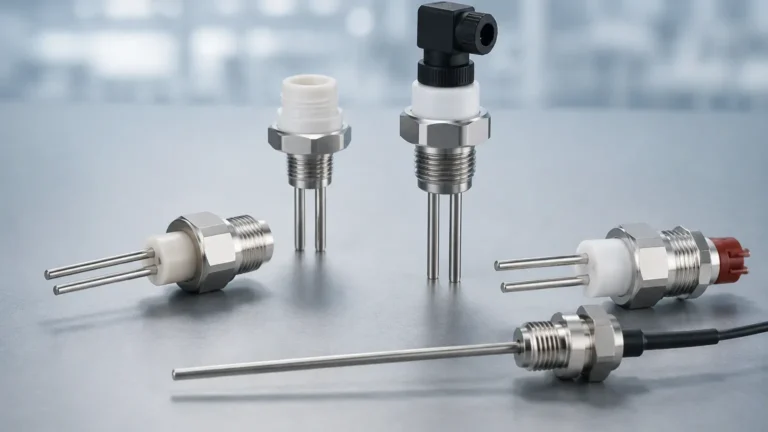
Tank Level Monitoring
Tank Level Monitoring
In the landscape of industrial automation, tank level monitoring serves as a critical pillar for operational safety, inventory management, and process efficiency. Whether managing water treatment facilities, chemical processing plants, or oil and gas storage, the ability to accurately track the volume of liquids or solids within a vessel is paramount. This guide provides a technical overview of the technologies used in modern tank level monitoring, offering engineering insights into selection, installation, and application.
Core Measurement Principles
Before selecting a system for tank level monitoring, it is essential to understand the physics behind the various measurement technologies. Industrial level instruments generally fall into two categories: contact and non-contact measurement.
Radar Level Measurement
Radar technology is widely considered the gold standard for high-accuracy tank level monitoring. It operates on the principle of Time Domain Reflectometry (TDR) or Frequency Modulated Continuous Wave (FMCW).
* Non-Contact Radar: These sensors emit high-frequency microwave pulses (typically 26 GHz or 80 GHz). The pulses reflect off the surface of the medium and return to the sensor. The time taken for the signal to return is proportional to the distance. High-frequency 80 GHz radar is particularly effective for narrow tanks or vessels with internal obstructions because it offers a narrower beam angle.
* Guided Wave Radar (GWR): This is a contact-based radar technology where the microwave pulse travels along a probe (rod or cable). GWR is highly effective for liquids with low dielectric constants or applications involving heavy foam and turbulence, as the probe guides the signal directly to the surface.
Ultrasonic Level Measurement
Ultrasonic sensors utilize sound waves to determine the level. The transducer emits an ultrasonic pulse that reflects off the material surface. The sensor calculates the distance based on the speed of sound. While cost-effective, ultrasonic measurement is sensitive to environmental factors. Since the speed of sound changes with air temperature, integrated temperature compensation is required. Furthermore, ultrasonic waves cannot travel through a vacuum and are easily scattered by heavy dust or foam.
Hydrostatic Pressure Measurement
Hydrostatic level monitoring is based on the principle that the pressure at the bottom of a tank is directly proportional to the height of the liquid column above it. The formula used is $P = \rho \cdot g \cdot h$, where $P$ is pressure, $\rho$ is the density of the liquid, $g$ is gravity, and $h$ is the height. This method is highly reliable for vented tanks. In pressurized vessels, a differential pressure (DP) transmitter is used to compensate for the overhead gas pressure.
Magnetic Level Gauges
Magnetic level gauges are mechanical systems that provide both local visual indication and remote electronic monitoring. A float containing a permanent magnet moves with the liquid level inside a bypass chamber. This magnet flips external flags for visual reading and can actuate a reed-chain transmitter for continuous electronic output. These are ideal for high-pressure, high-temperature, or corrosive environments where electronic sensors might fail.
Selecting the Right Technology for Tank Level Monitoring
Choosing the correct instrument requires an analysis of the medium's properties, the vessel's geometry, and the environmental conditions. The following table provides a comparison of common technologies used in industrial applications.
| Technology | Accuracy | Media Suitability | Max Temperature | Pressure Capability | Cost |
| :— | :— | :— | :— | :— | :— |
| 80GHz Radar | ±1 mm | Liquids/Solids | Up to 250°C | Up to 40 Bar | High |
| Guided Wave Radar | ±2 mm | Liquids/Slurries | Up to 400°C | Up to 400 Bar | Medium-High |
| Ultrasonic | ±0.25% of range | Clean Liquids | Up to 80°C | Up to 3 Bar | Low-Medium |
| Hydrostatic | ±0.1% to 0.5% | Liquids | Up to 100°C | N/A (Submersible) | Low-Medium |
| Magnetic Gauge | ±5 mm (Visual) | Hazardous Liquids | Up to 450°C | Up to 320 Bar | Medium |
For a detailed look at specific product specifications and to compare models for your project, you can review product options and application support on our Main Page.
Installation Considerations and Best Practices
Proper installation is as critical as selecting the right technology. Even the most advanced sensor will provide inaccurate data if mounted incorrectly.
1. The Dead Zone (Blocking Distance)
Every non-contact sensor (radar and ultrasonic) has a "dead zone" or "blocking distance" directly below the sensor face. In this zone, the device cannot accurately process the return signal. When designing tank level monitoring systems, ensure the maximum fill level of the tank does not enter this dead zone. For example, if an ultrasonic sensor has a 0.3m dead zone, the mounting nozzle should be tall enough to keep the sensor face at least 300mm above the highest possible liquid level.
2. Mounting Position and Nozzle Geometry
Sensors should generally not be mounted in the exact center of a tank, especially in cylindrical vessels, as this can lead to multiple echoes and signal interference. Conversely, mounting too close to the tank wall can cause the signal to reflect off the wall or weld seams. A common rule of thumb is to mount the sensor at 1/4 to 1/6 of the tank diameter from the wall. Additionally, the mounting nozzle should be as short and wide as possible to prevent the signal from "ringing" inside the nozzle.
3. Avoiding Obstructions
Internal structures such as agitators, heating coils, ladders, and inflow pipes can create false echoes. While modern radar sensors include "false echo suppression" software to ignore these reflections, it is best practice to provide a clear line of sight to the material surface. If an agitator is present, the sensor should be positioned where the blades do not cross the signal beam, or a guided wave radar should be used.
Common Risks and Limitations
While modern tank level monitoring systems are robust, certain conditions present significant challenges:
* Foam: Heavy, thick foam can absorb ultrasonic and radar signals, leading to signal loss. Guided wave radar or hydrostatic transmitters are often preferred in foaming applications.
* Turbulence: Rapidly moving surfaces can scatter non-contact signals. This can be mitigated by using a stilling well (a pipe that surrounds the sensor probe to provide a calm surface) or by increasing the damping/averaging time in the sensor settings.
* Vapor and Condensation: In chemical tanks, aggressive vapors can attenuate ultrasonic signals. Condensation on the sensor face can also cause "ghost" readings. Radar sensors with PTFE-encapsulated antennas are designed to shed condensation and resist chemical attack.
* Vacuum Conditions: Ultrasonic sensors require a medium (air/gas) to transmit sound. In a vacuum, they will not function. Radar, which uses electromagnetic waves, operates perfectly in a vacuum.

Industrial Application Scenarios
Water and Wastewater Treatment
In this sector, tank level monitoring is used for chemical storage (alum, polymer, bleach) and open-channel flow. Ultrasonic sensors are the standard due to their cost-effectiveness and non-contact nature, though radar is increasingly used for lift stations where foam and steam are common.
Chemical Processing
Chemical tanks often contain corrosive or volatile substances. Here, PTFE-coated radar sensors or magnetic level gauges are preferred. These materials ensure that the monitoring equipment does not degrade and that the process remains sealed from the environment.
Oil and Gas
For large-scale storage tanks, accuracy is vital for custody transfer. High-precision radar systems (accuracy of ±1mm) are used to monitor inventory levels. In high-pressure separators, guided wave radar or magnetic level gauges are used to manage the interface between oil and water.
Frequently Asked Questions (FAQ)
Q: Can I use one sensor for both liquid and solid level monitoring?
A: Some high-end 80GHz radar sensors are versatile enough for both, but generally, solids require sensors with higher power and specific algorithms to handle the uneven surfaces and dust associated with bulk materials.
Q: How do I monitor the level in a tank with a liner?
A: If the liner is non-metallic (like plastic or glass), radar can often see right through it. If the tank is fully metal-lined, non-contact radar or ultrasonic sensors mounted at the top are the best choice, provided the liner does not interfere with the mounting nozzle.
Q: What is the maintenance requirement for these sensors?
A: Non-contact sensors are virtually maintenance-free as they have no moving parts. However, they should be checked periodically for buildup on the sensor face. Contact-based systems like magnetic floats or hydrostatic sensors may require periodic cleaning to prevent sticking or clogging.
Conclusion
Effective tank level monitoring is a combination of choosing the right physics for the medium and adhering to rigorous installation standards. By understanding the strengths and limitations of radar, ultrasonic, hydrostatic, and magnetic technologies, engineers can implement solutions that enhance safety and optimize industrial processes. Welk provides a comprehensive range of industrial level measurement instruments tailored to these diverse needs, offering both standard and OEM/ODM customized solutions for global applications. For more technical documentation and product selection guides, visit the Main Page.