Vector Mckinney Tx
Vector Mckinney Tx
In the industrial landscape of North Texas, particularly within the growing technical hub of McKinney, the integration of precise automation and measurement solutions is critical for operational efficiency. Engineering firms and process facilities in the region often look toward established entities like Vector—a name synonymous with instrumentation distribution and support—to bridge the gap between high-end manufacturing and local application needs. For professionals navigating the complexities of fluid management, understanding the underlying technologies of level measurement is the first step toward optimizing a facility's performance.
Whether you are designing a new water treatment plant or upgrading a chemical processing line, the choice of level instrumentation impacts safety, cost, and accuracy. This guide examines the core principles of industrial level measurement, providing the technical foundation necessary for engineers working with regional partners in McKinney, TX, and beyond.
Principles of Level Measurement Technology
Before selecting a device, it is essential to understand the physics governing different measurement methods. Industrial level sensors generally fall into two categories: contact and non-contact.
Radar Level Measurement (Non-Contact)
Radar level meters utilize electromagnetic waves, typically in the microwave spectrum. There are two primary types: Pulse Radar and Frequency Modulated Continuous Wave (FMCW) Radar.
* Pulse Radar: The sensor emits a short microwave pulse that travels to the product surface, reflects, and returns to the antenna. The distance is calculated based on the time-of-flight.
* FMCW Radar: The sensor emits a continuous signal with a constantly changing frequency. The difference between the emitted and received frequency at any given moment is proportional to the distance. Modern 80GHz radar systems offer high precision and narrow beam angles, making them ideal for narrow tanks with internal obstructions.
Ultrasonic Level Measurement (Non-Contact)
Ultrasonic sensors use sound waves rather than electromagnetic waves. A piezoelectric crystal inside the transducer converts electrical energy into mechanical sound pulses. These pulses reflect off the surface of the medium. Because the speed of sound is affected by air temperature, these sensors usually include a temperature probe to compensate for changes in the medium's vapor space.
Hydrostatic Level Measurement (Contact)
This method relies on the principle that the pressure at a specific depth in a liquid is proportional to the height of the liquid column above it. The formula used is $P = \rho \times g \times h$, where $P$ is pressure, $\rho$ is the density of the liquid, $g$ is gravity, and $h$ is the height. A pressure transmitter at the bottom of the tank (or submerged) measures this head pressure and converts it to a level reading.
Magnetic Level Gauges (Contact)
Magnetic level gauges consist of a bypass chamber attached to the side of a vessel. Inside the chamber is a float containing a permanent magnet. As the liquid level rises and falls, the float moves accordingly. Outside the chamber, a visual indicator (usually magnetic flags) or a transmitter tracks the float's position through magnetic coupling. This provides a clear visual reference without the risks associated with glass sight gauges.
Technical Comparison and Selection Table
Selecting the right technology requires balancing process conditions with budget and accuracy requirements. For those working with automation specialists like Vector in McKinney, TX, the following table serves as a baseline for technology evaluation.
| Technology | Typical Accuracy | Max Range (Approx.) | Best Applications | Limitations |
| :— | :— | :— | :— | :— |
| 80GHz Radar | ±1 mm (0.04 in) | 120 m (393 ft) | Corrosive liquids, solids, narrow tanks | High initial cost |
| Ultrasonic | ±0.25% of range | 15 m (49 ft) | Water treatment, open channels | Affected by foam, dust, and vacuum |
| Hydrostatic | ±0.1% to 0.5% | 200 m (656 ft) | Deep wells, vented tanks, oils | Sensitive to density changes |
| Magnetic Gauge | ±5 mm (0.2 in) | 6 m (20 ft) | High pressure/temp, visual monitoring | Requires bypass piping; moving parts |
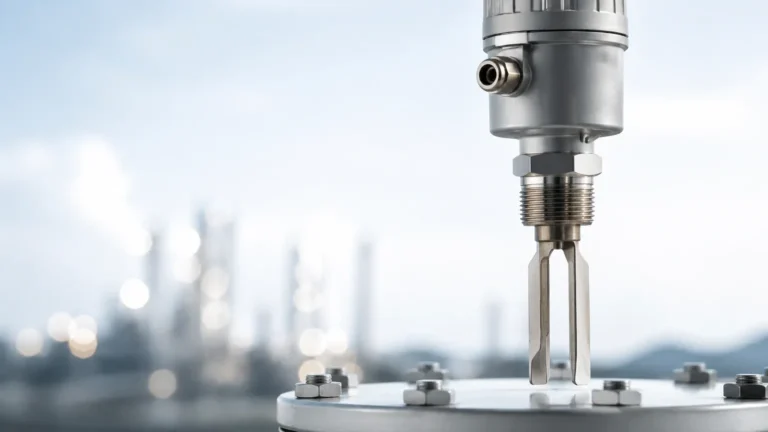
| Level Switch | N/A (Point level) | N/A | Overfill protection, pump control | No continuous measurement |
Application Considerations for the McKinney Industrial Sector
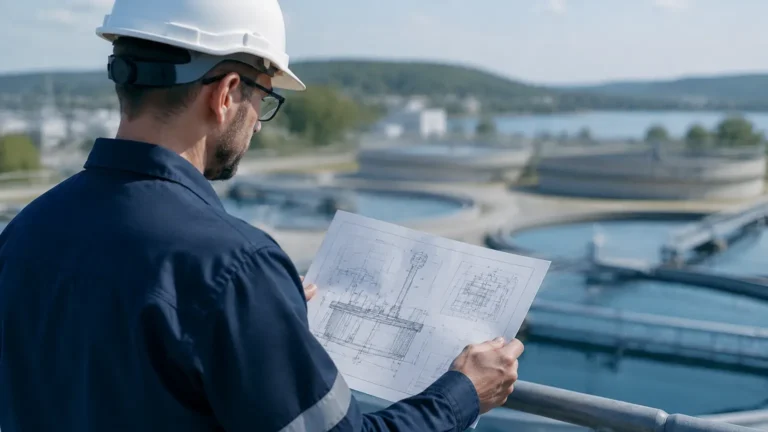
McKinney, TX, hosts a variety of industries, from semiconductor manufacturing support to municipal water management. Each environment presents unique challenges.
Water and Wastewater Management
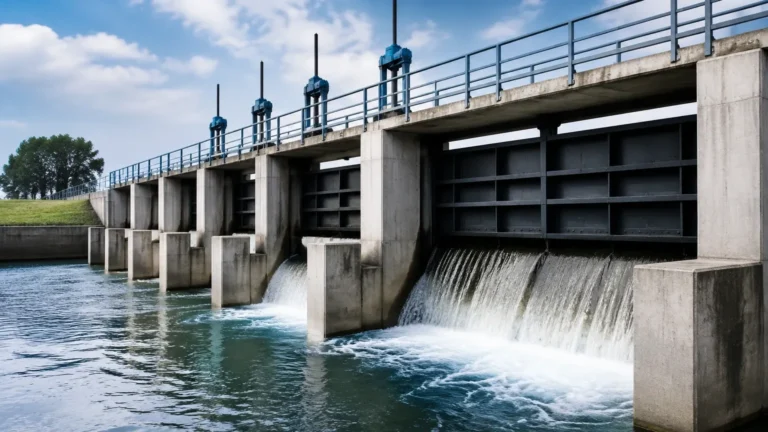
In municipal applications, ultrasonic sensors are frequently used due to their cost-effectiveness. However, in applications involving heavy steam or turbulence, radar is often preferred. For deep well monitoring or lift stations, hydrostatic transmitters provide a rugged solution that can withstand submersion.
Chemical and Petrochemical Processing
For volatile or corrosive chemicals, non-contact radar is the gold standard. Since the sensor does not touch the medium, maintenance is minimized, and the risk of sensor degradation is eliminated. In high-pressure environments, magnetic level gauges offer a robust mechanical backup that does not require power for visual verification.
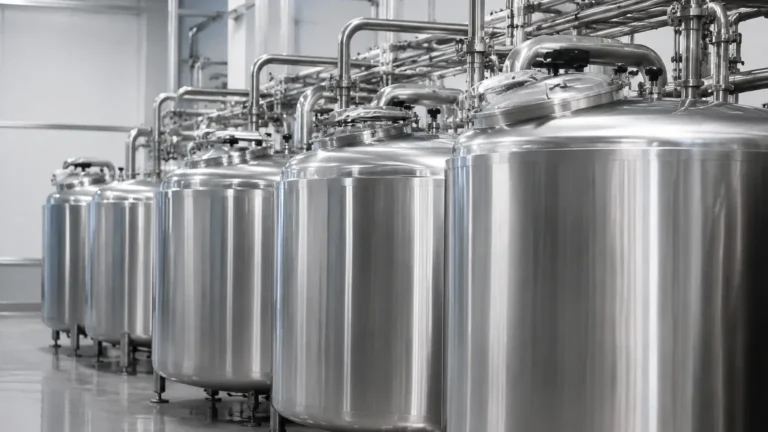
Food and Beverage
Sanitary applications require instruments with specific surface finishes (Ra < 0.8 µm) and process connections (like Tri-Clamp). Both radar and hydrostatic sensors are available in hygienic designs to meet these stringent requirements.
For a comprehensive look at available hardware and technical specifications, engineers can Review product options and application support to ensure their chosen instrumentation aligns with global standards.
Installation Best Practices
Proper installation is as critical as selecting the right technology. Even the most advanced radar meter will fail if placed incorrectly.
1. Avoid the "Dead Zone": Every sensor has a minimum distance it cannot measure (often called the blanking distance). Ensure the highest liquid level remains below this zone.
2. Nozzle Geometry: For radar and ultrasonic sensors, the nozzle should be as short and wide as possible to prevent signal interference from the nozzle walls.
3. Obstruction Clearance: Ensure the signal beam does not hit ladders, agitators, or inflow streams. For radar, a clear "path" of at least 10 degrees is recommended.
4. Mounting Position: Sensors should generally be mounted at 1/2 to 1/3 of the tank radius from the wall. Mounting too close to the wall causes interference, while mounting in the exact center can lead to multiple reflections in domed-roof tanks.
5. Hydrostatic Venting: Submersible pressure transmitters must have a vented cable to compensate for atmospheric pressure changes. If the vent tube is blocked or saturated with moisture, the reading will drift.

Limitations and Common Challenges
Understanding where a technology fails is essential for risk management.
* Foam: Heavy, thick foam can absorb ultrasonic and radar signals, leading to a "loss of echo." In these cases, a contact method like a magnetic level gauge or a guided wave radar (GWR) may be necessary.
* Vacuum/High Pressure: Ultrasonic waves require a medium (air/gas) to travel. In a vacuum, they cannot function. Radar, being electromagnetic, works perfectly in a vacuum but may require specialized sealing for high-pressure vessels.
* Density Variations: Hydrostatic sensors measure mass/pressure. If the liquid density changes (e.g., due to temperature swings or mixing of different fluids), the level reading will be inaccurate unless the transmitter is recalibrated or compensated.
* Dielectric Constant (Dk): Radar performance depends on the Dk of the material. Materials with very low Dk (like certain oils or liquefied gases) reflect less energy, requiring high-sensitivity antennas or guided wave probes.
Frequently Asked Questions (FAQ)
Q: Can I use an ultrasonic sensor for solids measurement?
A: While possible for some powders, solids often create angled surfaces that reflect sound waves away from the sensor. Radar, particularly 80GHz high-frequency radar, is significantly more reliable for solids and aggregates.
Q: How often do level meters need calibration?
A: This depends on the technology and the criticality of the process. Hydrostatic sensors may drift over 12–24 months. Radar and ultrasonic sensors are generally more stable, but a yearly verification is recommended for ISO-regulated environments.
Q: Is it better to buy through a local distributor in McKinney, TX?
A: Working with regional entities like Vector in McKinney, TX, provides the advantage of local technical support, onsite troubleshooting, and faster shipping for common parts. However, always ensure the manufacturer provides comprehensive documentation and global certifications.
Q: What is the difference between a level transmitter and a level switch?
A: A transmitter provides continuous measurement (e.g., 4-20mA or Modbus signal representing 0-100% level). A switch provides a discrete "on/off" signal at a specific point, typically used for high-level alarms or pump control.
Conclusion
Navigating level measurement requirements in an industrial setting requires a blend of theoretical knowledge and practical application. For professionals in McKinney, TX, leveraging the expertise of local partners while utilizing high-performance instrumentation ensures long-term reliability. By understanding the physics of radar, ultrasonic, and hydrostatic measurement, and adhering to strict installation guidelines, facilities can achieve the precision necessary for modern automated processes. For those seeking to explore specific hardware solutions, the Main Page of leading manufacturers offers a wealth of technical data and selection tools to refine your instrumentation strategy.