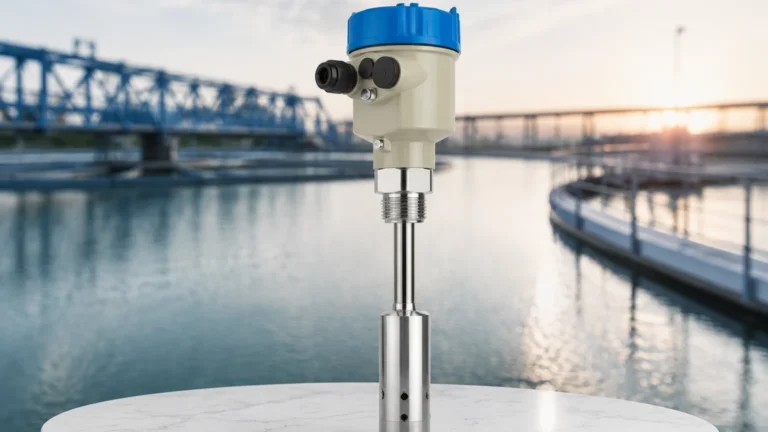
Vegapuls 69
Vegapuls 69
In the field of industrial automation, measuring the level of bulk solids presents a unique set of challenges compared to liquid level measurement. Factors such as dust generation, noise during filling, uneven material surfaces (cones and craters), and the physical properties of the media require specialized instrumentation. The vegapuls 69 is a radar level sensor specifically engineered to address these complexities in bulk solid applications. By utilizing high-frequency radar technology, it provides a reliable solution for monitoring inventory in silos, bunkers, and stockpiles.
Selecting the right level measurement technology is critical for operational efficiency and safety. While several technologies exist, including ultrasonic and guided wave radar, non-contacting radar has become the preferred choice for demanding solids applications. This guide examines the technical principles, application suitability, and installation considerations for the vegapuls 69 and similar high-frequency radar sensors.
Understanding 80 GHz Radar Technology for Bulk Solids
The fundamental principle behind the vegapuls 69 is Frequency Modulated Continuous Wave (FMCW) radar technology operating at a frequency of 80 GHz. To understand why this frequency is significant, it is necessary to look at the physics of microwave propagation and reflection.
The FMCW Principle
Unlike pulse radar, which measures the time-of-flight of a single microwave pulse, FMCW radar emits a continuous signal with a constantly changing frequency. The sensor transmits a signal that sweeps across a specific bandwidth. When the signal reflects off the material surface and returns to the sensor, there is a frequency difference between the transmitted and received signals. This frequency shift is directly proportional to the distance to the material. By using Fast Fourier Transform (FFT) signal processing, the sensor can accurately distinguish the true level from background noise or internal tank obstructions.
Advantages of 80 GHz Frequency
The shift from traditional 26 GHz radar to 80 GHz has revolutionized solids measurement. The higher frequency results in a much shorter wavelength, which offers two primary benefits:
1. Narrow Beam Angle: An 80 GHz sensor can achieve a beam angle as narrow as 3 degrees with a relatively small antenna. In contrast, a 26 GHz sensor would require a much larger antenna to achieve the same focus. A narrow beam is essential for tall, narrow silos where internal structures like ladders, braces, or buildup on the walls could cause false echoes.
2. Better Reflection from Solids: Bulk solids often have low dielectric constants and irregular surfaces that scatter radar signals. The shorter wavelength of the 80 GHz signal reflects more effectively off these uneven surfaces, providing a stronger return signal even in dusty environments or when the material has a steep angle of repose.
Key Features and Specifications of the Vegapuls 69
The vegapuls 69 is designed for versatile use across various industries. Its technical specifications reflect the requirements of heavy industrial environments where durability and precision are paramount.
Measurement Range and Accuracy
The sensor is capable of measuring distances up to 120 meters (approx. 394 feet), making it suitable for the largest grain elevators and mining silos. Despite this long range, it maintains a high degree of accuracy, typically within +/- 5 mm. This precision allows for tighter inventory control and prevents overfilling or stockouts.
Environmental Resistance
Industrial silos are often harsh environments. The vegapuls 69 is built to withstand:
* Temperature: Operating ranges typically span from -40°C to +200°C, depending on the flange and seal configuration.
* Pressure: While most solids silos are atmospheric, the sensor can handle process pressures from -1 to +20 bar (-14.5 to +290 psi).
* Dust and Build-up: The high-frequency signal can penetrate heavy dust clouds generated during pneumatic filling. Additionally, many versions feature a plastic horn antenna or a PTFE dropper antenna that resists material adhesion.
Signal Processing and Integration
The device incorporates advanced software algorithms to filter out "noise" from agitators or falling material during filling. It typically supports standard industrial outputs, including 4…20 mA/HART, Profibus PA, and Foundation Fieldbus, ensuring compatibility with existing PLC and SCADA systems. For those seeking comprehensive Main Page resources on radar integration, understanding these communication protocols is vital for successful deployment.
Application Areas and Industrial Use Cases
The versatility of the vegapuls 69 makes it applicable across a wide spectrum of industries. Any process involving the storage or processing of dry bulk materials can benefit from its high-frequency radar technology.
Cement and Building Materials
In the cement industry, silos containing raw meal, clinker, or finished cement are notoriously dusty. The 80 GHz technology ensures that the sensor can "see" through the dust to provide a continuous level reading. It is also used in stone crushers and sand bunkers where vibration and mechanical impact would damage other types of sensors.
Food and Grain Processing
Grain silos are often very tall and narrow. The narrow beam of the vegapuls 69 prevents interference from the silo walls. Furthermore, stainless steel versions with hygienic fittings are available for flour, sugar, or plastic pellet storage, where contamination must be avoided.
Mining and Minerals
For ore pass monitoring or large outdoor stockpiles, the 120-meter range is a critical feature. The sensor can be mounted high above the material, protecting it from the physical movement of heavy machinery while still providing accurate data for logistics management.
Selection Criteria: Radar vs. Other Level Technologies
When designing a level measurement system, engineers must choose between several competing technologies. The following table compares 80 GHz radar (like the vegapuls 69) with other common methods used in solids.
| Technology | Best Suited For | Limitations | Maintenance Level |
| :— | :— | :— | :— |
| 80 GHz Radar | Tall silos, heavy dust, low dielectric solids. | Higher initial cost than ultrasonic. | Very Low |
| Ultrasonic | Short ranges, stable environments, liquids. | Sensitive to dust, temperature shifts, and noise. | Moderate |
| Guided Wave Radar | Small silos, materials with very low dielectrics. | Contacting; subject to mechanical pull forces. | Moderate |
| Laser Level | Narrow openings, very long distances. | Cannot penetrate heavy dust or steam. | High (lens cleaning) |
Why Choose Non-Contacting Radar?
Non-contacting radar is generally preferred because it has no moving parts and does not touch the media. This eliminates the risk of probe breakage due to the heavy downward pull of settling solids (a common issue with guided wave radar) and reduces the maintenance required compared to ultrasonic sensors, which often struggle with signal attenuation in dusty air.

Installation Best Practices for Radar Level Sensors
Proper installation is just as important as selecting the right sensor. Even a high-performance device like the vegapuls 69 can fail if not positioned correctly.
1. Avoiding Internal Obstructions
The radar beam should have a clear path to the material surface. Even though 80 GHz has a narrow beam, it should be mounted away from ladders, pipes, or reinforcing struts. If an obstruction is unavoidable, the sensor's "false signal suppression" feature must be used to map out the static echo during commissioning.
2. Positioning Relative to the Inlet
Never mount the sensor directly in or above the filling stream. The falling material will reflect the radar signal, causing the sensor to report a "full" state prematurely. The ideal position is usually 1/3 of the diameter from the silo wall, though this varies based on the silo geometry.
3. Accounting for the Angle of Repose
Bulk solids do not sit flat; they form a cone when filling and a crater when emptying. The radar signal should ideally hit the slope of the material at a 90-degree angle for the best return. The vegapuls 69 often includes a swivelling holder or an adjustable flange, allowing the technician to aim the sensor toward the center of the material cone to optimize signal strength.
4. Nozzle Geometry
The antenna should ideally extend slightly below the mounting nozzle to prevent "ringing" or internal reflections within the nozzle itself. If a long nozzle is required, a sensor with a specialized antenna extension should be used.
Common Challenges and Troubleshooting in Solids Measurement
Despite the advanced technology, certain conditions can still interfere with radar performance. Understanding these challenges allows for better system design.
* Extremely Low Dielectric Constants: Materials like plastic pellets or very dry wood chips have low reflectivity (dielectric constant < 1.5). In these cases, the signal may pass through the material and reflect off the bottom of the silo. Advanced software settings or a larger antenna may be required to capture the faint surface reflection.
* Signal Attenuation from Foam or Steam: While radar is generally unaffected by dust, extremely dense steam or chemical vapors can cause signal attenuation. In such specialized cases, consulting with a manufacturer like Welk can help identify if a specific radar frequency or a different technology, such as a hydrostatic transmitter, is more appropriate for the environment.
* Mechanical Vibration: If the sensor is mounted on a vibrating structure (e.g., near a shaker or heavy motor), it can cause electronic noise. Using rubber dampeners and ensuring the mounting bracket is rigid can mitigate this.
Frequently Asked Questions (FAQ)
Q: Can the vegapuls 69 measure through a plastic tank roof?
A: Yes, because microwaves can penetrate non-conductive materials like polyethylene or fiberglass, the sensor can often measure the level from outside the tank, provided the roof is not too thick or reinforced with metal.
Q: What is the "dead zone" or blocking distance?
A: The dead zone is the area immediately below the sensor where it cannot accurately measure. For the vegapuls 69, this is typically very small (often 0 mm from the antenna end), but it is important to check the specific model's data sheet to ensure the material does not rise into this zone.
Q: Does the sensor require periodic recalibration?
A: No. Radar sensors are solid-state devices that do not suffer from mechanical wear or drift. Once commissioned, they typically do not require recalibration unless the process conditions or the material being measured change significantly.
Q: Is it suitable for liquid applications?
A: While the vegapuls 69 is optimized for solids (with software tailored for the signal characteristics of bulk materials), 80 GHz radar is also excellent for liquids. However, for dedicated liquid applications, other models in the same family might offer more cost-effective or specialized features for turbulent surfaces.
Conclusion
The vegapuls 69 represents the pinnacle of current radar level measurement for bulk solids. Its 80 GHz FMCW technology provides the focus, range, and reliability needed for modern industrial processes. By understanding the principles of radar propagation and following rigorous installation standards, engineers can ensure accurate inventory data even in the most challenging environments. For those exploring a wide range of industrial level measurement solutions—including radar, ultrasonic, and hydrostatic options—visiting professional resources and manufacturers like Welk provides the necessary context to make an informed technical decision.