Water Sampling Instruments
Water Sampling Instruments
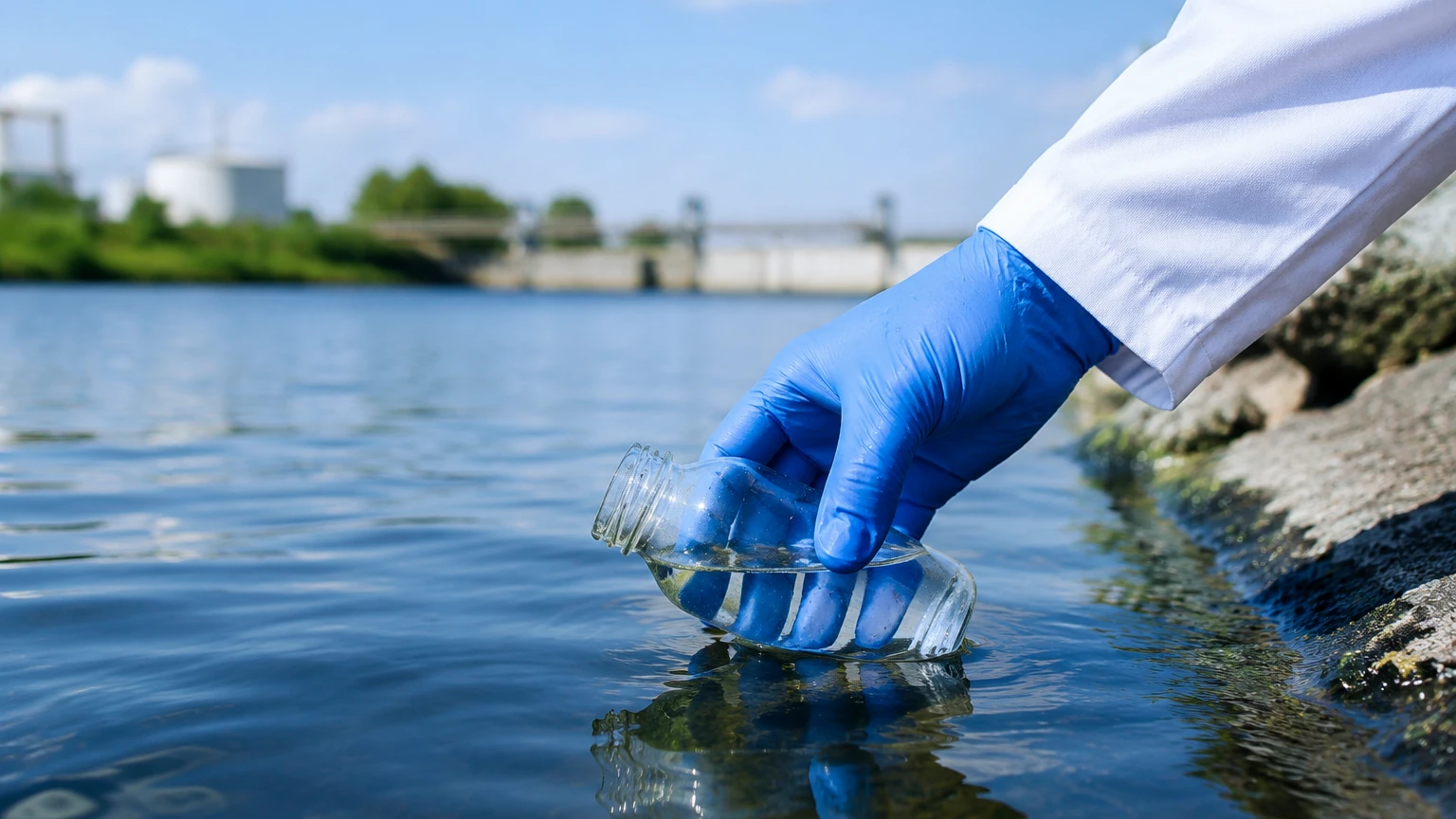
In industrial water management and environmental monitoring, the accuracy of analytical data is only as reliable as the sample collected. Water sampling instruments represent a critical category of hardware used to extract representative portions of a liquid stream or body for chemical, biological, or physical analysis. Whether for regulatory compliance in wastewater treatment or process optimization in chemical manufacturing, the integration of these instruments with precise level measurement technology is essential for ensuring that samples are taken at the correct time, depth, and volume.
To achieve a high degree of representativeness, engineers must understand the synergy between the sampling hardware and the level sensors that trigger them. For instance, flow-proportional sampling requires real-time data from level meters to calculate discharge rates, ensuring the sample reflects the true composition of the water over a specific period.
Measurement Principles Supporting Water Sampling
Before selecting water sampling instruments, it is vital to understand the measurement principles of the level sensors that often control them. In B2B industrial environments, automated sampling is frequently triggered by level or flow thresholds. Welk provides several core technologies that serve as the foundation for these automated systems.
Ultrasonic Level Measurement
Ultrasonic sensors operate on the "time-of-flight" principle. The sensor emits an ultrasonic pulse that travels through the air, reflects off the liquid surface, and returns to the transducer. By measuring the time interval ($t$) and knowing the speed of sound ($c$), the distance ($d$) is calculated as $d = (c \times t) / 2$. In water sampling applications, ultrasonic sensors are preferred for non-contact monitoring in open channels, such as flumes or weirs, where they provide the data necessary to trigger flow-proportional sampling.
Hydrostatic Level Transmission
Hydrostatic transmitters measure the pressure exerted by a liquid column. The principle is based on the formula $P = \rho gh$, where $P$ is pressure, $\rho$ is the density of the liquid, $g$ is gravity, and $h$ is the height of the liquid. This technology is highly effective for deep-well sampling or tank monitoring, where the sensor is submerged to provide a continuous reading of the liquid head, ensuring the sampling intake remains at the appropriate depth.
Radar Level Measurement
Radar level meters use high-frequency microwave pulses. Similar to ultrasonic technology, they measure the time it takes for the pulse to reflect off the surface. However, radar is unaffected by temperature fluctuations, steam, or dust, making it the ideal choice for sampling in volatile chemical environments or high-temperature industrial effluents.
Types of Water Sampling Instruments
Water sampling instruments are generally categorized by their operation mode and the type of sample they produce. Choosing the right type depends on the specific monitoring goals of the facility.
1. Manual Samplers
Manual samplers are basic tools, such as bailers, dip bottles, or Van Dorn samplers. These are typically used for spot sampling where the frequency of testing is low. While cost-effective, they are prone to human error and do not provide a continuous picture of water quality.
2. Automatic Samplers (Autosamplers)
Automatic water sampling instruments are programmable devices that collect samples at set intervals or in response to external triggers (such as a signal from a level meter). These are further divided into:
* Sequential Samplers: Collect individual samples into separate bottles over time, allowing for the analysis of changes in water quality.
* Composite Samplers: Collect multiple small samples and combine them into a single container to provide an average representation of the water over a 24-hour period.
3. Passive Samplers
These instruments remain in the water for extended periods (days or weeks) and collect analytes through diffusion. They are often used for detecting trace organic pollutants in environmental monitoring.
Selection Criteria for Industrial Applications
Selecting the appropriate combination of water sampling instruments and level monitoring hardware requires a detailed evaluation of the application environment. The following table provides a comparison of key factors for common configurations.
| Feature | Ultrasonic + Autosampler | Hydrostatic + Manual Port | Radar + Automated System |
| :— | :— | :— | :— |
| Primary Use Case | Open channel wastewater | Deep tanks/wells | Aggressive chemicals |
| Contact Mode | Non-contact | Submerged (Contact) | Non-contact |
| Accuracy | High (±2mm to 5mm) | High (0.1% to 0.5% FS) | Very High (±1mm) |
| Maintenance | Low (no fouling) | Moderate (sensor cleaning) | Very Low |
| Trigger Method | Flow-proportional | Level-based | Multi-variable trigger |
| Typical Industry | Municipal Water | Oil & Gas | Chemical Processing |
When evaluating these systems, engineers should also consider the material compatibility of the sampling lines and the level sensor housing. For acidic or corrosive liquids, PTFE or PVDF coatings are often required to prevent equipment degradation and sample contamination.
Installation and Engineering Considerations
Proper installation is the most critical factor in the performance of water sampling instruments. Even the most advanced sampler will produce inaccurate data if the installation environment is poorly managed.
1. Intake Placement: The sampling intake should be located in a well-mixed zone to ensure a representative sample. Avoid areas of stagnant water or excessive turbulence that could introduce air bubbles into the sample line.
2. Level Sensor Positioning: When using an ultrasonic or radar sensor to trigger a sampler, the sensor must be mounted perpendicular to the liquid surface. For ultrasonic sensors, ensure there is a clear "dead zone" (the minimum distance between the sensor face and the maximum liquid level) to prevent measurement errors.
3. Suction Head and Lift: Automatic samplers use vacuum or peristaltic pumps to draw water. Engineers must calculate the vertical lift (the distance from the water surface to the sampler). Most industrial samplers are rated for a maximum lift of 6 to 8 meters (approx. 20 to 26 feet).
4. Power Supply: In remote locations, solar-powered systems are common. However, the power draw of the sampler and the continuous monitoring of the level meter must be balanced against the battery capacity.
Limitations and Common Risks
While modern water sampling instruments are highly reliable, they are not without limitations. Understanding these risks helps in designing more robust monitoring programs.
* Cross-Contamination: If the sampling lines are not properly purged between cycles, residues from the previous sample can contaminate the current one. Many automated systems include a "pre-purge" and "post-purge" cycle using air to clear the lines.
* Sample Degradation: Samples containing volatile organic compounds (VOCs) or biological components can degrade quickly. In these cases, refrigerated samplers are necessary to maintain the sample at 4°C (39.2°F) until it can be transported to a laboratory.
* Representative Sampling Challenges: In streams with high suspended solids, the sampler may struggle to capture a proportional amount of solids compared to the liquid phase. Specialized high-velocity intake nozzles may be required.
* Environmental Interference: For level-triggered sampling, foam on the surface of the water can absorb ultrasonic signals, leading to false readings. In such scenarios, radar or hydrostatic sensors are more reliable alternatives.
Frequently Asked Questions (FAQ)
Q: How often should water sampling instruments be calibrated?
A: While the sampler itself may only require annual mechanical checks, the level sensors triggering the system (such as hydrostatic or ultrasonic meters) should be calibrated every 6 to 12 months, depending on the criticality of the process and the presence of fouling agents.
Q: Can I use a single level meter to control multiple samplers?
A: Yes, through a PLC (Programmable Logic Controller) or a multi-channel controller, a single radar or ultrasonic sensor can provide data to trigger multiple sampling points across a facility, ensuring synchronized data collection.
Q: What is the benefit of non-contact level measurement for sampling?
A: Non-contact methods, like those found on the Main Page of industrial instrument catalogs, prevent sensor fouling and chemical attack. This reduces maintenance costs and ensures that the trigger mechanism for the water sampling instruments remains operational even in harsh conditions.
Q: How do I choose between a peristaltic pump and a vacuum pump sampler?
A: Peristaltic pumps are generally easier to maintain and are better for samples where the integrity of suspended solids is important. Vacuum pumps are often faster and can handle higher lift requirements but are more complex to repair.
Conclusion
Effective water monitoring relies on the seamless integration of water sampling instruments and precision level measurement. By understanding the principles of ultrasonic, radar, and hydrostatic sensing, industrial operators can automate their sampling protocols with confidence. For those looking to optimize their process, it is recommended to Review product options and application support to find the specific level measurement technology that best complements their sampling requirements. Whether the goal is regulatory compliance or internal quality control, the right instrumentation ensures that every sample taken is a true reflection of the process stream.