Ultrasonic Level Sensor for Oil Tanks with Wifi
Ultrasonic Level Sensor for Oil Tanks with Wifi: A Technical Guide for Industrial Applications
In the landscape of modern industrial automation, the ability to monitor fluid levels remotely has transitioned from a luxury to a necessity. For facility managers and process engineers, managing oil reserves—whether for power generation, lubrication, or chemical processing—requires high precision and real-time data access. The emergence of the ultrasonic level sensor for oil tanks with wifi has revolutionized this sector, providing a non-contact method to track inventory without the need for complex cabling or manual inspections.
This guide explores the engineering principles behind ultrasonic technology, the specific considerations for oil tank applications, and the practicalities of integrating Wifi-enabled sensors into industrial workflows.
Understanding the Measurement Principle
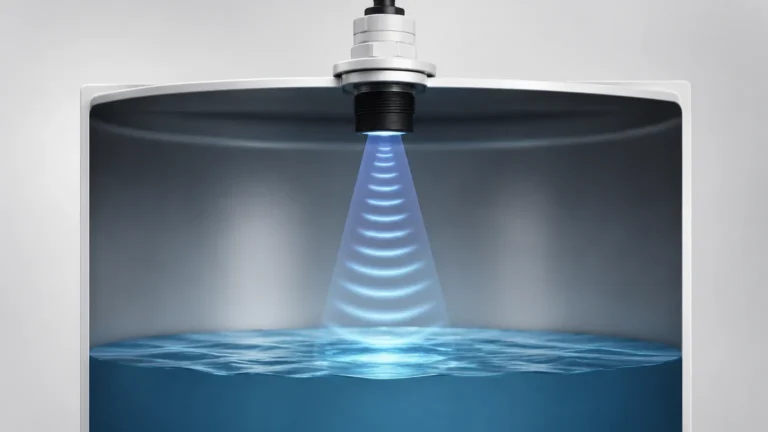
Before selecting a sensor, it is critical to understand the physics of ultrasonic measurement. Ultrasonic sensors operate on the "Time of Flight" (ToF) principle. The device, typically mounted at the top of a tank, emits a high-frequency acoustic pulse (usually between 20 kHz and 80 kHz). This sound wave travels through the air space in the tank, hits the surface of the oil, and reflects back to the sensor's transducer.
The sensor measures the time elapsed between the emission of the pulse and the reception of the echo. Since the speed of sound in air is a known constant (approximately 340 meters per second at 20°C), the distance to the liquid surface can be calculated using the formula:
Distance = (Speed of Sound × Time) / 2
The level of the oil is then determined by subtracting this distance from the total height of the tank. For industrial Ultrasonic Level Meters, internal microprocessors automatically compensate for temperature variations, as the speed of sound changes by approximately 0.6 m/s for every degree Celsius change.
Why Use Ultrasonic Sensors for Oil Tanks?
Oil measurement presents unique challenges. Unlike water, many oils are viscous, non-conductive, and may produce vapors. Ultrasonic technology is often preferred for several reasons:
1. Non-Contact Measurement: Because the sensor never touches the oil, there is no risk of corrosion, clogging of moving parts (as seen in float switches), or contamination of the fluid.
2. Low Maintenance: With no moving parts to wear out, these sensors offer a long service life in harsh industrial environments.
3. Versatility: They can be used for a wide range of oils, from light diesel and hydraulic fluids to heavier lubricating oils, provided the surface does not produce excessive foam.
The Integration of Wifi Connectivity
The addition of Wifi to an ultrasonic level sensor transforms a standalone measurement tool into an active node in the Industrial Internet of Things (IIoT). An ultrasonic level sensor for oil tanks with wifi allows for:
* Remote Monitoring: Access real-time level data from a central control room or a mobile device via a local network or cloud platform.
* Automated Alerts: Configure the system to send emails or SMS notifications when oil levels reach a predefined "low" or "high" threshold.
* Data Logging: Track consumption patterns over time to optimize procurement and detect potential leaks or unauthorized usage.
* Reduced Installation Costs: By eliminating the need for long runs of signal cables (such as 4-20mA loops), Wifi sensors significantly lower the labor and material costs of installation, especially in large tank farms.
Technical Selection Criteria
Choosing the right sensor requires matching the device specifications to the tank's physical geometry and the oil's properties. The following table provides a baseline for selecting an appropriate ultrasonic level meter based on common industrial tank configurations.
Selection Table: Ultrasonic Level Sensors for Oil
| Tank Type | Typical Height | Recommended Frequency | Key Sensor Feature |
| :— | :— | :— | :— |
| Small Day Tanks | 0.5m – 3m | 60 kHz – 80 kHz | High resolution, short dead zone |
| Horizontal Bulk Tanks | 2m – 5m | 40 kHz – 50 kHz | Narrow beam angle (< 10°) to avoid side walls |
| Large Vertical Silos | 5m – 15m | 20 kHz – 30 kHz | High power for long-range signal penetration |
| Underground Storage | 2m – 4m | 50 kHz | IP68 rating and robust Wifi antenna extension |
Beam Angle and Obstructions
One of the most critical factors in ultrasonic measurement is the beam angle. The acoustic pulse spreads out in a cone shape as it travels. If this cone hits a tank wall, a ladder, or a heating coil before reaching the oil surface, it will produce a false echo. For oil tanks, which often contain internal structures, selecting a sensor with a narrow beam angle (typically 5° to 12°) is essential for accuracy.
Installation Considerations for Oil Tanks
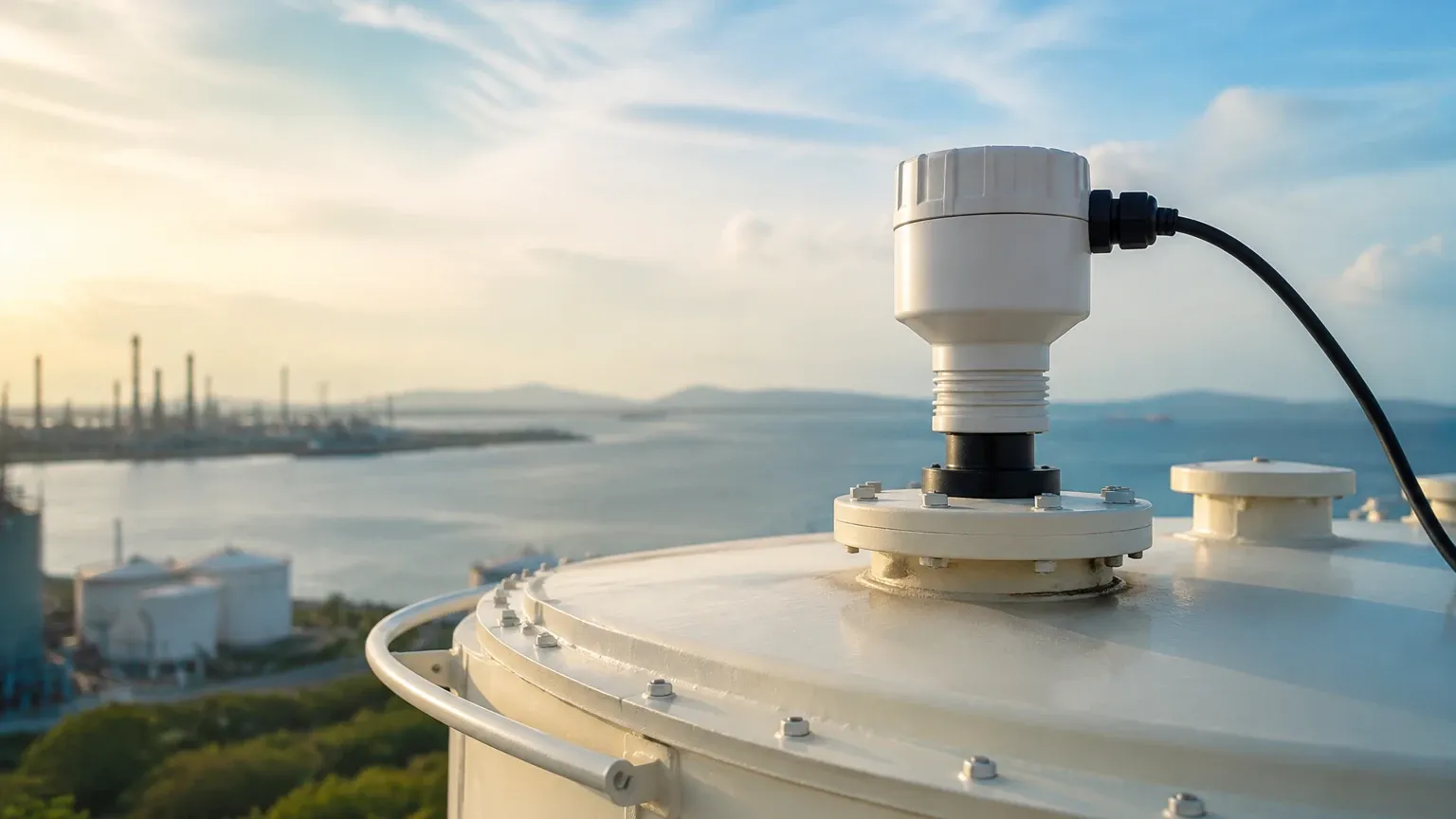
To ensure reliable performance of an ultrasonic level sensor for oil tanks with wifi, several installation best practices must be followed:
1. Avoid the Dead Zone: Every ultrasonic sensor has a "dead zone" (or blocking distance) directly beneath the transducer where it cannot measure. This is usually between 0.2m and 0.5m. The sensor must be mounted high enough so that the oil never enters this zone at maximum fill.
2. Perpendicular Mounting: The transducer face must be perfectly parallel to the oil surface. If the sensor is tilted, the pulse will reflect away from the transducer, resulting in a "Lost Echo" error.
3. Positioning Relative to Inlets: Never install the sensor directly above the oil inlet pipe. The turbulence and splashing during filling will scatter the ultrasonic signal and cause erratic readings.
4. Wifi Signal Strength: In industrial environments, metal tanks can act as Faraday cages, blocking Wifi signals. If the sensor is mounted inside a heavy metal enclosure or underground, an external antenna or a Wifi gateway positioned nearby may be required to ensure stable connectivity.
Limitations and Risks
While ultrasonic sensors are highly effective, they are not universal solutions. Engineers should be aware of the following limitations:
* Surface Foam: If the oil produces heavy foam (common in some high-speed filling processes), the foam can absorb the ultrasonic pulse rather than reflecting it. In these cases, a radar level meter or a pressure transmitter may be more appropriate.
* High Pressure/Vacuum: Ultrasonic pulses rely on air (or gas) as a medium. In high-pressure environments (> 3 bar) or vacuum conditions, the speed of sound changes drastically or the signal cannot propagate at all.
* Vapor Density: Highly volatile oils can create a layer of heavy vapor above the liquid. If the vapor density is non-uniform, it can refract the sound wave, leading to measurement errors. For such applications, professional-grade Ultrasonic Level Meters with advanced signal processing are required to filter out noise.
* Explosion-Proof Requirements: Many oil storage areas are classified as hazardous zones (ATEX/IECEx). It is mandatory to use sensors that are certified as intrinsically safe or explosion-proof when dealing with flammable oils like diesel or light crude.
Maintenance and Troubleshooting
Ultrasonic sensors are generally low-maintenance, but in oil applications, some routine checks are recommended:
* Transducer Cleaning: Over time, oil vapors can condense on the transducer face. While many modern sensors have self-cleaning properties through vibration, a periodic wipe with a non-abrasive cloth ensures signal clarity.
* Wifi Security: Ensure that the sensor’s Wifi connection uses industrial-grade encryption (WPA2/WPA3) to prevent unauthorized access to tank data.
* Firmware Updates: Manufacturers often release updates to improve signal processing algorithms. Regularly checking for updates can enhance the sensor's ability to handle difficult tank geometries.
Frequently Asked Questions (FAQ)
Q: Can I use an ultrasonic sensor for crude oil?
A: Yes, but with caution. Crude oil can be heavy and may produce significant vapors or foam. A high-power sensor with a narrow beam is usually required, and in some cases, radar is a more robust alternative.
Q: How far can the Wifi signal travel in an industrial plant?
A: Standard Wifi typically reaches 30 to 50 meters indoors, but this is significantly reduced by metal walls and machinery. For larger facilities, using a Wifi mesh network or a dedicated IoT gateway is recommended.
Q: What happens if the tank is not vented?
A: If the tank is completely sealed and pressure builds up, the speed of sound will change, leading to inaccurate readings. Most industrial oil tanks are vented; if not, you must use a sensor that can compensate for pressure or choose a different technology.
Q: Is a battery-powered Wifi sensor feasible?
A: Yes, many sensors are battery-powered for ease of installation. However, Wifi is power-intensive. These devices typically use "sleep modes" and only wake up at set intervals (e.g., every 15 minutes) to take a reading and transmit data to conserve battery life.
Conclusion
The implementation of an ultrasonic level sensor for oil tanks with wifi represents a significant step forward in digitalizing inventory management. By understanding the acoustic principles, selecting the correct frequency and beam angle, and adhering to strict installation guidelines, industrial operators can achieve high-accuracy monitoring with minimal infrastructure investment. For those managing multiple tanks across a site, the ability to centralize this data via Wifi provides the visibility needed to improve operational efficiency and safety.
When evaluating options, always prioritize sensors that offer robust temperature compensation and the necessary hazardous area certifications for your specific oil type. For a comprehensive range of industrial-grade solutions, you can Review product options and application support to find the right fit for your facility's requirements.
Download Ultrasonic Level Sensor for Oil Tanks with Wifi as a PDF