Ultrasonic Level Sensor Wifi
Ultrasonic Level Sensor WiFi: Integrating Wireless Connectivity into Industrial Level Measurement
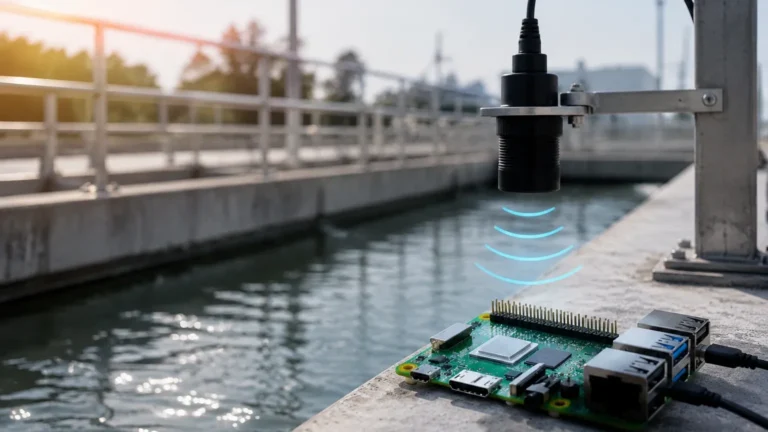
In the landscape of industrial automation and the Internet of Things (IoT), the demand for real-time data acquisition has transformed traditional instrumentation. Among these advancements, the ultrasonic level sensor wifi has emerged as a pivotal tool for facilities seeking to modernize their monitoring systems without the prohibitive costs of extensive cabling. By combining non-contact ultrasonic measurement with wireless data transmission, these devices provide a scalable solution for water treatment, chemical storage, and logistics management.
This guide explores the fundamental principles of ultrasonic technology, the specific advantages of WiFi integration, and the technical considerations required for successful deployment in industrial environments.
1. Measurement Principles of Ultrasonic Technology
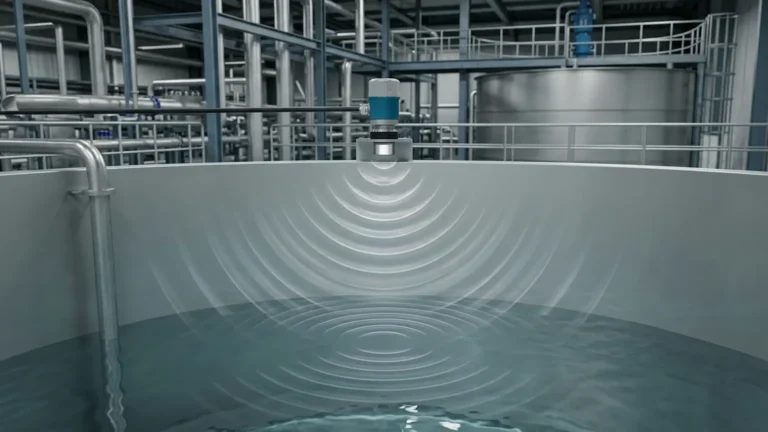
Before evaluating the connectivity options of an ultrasonic level sensor wifi, it is essential to understand how the core measurement is performed. Ultrasonic sensors operate on the Time-of-Flight (ToF) principle.
The Time-of-Flight (ToF) Mechanism
The sensor's transducer emits a high-frequency acoustic pulse, typically in the range of 20 kHz to 200 kHz. This pulse travels through the air, strikes the surface of the medium (liquid or solid), and reflects back toward the sensor. The device measures the time interval between the emission of the pulse and the reception of the echo.
Using the known speed of sound in air, the distance to the surface is calculated using the following formula:
Distance (D) = (Speed of Sound × Time) / 2
The level of the material in the tank is then determined by subtracting this distance from the total height of the vessel.
Factors Influencing Sound Velocity
The speed of sound is not constant; it is primarily affected by air temperature. For every 1°C change in temperature, the speed of sound changes by approximately 0.17%. To maintain accuracy, industrial-grade Ultrasonic Level Meters incorporate internal temperature sensors to provide automatic compensation. Without this feature, a 10°C shift could result in a measurement error of nearly 2%.
2. The Role of WiFi in Industrial Level Monitoring
Traditional level transmitters rely on 4-20mA analog loops or RS485 digital communication. While reliable, these methods require physical wiring, which can be expensive in large-scale plants or remote outdoor locations. An ultrasonic level sensor wifi eliminates the need for signal cables by transmitting data over standard IEEE 802.11 networks.
Key Benefits of WiFi Connectivity
* Rapid Deployment: Sensors can be installed on tanks or silos where running conduit is physically impossible or cost-prohibitive.
* Direct Cloud Integration: Many WiFi-enabled sensors support protocols like MQTT or HTTP, allowing them to push data directly to a central server or cloud platform without needing a dedicated PLC (Programmable Logic Controller).
* Remote Configuration: Engineers can often adjust sensor parameters (such as range, damping, and offset) via a web browser or mobile app, reducing the need for physical access to the sensor head.
3. Technical Selection Criteria
When selecting an ultrasonic level sensor wifi, engineers must balance the requirements of the application with the technical limitations of the technology. The following table provides a comparison of typical specifications for industrial WiFi ultrasonic sensors.
Selection Comparison Table
| Feature | Standard WiFi Sensor | High-Performance Industrial WiFi |
| :— | :— | :— |
| Measurement Range | 0.2m to 5m (0.6ft to 16.4ft) | 0.5m to 15m+ (1.6ft to 49.2ft) |
| Accuracy | ±0.5% of full scale | ±0.2% to ±0.25% of full scale |
| Power Source | Battery-powered (Internal) | DC 12-24V or High-Capacity Lithium |
| WiFi Protocol | 2.4GHz (802.11 b/g/n) | 2.4GHz / 5GHz Dual Band |
| Enclosure Rating | IP65 | IP67 / IP68 (Submersible) |
| Operating Temp | -10°C to +50°C | -40°C to +80°C |
Power Management Considerations
WiFi is a relatively power-hungry protocol compared to LoRaWAN or NB-IoT. In applications where the sensor is battery-powered, the "heartbeat" or transmission frequency is critical. To extend battery life, these sensors often remain in a sleep state, waking up at set intervals (e.g., every 15 minutes) to take a measurement and upload the data. If real-time, continuous monitoring is required, a permanent 24V DC power supply is recommended.
4. Installation Guidelines and Best Practices
Proper physical installation is as important as the network configuration. Even the most advanced ultrasonic level sensor wifi will fail if the acoustic path is obstructed.
1. The Blocking Distance (Dead Zone)
Every ultrasonic sensor has a "dead zone" immediately below the transducer face where it cannot accurately measure. This is the time required for the transducer to stop vibrating from the emission pulse before it can listen for the echo. For a 5-meter (16.4ft) range sensor, the dead zone is typically between 0.2m and 0.3m (0.6ft to 1ft). The sensor must be mounted high enough that the maximum liquid level never enters this zone.
2. Beam Angle and Obstructions
The ultrasonic pulse spreads in a cone shape, typically between 5° and 12°. Any internal tank structures—such as ladders, heating coils, or agitators—that fall within this beam angle will create "false echoes."
* Calculation: At a distance of 5 meters, a 10° beam angle covers a circular area with a diameter of approximately 0.87 meters (2.8ft).
* Solution: Mount the sensor away from walls and internal obstructions. If obstructions are unavoidable, use a sensor with "false echo suppression" software to ignore static reflections.
3. Orientation
The transducer face must be mounted perfectly parallel to the liquid surface. If the sensor is tilted, the pulse will reflect away from the transducer rather than back toward it, resulting in a "Loss of Echo" (LOE) error.
4. WiFi Signal Strength
In industrial environments, metal tanks and concrete walls act as Faraday cages, severely attenuating WiFi signals.
* External Antennas: If the sensor is installed inside a metal enclosure or a basement, an external high-gain antenna should be routed to the outside of the structure.
* Signal Survey: Always perform a site survey using a WiFi analyzer to ensure a minimum signal strength of -70 dBm at the installation point.

5. Limitations and Environmental Constraints
While highly versatile, an ultrasonic level sensor wifi is not suitable for every process. Understanding these limitations prevents costly misapplications.
* Vapor and Steam: Heavy steam or chemical vapors can change the density of the air, altering the speed of sound and causing significant measurement errors. In such cases, radar level meters are often a better choice.
* Surface Foam: Thick, dense foam absorbs the acoustic pulse rather than reflecting it. If the application involves heavy agitation or soap-based liquids, the sensor may report a loss of signal.
* Vacuum or High Pressure: Sound requires a medium (air/gas) to travel. Ultrasonic sensors cannot function in a vacuum. High-pressure environments also significantly alter the acoustic impedance, often requiring specialized transducers.
* Dust: While ultrasonic sensors can handle some dust, extremely dusty environments (like grain silos during filling) can attenuate the signal.
6. Security and Data Protocols
Integrating a sensor into a corporate WiFi network introduces security considerations. Industrial WiFi sensors should support modern encryption standards to protect process data.
* Encryption: Ensure the device supports WPA2-PSK (AES) or WPA3. For enterprise environments, support for 802.1X authentication may be required.
* Data Protocols: Look for sensors that support MQTT with TLS encryption. MQTT is lightweight and ideal for unstable wireless connections, as it includes features like "Last Will and Testament" to notify the system if a sensor goes offline.
* Static vs. DHCP: For small installations, DHCP is sufficient. In larger industrial networks, assigning a static IP address to each sensor simplifies device management and troubleshooting.
7. Frequently Asked Questions (FAQ)
Q: Can I use a WiFi ultrasonic sensor for solids like sand or grain?
A: Yes, but with caveats. Solids do not reflect sound as efficiently as liquids and often have an angle of repose (a sloped surface). You must select a sensor with a higher power output and a narrower beam angle to ensure a reliable return signal.
Q: What happens if the WiFi signal is lost?
A: Most industrial-grade sensors include internal data logging. If the WiFi connection is interrupted, the sensor stores the timestamped measurements in its local memory and uploads them once the connection is restored.
Q: How often does the battery need to be changed?
A: This depends on the transmission frequency. If the sensor sends data once per hour, a high-capacity lithium battery can last 2 to 3 years. If it sends data every minute, the battery may only last a few months.
Q: Is WiFi better than LoRaWAN for level sensing?
A: WiFi offers higher bandwidth and easier integration with existing IT infrastructure. However, LoRaWAN has a much longer range (kilometers vs. meters) and better penetration through walls. WiFi is best for facility-wide monitoring where APs are already present.
Conclusion
The ultrasonic level sensor wifi represents a significant step forward in making industrial data accessible and actionable. By eliminating the complexities of wired infrastructure, these devices allow for rapid scaling of monitoring projects across various sectors. However, successful implementation requires a thorough understanding of acoustic physics, careful consideration of the dead zone and beam angle, and a robust approach to wireless network security.
For engineers looking to implement these solutions, verifying the environmental conditions—specifically the presence of foam, steam, or signal-blocking obstacles—is the first step toward ensuring long-term measurement reliability. When properly configured, WiFi-enabled Ultrasonic Level Meters provide a cost-effective, high-accuracy window into the critical levels of a facility's most important assets.