Amperometric Oxygen Sensor
Amperometric Oxygen Sensor
In industrial process control, the precise measurement of oxygen concentrations—whether in gaseous phases or dissolved in liquids—is critical for safety, quality assurance, and environmental compliance. Among the various electrochemical methods available, the amperometric oxygen sensor remains a cornerstone technology in sectors ranging from wastewater treatment to chemical manufacturing. This guide provides a technical overview of how these sensors function, how to select them for specific industrial environments, and the best practices for their integration into broader automation systems.
Measurement Principles of Amperometric Oxygen Sensors
Amperometric oxygen sensors, often referred to as Clark-type sensors after their inventor Leland Clark, operate on the principle of polarography. The fundamental mechanism involves the electrochemical reduction of oxygen at a sensing electrode, which generates an electrical current directly proportional to the partial pressure of oxygen (pO2) in the medium.
The Electrochemical Reaction
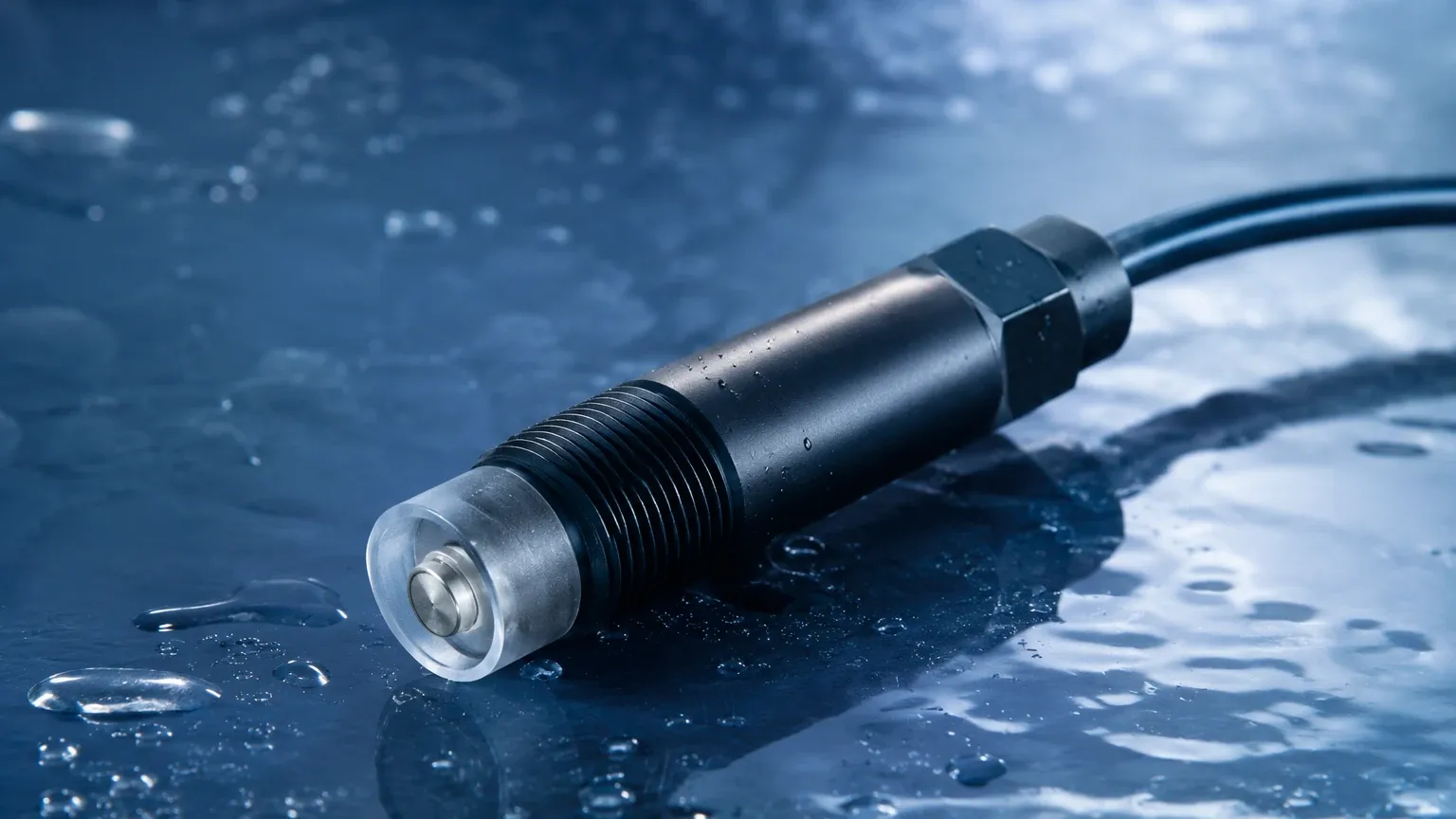
The sensor typically consists of a cathode (the sensing electrode) and an anode (the counter electrode) immersed in an electrolyte solution. These components are separated from the process medium by a thin, semi-permeable membrane. Oxygen molecules diffuse through this membrane and reach the cathode, where a constant polarizing voltage is applied.
At the cathode (usually made of noble metals like gold or platinum), the following reduction reaction occurs:
O₂ + 2H₂O + 4e⁻ → 4OH⁻
Simultaneously, at the anode (typically silver or lead), an oxidation reaction takes place to complete the circuit. The resulting current flow is measured by the transmitter. Because the rate of oxygen reduction is limited by the rate of diffusion through the membrane, the current is linearly proportional to the oxygen concentration outside the sensor.
Diffusion and Flow Dependency
One defining characteristic of the amperometric oxygen sensor is that it consumes oxygen during the measurement process. This creates a "depletion zone" immediately adjacent to the membrane. To ensure accurate readings, the sample must be in motion to constantly replenish the oxygen at the membrane surface. In stagnant liquids, the sensor will report a declining oxygen level that does not reflect the true concentration of the bulk medium.
Key Components and Design
Understanding the physical construction of an amperometric oxygen sensor is essential for maintenance and troubleshooting. Most industrial-grade sensors comprise four primary elements:
1. The Membrane: Usually made of Teflon (PTFE) or Silicone, this membrane allows oxygen to pass while blocking water, ions, and solid contaminants. The thickness of the membrane determines the response time and the sensitivity of the sensor.
2. The Cathode: A gold or platinum wire or disk where the reduction occurs. The surface area and material purity are critical for long-term stability.
3. The Anode: Often a silver/silver chloride (Ag/AgCl) electrode. In some designs, the anode is sacrificial and gradually consumed over years of operation.
4. The Electrolyte: A buffered potassium chloride (KCl) or potassium hydroxide (KOH) solution that facilitates ion transport between the electrodes.
Modern sensors often include an integrated temperature compensator (such as a PT100 or PT1000 thermistor). Since membrane permeability and oxygen solubility are highly temperature-dependent, real-time compensation is required to convert the raw current into a standard concentration unit like mg/L or percentage saturation.
Selection Criteria for Industrial Applications
Choosing the right amperometric oxygen sensor requires an evaluation of the process conditions and the required precision. Engineers must balance the need for fast response times against the durability required for harsh chemical environments.
Practical Selection Table
| Feature | Standard Amperometric | Trace Level Amperometric | High-Pressure Variant |
| :— | :— | :— | :— |
| Measurement Range | 0.05 – 20 mg/L | 1 ppb – 2,000 ppb | 0.05 – 50 mg/L |
| Typical Accuracy | ±1% of full scale | ±0.1 ppb | ±2% of full scale |
| Max Temperature | 50°C (Standard) | 45°C | Up to 130°C (with cooling) |
| Max Pressure | 2 bar (30 psi) | 5 bar (72 psi) | 10+ bar (145+ psi) |
| Primary Use Case | Wastewater aeration | Boiler feed water | Chemical reactors |
Key Evaluation Factors
* Response Time (T90): This refers to the time it takes for the sensor to reach 90% of the final value after a step change in concentration. Thinner membranes offer faster response but are more fragile.
* Chemical Compatibility: Ensure the membrane and sensor body (often stainless steel or PEEK) can withstand the presence of acids, bases, or organic solvents in the process.
* Calibration Stability: High-quality sensors from manufacturers like Welk are designed to maintain calibration for weeks or months, reducing the labor costs associated with manual site visits.
For facilities managing complex liquid levels alongside gas analysis, integrating these sensors with reliable Main Page technologies allows for a more holistic view of tank and vessel dynamics.
Installation and Maintenance Best Practices
Proper installation is the single most important factor in the longevity of an amperometric oxygen sensor. Because these sensors are sensitive to flow and pressure, placement must be carefully planned.
Installation Considerations
* Orientation: Sensors should typically be installed at an angle (at least 15° above the horizontal) to prevent air bubbles from becoming trapped against the membrane, which would cause erratic readings.
* Flow Velocity: A minimum flow velocity of approximately 0.3 m/s (1 ft/s) is generally required across the membrane to prevent oxygen depletion at the sensor tip. In tanks, this is often achieved by placing the sensor near an agitator or using a flow-through cell in a bypass line.
* Immersion Depth: Ensure the sensor is deep enough to avoid surface turbulence but accessible enough for routine maintenance.
Maintenance Schedule
Amperometric sensors require more frequent maintenance than optical or paramagnetic alternatives.
1. Calibration: Perform a single-point air calibration weekly or monthly depending on the stability of the process.
2. Membrane Replacement: Depending on the fouling levels, membranes should be replaced every 3 to 6 months. Physical tears or coating by oils/fats will necessitate immediate replacement.
3. Electrolyte Refilling: The electrolyte level should be checked whenever the membrane is changed. Air bubbles in the electrolyte chamber can cause noisy signals.
Comparison with Other Oxygen Sensing Technologies
While the amperometric oxygen sensor is a versatile tool, it is important to understand how it compares to other common technologies used in industrial automation.
* Optical (Fluorescence Quenching): Optical sensors do not consume oxygen and do not require a minimum flow rate. They are becoming more popular in wastewater applications due to lower maintenance, but they often carry a higher initial capital cost compared to amperometric models.
* Paramagnetic Sensors: These are primarily used for gas-phase oxygen measurement in high-purity applications. They are extremely accurate but sensitive to vibration and orientation, making them less suitable for many field-mounted liquid applications.
* Zirconia (High Temperature): Zirconia sensors are the standard for combustion control in flues and furnaces. However, they operate at very high temperatures (above 600°C) and cannot be used for dissolved oxygen in liquids.
Common Challenges and Limitations
Despite their reliability, amperometric oxygen sensors are subject to specific interference and environmental limitations that engineers must account for during the design phase.
Chemical Interferences
Certain gases can permeate the membrane and react at the cathode, leading to false high readings. The most common interferences include:
* Hydrogen Sulfide (H2S): Can poison the noble metal cathode.
* Carbon Dioxide (CO2): Can shift the pH of the electrolyte in some sensor designs, leading to a drift in the baseline.
* Chlorine: Can be reduced at the cathode similarly to oxygen, causing significant over-reporting of O2 levels.
Physical Limitations
* Pressure Shocks: Rapid changes in process pressure can deform the membrane against the cathode, potentially damaging the sensor or causing temporary spikes in the output signal.
* Coating and Scaling: In wastewater or mineral processing, the buildup of biological films or calcium scales on the membrane will slow the diffusion of oxygen, leading to sluggish response times and under-reporting of concentrations.
Frequently Asked Questions (FAQ)
Q: How often should I calibrate my amperometric oxygen sensor?
A: For most industrial applications, a monthly calibration is sufficient. However, in critical processes like pharmaceutical fermentation or high-pressure chemical synthesis, weekly or even daily checks may be required to ensure compliance with strict quality standards.
Q: Can I use an amperometric sensor in pure water?
A: Yes, but you must ensure the electrolyte is designed for low-conductivity environments and that the sensor is placed in a flow-through cell to maintain the necessary velocity across the membrane.
Q: What is the difference between % Saturation and mg/L?
A: % Saturation measures the partial pressure of oxygen relative to the maximum amount of oxygen that could be dissolved in the liquid at that specific temperature and pressure. mg/L (or ppm) measures the actual mass of oxygen per unit volume. The relationship between the two changes significantly with temperature and salinity.
Q: Why is my sensor reading zero even when I know oxygen is present?
A: This is often caused by a depleted electrolyte, a disconnected cable, or a cathode that has become "passivated" or coated by contaminants. If the membrane is intact and the electrolyte is fresh, the sensor may require professional cleaning or replacement.
Conclusion
The amperometric oxygen sensor remains an essential tool for industrial process monitoring due to its proven track record, linear response, and relatively low cost of ownership. By understanding the electrochemical principles and maintaining a disciplined service schedule, operators can achieve high-precision measurements even in demanding environments. For comprehensive instrumentation solutions, including level measurement and process control, visiting the Main Page provides access to the technical resources and product specifications necessary for modern industrial engineering.